Mealybugs on Lucky Bamboo: Causes, Checks & Fixes
Quick answer
Mealybugs on Lucky Bamboo look like white cotton at leaf bases and cane nodes. First step: dab visible bugs with rubbing alcohol on a swab, then rinse and treat with insecticidal soap or neem oil.
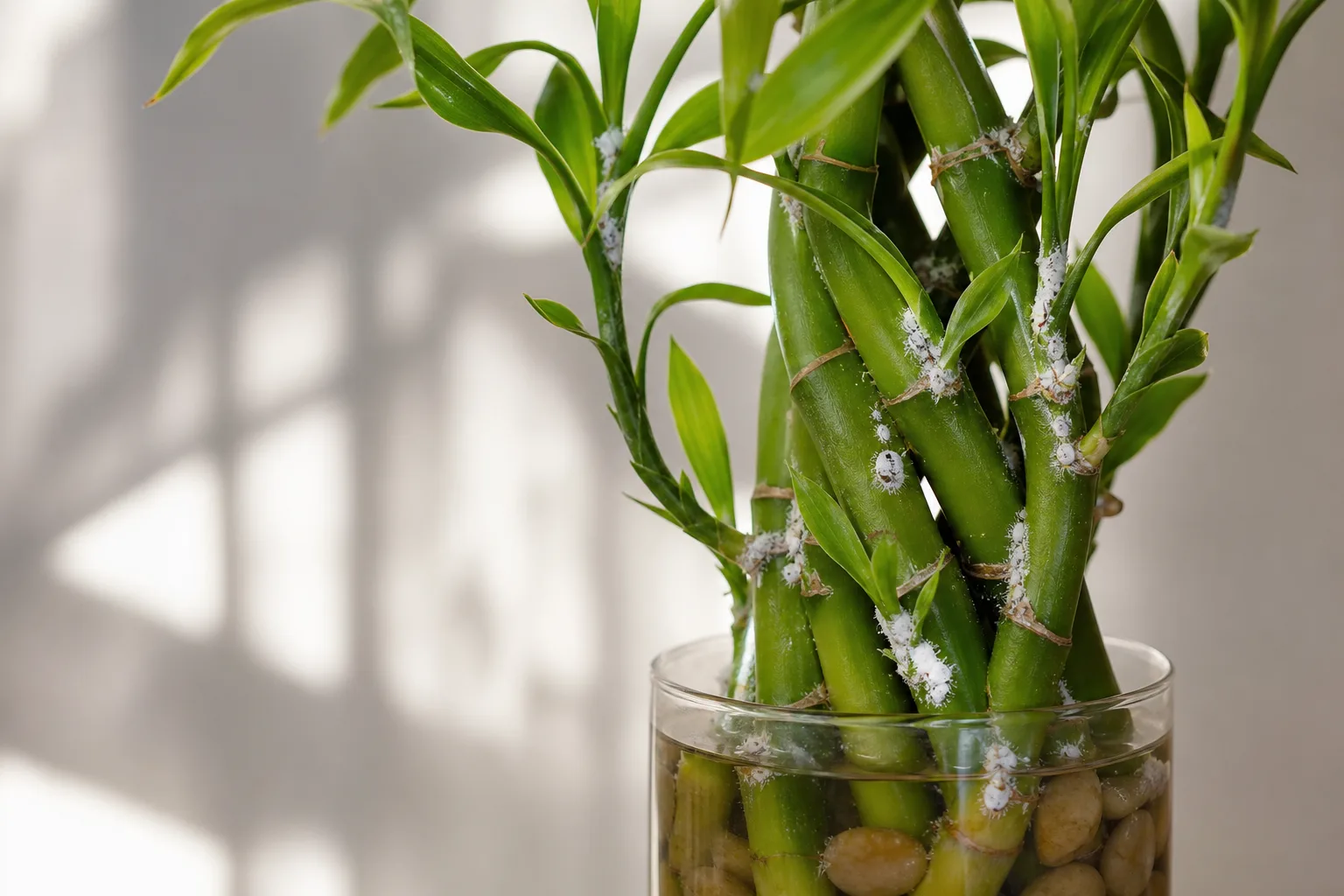
Mealybugs on Lucky Bamboo: Causes, Checks & Fixes
This guide covers mealybugs on Lucky Bamboo. See also the general Mealybugs guide, watering, and light pages for this plant.
Mealybugs on Lucky Bamboo: Causes, Checks & Fixes
Quick answer
Mealybugs on Lucky Bamboo (Dracaena sanderiana) appear as white, cottony clumps at leaf bases and nodes - especially hidden inside braided canes. First step: remove visible bugs with an alcohol-dipped swab, then rinse leaves and treat with neem oil or insecticidal soap.
Clemson Extension lists mealy bugs among common pests on lucky bamboo. NC State advises to monitor for mealybugs on Dracaena sanderiana.
What mealybugs look like on Lucky Bamboo
Adults and nymphs form waxy white masses resembling cotton at the junction of leaves and green canes. In spiral or heart-shaped arrangements, bugs hide where stems touch - easy to miss from the front.
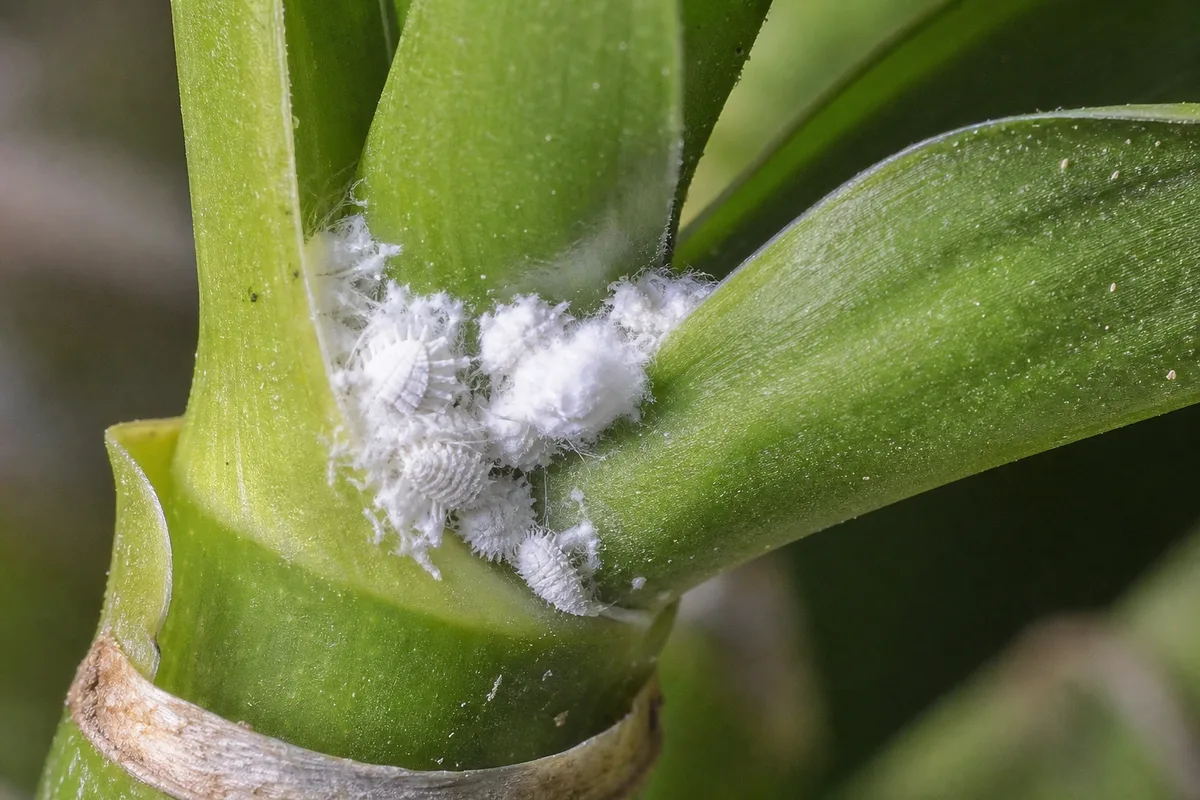
Mealybugs symptoms on Lucky Bamboo - compare with healthy tissue on the same plant.
Infested leaves may yellow slowly as sap is drained. Honeydew can make leaves sticky and attract sooty mold. Unlike spider mite stippling, mealybugs are visible blobs you can crush with a swab.
Root mealybugs occasionally appear on soil-grown plants at the soil line - less common in pure water culture but check pebbles for waxy deposits.
Why Lucky Bamboo gets mealybugs
Mealybugs hitchhike on new purchases and spread plant to plant. Warm indoor temperatures speed reproduction.
Over-fertilized, soft new growth attracts sap feeders. Fertilize lightly - heavy nitrogen in vase water produces tender tissue mealybugs prefer.
Tight braids reduce airflow and hide colonies from casual inspection. Dusty desk plants in bright, indirect light with dry air stress may succumb faster once infested.
How to confirm the cause
- Swab test - Touch white masses; mealybugs leave red or orange smear when crushed.
- Location - Leaf axils and nodes, not uniform tip burn from fluoride.
- Sticky leaves - Honeydew points to sap feeders, not water quality alone.
- Spread pattern - Cluster growth along canes vs. environmental tip damage on all leaves equally.
- Neighbor plants - Other houseplants with cottony masses suggest active infestation.
- Persistence - White material returns after dusting confirms live insects, not mineral deposits.
First fix for Lucky Bamboo
Manual removal plus rinsing and labeled insecticide.
Isolate the plant. Dab each visible colony with 70% isopropyl alcohol on a cotton swab - avoid flooding vase water with alcohol. Follow with thorough rinsing and neem oil or insecticidal soap application to reach nymphs you missed.
These pests can be removed by hand, by rinsing the leaves off, or by using neem oil or insecticidal soap according to Clemson Extension.
Step-by-step recovery
- Isolate Lucky Bamboo from other plants.
- Work stem by stem; swab every white patch.
- Separate braided sections temporarily if needed for access.
- Rinse all foliage with lukewarm water.
- Apply insecticidal soap or neem; coat axils and undersides.
- Repeat weekly for four weeks - eggs hatch in cycles.
- For soil plants, inspect top inch of mix; repot if root mealybugs are suspected.
- Resume weekly filtered water changes after treatments.
Recovery timeline
Small infestations may clear within two to three weekly rounds if every colony is swabbed. Braided displays with hidden mealybugs often need six weeks of persistence.
Yellowed leaves from feeding do not revert; watch for clean new growth at nodes.
Causes to rule out
- Mineral or hard-water deposits - Crusty white on vase walls, not waxy moving insects.
- Mealybug lookalike fuzz - Rare fungal growth; does not smear red when crushed.
- Scale insects - Flat brown shields, not cottony masses.
- Fluoride tip burn - Dry brown margins without cotton clusters.
What not to do
Do not spray alcohol over the entire plant in bright sun - leaf burn follows. Avoid pouring insecticide into vase water unless label allows. Do not compost infested prunings indoors. Do not return to shared shelves before two clean inspections.
How to prevent mealybugs next time
Quarantine newcomers two weeks. Inspect leaf bases monthly - especially braids. Feed at quarter strength in water culture to avoid soft flushes.
Keep moderate humidity and dust-free leaves. Use filtered water so plants stay stress-free and less attractive to pests.
Lucky Bamboo care cross-check
Mealybug treatment must reach every cane joint in decorative forms. A single missed cluster re-infests the arrangement after you stop spraying.
When to worry
Escalate when bugs appear on most canes, growth stops, or sticky mold covers leaves. Lucky bamboo is toxic to pets - keep alcohol and soap runoff away from animals.
Conclusion
Mealybugs on Lucky Bamboo hide in leaf axils and braided joints as white cottony masses. Confirm with a swab crush test, remove manually, rinse, and repeat neem or soap treatments weekly until new growth stays clean.
When to use this page vs other Lucky Bamboo guides
- Lucky Bamboo watering guide - Use for routine moisture checks before assuming mealybugs is the main issue.
- Lucky Bamboo problems hub - Browse all 41 common issues on this species.
- Ants on Plant on Lucky Bamboo - Different entry point when symptoms overlap with mealybugs.
- Yellow Leaves on Lucky Bamboo - Different entry point when symptoms overlap with mealybugs.
- Slow Growth on Lucky Bamboo - Different entry point when symptoms overlap with mealybugs.