Leaf Drop on Lucky Bamboo: Causes, Checks & Fixes
Quick answer
Lucky Bamboo drops leaves when cold drafts, stale vase water, fluoride damage, or root stress hit at once. First step: move away from AC vents, fully change vase water or check soil moisture, and inspect roots - bare cane sections rarely grow new leaves.
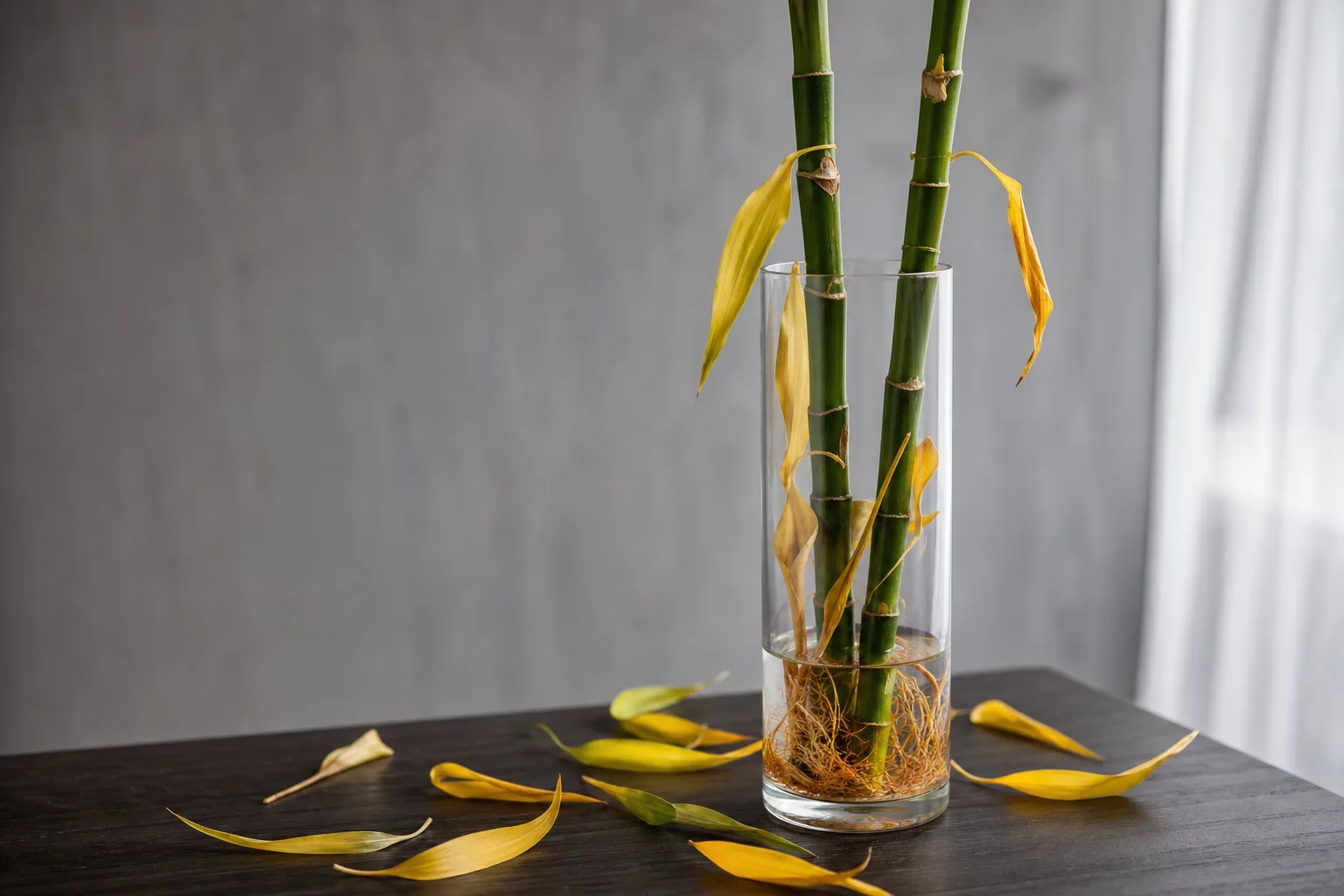
Leaf Drop on Lucky Bamboo: Causes, Checks & Fixes
This guide covers leaf drop on Lucky Bamboo. See also the general Leaf Drop guide, watering, and light pages for this plant.
Leaf Drop on Lucky Bamboo: Causes, Checks & Fixes
Quick answer
Leaf drop on Lucky Bamboo (Dracaena sanderiana) means leaves detach cleanly at the sheath - often after yellowing from the tip inward - not just hang limp on the cane. Bare internodes below the foliage tuft rarely refoliate; recovery shows as new leaves at the top or nodes, not along old bare stem sections.
Environmental shock is the usual trigger: cold drafts from desk AC vents, stale vase water, fluoride in tap water, or failing roots. First step: move away from vents and heat registers, fully change all vase water (do not top off cloudy water) or check whether soil has stayed wet for days, then inspect roots for firm white tissue versus brown slime.
This page covers leaves falling off. If leaves stay attached but hang limp, see drooping leaves. If tips brown but blades remain attached, see yellow leaves or brown tips. If whole canes collapse from the base, see wilting.
Leaf drop vs wilting vs drooping vs yellow tips
Lucky Bamboo problem pages overlap - use this table to pick the right guide:
| Pattern | Canes | Leaves | What happens | Start here |
|---|---|---|---|---|
| Leaf drop | Usually firm | Yellow, then detach at sheath | Fallen blades on desk or in vase; bare nodes may stay bare | This page |
| Drooping | Firm, upright | Hang limp along cane | Blades dangle but stay attached | Drooping leaves |
| Wilting | Limber from base | Collapse with the cane | Whole stem bends, not just foliage | Wilting |
| Yellow tips | Firm | Brown margins, blade still attached | Fluoride or salt stress before full drop | Brown tips |
| Normal aging | Firm | One lower leaf every few weeks | Single sheath scar, no cascade | No treatment |
Leaf drop can follow drooping or yellow tips if stress continues - treat water quality and root firmness before stems soften.
What leaf drop looks like on Lucky Bamboo
On water-culture plants, leaves yellow from the tip inward or drop suddenly after a room move. Lower leaves on each cane often go first, leaving bare green stems with a tuft of foliage at the top. Severe stress shows multiple leaves falling within days while vase water looks cloudy or smells sour.
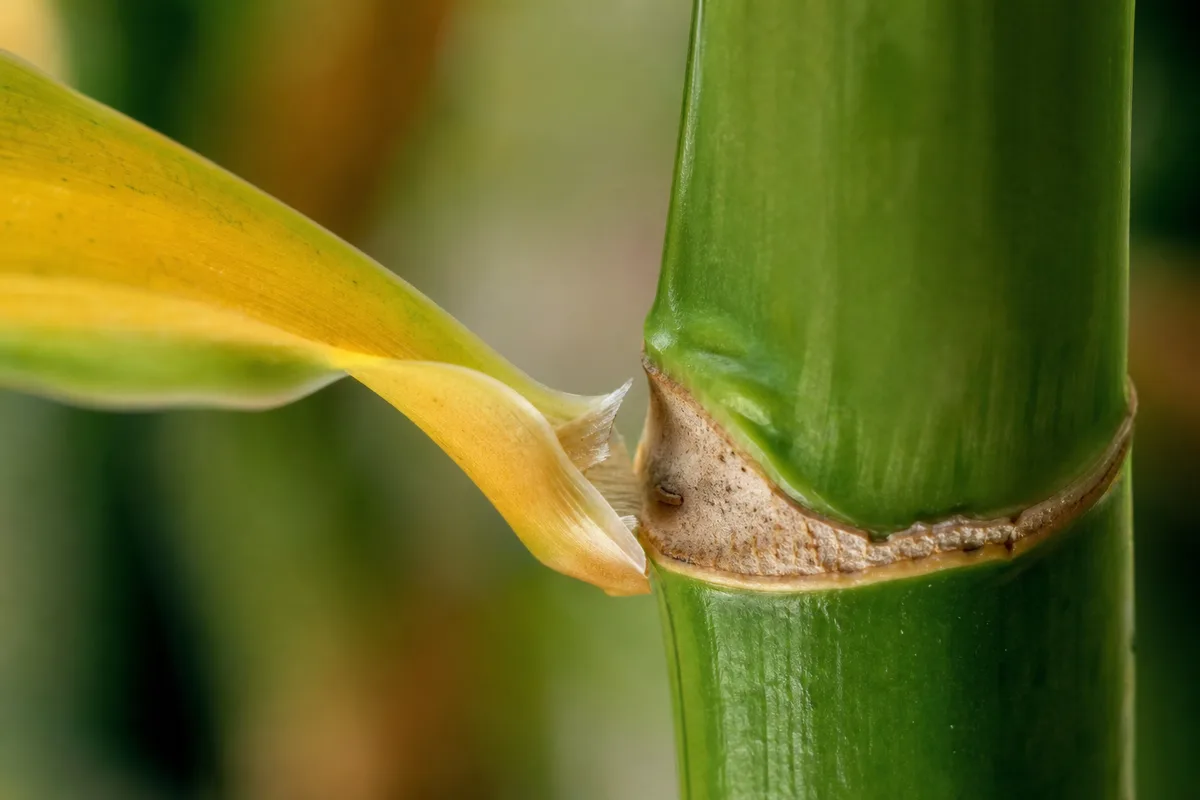
Leaf Drop symptoms on Lucky Bamboo - compare with healthy tissue on the same plant.
In soil culture, leaf drop pairs with limp canes despite wet mix, or with very dry soil and crispy leaf edges before leaves detach. Braided arrangements may lose leaves on one cane while others stay green - a clue that one stem’s roots failed while neighbors remain healthy.
Normal aging drops one or two older leaves near the base over weeks with no yellowing climbing the cane. That pattern needs no treatment. A sheath scar where the dead leaf detached on an otherwise firm cane is typical senescence, not crisis drop.
Fluoride progression before whole leaves fall
Tap-water fluoride often follows a predictable sequence on Dracaena species: brown tips first, then yellow streaks inward, then whole blades detach. Dracaena species are easily affected by fluoride in tap water. Unlike chlorine, fluoride does not dissipate when water sits out overnight - switching to filtered or rain water stops new damage but cannot re-green leaves already yellowed.
Why Lucky Bamboo drops leaves
Cold drafts and desk placement
Draft and temperature swings are common triggers on office desks. Bring plants indoors before nighttime temperatures drop below 65°F and keep them away from winter window sills, air-conditioning vents, and heat registers. Cold shock makes leaves drop within days even when water looks fine. A grocery-store vase moved from a warm shop to a drafty cubicle often sheds several lower leaves in the first week - that is shock, not disease.
Stale vase water and bacterial root damage
Water quality matters in vases. Stagnant vase water weakens roots; weakened roots cannot support foliage, so leaves drop even though the vase looks full. Fog or cloudiness in the water is a sign of bacteria that can attack submerged tissue. Topping off cloudy water without a full dump-and-rinse cycle lets bacteria persist - cyclical leaf loss every few weeks often traces to this habit.
Fluoride and tap-water salts
In soil or water culture, municipal tap water exposes Dracaena sanderiana to fluoride most homes cannot avoid without filtering. Use rain water or distilled water when growing lucky bamboo in water or in soil if tips brown before blades fall. Salt buildup from forgotten fertilizer in vase water follows a similar yellow-then-drop pattern.
Overwatered soil in low light
In soil, overwatering causes yellowing and stem problems that show up as leaf drop before rot becomes obvious. Dim corners keep mix wet longer - pair with the overwatering guide when the pot stays heavy while leaves cascade off.
Low light and post-move shock
Low light causes slow decline. Bright, indirect light keeps canes actively growing. Dim hallways produce weak leaves that drop after any extra stress. Recent Lucky Bamboo repotting guide, fertilizer spikes, or a move to a new room also trigger temporary shedding while the plant adjusts.
Lucky Bamboo is not a true bamboo - it is a tropical Dracaena sanderiana related to corn plant and dragon tree, sharing fluoride sensitivity and rot patterns with those houseplants.
How to confirm the cause
Confirm in this order:
- Recent location change - Was the plant moved near a vent, window, or door? Draft stress fits sudden multi-leaf drop.
- Water status - For vases, note last change date and clarity. For soil, probe the top inch; constant wetness or bone-dry extremes both cause drop.
- Water source - Heavy tap-water use with brown tips before drop points to fluoride or salts, not disease.
- Root check - Lift from pebbles or slide from pot. Firm pale roots support recovery; brown slime means rot-driven drop.
- Stem firmness - Soft nodes with yellowing climbing the cane signal advanced decline, not reversible leaf loss alone.
- Pest scan - Check leaf undersides for scale or mealybug; heavy infestations cause shedding, but pests are less common than care stress on Lucky Bamboo.
First fix for Lucky Bamboo
Move to stable bright indirect light away from drafts, then fully refresh the growing medium - change all vase water and rinse pebbles, or let soil dry to the correct depth before the next drink.
Why you must fully change vase water, not top off
Cloudy or sour-smelling vase water means bacteria - partial top-ups leave biofilm on pebbles and glass. Dump all water, scrub pebbles, rinse roots, trim soft tissue, and refill with filtered or distilled water. Submerge roots and at least one inch of stem in clean water.
For soil plants: if mix stayed soggy, unpot, trim rotted roots, and repot into well-drained potting soil. If soil was dry, water lightly once and wait for the top inch to dry before watering again - see underwatering when drought alone caused drop.
Hold fertilizer until new leaves appear - feeding a shedding plant adds salt stress.
Step-by-step recovery
- Relocate to bright indirect light between 65°F and 85°F with no direct hot sun.
- Remove fallen leaf debris from the vase or soil surface to limit bacteria.
- Change vase water completely or correct soil moisture; use filtered water going forward per the watering guide.
- Trim mushy roots with clean scissors; sterilize between cuts.
- Stake tall bare canes lightly if they wobble - root loss reduces anchoring.
- Wait two weeks before judging; new leaf buds at nodes mean recovery is underway.
- If one cane in a braid fails while others stay firm, separate the weak cane before rot spreads - steps below.
Recovery timeline
Draft or water-quality fixes may stop drop within one week; new leaves often appear in two to four weeks on firm canes. Root rot recovery takes longer - three to six weeks before stable new growth.
Leaves that already yellowed will not green up again. Judge success by stopped shedding and fresh leaves at the top or nodes. Bare cane sections stay bare; Lucky Bamboo rarely refoliates old internodes.
Canes that yellow from the base upward with soft stems rarely recover fully - cut firm sections above healthy nodes and reroot per the propagation guide.
Salvaging braided displays when one cane fails
Braided Lucky Bamboo is often three to six canes wired together in one pebble vase - the most common desk setup and the most common partial-failure pattern.
- Lift each cane separately - Outer canes may look fine while an inner stem lost half its leaves. Check hidden foliage before assuming the whole display is doomed.
- Compare root firmness per cane - Rinse pebbles and feel each root mass. One mushy cluster explains one-sided leaf drop.
- Separate the failing cane - Cut wire or zip ties carefully; do not yank stems. Trim soft roots on the weak cane only.
- Reroot or discard - Firm upper sections with one or two nodes can reroot in fresh filtered water. Soft bases go to compost.
- Rebuild the display - Re-braid only firm canes; give separated survivors their own vase until roots recover.
If cloudiness returns within 48 hours after a full change, escalate to the root rot guide - partial top-ups will not save a braided vase.
Causes to rule out
| Symptom | How it differs from crisis leaf drop | Where to go |
|---|---|---|
| Normal senescence | One old leaf at a time; cane stays firm | No treatment |
| Fluoride tip burn | Brown tips, leaves still attached | Brown tips |
| Root rot | Cloudy water, mushy roots, sour smell | Root rot |
| Underwatering | Dry vase, light pot, wrinkled canes | Underwatering |
| Direct sun scorch | Bleached patches on window-facing leaves | Light guide |
| Draft stress only | Drop after vent move; water and roots fine | Fix placement; this page |
What not to do
Do not keep topping cloudy vase water without a full change. Do not fertilize heavily while leaves are falling. Do not move the plant repeatedly hunting for a “luckier” spot. Avoid cold water straight from the tap in winter. Do not assume all leaf loss is fungal disease and spray fungicides on a care-stressed Dracaena.
How to prevent leaf drop next time
Change vase water weekly with low-fluoride water and rinse pebbles monthly. For soil culture, water when the top inch of soil is dry and empty saucers.
Keep plants in bright indirect light and stable temperatures. Minimize moves once the plant acclimates. If tap water causes tip burn, switch to rain or distilled water permanently.
Match weekly water rhythm and light placement to the watering and light guides so vase depth and soil dry-down stay consistent through seasonal HVAC changes.
Related Lucky Bamboo problems
- Wilting - whole-cane collapse from the base; use when stems bend limply, not when blades detach at the sheath
- Drooping leaves - limp attached leaves on firm canes before they yellow and fall
- Yellow leaves - yellowing blades still attached; often precedes drop if water quality is not fixed
- Brown tips - fluoride margins without full detach; early stage of the tip-yellow-drop cascade
- Overwatering - wet soil before roots fail in potted culture
- Underwatering - dry vase or crispy drought drop when roots are firm but dehydrated
- Root rot - cloudy vase water or mushy roots; full trim-and-rinse when drop pairs with bacterial water
- Propagation - reroot firm cane sections after heavy drop or braid salvage
Lucky Bamboo care guides
- Overview - vase vs. soil culture decision hub
- Watering - weekly filtered rhythm and submersion depth
- Light - bright indirect placement away from window scorch
When to worry
Escalate if yellowing climbs multiple canes, stems feel mushy, or more than half the leaves fall within a week. Lucky bamboo is toxic to pets - collect fallen leaves if cats or dogs chew plants, and wear gloves when handling sap from trimmed tissue.
Contact your local Cooperative Extension office if firm-caned plants keep dropping leaves after weekly filtered water changes, draft-free placement, and root inspection - persistent loss may need pest screening per NC State Dracaena sanderiana guidance.
Conclusion
Lucky Bamboo leaf drop is a stress signal, not bad luck. Confirm drafts, water quality, and root firmness before treating disease. Fully refresh vase water or fix soil moisture, stabilize light and temperature, and expect new leaves only at the top or nodes - not along bare internodes. For braided desk vases, lift each cane monthly and separate failing stems before rot reaches the whole display.
When to use this page vs other Lucky Bamboo guides
- Lucky Bamboo watering guide - Use for routine moisture checks before assuming leaf drop is the main issue.
- Lucky Bamboo problems hub - Browse all 41 common issues on this species.
- Yellow Leaves on Lucky Bamboo - Different entry point when symptoms overlap with leaf drop.
- Drooping Leaves on Lucky Bamboo - Different entry point when symptoms overlap with leaf drop.
- Root Rot on Lucky Bamboo - Different entry point when symptoms overlap with leaf drop.