Plant Leaning on Lucky Bamboo: Causes, Checks & Fixes
Quick answer
Lucky Bamboo leans when roots cannot anchor in pebbles, canes grow toward light, or braided tops outweigh the base. First step: rotate the plant weekly for even light and add pebbles or a stake so roots and stem bases stay upright in the vase or pot.
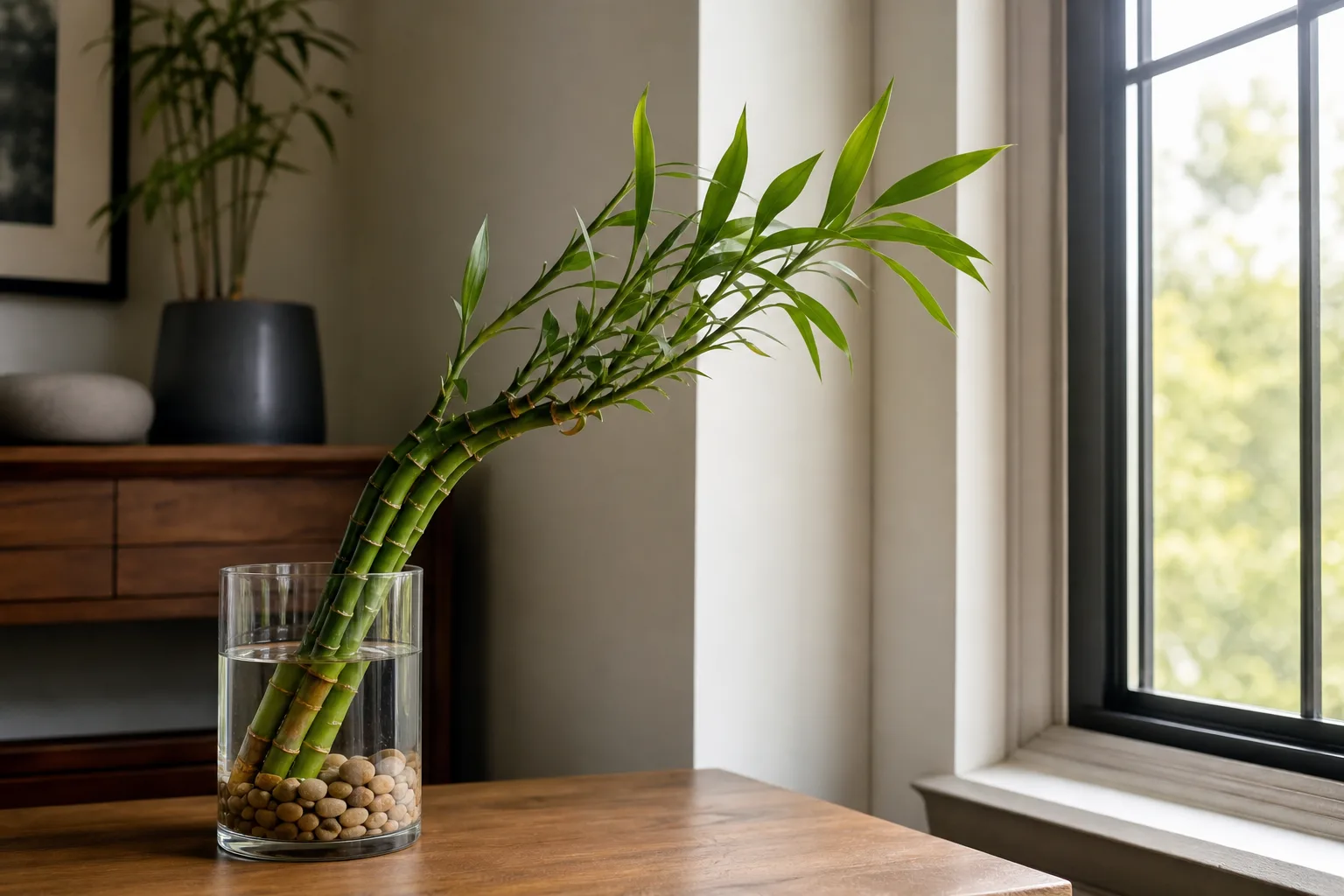
Plant Leaning on Lucky Bamboo: Causes, Checks & Fixes
This guide covers plant leaning on Lucky Bamboo. See also the general Plant Leaning guide, watering, and light pages for this plant.
Plant Leaning on Lucky Bamboo: Causes, Checks & Fixes
Quick answer
Plant leaning on Lucky Bamboo (Dracaena sanderiana) is usually mechanical - roots poorly anchored in pebbles, top-heavy braided canes, or growth toward the brightest window - not a disease. First step: rotate the plant a quarter turn weekly, add pebbles or a soft stake so roots stay fixed, and confirm vase water covers roots and one inch of stem for stable support.
Intentional curved Lucky Bamboo is sold as trained shapes; this guide addresses unwanted tipping where the display lists or roots slide. Weak anchoring plus bright, indirect light from one direction makes canes bend toward the window over time.
What plant leaning looks like on Lucky Bamboo
On water-culture plants, the whole cluster tilts toward a window while roots lift from pebbles on the opposite side. Tall braided canes sway when touched. Vase water may be too shallow - roots float instead of gripping stones - or pebbles are too smooth and sparse.
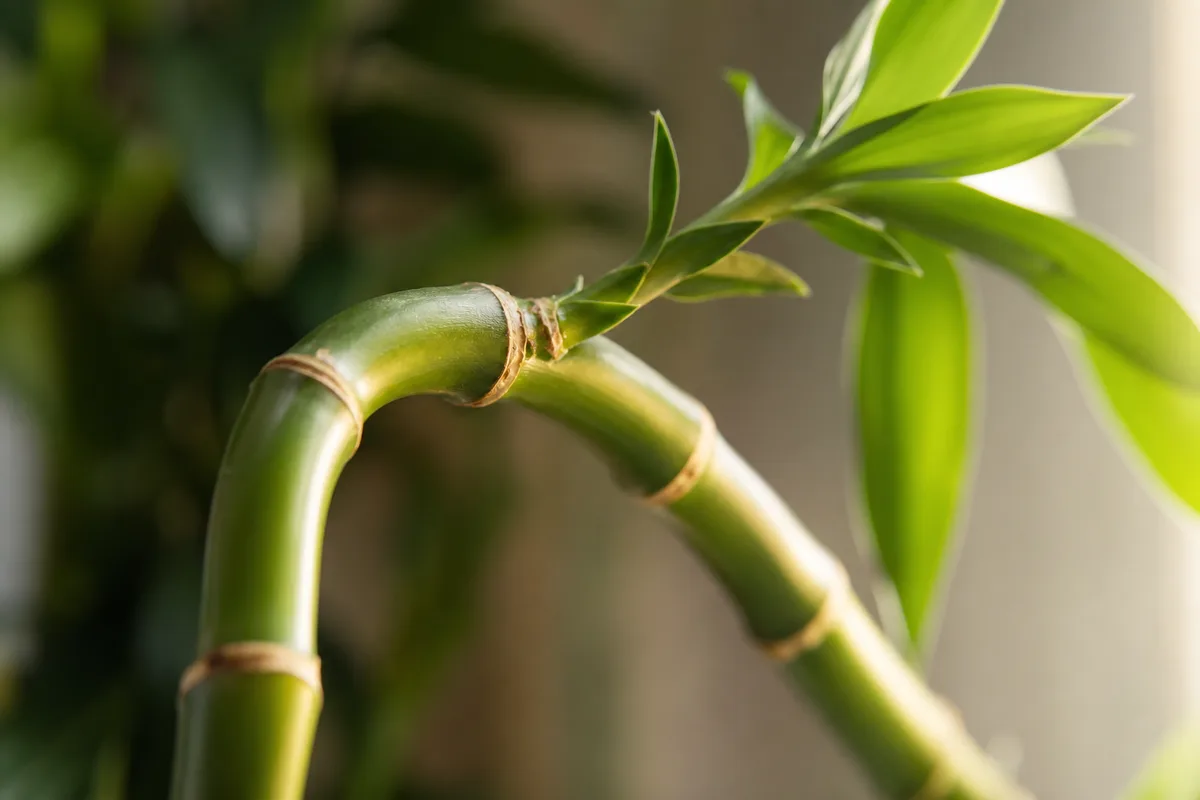
Plant Leaning symptoms on Lucky Bamboo - compare with healthy tissue on the same plant.
In soil culture, lean may show as the pot tipping because roots fill one side or the root ball is small relative to cane height. Uneven watering can compress mix on one side. Stems stay firm and green in simple lean; soft bases suggest rot overlap.
Phototropic lean develops gradually over weeks. Sudden lean after a pet bump or draft is mechanical - reposition and stake.
Why Lucky Bamboo leans
Light direction pulls new growth. Bright, indirect light is essential, but one-sided exposure bends canes toward the source. Without weekly rotation, braided tops offset the center of gravity.
Water culture lacks soil weight. Roots in decorative vases depend on pebble friction; change water weekly and root disturbance during careless dumps loosens anchoring. Shallow water that does not cover one inch of stem reduces stability.
Top-heavy braids - three or more tall canes wired together - concentrate mass high while roots stay thin. New roots form within 2 to 3 weeks after disturbance, but until then plants list.
Soil plants lean when pots are too small, mix is constantly oversaturated on one side, or root balls are lopsided after Lucky Bamboo repotting guide. Low light produces weak stems that bend more easily under leaf weight.
How to confirm the cause
Confirm in this order:
- Lean direction - Toward the brightest window supports phototropism; random tilt after a bump supports mechanical shift.
- Root anchoring - Lift gently; roots should resist in pebbles or firm soil. Floating roots confirm poor anchor.
- Water depth - Roots and stem base should meet correct submersion depth; too shallow causes wobble.
- Stem base firmness - Soft tissue means rot - leaning is secondary; inspect roots for slime.
- Vase size versus height - Narrow bases with tall braids fail physics before biology.
- Recent repot or water change - Temporary lean normal until roots re-anchor in two to three weeks.
First fix for Lucky Bamboo
Re-anchor roots and balance light - add pebbles around roots, adjust water depth, rotate the display, and use a soft plant tie to a bamboo stake if canes are tall.
For vase plants: drain partially, nest roots into deeper pebbles, refill with filtered water to proper depth, and rotate a quarter turn weekly. Use a heavier glass vase if the display is top-heavy.
For soil plants: repot into a slightly wider pot with well-drained potting soil if the root ball is tiny versus cane mass. Insert a stake to the pot bottom and tie canes loosely with soft cloth ties.
Do not pull bent green canes forcefully straight - they snap. Gradual staking over weeks is safer.
Step-by-step correction
- Place the vase or pot where it receives bright indirect light from multiple directions if possible - sheer curtain diffuses one-sided sun.
- Add clean pebbles around roots in layers, tamping gently - not crushing roots.
- Set water level to cover roots and one inch of stem; avoid submerging higher nodes unnecessarily.
- Insert a slim stake beside braided canes; tie with soft ties in two places.
- Rotate the plant a quarter turn each week toward balanced growth.
- Change vase water weekly without disturbing pebble anchor more than needed - hold pebbles when pouring.
- Remove stake after four to six weeks when roots resist a gentle tug.
Recovery timeline
Anchoring and rotation often stabilize lean within one to two weeks. Phototropic bend straightens slowly over four to eight weeks with consistent rotation and staking. New root grip after repot may take 2 to 3 weeks before removing supports.
Permanent cane curvature may remain cosmetic if stems were green when bent - Lucky Bamboo does not unbend fully like some woody shrubs.
Causes to rule out
Leaning overlaps with:
- root rot on Lucky Bamboo - Cloudy water, mushy roots, sour smell; canes soften at base and collapse - not simple lean.
- underwatering on Lucky Bamboo wilt - Lim canes that recover after watering; different from slow phototropic tilt.
- Intentional trained spiral - Purchased curved shapes; not a problem to fix.
- Leggy weak growth - Low light produces thin canes that lean easily; move brighter and stake.
- Draft knockdown - Sudden position change; re-anchor without disease treatment.
- Root-bound tilt - Soil pot lifts on one side; repot into appropriate width.
What not to do
Do not submerge entire canes deeper to “weigh them down” - that invites stem rot. Do not use tight wire ties that cut green bark. Avoid top-heavy vases with narrow bases on slick surfaces. Do not ignore lean that comes with soft stems - that is rot, not staking issue. Do not place in direct hot sun to “strengthen” stems - that scorches leaves.
How to prevent leaning next time
Rotate displays weekly. Use enough pebbles and a stable vase for braided height. Maintain weekly water changes with filtered water without washing roots out of anchor each time.
For soil culture, choose pots proportional to cane mass with well-drained mix and water when the top inch dries. Dracaena sanderiana grows well in evenly moist soil with a root ball sized to support the top.
Stake new tall braids until roots establish after purchase or repotting.
Lucky Bamboo care cross-check
Stable displays combine anchoring, balanced light, and correct water depth. A tall braid in a shallow vase with one-window light will lean predictably - fix mechanics before assuming nutrient or disease problems. Soil transition helps heavy top displays if vase anchoring is hard to maintain - much less difficult in soil with drainage for long-term stability.
When to worry
Escalate if lean worsens while stem bases soften, vase water clouds within days, or roots smell sour - treat as root failure. Lucky bamboo is toxic to pets - secure staked displays so pets cannot knock vases and expose sap.
Conclusion
Lucky Bamboo leaning is usually fixable anchoring and light balance, not bad luck. Confirm firm stems and floating roots versus rot, add pebbles or stakes, rotate weekly, and maintain proper vase depth or soil root mass. Prevent recurrence with stable vases, weekly water care, and proportional pots for braided height.
When to use this page vs other Lucky Bamboo guides
- Lucky Bamboo watering guide - Use for routine moisture checks before assuming plant leaning is the main issue.
- Lucky Bamboo problems hub - Browse all 41 common issues on this species.