Cold Damage on Lucky Bamboo: Causes, Checks & Fixes
Quick answer
Cold damage on Lucky Bamboo shows as yellow or brown leaves, darkened stem sections, and limp canes after exposure below about 65°F. First step: move the plant to a stable warm room away from drafts, inspect stem firmness, and trim only clearly dead tissue after it dries.
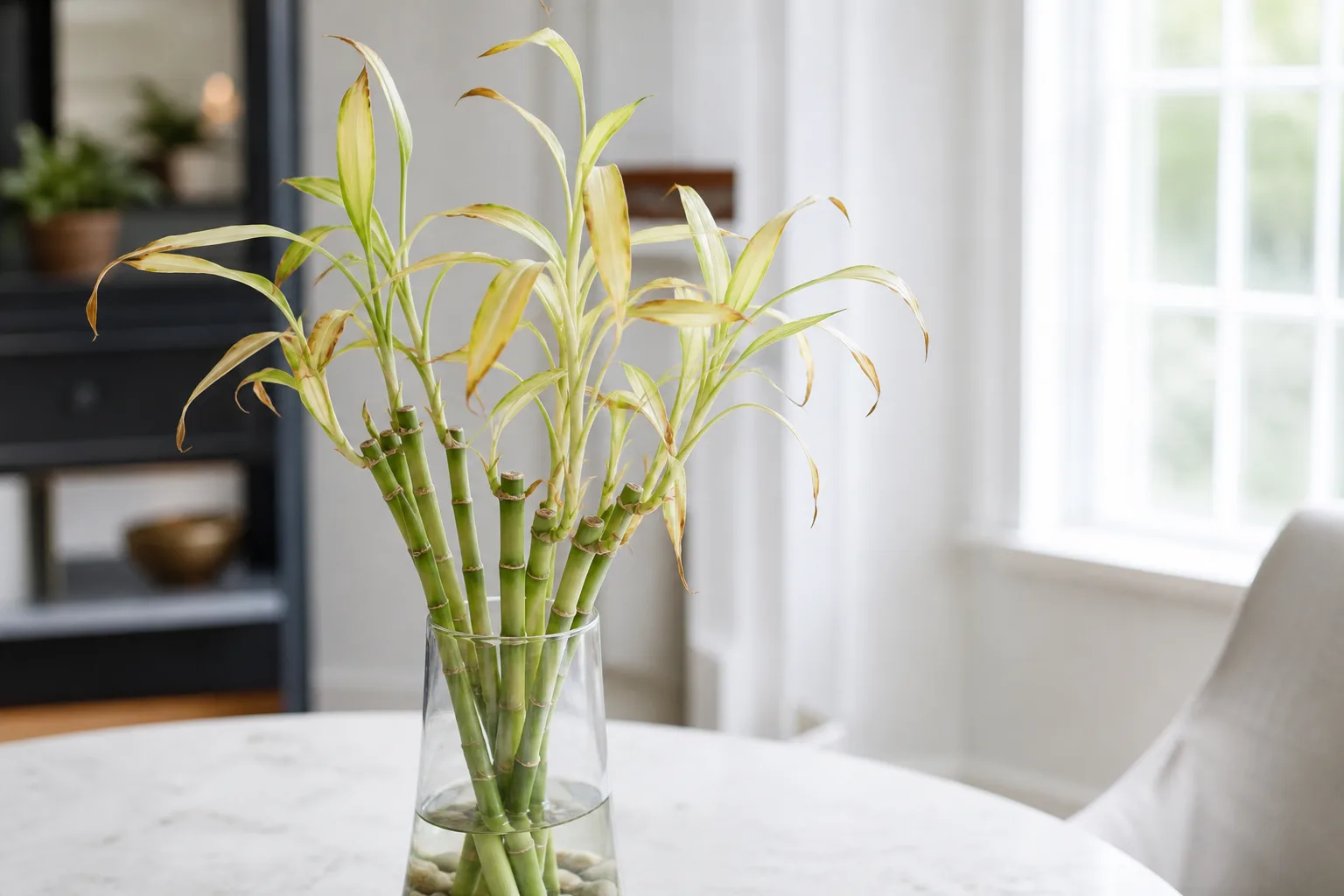
Cold Damage on Lucky Bamboo: Causes, Checks & Fixes
This guide covers cold damage on Lucky Bamboo. See also the general Cold Damage guide, watering, and light pages for this plant.
Cold Damage on Lucky Bamboo: Causes, Checks & Fixes
Quick answer
Cold damage on Lucky Bamboo (Dracaena sanderiana) appears after exposure to temperatures below about 65°F - common on winter windowsills, air-conditioning drafts, or plants forgotten outdoors. First step: move to a stable warm room with bright, indirect light, check stem firmness, and trim only tissue that has fully browned or softened.
Bring indoors before nighttime temperatures drop below 65°F - Lucky Bamboo is tropical, not hardy. Cold-chilled vase water can shock submerged roots even when air temperature recovers by morning.
What cold damage looks like on Lucky Bamboo
Typical patterns after a chill:
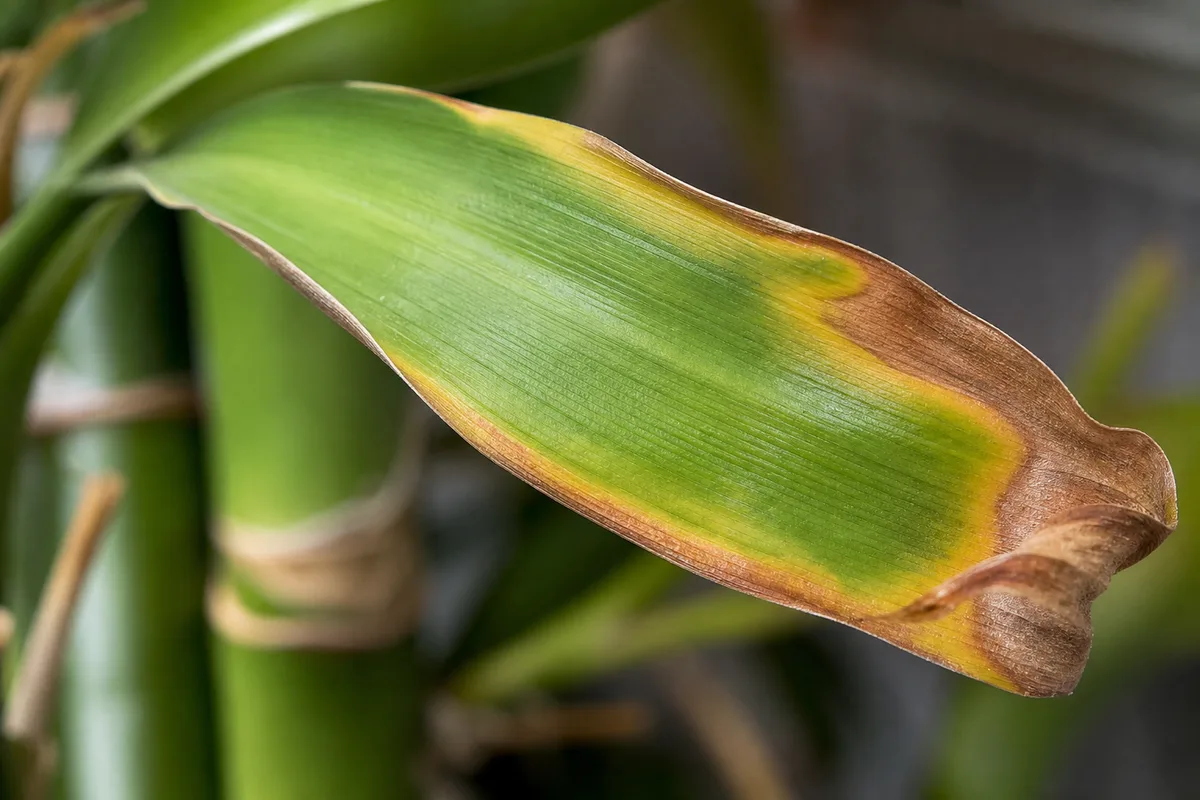
Cold Damage symptoms on Lucky Bamboo - compare with healthy tissue on the same plant.
- Yellow or pale leaves that were green the day before - often all leaves on exposed canes at once
- Brown or tan leaf tips and margins developing over several days after the event
- Limp canes that stand upright again once warmed, if stems stayed firm
- Dark water-soaked patches on stems left in cold vase water overnight - cold injury that invited rot
In water culture, damage often hits every cane touching cold pebbles or chilled water simultaneously. Glass vases on frosty windowsills conduct cold into the root zone faster than soil pots on the same sill.
In soil culture, outer leaves against the window pane show damage first while inner leaves stay green. Dracaena sanderiana grown indoors does not enter dormancy like temperate plants - it simply stops functioning until warmth returns.
Advanced cold exposure turns stem tissue soft and black - that is secondary bacterial rot, not reversible cold scorch alone.
Why Lucky Bamboo suffers cold damage
Lucky Bamboo evolved in warm, frost-free climates. Easily grown in evenly moist soil in part shade applies to indoor temperatures - not outdoor winter benches.
Common triggers:
- Vase sitting on a metal or stone windowsill during a cold snap
- HVAC vents blowing chilled air directly on braided canes
- Delivery boxes left on porches in winter
- Brief outdoor “fresh air” that dipped below safe range
Low light alone does not cause cold symptoms, but dim corners near leaky windows combine chill and slow recovery. Fluoride in tap water can brown tips separately - cold damage usually affects whole leaves or one exposed side at once after a known temperature drop.
Water-culture roots have no soil insulation; chilled water below 55°F impairs root function within hours.
How to confirm the cause
Confirm in this order:
- Recent exposure - Cold car ride, open window, or outdoor time in the last 72 hours?
- Pattern - Side facing the cold source shows worst damage; uniform tip brown without an event suggests fluoride.
- Stem firmness - Firm stems with yellow leaves = cold stress; mushy base = rot needing different fix.
- Water temperature - Vase water ice-cold to touch after a window night confirms root chill.
- Timeline - Symptoms appear within one to three days of exposure, not gradually over months.
- Root check - Firm pale roots with yellow leaves support cold; brown slime supports rot.
If no cold event occurred, reconsider overwatering on Lucky Bamboo, fluoride, or low light before blaming temperature.
First fix for Lucky Bamboo
Move to a stable room above 65°F away from drafts, and replace chilled vase water with room-temperature filtered or distilled water.
Do not trim aggressively the first day - wait 48 to 72 hours so clearly dead tissue separates from tissue that will recover. Remove only leaves or stem sections that turn black, soft, or fully brown.
For vases: dump cold water, rinse pebbles, refill to cover roots and one inch of stem with room-temperature filtered water. Keep leaves above the rim.
For soil plants: move off the cold sill, let the pot warm gradually - do not place on a radiator. Water only when the top inch is dry; cold-stressed roots absorb less.
Step-by-step recovery
- Relocate to a warm spot with Lucky Bamboo light guide - not direct winter sun that adds scorch stress.
- Wait 48 hours; reassess which leaves are firm-green versus fully necrotic.
- Trim fully brown leaves at the sheath base with sterilized scissors.
- If stem sections are soft, cut to firm green tissue one node above the damage.
- For vases: change water weekly during recovery; watch for clouding that signals rot.
- For soil: ensure drainage; avoid Lucky Bamboo repotting guide and fertilizing until new growth appears.
- Stake limp but firm canes until turgor returns - usually within a week in warmth.
- Propagate firm top cuttings if lower stems cannot be saved.
Hold fertilizer until at least one clean new leaf unfurls.
Recovery timeline
Firm canes with yellow-only leaves often green up new growth within two to four weeks in stable warmth. Limp leaves that turn fully brown will not revert - wait for replacement foliage from the cane tip.
If stems softened during the cold event, recovery depends on how much firm tissue remains - similar to rot timelines of 2 to 3 weeks for new roots on salvaged cuttings.
Causes to rule out
Post-chill symptoms overlap with:
- Fluoride tip burn - Gradual brown tips, no cold event, clear timeline over weeks.
- root rot on Lucky Bamboo - Cloudy water, mushy roots, sour smell - may follow cold but needs rot protocol.
- underwatering on Lucky Bamboo - Dry pebbles, wrinkled firm stems, no recent chill.
- Direct sun scorch - Bleached or tan patches on sun-facing side in summer, not winter window chill.
What not to do
Do not place cold-damaged Lucky Bamboo on a heat register - rapid temperature swings worsen stress. Avoid fertilizing yellow leaves hoping to “green them up.” Do not submerge chilled stems deeper in water trying to revive them. Never leave vase displays on uninsulated windowsills through winter nights without moving them inward.
How to prevent cold damage next time
Bring plants indoors before nighttime temperatures drop below 65°F if you summer them outside. In winter, pull vases six inches back from glass or set on a cork mat to block conductive chill.
Keep arrangements away from AC vents and frequently opened doors. For soil pots, water when the top inch of soil is dry - cold roots in wet mix rot faster than dry ones.
Use filtered water year-round so cold stress and fluoride tip burn do not stack visually.
Lucky Bamboo care cross-check
Cold damage prevention is placement discipline - warm stable air, room-temperature filtered water, and weekly vase maintenance. A plant that survived summer outdoors needs the same 65°F threshold as a windowsill vase in January. Low light tolerance does not mean cold tolerance.
When to worry
Escalate if stems turn mushy after warming - that is rot colonizing cold-wounded tissue. Change vase water immediately, isolate affected canes, and trim to firm tissue. Lucky bamboo is toxic to pets; discard trimmed tissue where cats and dogs cannot reach it.
Conclusion
Cold damage on Lucky Bamboo follows exposure below about 65°F - yellow or brown leaves on firm stems, or worse, soft rot if chilled vase water sat overnight. Move to stable warmth, refresh room-temperature filtered water, trim only dead tissue after 48 hours, and prevent recurrence by keeping displays off cold glass and indoors before outdoor nights turn cool.
When to use this page vs other Lucky Bamboo guides
- Lucky Bamboo watering guide - Use for routine moisture checks before assuming cold damage is the main issue.
- Lucky Bamboo problems hub - Browse all 41 common issues on this species.
- Leaf Drop on Lucky Bamboo - Different entry point when symptoms overlap with cold damage.
- Drooping Leaves on Lucky Bamboo - Different entry point when symptoms overlap with cold damage.