Mosaic Virus on Lucky Bamboo: Causes, Checks & Fixes
Quick answer
True mosaic virus on Lucky Bamboo shows irregular yellow-green mottling on new leaves that worsens over time with no cure. First step: isolate the plant, compare new versus old growth, and discard severely affected canes rather than fertilizing or repotting repeatedly.
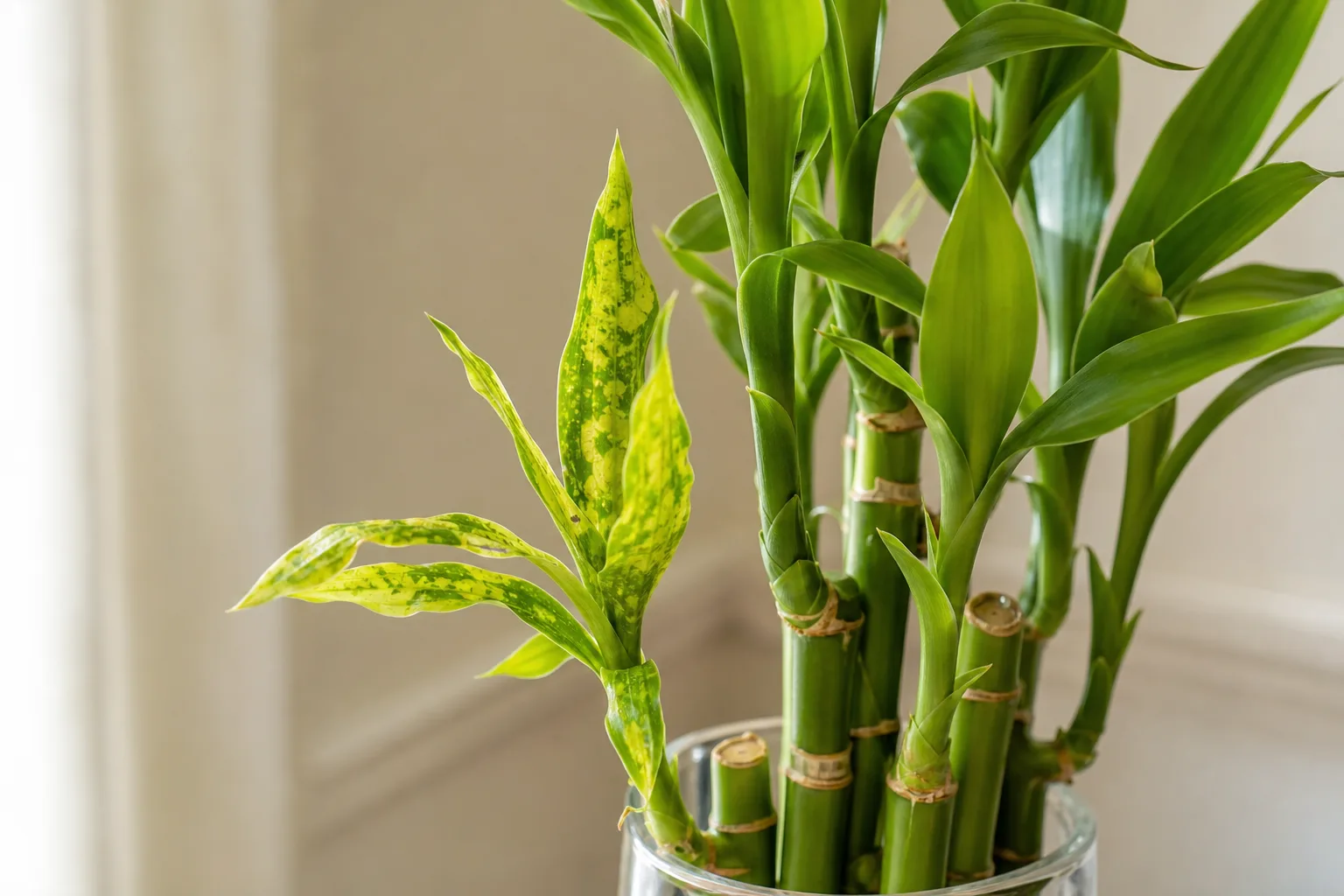
Mosaic Virus on Lucky Bamboo: Causes, Checks & Fixes
This guide covers mosaic virus on Lucky Bamboo. See also the general Mosaic Virus guide, watering, and light pages for this plant.
Mosaic Virus on Lucky Bamboo: Causes, Checks & Fixes
Quick answer
Mosaic virus on Lucky Bamboo (Dracaena sanderiana) is rare in home collections but serious when confirmed: irregular yellow-green mottling on new leaves that worsens over successive flushes, often with leaf distortion. There is no home cure. First step: isolate the plant, stop propagating from it, and compare new growth over three to four weeks before deciding to discard.
Many suspected cases are fluoride damage, low light, or stable cultivar variegation - not virus. Dracaena species are easily affected by fluoride in tap water, which produces tip burn and pale streaks that do not spread like viral mottling. Accurate confirmation saves healthy plants from unnecessary disposal.
What mosaic virus looks like on Lucky Bamboo
On water-culture and soil-culture plants alike, viral mosaic shows as patchy yellow and green islands on emerging leaves, sometimes with wrinkled or narrow blades. The pattern is irregular - not the neat stripes of some sold variegated forms. Over weeks, each new leaf looks worse than the last.
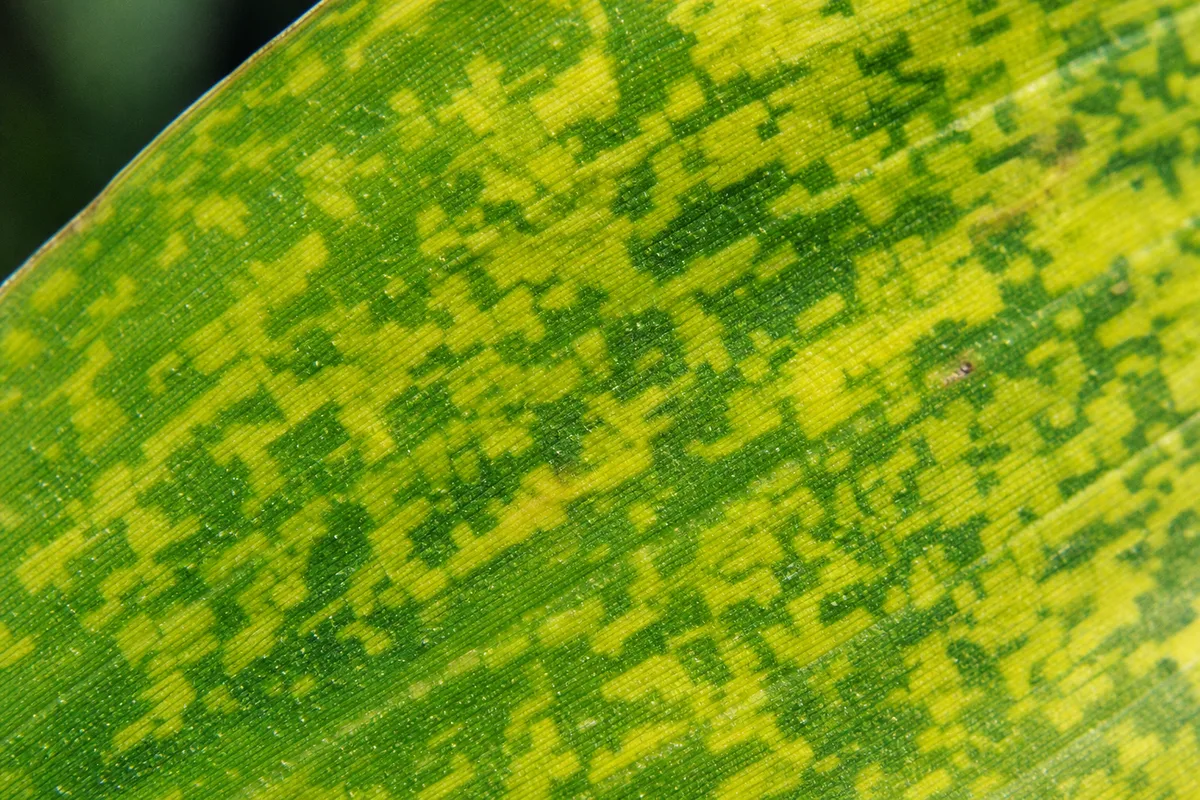
Mosaic Virus symptoms on Lucky Bamboo - compare with healthy tissue on the same plant.
Affected canes in braided arrangements may show mottling on one stem while neighbors stay solid green - unless all were cut from the same infected stock. Virus does not typically produce mushy stems or cloudy vase water; those signs point to rot or bacteria instead.
Stable variegation stays consistent on every leaf of that cane. Viral mottling drifts and intensifies on new growth even when care is perfect.
Why Lucky Bamboo gets mosaic virus
Mosaic viruses spread through sap-contaminated tools, infected cuttings, and sometimes aphid transmission in greenhouse settings. Home Lucky Bamboo is usually propagated from cane sections rooted in water; new roots form within 2 to 3 weeks - a window where growers may share cuttings without knowing parent stock was infected.
Purchasing bundled canes from uncertain supply chains increases risk. Stress from stagnant vase water or overwatered soil does not cause true mosaic virus, but stress makes mottling from other causes harder to read.
There is no fertilizer or repot fix for confirmed virus - misdiagnosis leads to months of useless treatments while tools spread sap to other plants.
How to confirm the cause
Confirm in this order:
- New leaf progression - Watch three to four new leaves. Worsening irregular mottling supports virus; stable pattern supports variegation or environmental streaking.
- Water and light review - Switch to filtered water and bright indirect light for two weeks. Fluoride and low-light patterns often improve; virus does not.
- Tool history - Shared scissors between houseplants without sterilizing increases virus likelihood if mottling appeared after pruning.
- Source history - Recent cheap bulk cuttings or flea-market bundles raise suspicion.
- Stem health - Firm green stems with only foliar mottling fit virus suspicion; soft stems fit rot.
- Lab certainty - Home growers rarely get lab tests; when stock is valuable, professional virus indexing is the only definitive confirmation.
When in doubt on a inexpensive display plant, treat as virus for isolation purposes rather than continuing to propagate.
First fix for Lucky Bamboo
Isolate the plant away from other Dracaena, cordyline, and related houseplants, and stop taking cuttings until you confirm or rule out virus over several new leaves.
Improve baseline care so non-viral causes reveal themselves: change vase water weekly with filtered water, or for soil plants water when the top inch dries. Place in bright indirect light.
If mottling keeps worsening on clean new leaves, discard infected canes - do not compost near other plants. Sterilize tools with alcohol or bleach solution after handling.
Step-by-step management
- Move the plant to an isolated room or sealed shelf away from other specimens.
- Label tools used on the plant; sterilize before touching other plants.
- Photograph new leaves weekly to track pattern progression.
- Remove only leaves too damaged to photosynthesize if cane is worth keeping temporarily.
- If discarding, bag canes and dispose in trash - not outdoor compost piles near gardens.
- Disinfect vase, pebbles, and saucers before reuse.
- If propagating backup stock, take cuttings only from canes with six weeks of clean new growth and use sterile tools.
Recovery timeline
True mosaic virus does not recover - infected cells remain infected. Isolated plants may survive months with increasing foliar distortion. Clean new growth for six to eight weeks is the only home-level signal that you misdiagnosed environmental streaking.
Environmental mottling from fluoride often improves within two to four weeks after switching to rain or distilled water. Low-light pale leaves green up after a move to bright indirect light.
Causes to rule out
Mosaic lookalikes on Lucky Bamboo include:
- Stable variegation - Regular stripe pattern on a known cultivar; pattern repeats on every new leaf.
- Fluoride damage - Brown tips and chlorotic streaks that improve with filtered water.
- Low light chlorosis - Overall pale new growth, not patchy islands on otherwise green leaves.
- Nutrient deficiency - Even yellowing on older leaves first; rare in water culture with zero feeding.
- Mealybug or scale stress - Check undersides; honeydew and bumps precede mottled decline.
- Cold damage - Night temperatures below 65°F cause uniform yellowing, not mosaic patches.
What not to do
Do not propagate from mottled canes hoping children will be clean - cuttings often carry virus. Do not apply repeated fertilizer hoping to “green up” viral leaves. Do not return an isolated plant to a shared windowsill after one improved leaf. Avoid using the same pruning scissors on multiple Dracaena without sterilizing.
How to prevent mosaic virus next time
Buy from reputable nurseries with healthy, uniform foliage. Quarantine new Lucky Bamboo four weeks before placing near other plants. Sterilize cutting tools between specimens. Change vase water weekly and use filtered water to keep non-viral streaking visible early.
When long-term soil culture is easier to monitor, Dracaena sanderiana grows well in evenly moist, well-drained mix - easier to inspect steady new growth than in opaque decorative vases.
Lucky Bamboo care cross-check
Suspected virus diagnosis requires stable care first: filtered water, weekly vase changes or proper soil dry-down, and bright indirect light. Most “virus” scares in home Lucky Bamboo trace to fluoride, light, or variegation confusion - only progressive new-leaf mottling after care correction warrants discard.
When to worry
Worry about spread to your collection, not instant plant death. Discard and disinfect when mottling clearly worsens on successive leaves despite filtered water and good light. Lucky bamboo is toxic to pets - bag discarded tissue securely if pets dig trash.
Conclusion
Mosaic virus on Lucky Bamboo is uncommon, uncured, and spread through sap on tools and cuttings. Isolate, improve water and light, and watch new leaves for worsening irregular mottling. Rule out fluoride, variegation, and low light before discarding - but do not propagate from suspect canes. Prevention is sterile tools, clean stock, and quarantine for new plants.
When to use this page vs other Lucky Bamboo guides
- Lucky Bamboo watering guide - Use for routine moisture checks before assuming mosaic virus is the main issue.
- Lucky Bamboo problems hub - Browse all 41 common issues on this species.