Weak Stems on Lucky Bamboo: Causes, Checks & Fixes
Quick answer
Weak Lucky Bamboo stems bend or feel hollow from low light, failing roots, or lack of support in tall vase arrangements. First step: inspect roots, move to bright indirect light, and stake floppy canes. Old weak cane sections do not regain full rigidity - judge recovery by firm new growth, not by waiting for stretched tissue to thicken.
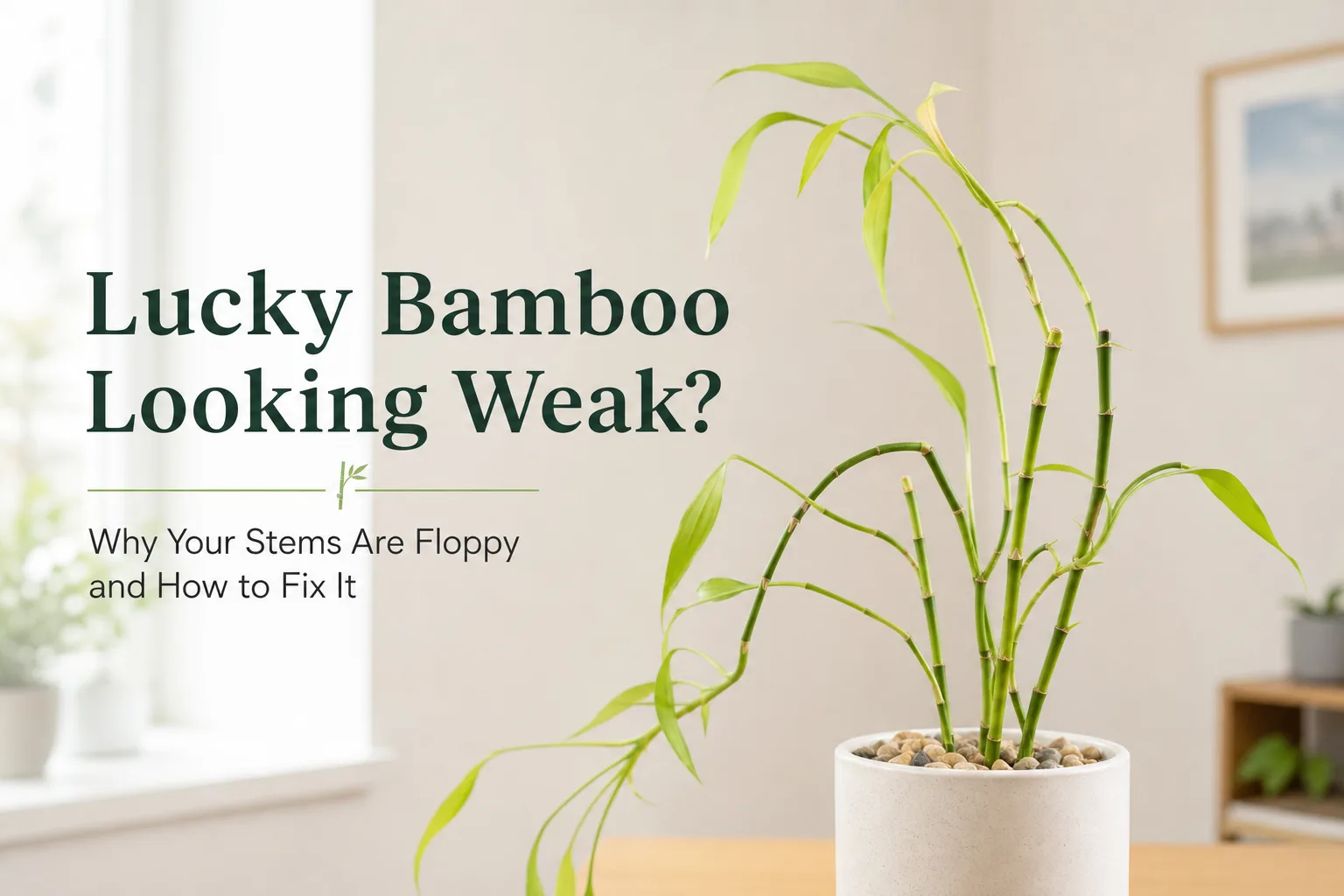
Weak Stems on Lucky Bamboo: Causes, Checks & Fixes
This guide covers weak stems on Lucky Bamboo. See also the general Weak Stems guide, watering, and light pages for this plant.
Weak Stems on Lucky Bamboo: Causes, Checks & Fixes
Quick answer
Weak stems on Lucky Bamboo (Dracaena sanderiana) bend, flop, or feel less rigid at the nodes - often from low light, failing roots, or top-heavy vase culture without support. First step: inspect roots in water or soil, move to bright, indirect light, and stake floppy canes until new growth hardens.
Existing weak cane sections do not regain full rigidity once tissue has stretched thin - only new shoots from firm nodes will feel stiff again. Yellow or soft bases will not stiffen; prune above firm tissue and reroot cuttings as backups.
Unlike healthy slow growth, weak stems cannot hold a braided shape. Overwatering can cause yellowing and rotting of the stems - soft tissue at the base is rot, not simple floppiness. For the full care picture, start with the lucky bamboo overview.
When this page vs. sibling guides
| Your main symptom | Read this page | Read instead |
|---|---|---|
| Canes bend, feel hollow, or cannot hold braid shape | Weak stems (here) | - |
| Leaves hang down but stems still feel firm | Drooping leaves | This page if squeeze test shows structural flop |
| Wet soil or cloudy vase with yellow base leaves | Overwatering | This page after rot is ruled out |
| Long bare internodes, firm thin canes reaching toward light | Leggy growth | This page when stems feel compromised, not just elongated |
| Mushy black stem bases spreading up nodes | Root rot | This page for light or support weakness only |
What weak stems look on Lucky Bamboo
Healthy canes feel firm and springy at every node. Weak stems droop sideways, buckle under leaf weight, or lean out of spiral or heart-shaped training wires without the extreme length of pure leggy stretch.
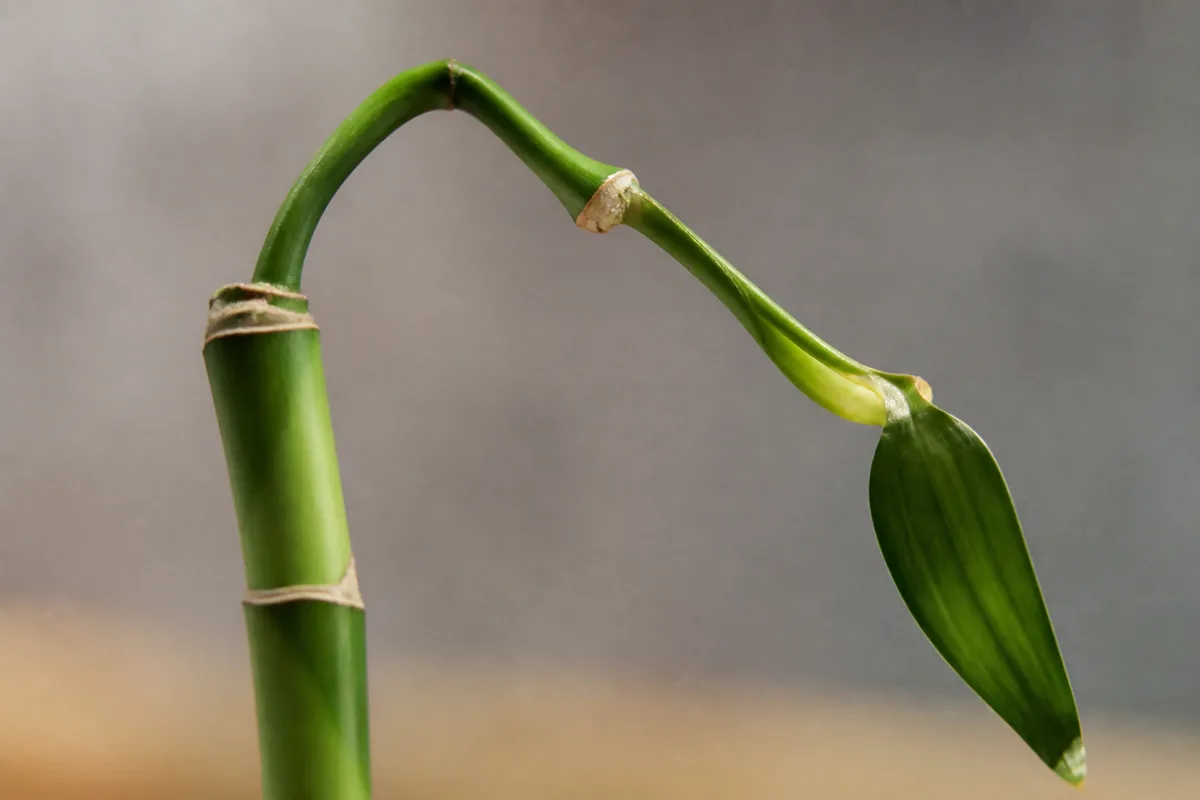
Weak Stems symptoms on Lucky Bamboo - compare with healthy tissue on the same plant.
Braided and vase-culture flop patterns
In water culture, tall single canes in shallow pebble vases often flop when roots are short or rotting - the stem cannot support height. Cloudy water with brown slimy roots confirms weakness from root decline. See the watering guide for weekly change protocol.
In soil culture, weak stems may accompany yellow lower leaves and a heavy, wet pot. Advanced cases show soft green tissue at the soil line - rot climbing the cane; escalate to root rot if bases stay mushy after dry-down.
Braided arrangements look lopsided when outer canes stay firm but inner stems collapse from shade and poor airflow between stalks. Top-heavy spiral forms in narrow vases stress nodes mechanically even when roots are healthy.
Severity ladder
| Level | Stem feel | Roots / water | Urgency |
|---|---|---|---|
| Cosmetic flop | Firm green nodes, cane bends under leaf weight | Firm white roots, clear vase water | Stake + brighter light - not an emergency |
| Root-decline weakness | Nodes less firm, slow lean worsening | Brown tips on roots, water clouds within a week | Full water change or soil dry-down this week |
| Rot-driven collapse | Mushy base, yellow climbing | Slimy roots, sour smell | Root rot protocol same day |
| Braided structural failure | Inner cane soft, outer canes firm | Variable - often dim light plus poor airflow between stalks | Stake inner cane, improve light, rotate arrangement |
Why Lucky Bamboo gets weak stems
Insufficient light is the most common non-rot cause. Lucky Bamboo tolerates lower light with slower growth, but prolonged dim conditions produce thin-walled stems that cannot support foliage. Office desks and interior shelves are frequent triggers - survival in fluorescents is not the same as compact strength. See the light guide for window and grow-light placement.
Root dysfunction weakens stems regardless of light. Stagnant vase water breeds bacteria; change water weekly to keep roots firm. Soil-grown plants in saturated mix lose root mass and cannot anchor tall canes - overlap with overwatering when mix stays wet for days.
Over-fertilization in low light pushes soft, elongated tissue. Fertilize lightly - heavy nitrogen in vase water produces tender stems that bend easily.
Fluoride and chlorine in tap water weaken tissue over time. Dracaena species are easily affected by fluoride, compounding stem fragility when combined with poor light.
Top-heavy forms - tall braided displays in narrow vases - stress nodes mechanically even when roots are healthy.
How to confirm the cause
Work through these checks before changing multiple variables:
- Stem squeeze test - Firm green nodes suggest light or support issues; mushy bases point to rot. Firm nodes with a floppy mid-cane = support or light weakness; mushy base = rot rescue.
- Root inspection - Lift from pebbles or unpot soil plants. White firm roots support stiff stems; brown slime means rot-driven weakness.
- Water clarity - Cloudy vase water within days of changing confirms bacterial stress.
- Light audit - Can you read without a lamp at the plant’s spot? Weak lean without long bare internodes still implicates low vigor - compare to leggy growth if internodes are long and tissue firm.
- Recent changes - New fertilizer, repotting, or a move to a darker room narrows timing.
- Culture type - Water-grown canes flop faster when roots fail; soil plants show wet mix and heavy pots.
Leggy growth alone shows long internodes and active lean toward windows - stems may still feel firm. Weak stems feel structurally compromised without that stretch pattern.
First fix for Lucky Bamboo
Inspect roots, improve light, and support floppy canes.
For vase plants: fully change water, rinse pebbles, trim mushy roots, refill with filtered or distilled water, and add a discreet stake tied loosely at two nodes.
For soil plants: check drainage, let the top inch of soil dry before watering again, and repot into well-drained potting soil if mix stays soggy.
Move the arrangement to bright indirect light and rotate weekly for even strength in braided forms. Acclimate gradually when relocating from a dim corner - abrupt moves to hot south glass can scorch leaves; step closer to the target window over one to two weeks per the light guide.
Grow-light setup for offices and interior rooms
When natural light at the cane tips stays dim - interior shelves, windowless cubicles, or north rooms with no vigor - supplement with a full-spectrum LED fixture 12 to 18 inches (30 to 45 cm) above the tallest cane, run 8 to 10 hours daily on a timer, and cover the whole arrangement so outer braid canes are not left in shadow. Office ceiling fluorescents often keep plants alive but produce thin canes over months; a desk lamp pointed at the arrangement for part of the day helps, but a dedicated grow light gives more even strength on braided forms.
If new leaves stretch toward the bulb or pale, lower the fixture slightly or add an hour. If leaf edges crisp only under the bulb, raise it or reduce hours. Full specs and acclimation steps live on the lucky bamboo light guide.
Staking braided vs. single-cane arrangements
Single canes: One slim bamboo skewer or plant stake alongside the cane, tied loosely at two firm nodes - never pierce tissue.
Braided displays: Support collapsed inner canes first; outer stems that stay firm rarely need stakes. Use soft plant tape or twist ties - tight wire scars green tissue and invites rot. When one inner stem must be removed, rebalance the braid by staking remaining canes until new growth firms up; see pruning for clean cuts above firm nodes.
Step-by-step recovery
- Remove the plant from cloudy water or inspect soil moisture depth.
- Rinse roots; trim all soft brown tissue with sterilized scissors.
- Stake leaning canes with a slim rod or bamboo skewer - avoid piercing nodes.
- Relocate to east-facing or filtered bright light over one to two weeks.
- For vases: clean container, fresh pebbles, filtered water covering roots plus one inch of stem.
- For soil: repot if roots are sparse; water lightly once after repotting.
- Hold fertilizer until new leaf tips emerge firm and upright.
- Prune canes that stay mushy - reroot firm tops in clean water as backups per propagation.
Recovery timeline
Light- and support-related weakness may stiffen within four to six weeks after brighter placement and staking - judge by new growth firmness, not by old bent sections straightening. Root rot recovery takes two to four weeks before new root tips anchor stems.
Canes that turned yellow or soft at the base will not regain rigidity - new roots form in 2 to 3 weeks from healthy cuttings placed in fresh water.
Leave stakes in place until new tissue above the tie feels firm when squeezed - removing support too early lets compact new growth flop again. If stems stay soft or blacken after four to six weeks of corrected light, weekly filtered water changes, and proper staking, contact your local cooperative extension office for hands-on diagnosis.
Case note: gift-store braid on a dim desk
A typical failure path: braided five-stalk arrangement from a gift shop → placed on a dim interior desk → inner cane collapses while outer canes stay green → owner tops off stale vase water without weekly changes. Fix sequence: full water change with filtered water, rinse pebbles, trim any brown root tips, stake the collapsed inner cane at two nodes, move to an east window or add an 8-hour grow light, rotate weekly. Within four to six weeks, new leaf tips on the staked cane often emerge firmer and more upright - the old bent section below the new growth stays thin permanently.
Causes to rule out
- Leggy stretch - Long bare internodes, firm tissue, active lean toward light. See leggy growth.
- Drooping leaves only - Leaves hang but stems feel firm; turgor or humidity issue. See drooping leaves.
- Normal slow growth - Compact nodes, upright habit, deep green leaves.
- Draft stress - Crispy leaf margins from HVAC airflow; stems may still feel firm.
- Mealybugs or scale - Sap loss weakens plants; look for cottony masses or brown shields.
- Cold damage - Brought near cold glass; bring indoors before nights drop below 65°F.
What not to do
Do not add more fertilizer to floppy stems in dim light. Do not keep watering wilting soil plants without checking roots. Avoid oversized vases that let canes sway and snap nodes. Do not bind stakes so tight they scar green tissue. Do not expect old weak internodes to thicken after a light upgrade - only new nodes produce firm tissue.
How to prevent weak stems next time
Keep bright, indirect light year-round per the light guide. Change vase water weekly with low-fluoride water per the watering guide. Stake tall braided forms early before inner canes shade each other.
For soil culture, use pots with open drainage and match watering to light levels. Dracaena sanderiana is much less difficult to maintain in soil when drainage and filtered water stay consistent.
Lucky Bamboo care cross-check
Weak stems often combine two factors - dim light plus declining roots in unchanged vase water. Fixing only one leaves canes floppy. Pair weekly water changes with a brighter location before fertilizing. In soil culture, a dim plant uses less water - letting the top inch dry between waterings prevents the wet-root weakness that mimics light flop. Rotate braided arrangements every week so inner stalks do not spend months in mutual shade.
When to worry
Escalate when stems turn mushy, blacken at nodes, or vase water clouds within 48 hours of changing. Switch to root rot rescue when more than one node softens on the same cane despite corrected water.
Lucky bamboo is toxic to pets - wear gloves when trimming rotted tissue.
Conclusion
Weak Lucky Bamboo stems bend from low light, failing roots, or lack of support in tall vase arrangements. Confirm by squeezing nodes and inspecting root firmness, improve light and water quality, stake floppy canes, and reroot firm cuttings when bases go soft. Remember that old weak tissue does not thicken back - track recovery through firm new shoots, not by waiting for bent canes to straighten on their own.
Related Lucky Bamboo guides
- Lucky bamboo overview
- Lucky bamboo light - windows, office fluorescents, grow-light distance
- Lucky bamboo watering - vase changes and soil dry-down
- Leggy growth - long internodes with firm tissue
- Drooping leaves - leaf turgor without structural flop
- Overwatering - wet roots and cloudy vase water
- Root rot - mushy stem bases
- Propagation - rerooting firm cuttings
- Pruning - removing collapsed inner braid canes