High Humidity on Lucky Bamboo: Causes, Checks & Fixes
Quick answer
Lucky Bamboo usually tolerates high humidity well; problems appear when damp air pairs with poor airflow, stale vase water, or cold drafts. First step: improve air circulation and change vase water weekly before treating humidity as the enemy.
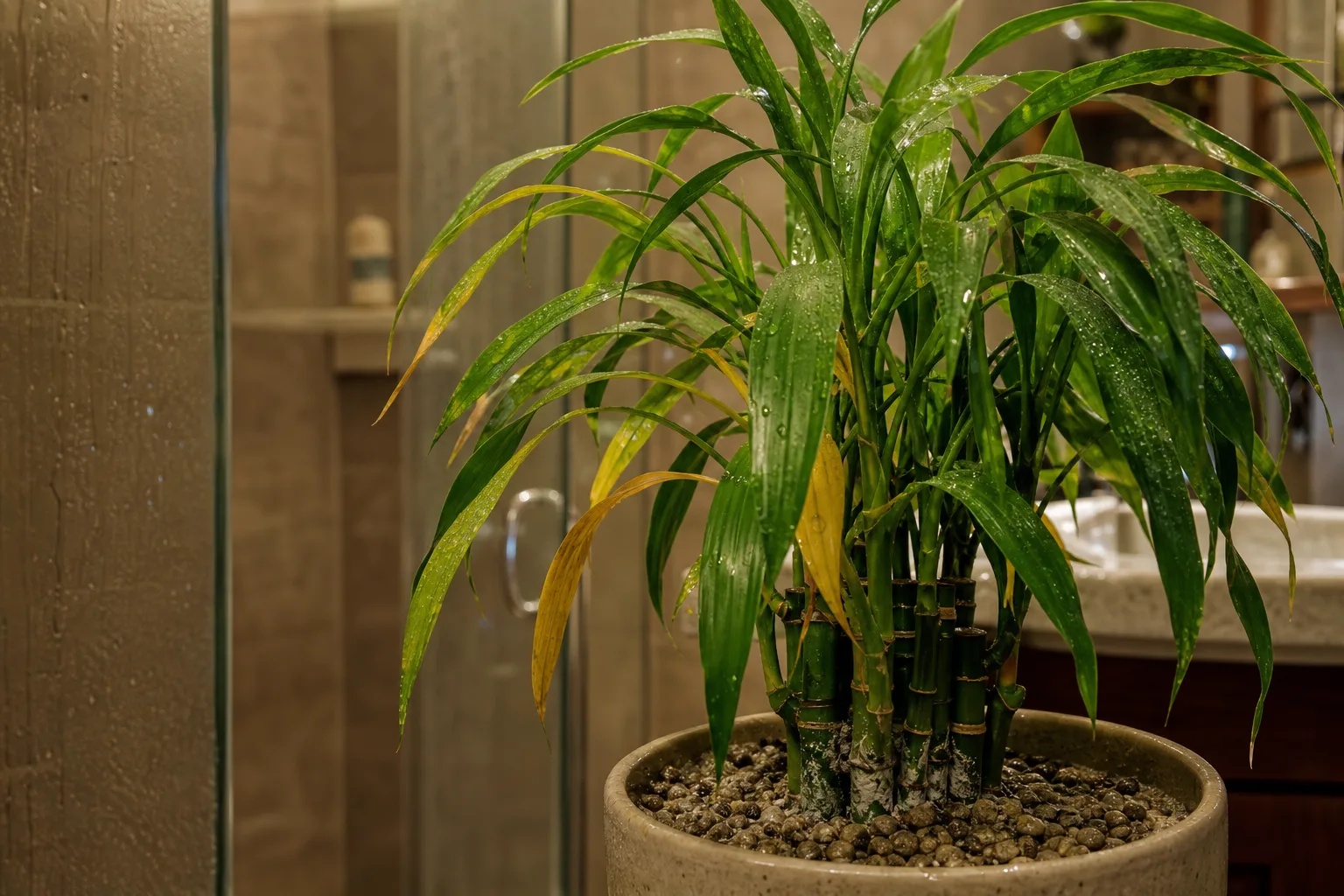
High Humidity on Lucky Bamboo: Causes, Checks & Fixes
This guide covers high humidity on Lucky Bamboo. See also the general High Humidity guide, watering, and light pages for this plant.
High Humidity on Lucky Bamboo: Causes, Checks & Fixes
Quick answer
High humidity on Lucky Bamboo (Dracaena sanderiana) is usually not a problem - this species tolerates typical indoor conditions and often looks better than in bone-dry heated air. Trouble starts when damp air combines with stale vase water, wet leaves, and no airflow. First step: change vase water weekly and improve circulation before lowering humidity.
Unlike ferns that demand constant mist, Lucky Bamboo in water culture already sits in a humid microclimate around submerged roots. Adding steamy bathroom air on top of unchanged water can feed algae and bacteria that show up as fog or cloudiness in the vase. If leaf tips brown without fuzzy spots, check low humidity or brown tips before blaming excess moisture.
What high-humidity stress looks on Lucky Bamboo
When humidity helps
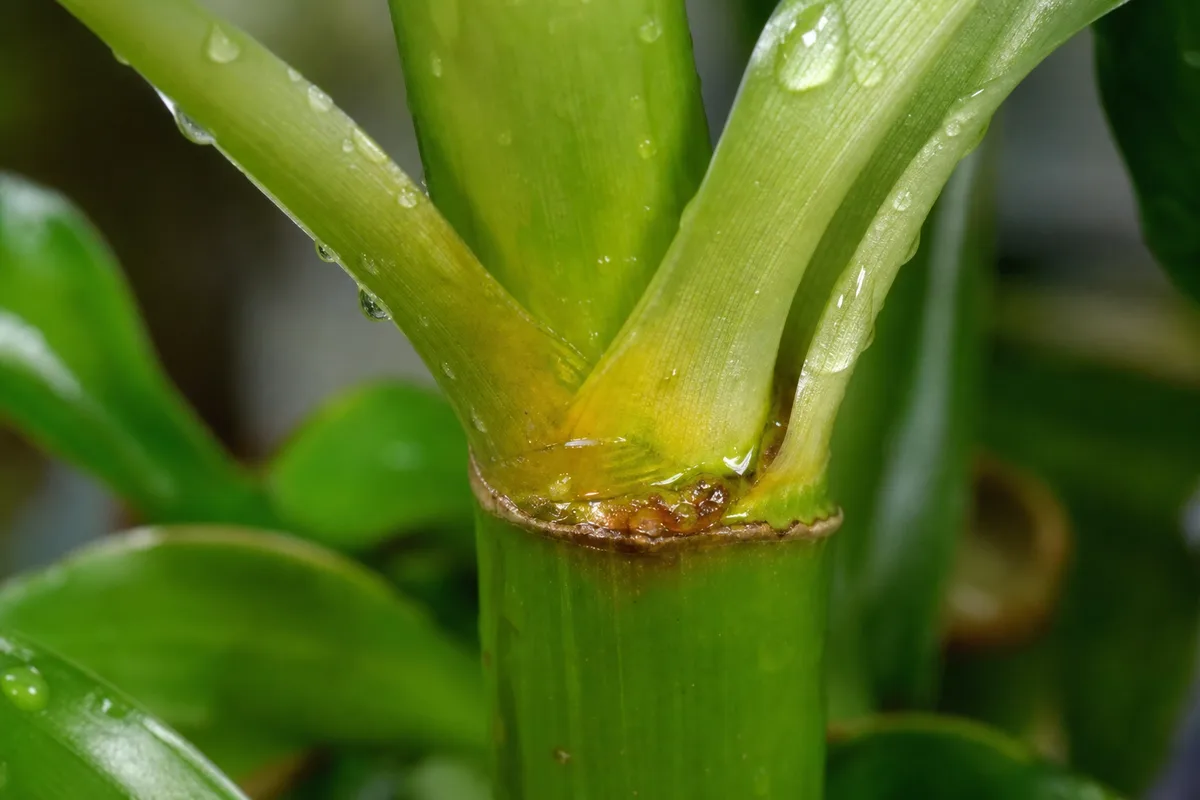
High Humidity symptoms on Lucky Bamboo - compare with healthy tissue on the same plant.
Leaves stay pliable, tips stay green, and canes grow evenly in bright indirect light. Many desk and bathroom displays thrive without extra misting. Relative humidity around 40–60% in a ventilated room is comfortable for this plant and needs no dehumidifier.
When humidity hurts
Soft brown spots on leaves, fuzzy gray or white patches on leaf surfaces, algae on vase pebbles, and sour-smelling water despite a humid room. Stem bases may soften if roots rot in stagnant water while the air stays moist.
Lookalike patterns
Low humidity browns leaf tips - the opposite problem. Fluoride burn also crisps tips in dry rooms; do not confuse with fungal spotting from wet foliage. Overwatering in soil mimics high-humidity soggy-root stress when mix stays wet for days. Advancing root rot shows mushy stem bases regardless of air moisture.
Why Lucky Bamboo reacts to humid conditions
Lucky Bamboo is a slow-growing tropical perennial from moist forest understories. Moderate humidity supports leaf health. The species does not need terrarium-level moisture in most homes.
Problems arise from humidity plus poor hygiene:
- Unchanged vase water in a steamy bathroom breeds bacteria.
- Leaves that stay wet overnight invite fungal spots.
- Closed terrariums or crowded plant shelves trap moisture without drying cycles.
- Soil that stays wet in humid rooms mimics overwatering even when you water lightly.
In dim humid corners, transpiration slows and roots exchange less oxygen in standing water. That extends the window where bacteria bloom in vases - so skipping weekly water changes hurts more in a dark bathroom than on a bright desk.
Braided or tightly grouped canes on crowded humid shelves can trap moisture between stems. Inner canes may develop soft pockets while outer leaves look fine.
Dracaena sanderiana prefers bright indirect light - dim humid corners slow growth and extend the time water stays stale on roots.
How to confirm the cause
- Measure context - Is the room humid but well ventilated, or steamy with no fan? Typical 40–60% RH with airflow is benign; sealed steam zones are not.
- Water hygiene - When was vase water fully changed? Is it cloudy?
- Leaf wetness - Are you misting heavily or splashing leaves when filling vases? Leaves should be dry by morning.
- Stem and root check - Firm white roots and solid canes suggest humidity is fine; mushy bases point to rot.
- Spot pattern - Fuzzy surface growth suggests fungus; uniform tip brown suggests dry air or fluoride instead.
- Culture type - Water-grown plants fail faster in humid stale conditions than soil plants with proper dry-down.
Lookalike comparison table
| Symptom pattern | High humidity + stagnation | Low humidity | Overwatering (soil) | Fluoride tips | Root rot |
|---|---|---|---|---|---|
| Leaf signs | Fuzzy spots, wet patches | Crisp brown tips, firm canes | Yellow droop, wet mix | Even tip burn, clear water | Yellow climb, soft base |
| Vase water | Cloudy, sour smell | Usually clear | N/A or cloudy if vase | Clear | Cloudy, fast return |
| Stem base | Soft if rot advanced | Firm | Soft in wet mix | Firm | Mushy, dark |
| First move | Change water, add airflow | Move from vents, filter water | Stop watering, check drainage | Switch to filtered water | Root rot protocol |
| Read next | This guide | Low humidity | Overwatering | Brown tips | Root rot |
First fix for Lucky Bamboo
Improve airflow and refresh water before trying to dry the room.
Dump vase water, scrub the container, rinse pebbles, and refill with filtered or distilled water. Open a bathroom door or run the exhaust fan for 20–30 minutes after showers until leaves are dry. Stop misting leaves if spots are already fuzzy - wetting spotted tissue spreads spores faster in stagnant humid air.
For soil plants, verify the top inch of soil dries between drinks - humidity should not keep mix soggy.
Mild, moderate, and severe branches
Mild - Firm canes, clear or slightly hazy water, no fuzzy growth: full water change, improve airflow, stop unnecessary misting. Re-check in one week.
Moderate - Fuzzy spots on a few leaves, algae on pebbles, sour smell after seven-plus days without a change: remove spotted leaves with sterilized scissors, scrub container, weekly water changes, keep leaves dry overnight. Trim only tissue that is clearly spotted.
Severe - Stem bases soft, water clouds within 48 hours of a full clean, or spots spread across multiple canes after airflow fix: follow root rot rescue the same day. Humidity triage alone will not save mushy tissue.
Step-by-step recovery
- Fully change vase water or flush soil once with filtered water per the weekly change protocol.
- Remove spotted leaves with clean scissors; sterilize blades between cuts.
- Space plants so air moves between canes - avoid sealed glass domes unless you monitor daily.
- Wipe algae from pebbles and container walls.
- Move the display slightly away from direct shower spray if leaves stay wet for hours.
- Hold fertilizer until new growth looks clean for two weeks.
- Resume quarter-strength feed every other month in water culture only if growth is pale.
If step 4 reveals mushy stem bases, stop here and switch to the root rot guide - do not wait for humidity adjustments to work on rotting tissue.
Recovery timeline
Clean water and better airflow often stop new spotting within one to two weeks. Old damaged leaves remain until trimmed.
Chronic bathroom placement with zero ventilation may need a permanent fan habit or moving the plant to a bright spot outside the direct steam zone. See the light guide if a dim humid corner was slowing recovery.
Causes to rule out
- Low humidity - Crispy tips without spots; common near heaters.
- Fluoride in tap water - Tip burn on multiple leaves; clear vase water.
- Root rot - Cloudy water and soft stems; humidity may be incidental.
- Direct sun - Bleached or scorched patches on the window side.
- Normal leaf drop - Lower leaves yellow and fall in low light; no fungal fuzz.
What not to do
Do not run a dehumidifier aggressively to “save” firm healthy plants in humid rooms. Avoid sealing Lucky Bamboo in closed jars without daily water monitoring. Do not mist heavily when leaf spots are already fuzzy. Do not ignore cloudy vase water because the air feels fine.
How to prevent humidity problems next time
Maintain weekly water changes with filtered water per the watering guide. Keep bright, indirect light and gentle airflow. For bathrooms, run exhaust fans after showers and confirm leaves are dry by morning.
Soil-grown plants need well-drained potting mix so humidity does not lock moisture in the root zone. Grouping with other plants is fine if air can move between pots.
Related Lucky Bamboo guides
- Lucky bamboo overview
- Lucky bamboo watering
- Low humidity
- Overwatering
- Root rot
- Brown tips
- Downy mildew
- Light
When to worry
Escalate if spots spread rapidly, stems soften at the base, or vase water smells rotten within days of changing. Overwatering can cause yellowing and stem rot when humidity keeps soil or vase conditions wet. Lucky bamboo is toxic to cats and dogs - discard heavily molded leaf debris safely, wash hands after handling, and contact a veterinarian promptly if a pet ingests leaves or vase water.
Conclusion
Lucky Bamboo generally enjoys moderate to high humidity; problems come from damp air stacked on unchanged vase water, wet leaves, and poor ventilation. Confirm fungal or rot signs, refresh water, improve airflow, and judge recovery by clean new leaves. If stems stay mushy 48 hours after that reset, use the root-rot guide - not a dehumidifier.