Downy Mildew on Lucky Bamboo: Causes, Checks & Fixes
Quick answer
Most fuzzy growth on Lucky Bamboo is algae, hard water, or mealybugs-not true downy mildew. First step: inspect leaf undersides in bright light, check vase water clarity, improve airflow, keep leaves dry overnight, and fully change vase water before any fungicide.
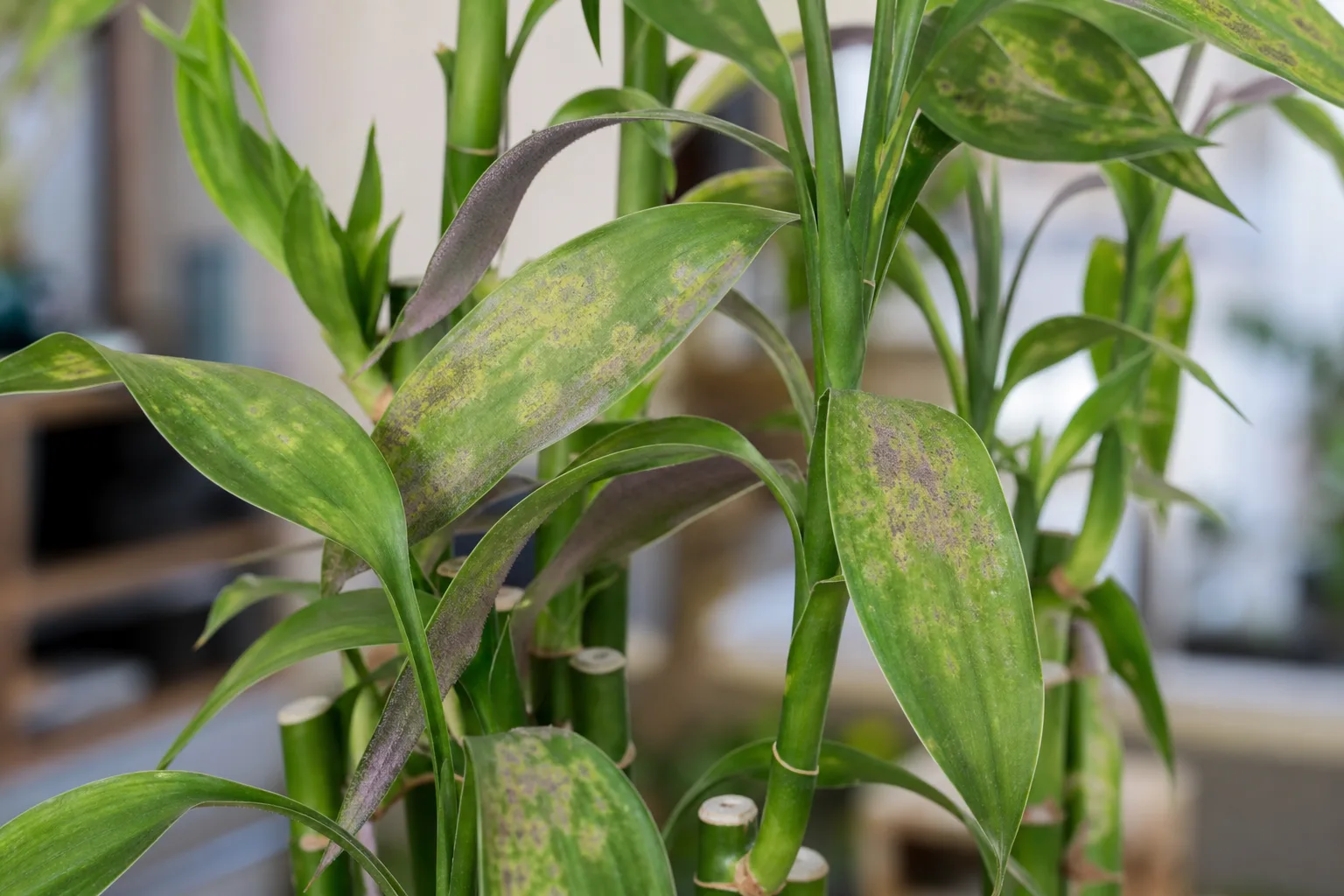
Downy Mildew on Lucky Bamboo: Causes, Checks & Fixes
This guide covers downy mildew on Lucky Bamboo. See also the general Downy Mildew guide, watering, and light pages for this plant.
Downy Mildew on Lucky Bamboo: Causes, Checks & Fixes
Quick answer
Most fuzzy growth on Lucky Bamboo is not downy mildew. Grocery-store vase displays, humidifier mist on strap leaves, and sealed decorative jars create panic-but algae on glass, hard-water crust, and mealybug cotton at nodes account for far more desk-plant scares than true foliar mildew on Dracaena sanderiana.
True downy mildew is uncommon indoors on this species. NC State lists no serious diseases on Lucky Bamboo as a houseplant, which matches how rarely oomycete foliar infections appear in vase or soil culture. When gray-purple fuzz does show on leaf undersides, it almost always follows sustained leaf wetness plus stagnant air.
First step: inspect undersides in good light, check vase water clarity, improve airflow, stop wetting foliage at night, and fully change vase water (or let the soil surface dry) before any fungicide. If spots are angular brown lesions without underside fuzz, see leaf spot disease instead.
Most “mildew” on Lucky Bamboo is something else - start here
Use this routing before you treat chemicals:
| What you see | Where it is | Wipe test | Likely cause | Next page |
|---|---|---|---|---|
| Green or brown film | Vase glass, pebbles, water surface | Wipes off glass; not on leaf tissue | Algae in water | Watering guide - scrub and weekly change |
| White or tan crust | Upper leaf surface after drying | Chalky residue brushes away | Hard water / minerals | Brown tips - switch filtered water |
| White cotton clumps | Cane nodes, leaf sheaths | Red smear when crushed | Mealybugs | Mealybugs |
| Angular brown spots | Leaf blade, often with yellow halo | No velvety fuzz underneath | Leaf spot / anthracnose | Leaf spot disease |
| Gray-purple velvety fuzz | Leaf undersides opposite pale tops | Does not wipe off like dust | Possible downy mildew | Continue below |
Lucky Bamboo is not true bamboo - it is Dracaena sanderiana, a tropical Dracaena that shares rot patterns with corn plant and dragon tree. Fungal worries on desk displays usually trace to unchanged vase water or wet leaves, the same culture mistakes that drive root rot.
What downy mildew looks like on Lucky Bamboo
Downy mildews are oomycete water molds in the Peronospora group. They typically produce gray, purple, or brownish fuzz on leaf undersides, sometimes with yellow or pale patches on the upper surface opposite the sporulation.
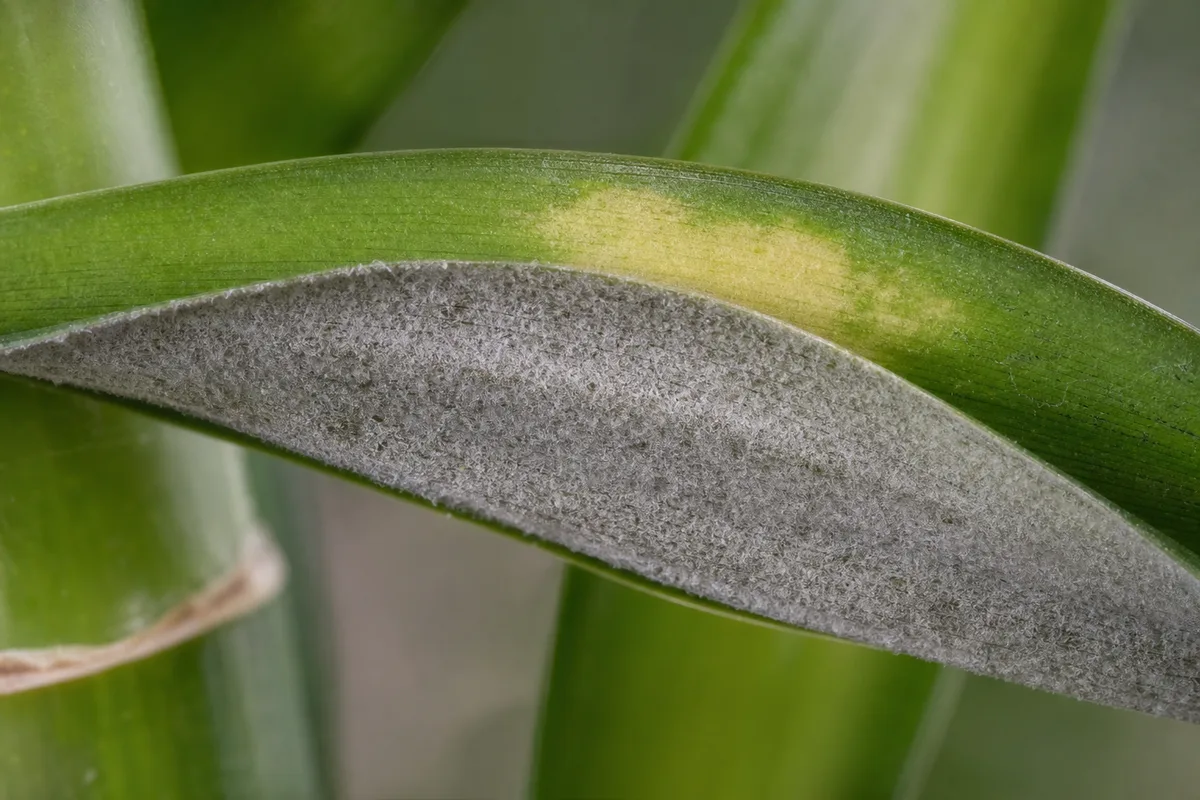
Downy Mildew symptoms on Lucky Bamboo - compare with healthy tissue on the same plant.
On Lucky Bamboo’s strap-like leaves, spots often start at the base of a leaf sheath where moisture collects against the green cane. In morning humidity, fold a suspect leaf and look underneath in bright light - downy mildew shows a mat of fluffy or velvety growth opposite discolored tissue above, matching the classic downy mildew pattern extension services describe for ornamental hosts.
Vase culture: algae vs. foliar mildew
In water culture, algae film on the vase wall or pebbles is frequently mistaken for mildew. Algae stays in the water column and on glass; downy mildew clings to living leaf tissue and spreads along the leaf blade. Cloudy vase water with firm canes points to bacterial stress first - fog in the water is a sign of bacteria - not a leaf-surface mildew issue alone.
Soil culture: overhead splash vs. true infection
In soil culture, overhead watering that splashes mix onto leaves can leave brown speckles that look fungal but wipe off as dried mineral crust. Compare texture: mildew fuzz does not brush away cleanly; mineral deposits often do. Persistent angular lesions without underside fuzz fit leaf spot or anthracnose patterns more often than downy mildew on indoor Dracaena.
Advanced cases show yellowing leaves dropping from infected sheaths while the cane itself stays firm - different from root rot, where the stem base turns soft.
Why Lucky Bamboo rarely gets downy mildew indoors
Downy mildew favors cool, humid nights with wet foliage - more typical of outdoor bedding plants than a warm indoor cane. Lucky Bamboo prefers bright, indirect light and stable room temperatures, which limits the pathogen window indoors.
When problems do appear, contributing factors usually include:
- Misting or humidifier spray hitting leaves that never dry before evening
- Overcrowded braided arrangements in sealed decorative jars blocking airflow between canes
- Cloudy vase water feeding bacteria and algae that weaken leaf tissue
- Overhead watering of soil-grown plants in dim corners where leaves stay damp for hours
- Grocery-store vase setups left unchanged for weeks in stagnant office air
Lucky Bamboo is generally problem free as a houseplant when culture stays clean - fungal leaf issues are the exception, not the norm.
How to confirm the cause
Work through this checklist before treating:
- Location - Is the plant near a humidifier, shower, or closed terrarium lid?
- Leaf wetness - Do leaves stay visibly wet past midday?
- Underside texture - Fuzzy growth that survives a gentle wipe suggests mildew; chalky residue does not.
- Vase clarity - Clear water with firm roots makes advanced mildew less likely; cloudy water points to bacterial stress or rot first.
- Pest check - Monitor for mealybugs, mites, and scale; cottony patches at nodes mimic mildew - route to mealybugs.
- Stem firmness - Soft cane tissue at the water line indicates rot, not a leaf-surface mildew issue alone.
If only the oldest outer leaves show dry brown tips with firm canes, low humidity or water additives are more probable than downy mildew - see also brown tips.
Powdery mildew vs. downy mildew on Lucky Bamboo
These names sound alike but look different on strap leaves:
| Feature | Downy mildew | Powdery mildew |
|---|---|---|
| Growth location | Primarily leaf undersides | Often upper surfaces; can appear on both sides |
| Appearance | Gray, purple, or velvety fuzz | Dry white or gray powder that rubs off like talc |
| Leaf pattern | Yellow or pale blotches opposite underside fuzz | Circular white dusty patches on tops |
| Conditions | Needs prolonged leaf wetness and humid stagnant air | Can spread in drier air with humid nights |
| On indoor Lucky Bamboo | Rare; needs wet-leaf culture mistakes | Uncommon but more plausible than downy on dry desk plants |
Powdery mildew looks like flour dusted on leaf surfaces and rubs off with a finger. Downy mildew shows mats of fluffy growth on undersides with yellowing above. If you see topside dust only on firm canes in a dry office, mineral spotting or old sheath scars are more likely than either mildew type.
First fix for Lucky Bamboo
Improve airflow and keep leaves dry, then refresh the root zone.
Vase plants: scrub, rinse, trim soft roots
Dump all water, scrub the container, rinse pebbles, trim any soft roots, and refill with filtered or distilled water. Submerge roots and at least one inch of stem - do not raise the water level to wet foliage. Follow the full watering guide for weekly change rhythm.
Soil plants: stop overhead watering, remove spotted leaves
Water at the pot edge until the top inch dries between drinks. Remove badly spotted leaves with clean scissors - see pruning for sterile technique at sheath bases.
When (and whether) to use fungicide
Only after culture fixes, consider a labeled houseplant fungicide on remaining foliage - and always test one leaf first. Mild cases often clear without chemicals once leaves stay dry and water stays fresh. Do not spray while vase water is cloudy.
For persistent spotting on otherwise dry, healthy culture, extension guidance for ornamental downy mildew supports removing infected tissue first, then applying protectant fungicides where labels allow. Copper fungicides and neem oil are common home options, but Dracaena sensitivity varies - patch-test one leaf, wait 48 hours, then treat the rest. Systemic products belong only where the label lists Dracaena or generic houseplant foliage. If spots spread despite dry culture and weekly filtered water changes, contact your local Cooperative Extension office with photos before repeated spraying.
Step-by-step recovery
- Move the plant away from humidifier mist and closed glass domes.
- Space braided canes slightly or rotate the arrangement for airflow.
- Remove yellowed or heavily fuzzy leaves at the sheath base.
- Change vase water completely or repot soil plants if mix smells musty - see mold on soil when fungus grows on mix surface.
- Wipe cane nodes with a dry cloth; inspect for mealybugs hiding in sheaths.
- Hold fertilizer until new growth looks clean - stressed tissue burns easily from salts.
- Place in bright, indirect light with a small fan on low several feet away if the room is stagnant.
Recovery timeline
Isolated spots on one or two lower leaves may stop spreading within one to two weeks after leaves stay dry and water is refreshed. New leaf tips should emerge green from the cane apex.
If spotting climbs multiple canes despite dry culture, reassess for rot or pests - mildew alone rarely kills firm Lucky Bamboo quickly. Change vase water weekly throughout recovery to prevent bacterial setbacks.
Causes to rule out
Symptoms overlap with:
- Algae in vase water - Green film on glass, not fuzzy leaf undersides.
- Fluoride or chlorine damage - Brown leaf tips with firm roots; fix water source per brown tips.
- Hard-water spotting - White or tan crust on upper leaf surfaces after evaporation.
- Mealybugs - White cotton at nodes; insects visible under magnification.
- Leaf spot / anthracnose - Angular brown lesions; see leaf spot disease.
- Yellow leaves from culture stress - Widespread yellowing without underside fuzz; see yellow leaves.
- Normal leaf sheath scars - Brown patches where old leaves detached; static, not spreading.
What not to do
Do not mist Lucky Bamboo to “wash off” mildew - wet leaves worsen the environment. Do not seal plants in jars without airflow. Avoid tap water if fluoride has yellowed leaves before. Do not drench with fungicide while vase water is cloudy - fix bacterial stress first. Do not remove all foliage from a stressed cane; keep some green tissue for photosynthesis.
How to prevent downy mildew next time
Keep leaves dry overnight. Change vase water weekly and rinse pebbles monthly - details in the watering guide. For soil culture, water when the top inch is dry and empty saucers completely.
Match humidity strategies to roots, not constant leaf spraying. Lucky Bamboo grows in evenly moist soil or clean water - leaf surfaces should not stay wet for hours. Open sealed decorative displays overnight or drill ventilation if you keep braided arrangements in glass.
When to worry - pet safety during pruning
Escalate if cane bases soften, vase water clouds within 48 hours of changing, or more than one-third of leaves yellow in a week. Lucky bamboo is toxic to pets - bag and discard heavily infected trimmings away from curious cats and dogs.
Related Lucky Bamboo problems
- Lucky Bamboo overview - species basics and care hub
- Watering - weekly vase changes and soil moisture checks
- Mealybugs - white cotton at nodes (top misidentification)
- Root rot - soft stems and cloudy vase water
- Yellow leaves - widespread yellowing without underside fuzz
- Leaf spot disease - angular brown lesions on blades
- Brown tips - fluoride and hard-water damage
- Mold on soil - fungus on potting mix surface
- Black spots - dark speckling from other stressors
- Pruning - clean removal of infected sheath leaves
Most fuzzy desk-plant scares resolve after routing through this table - not after fungicide. True downy mildew on indoor Lucky Bamboo is rare; honest culture correction is the fix that works.
When to use this page vs other Lucky Bamboo guides
- Lucky Bamboo watering guide - Use for routine moisture checks before assuming downy mildew is the main issue.
- Lucky Bamboo problems hub - Browse all 41 common issues on this species.