Leaf Spot Disease on Lucky Bamboo: Causes, Checks & Fixes
Quick answer
Leaf spot on Lucky Bamboo usually follows splashed stagnant vase water or wet foliage-not every brown mark is disease. First step: stop wetting leaves, fully change vase water or water soil at the base only, and remove spotted leaves with clean scissors.
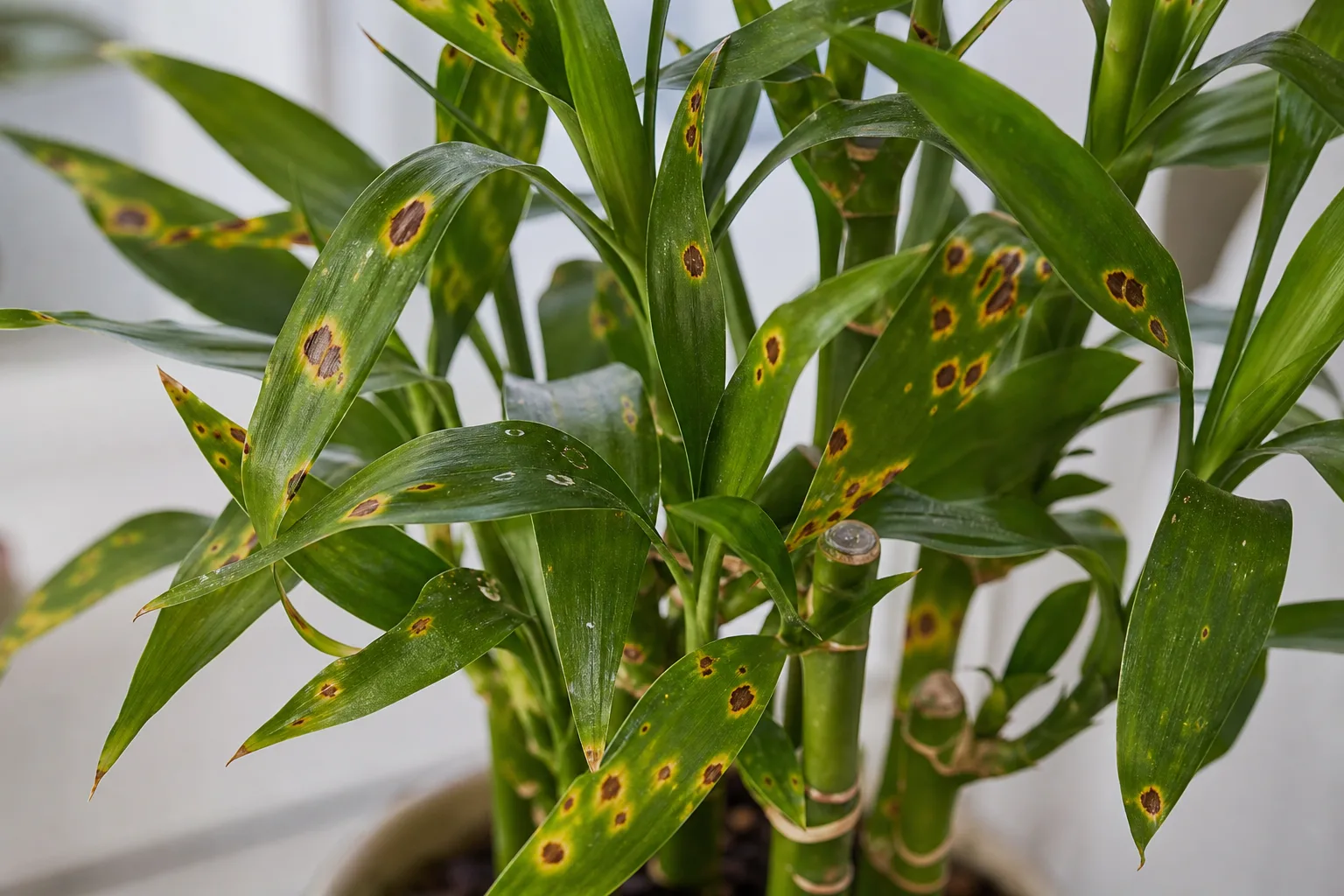
Leaf Spot Disease on Lucky Bamboo: Causes, Checks & Fixes
This guide covers leaf spot disease on Lucky Bamboo. See also the general Leaf Spot Disease guide, watering, and light pages for this plant.
Leaf Spot Disease on Lucky Bamboo: Causes, Checks & Fixes
Quick answer
Leaf spot disease on Lucky Bamboo (Dracaena sanderiana) in home settings usually means fungal or bacterial lesions on leaves after wet foliage, splashing, or poor vase hygiene - not every brown mark is a disease. If you are unsure whether a mark is fungal, chemical, or physical, start with the black spots triage guide for umbrella checks, then return here for round-lesion deep diagnosis.
First step: stop wetting leaves, fully change vase water per the watering guide or water soil at the base only, and remove the worst spotted leaves with sterilized scissors.
Lucky Bamboo leaves stay vulnerable when water sits unchanged and bacteria multiply. Splashed stagnant water on foliage creates entry points for spot pathogens. Overwatering in soil keeps lower leaves wet longer and worsens spotting on crowded canes.
Most common mistake: Uniform brown at leaf tips on many canes with clear water and firm stems is almost always fluoride or salt burn - not fungal leaf spot. Round lesions with yellow halos on scattered leaves after splashing point here instead.
What leaf spot looks on Lucky Bamboo
Water culture patterns
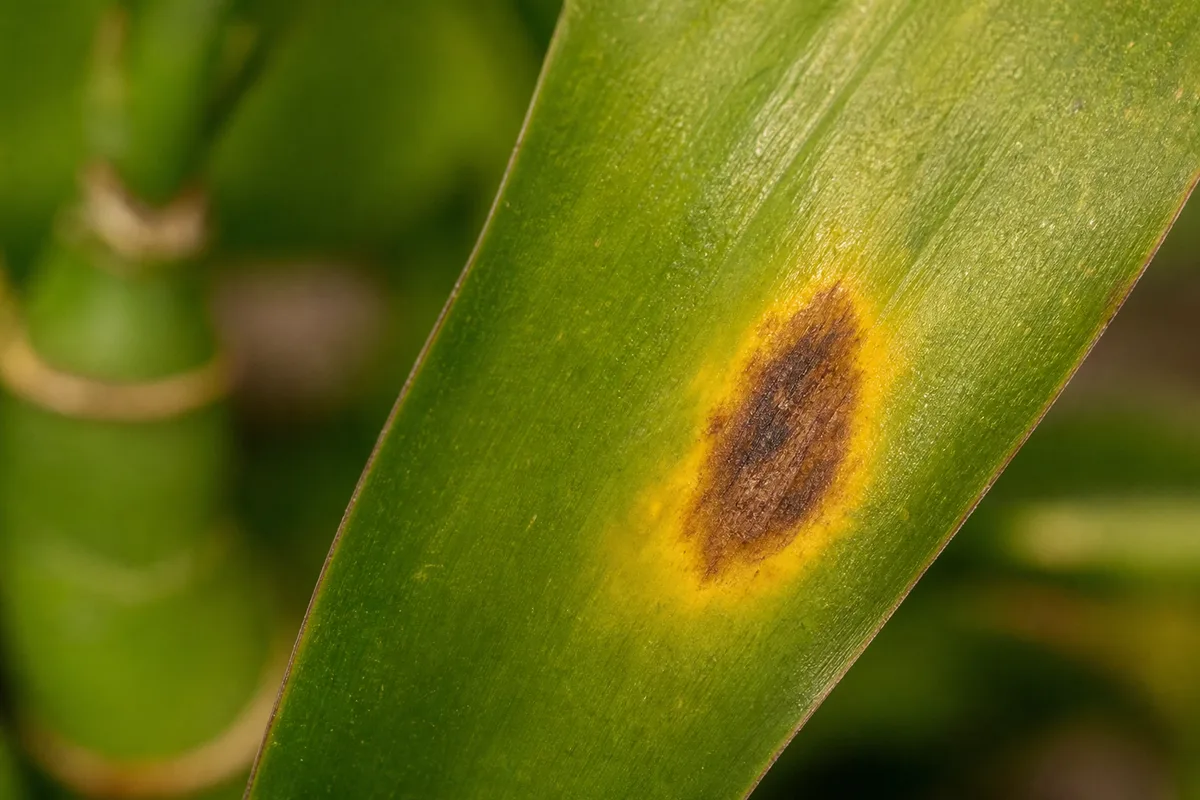
Leaf Spot Disease symptoms on Lucky Bamboo - compare with healthy tissue on the same plant.
On water-culture plants, spots appear as tan to dark brown circles on strap-like leaves, sometimes with a yellow ring. They often start on lower leaves that caught splashed vase water or condensation. Advanced cases show multiple spots per leaf; severely spotted blades should be removed.
Soil culture patterns
In soil culture, spotting may cluster on leaves near the soil line after overhead watering or saucer splash-back. Fungal leaf spots on houseplants often begin as tan to reddish brown roughly circular lesions that can enlarge and merge on lower foliage.
Braided-display inner-leaf spotting
Braided canes with tight foliage hold moisture between leaves, so inner leaves spot while outer ones stay clean. That pattern is a strong clue that trapped wetness - not a mysterious airborne plague - is driving infection. Outer blades dry faster; sheltered inner tissue stays damp for hours after misting or splashing.
Distinguish from fluoride tip burn - uniform brown at tips without round lesions - and from mechanical scrapes - irregular tan patches where leaves rubbed against pebbles or ties.
Why Lucky Bamboo gets leaf spot
High humidity with wet leaf surfaces favors fungal spots. Lucky Bamboo tolerates average indoor humidity but does best in bright, indirect light with good air movement. Stagnant air in bathrooms or crowded shelves lets leaf wetness linger - the same conditions extension guides cite for indoor leaf spot outbreaks.
Vase culture risks are specific. Organic debris in unchanged water feeds microbes; splashing during top-ups spreads them onto leaves. Change the water weekly and rinse pebbles to cut the bacterial load that accompanies many leaf spot outbreaks.
Soil-grown plants spot when mix stays saturated. Easily grown in evenly moist soil does not mean constantly wet foliage - water the root zone, not the leaves. Overhead spritzing is a common trigger on Dracaena leaves.
On commercial crops, anthracnose from Colletotrichum dracaenophilum is a documented pathogen on lucky bamboo - dark sunken lesions that can spread with splash and wet foliage. Home diagnosis rarely needs lab ID; hygiene and dry leaves are the first-line fix for both fungal and bacterial leaf spot on Dracaena.
Cool winter rooms slow evaporation. A bathroom vase or dim desk in January keeps leaves wet longer than the same setup in summer - extend dry-foliage discipline and keep weekly vase changes even when transpiration drops.
How to confirm the cause
Confirm in this order:
- Spot shape - Round lesions with margins suggest disease; tip-only brown suggests fluoride or salt - see brown tips.
- Leaf wetness habit - Recent misting, splashing, or fogged glass nearby supports spot disease.
- Water clarity - Cloudy vase water plus spotting points to hygiene failure, not a mysterious pathogen.
- Spread pattern - New spots on higher leaves after splashing confirm splash spread; tip burn on all leaves suggests tap water chemistry.
- Stem and root check - Soft stems or slimy roots mean rot overlap - treat with the root rot guide first.
- Pest check - Scale leaves sticky residue that can host sooty mold mimicking spots; scrape test for bumps.
Lookalike comparison table
| Symptom pattern | Fungal leaf spot | Fluoride tips | Sheath scars | Scale soot | Sun scorch |
|---|---|---|---|---|---|
| Location | Scattered round lesions, often lower leaves | Even tips on many leaves | Static patch at old detach site | Sticky residue, bumps | Window-facing side only |
| Halo | Yellow ring common | No halo | No spread | Dark flecks on residue | Dry crisp edge |
| Spread | New spots after splash | Slow tip creep | Never changes | Soot follows pests | Static after exposure |
| Urgency | Low if isolated; moderate if spreading | Low | None | Medium | Low to medium |
| First move | Dry leaves, change water | Filtered water | None needed | Scrape scale | Move from direct sun |
| Read next | This guide | Brown tips | - | Black spots | Light |
Whether lesions are fungal or bacterial rarely changes the first home treatment on Lucky Bamboo - remove spotted tissue, keep leaves dry, and fix water hygiene. Bacterial spots may look water-soaked or angular between veins; fungal spots tend toward round tan lesions. Both respond to the same moisture correction before any spray product.
First fix for Lucky Bamboo
Keep leaves dry and refresh the water or soil environment - change all vase water, rinse pebbles, and trim heavily spotted leaves.
For vase plants: dump water, gently rinse roots and container, sterilize scissors, remove leaves with more than one-third spot coverage, and refill with filtered or distilled water. Submerge roots and one inch of stem only - do not splash leaves when refilling.
For soil plants: switch to base watering, let the top inch of soil dry between drinks, and remove the worst affected leaves. Improve airflow around braided displays.
Do not spray generic fungicide as the first move on a water-stressed Dracaena - fix moisture and hygiene first. Registered fungicides exist for houseplants, but removal of infected leaves and drier conditions usually suffice indoors.
Mild, moderate, and severe branches
Mild - A few round spots on lower old leaves after one splash, clear vase water, firm canes: stop misting, one full vase change with rinsed pebbles, or switch soil plants to base watering. Remove only leaves with heavy spot coverage. Re-check in one week.
Moderate - Spots on multiple leaves, slightly hazy vase water, or inner braided leaves spotting while outer ones stay clean: remove all leaves beyond one-third damage, sterilize scissors between cuts, fully refresh water or dry soil top inch, and space plants for airflow. Hold fertilizer two weeks.
Severe - Spots on every new leaf despite dry foliage, stems softening at the base, or vase water clouds within 48 hours of a full clean: follow the root rot guide the same day. Leaf spot hygiene alone cannot save rotting cane tissue.
When to escalate to root-rot protocol
Escalate when mushy stems persist 48 hours after a full water change and root trim, when yellowing spreads up canes despite dry foliage, or when cloudy water returns within two days of a clean refill. Early leaf spot triage on this page is not enough once stem tissue rots.
Step-by-step recovery
- Move the plant to bright indirect light with space between neighbors for airflow.
- Remove spotted leaves beyond one-third damage; bag and discard - do not compost indoors.
- Sterilize scissors with rubbing alcohol between cuts.
- Fully change vase water or repot soil plants if mix smells musty. If step 4 reveals mostly mushy roots and soft stem bases, stop here and switch to root rot rescue.
- Rinse pebbles and container; avoid decorative rocks with sharp edges that wound leaves.
- Hold fertilizer for two weeks while new growth appears.
- Monitor new leaves weekly; clean leaves mean the fix worked.
Recovery timeline
Hygiene corrections often halt new spots within one to two weeks. Existing lesions stay visible until leaves are removed or age out. Expect clean new foliage in three to four weeks on actively growing canes in good light.
Spotted leaf tissue does not revert to green. Judge recovery by absence of new spots on emerging leaves, not by old blemishes fading.
Causes to rule out
Leaf spot lookalikes on Lucky Bamboo include:
- Fluoride or salt burn - Dracaena species are easily affected by fluoride; tips brown symmetrically without round spots. See brown tips.
- Old leaf sheath scars - Brown patches where leaves detached are permanent and static.
- Sun scorch - Bleached or crispy patches on the window side only.
- Root rot decline - Yellowing and spotting spread with mushy roots and cloudy water. See root rot.
- Normal variegation - Some cultivars show natural streaking without yellow halos or spreading lesions.
- Overwatering without discrete spots - Yellow lower leaves and soggy mix without round lesions; see overwatering.
What not to do
Do not mist Lucky Bamboo leaves to “raise humidity” - that worsens spotting. Do not top up cloudy vase water. Avoid overhead watering on soil plants. Do not apply heavy fertilizer on spotted, stressed foliage. Do not leave fallen wet leaves decaying in the vase. Do not reach for fungicide before confirming round lesions are not fluoride tip burn.
How to prevent leaf spot next time
Change vase water weekly with chlorine-free, low-fluoride water - a full change beats topping off stale liquid. Rinse pebbles monthly. Water soil at the base when the top inch dries and empty saucers.
Keep plants in bright indirect light with gentle fan-level airflow in humid rooms. Handle braided ties carefully so wires do not scrape leaves and create wound entry points.
For the full weekly vase protocol and soil dry-down rhythm, use the watering guide. Consider soil culture if vase maintenance is unsustainable - easier to maintain in soil with proper drainage than a neglected vase.
Related Lucky Bamboo guides
This page is the fungal leaf-spot deep dive for round lesions and splash spread. Use sibling guides when symptoms overlap:
- Lucky bamboo overview - dual culture context and desk-plant basics
- Lucky bamboo watering - weekly change protocol and soil dry-down
- Black spots - umbrella triage for any dark marking on leaves or stems
- Brown tips - fluoride and salt burn lookalike
- Root rot - stem softening and advanced cane decline
- Overwatering - soggy mix and stale vase water without discrete round spots
- Yellow leaves - yellowing patterns that are not spot lesions
When to worry
Escalate if spots spread to every new leaf despite dry foliage, stems soften, or vase water clouds within 48 hours of changing - use the root rot guide that day. Lucky bamboo is toxic to cats and dogs - discard trimmed spotted leaves safely if pets access plant debris, and contact a veterinarian promptly if a pet ingests leaves or vase water.
Conclusion
Leaf spot on Lucky Bamboo is usually a hygiene and wet-leaf problem, not an unstoppable infection. Confirm round lesions after splashing or stagnant water, dry the foliage, refresh vase water or soil moisture practices, and remove damaged leaves. If stems stay mushy 48 hours after that reset, escalate to root-rot rescue - not another misting session.