Draft Stress on Lucky Bamboo: Causes, Checks & Fixes
Quick answer
Draft stress on Lucky Bamboo shows as sudden one-sided leaf curl, brown tips, or cane droop near vents and cold glass. First step: dip a finger in the vase - if water feels cold, fully change it with room-temperature filtered water, then move the plant at least three feet from AC, heaters, and drafty doors.
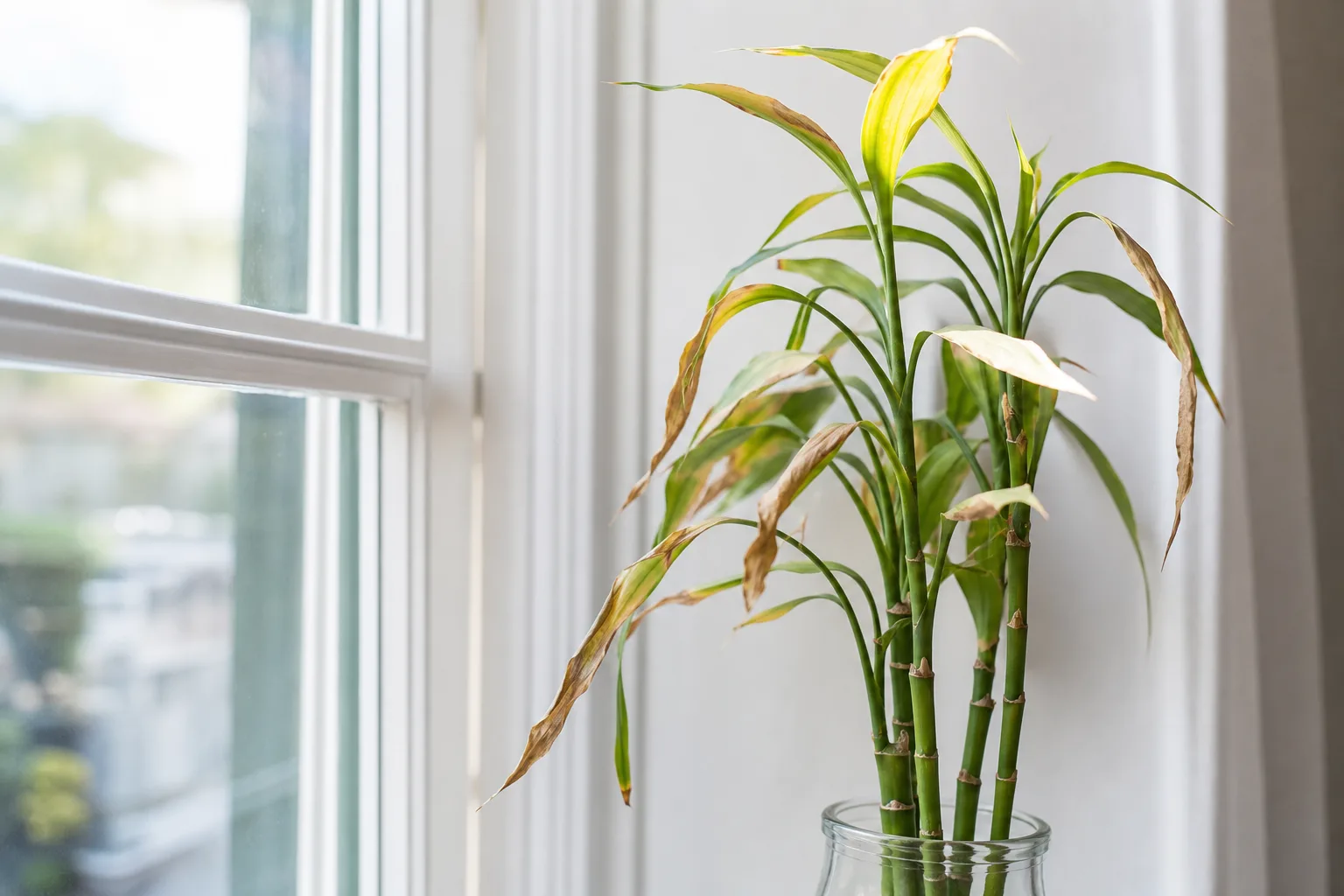
Draft Stress on Lucky Bamboo: Causes, Checks & Fixes
This guide covers draft stress on Lucky Bamboo. See also the general Draft Stress guide, watering, and light pages for this plant.
Draft Stress on Lucky Bamboo: Causes, Checks & Fixes
Quick answer
Draft stress on Lucky Bamboo (Dracaena sanderiana) comes from cold or dry air hitting leaves and vase water - not from normal indoor humidity swings alone. Before trimming leaves, dip a finger in the vase: if water feels cold, that is your first fix - fully change it with room-temperature filtered water, then move the plant at least three feet from AC vents, heaters, and drafty windows.
This page covers ongoing airflow and chilled refill injury. If every cane yellowed after one known cold night below 65°F - porch, car, or frost snap - start with the cold damage guide instead.
Tropical understory plants like Lucky Bamboo expect stable warmth. Bring plants indoors before nighttime temperatures drop below 65°F when grown outdoors in summer; the same sensitivity applies to winter window sills and HVAC blasts indoors.
Draft stress vs. cold damage on Lucky Bamboo
These two guides overlap because both involve chill - but the trigger and pattern differ:
| Situation | Typical trigger | Damage pattern | Start here |
|---|---|---|---|
| Draft stress | AC vent stream, opened entry door, cold tap refill, refrigerator exhaust, dry forced-air heat | One-sided brown margins on leaves facing the airflow; vase water chills while leaves still look fine at first | This page |
| Cold damage | Single event below ~65°F - porch night, delivery box, car, outdoor forget | Uniform yellowing on all exposed canes after the chill; limp canes that recover when warmed if stems stay firm | Cold damage |
| Low humidity / fluoride | Dry winter air plus untreated tap water | Symmetrical tip browning on many leaves, not one vent-facing side | Low humidity or brown tips |
Draft stress can mimic cold damage when a grocery-store vase sits on a winter windowsill every night - the repeated chill acts like a slow draft, not one freeze. Route by whether damage tracks airflow direction (draft) or a dated cold event (cold damage).
What draft stress looks like on Lucky Bamboo
Draft damage often appears suddenly on the side of the plant facing the air source:
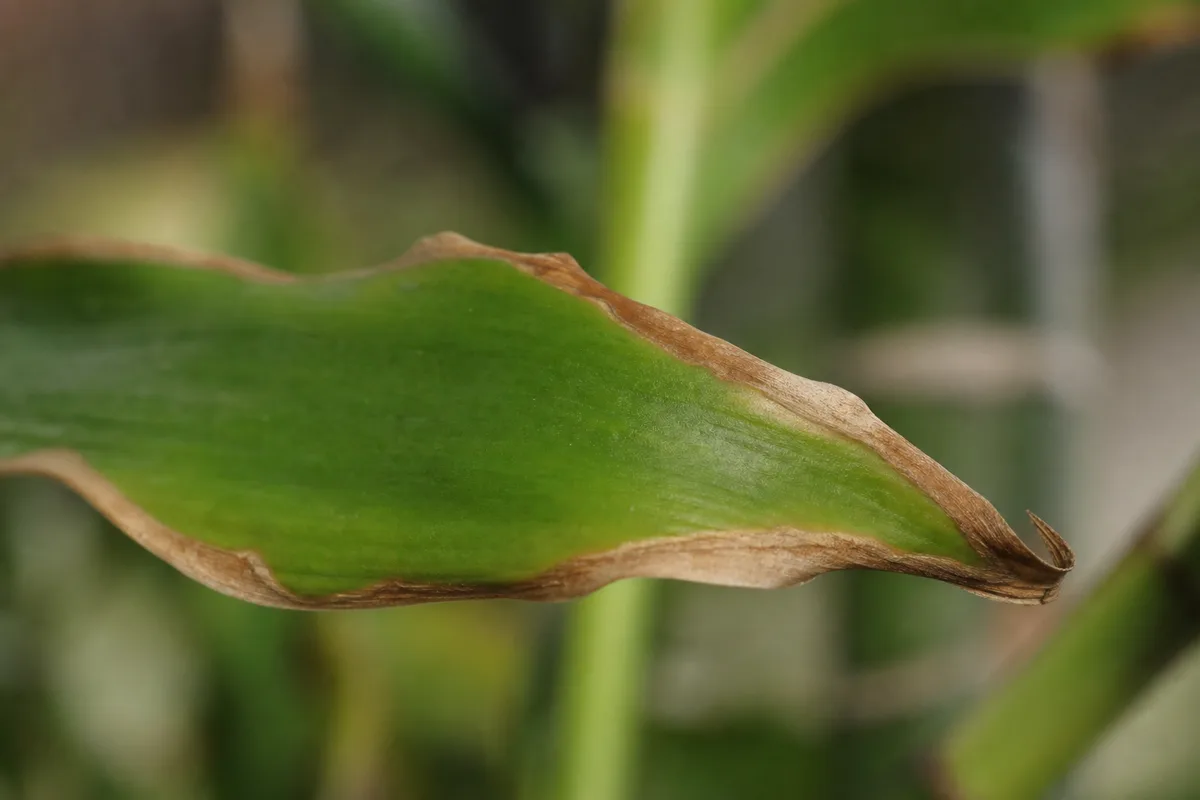
Draft Stress symptoms on Lucky Bamboo - compare with healthy tissue on the same plant.
- Brown or tan leaf margins that develop within days, not weeks
- Curling or drooping strap leaves while the green cane still feels solid
- Yellowing of newest leaves after nights near cold glass
- Uneven damage - one cane in a braid looks worse because it catches the vent stream
In water culture, cold drafts chill the vase quickly. Roots in water have no soil insulation, so using icy water can shock roots and cause stress even when leaves look fine at first. On a desk setup with pebbles, the side of the vase nearest the vent cools first - inner canes in a tight braid may stay warmer while the outer cane browns.
In soil culture, a drafty windowsill cools the pot surface. The top inch dries fast while deeper mix stays damp, confusing owners into overwatering the already stressed plant - see overwatering if yellow lower leaves pair with a heavy wet pot.
Why Lucky Bamboo is draft-sensitive
Lucky Bamboo is not true bamboo - it is a Dracaena species native to tropical West African rain forest understory, where temperatures stay moderate and air moves gently. NC State notes bright but indirect light indoors all year; cold glass beside a cane violates that stable environment.
Vase water chills faster than soil
Water conducts temperature changes faster than potting mix. A vase on a metal desk plate beside an AC register can drop several degrees within an hour while the thermostat still reads 72°F. That is why touching vase water beats guessing from room temperature alone.
Common draft triggers
- Central AC or heat vents blowing across a desk arrangement
- Frequently opened exterior doors in entryways and kitchens
- Single-pane winter windows radiating cold onto vase water
- Refrigerator or freezer exhaust warming then chilling nearby air on shared kitchen counters
- Cold tap water poured straight into a vase on a winter morning - mimics draft injury even after you move the plant
- Office microclimates - monitor heat on one side of the braid, AC draft on the other
Dracaena species are sensitive to fluoride and temperature stress in water culture, so draft plus poor water quality compounds leaf tip burn - a common winter stack when owners open windows for air and use untreated tap water.
How to confirm the cause
Confirm in this order:
- Water temperature - Dip a finger in the vase. Cold water after a morning refill strongly supports draft-style root chill even if the plant already moved away from the vent.
- Air source - Stand where the plant sits; can you feel vent air on your hand?
- Timing - Did browning follow a new AC season, desk move, or habit of topping off with cold tap?
- Pattern - Is damage one-sided toward the vent or glass?
- Root check - Firm white roots and clear water suggest draft, not rot. Cloudy water means route to root rot.
- Stem base - Soft tissue at nodes means rot or cold injury advanced beyond leaf tips.
Symptom lookalike table
| Symptom | Draft stress | Cold damage | Low humidity / fluoride |
|---|---|---|---|
| Leaf pattern | One side toward vent or window | All exposed leaves after chill event | Even tips on many leaves |
| Vase water | Feels cold; may look clear | Often chilled overnight on sill | Neutral temperature |
| Timing | Gradual with HVAC or refill habit | Sudden after known cold night | Builds over dry winter weeks |
| Canes | Usually firm | May limp then firm when warm | Firm |
| Guide | This page | Cold damage | Low humidity |
Low humidity browning is usually symmetrical on leaf tips in dry winter rooms, not localized to one side. Low humidity can cause browning of the leaf tips without the sudden one-sided pattern of drafts.
First fix for Lucky Bamboo
If vase water feels cold: fully dump, rinse pebbles, and refill with room-temperature filtered water - do not top off with a cold splash. Chilled water shocks submerged roots faster than a brief breeze on leaves alone.
Then relocate at least three feet from moving air. Move the vase or pot to a spot with bright, indirect light - east- or north-facing rooms work well - away from vents and exterior doors. Review light placement if the new spot is dimmer than the drafty windowsill.
For soil plants: avoid watering with cold water; wait until the top inch of soil is dry before the next drink so you do not add chill to an already stressed root zone.
Step-by-step recovery
- Chilled-vase rescue - Pour out all water, rinse pebbles and vase, trim only mushy roots, refill with room-temperature filtered or distilled water to the correct depth - roots plus one inch of stem submerged.
- Move the arrangement to stable room temperature away from drafts.
- Trim only fully brown leaf sections; leave partial green tissue intact.
- For soil plants, hold watering until the surface dries unless leaves are severely limp.
- Rotate braided canes weekly so each stem gets even light, not uneven cold exposure.
- Hold fertilizer until new tips emerge green - salts stress recovering tissue.
- If summering outdoors, plan to bring indoors before nights below 65°F.
- If stems soften despite firm roots after chill, see propagation for cane salvage above healthy nodes.
Follow the weekly watering rhythm after recovery - room-temperature filtered changes prevent repeat chill.
Recovery timeline
Localized brown tips on firm canes often stop worsening within days of relocation and a full warm water change. New leaf sheaths may look clean in two to four weeks.
Severe cold shock with soft stem tissue at the water line may not fully recover - propagate firm cane sections above healthy nodes into fresh water. New roots usually form within 2 to 3 weeks from healthy cuttings per the propagation guide.
Causes to rule out
Draft symptoms overlap with:
- Fluoride or chlorine burn - Even tip browning on all leaves; test water source on brown tips.
- Direct sun scorch - Bleached or crispy patches after moving to a sunny sill; see light guide.
- underwatering on Lucky Bamboo - Dry pebbles, light pot, wrinkled canes with firm roots.
- Spider mites - Fine webbing and stippling, often worsened by dry forced-air heat.
- Wilting from rot - Whole-cane collapse with sour water; see wilting and root rot.
- Normal old-leaf drop - Lower sheaths brown and detach slowly, not overnight.
What not to do
Do not blast recovering plants with a fan inches away - gentle room air is enough. Do not refill vases with cold tap water straight from the pipe or top off cold water onto warm water. Avoid moving between a hot radiator and a cold window repeatedly. Do not fertilize stressed plants. Do not repot and relocate on the same day - pick one stressor to remove first.
How to prevent draft stress next time
Site Lucky Bamboo in bright, indirect light away from HVAC registers. Use pebble trays or humidifiers beside the plant, not blowing directly on leaves - dry AC air plus draft doubles tip burn risk; see low humidity when tips brown evenly.
For water culture, change water weekly with room-temperature filtered water stored indoors. For soil, choose well-drained potting mix in a stable indoor location per the soil guide rather than a drafty ledge.
Desk checklist: vent distance ≥3 feet, vase water room-temperature at refill, one-sided damage mapped to airflow direction, weekly full change not cold top-off.
FAQs
Is draft stress the same as cold damage on Lucky Bamboo?
No. Draft stress tracks ongoing airflow or repeated cold refills - brown margins on the vent-facing side while canes stay firm. Cold damage follows a single sub-65°F event that often yellows every exposed leaf at once. Use this page when HVAC, doors, or cold tap habits explain the pattern; switch to cold damage after a porch night, car ride, or outdoor freeze.
Should I warm vase water before refilling near a window?
Always. Dracaena in water culture reacts to temperature and fluoride - cold tap straight from the pipe chills roots even after you move the vase off the sill. Let water sit overnight indoors or use filtered water at room temperature. If the vase feels cold now, full change - topping off leaves warm water sitting over a cold bottom layer.
Can braided Lucky Bamboo recover uneven draft damage?
Yes, when outer canes browned but nodes stay firm. Rotate the braid weekly so each stem escapes the vent stream, change water at room temperature, and trim only fully dead leaf tissue. The inner cane may look fine while one outer strap leaf browns - that asymmetry is classic draft stress, not necessarily rot.
When is draft damage urgent on Lucky Bamboo?
Urgent when stems soften within 24 hours of ice-cold refill or when vase water clouds and smells sour - pair with root rot rescue. One-sided brown tips on firm canes after moving off a vent allow gradual recovery without same-day trimming.
How do I prevent draft stress on a shared office desk?
Keep the vase at least three feet from AC vents and away from frequently opened doors. Store refill water indoors so it is not cold from the tap. If one side of the braid faces a monitor and the other catches AC, rotate weekly and consider a low deflector on the vent so air disperses before it hits leaves.
Related Lucky Bamboo problems
- Cold damage - acute sub-65°F events (porch, car, frost) with uniform yellowing after a known chill
- Low humidity - symmetrical tip browning in dry forced-air rooms without one-sided vent pattern
- Brown tips - fluoride and chlorine margins when water quality is the main trigger
- Wilting - whole-cane collapse from the base after advanced root failure
- Water stress - inconsistent vase depth or drought without vent-side asymmetry
- Root rot - cloudy vase water or mushy roots after chill invited bacteria
Lucky Bamboo care guides
- Overview - vase vs. soil culture decision hub
- Watering - weekly filtered water rhythm and refill temperature
- Light - bright indirect placement away from cold glass
- Propagation - cane salvage when stem tissue softens at the water line
When to worry
Escalate if cane bases turn mushy, multiple stems wilt despite firm roots, or damage spreads after you removed the draft and changed to warm filtered water - follow root rot same-day. Lucky bamboo is toxic to pets - keep trimmed leaves away from cats and dogs that chew houseplants.
Contact your local Cooperative Extension office if firm-caned plants keep browning after corrected placement, weekly filtered water, and vent relocation - persistent symmetrical tips despite stable airflow may point to fluoride or humidity issues on brown tips rather than draft alone.
Conclusion
Draft stress on Lucky Bamboo is a placement, airflow, and water-temperature problem - not mysterious decline. Touch the vase water first, fully change it if cold, then move the plant off the vent path. Route to cold damage after a single freeze event; route to low humidity or brown tips when damage is symmetrical on firm canes. Firm stems with browned vent-side tips usually push clean new growth once air and water stay stable.
When to use this page vs other Lucky Bamboo guides
- Lucky Bamboo watering guide - Use for routine moisture checks before assuming draft stress is the main issue.
- Lucky Bamboo problems hub - Browse all 41 common issues on this species.