Calcium Deficiency on Lucky Bamboo: Causes, Checks & Fixes
Quick answer
Calcium deficiency on Lucky Bamboo shows as distorted or hooked new leaves, brown leaf margins, and weak cane growth-common in water culture without nutrients or long-unfed soil pots. First step: switch to filtered water and add one drop of dilute liquid fertilizer monthly, or repot into fresh soil.
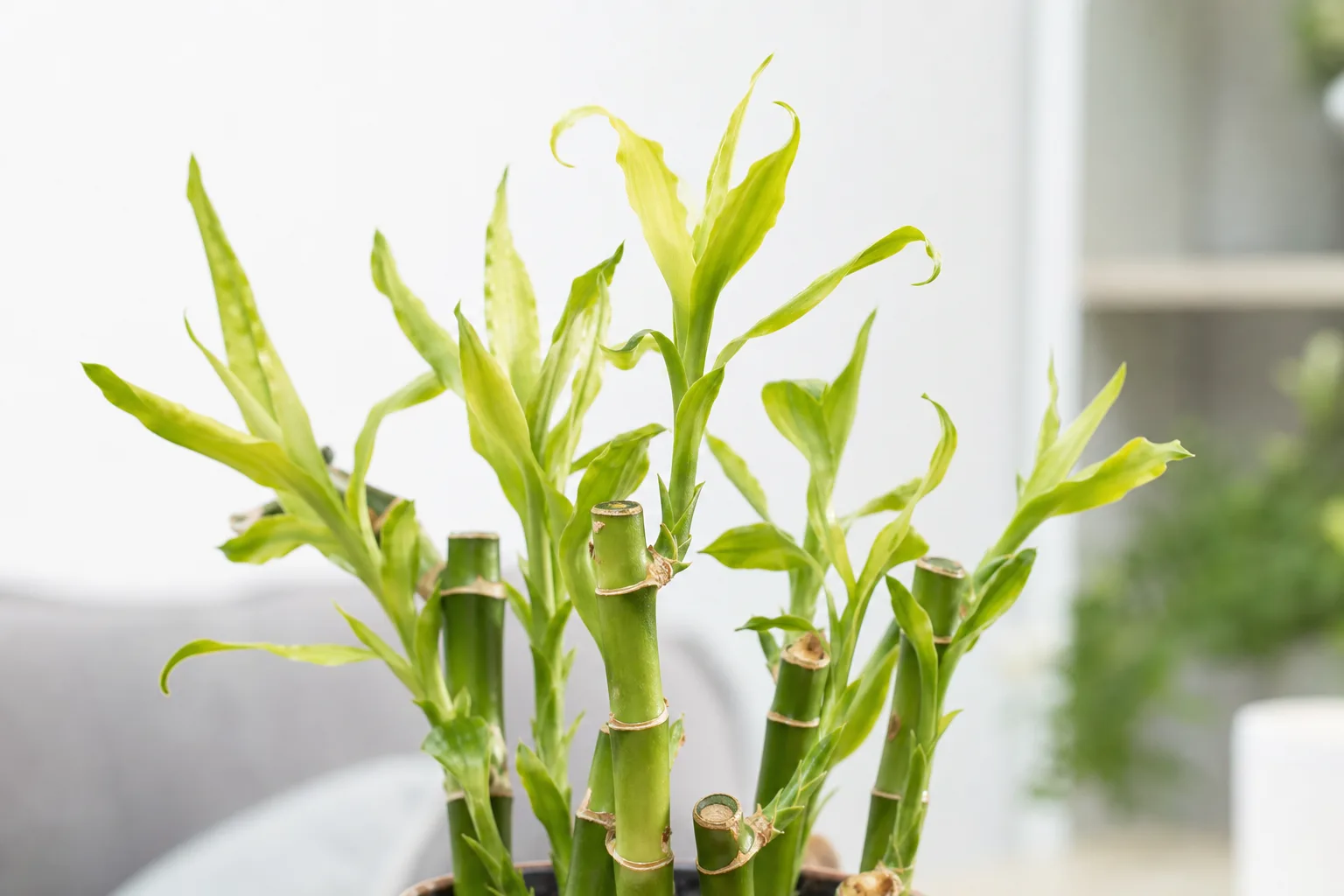
Calcium Deficiency on Lucky Bamboo: Causes, Checks & Fixes
This guide covers calcium deficiency on Lucky Bamboo. See also the general Calcium Deficiency guide, watering, and light pages for this plant.
Calcium Deficiency on Lucky Bamboo: Causes, Checks & Fixes
Quick answer
Gift-shop lucky bamboo in a pebble vase often runs on plain filtered or distilled water for months-and that setup supplies no calcium for new cell walls. Calcium deficiency on Lucky Bamboo (Dracaena sanderiana) shows when new leaves hook, crinkle, or fail to unfurl while older foliage stays green.
First step: keep filtered or distilled water, then add one minimal balanced feed dose at the next weekly change per the fertilizer guide-or repot into fresh well-drained potting soil if the vase has been nutrient-free for years.
For baseline vase changes and water chemistry, see the watering guide. If tips burn but blades stay flat, route to brown tips instead-this page owns whole-blade distortion on new growth.
What calcium deficiency looks like on Lucky Bamboo
New growth tells the story. Watch the leaf emerging from the top of each cane:
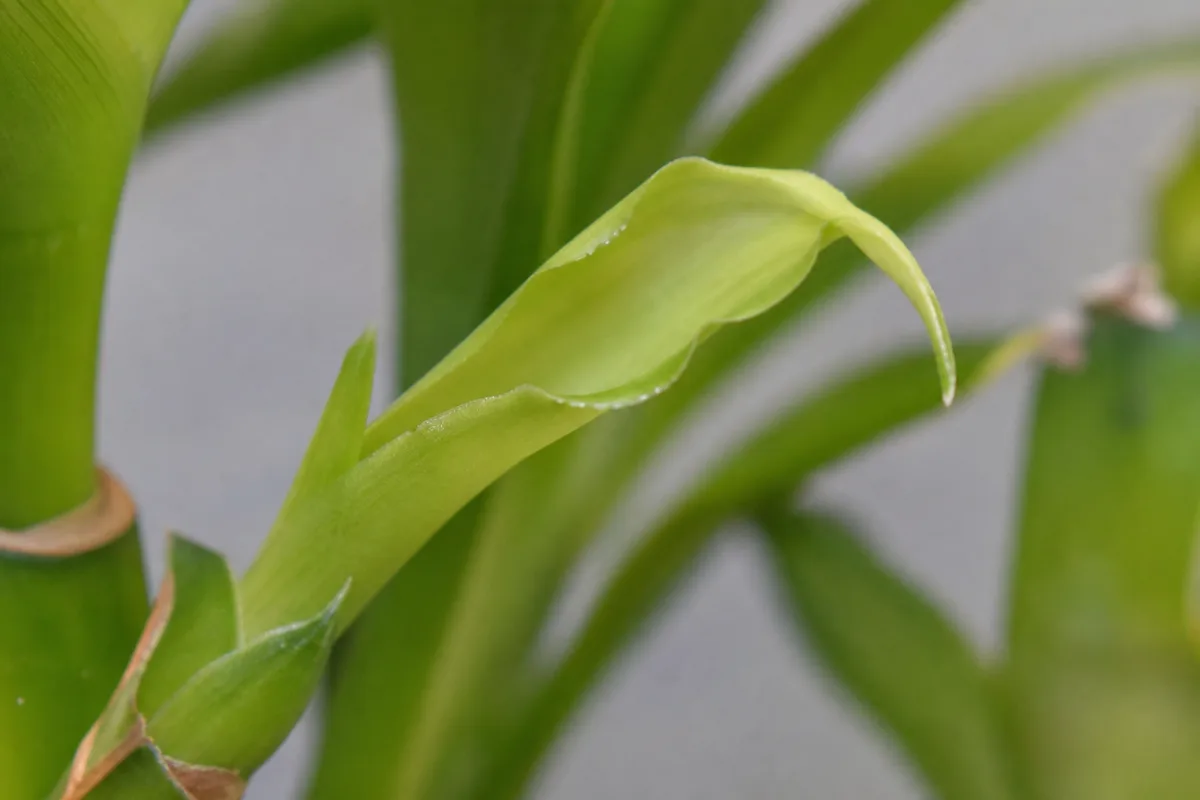
Calcium Deficiency symptoms on Lucky Bamboo - compare with healthy tissue on the same plant.
- Hooked or bent leaf tips that never straighten after full unfurl
- Crinkled, uneven leaf margins on the youngest blade
- Pale green new leaves compared to older foliage below
- Slow or absent new leaves on canes that previously grew steadily
Older leaves often stay dark green - unlike nitrogen deficiency, which yellows lower leaves first. Brown tip burn alone may be fluoride in tap water rather than calcium; distortion of the entire new leaf blade points to mineral shortage.
Multi-cane and braided displays
In water culture, multiple canes in one vase share the same depleted water - symptoms appear on all growing tips at once. A braided five-stem arrangement with every active tip hooked within the same month strongly fits shared mineral depletion, not isolated damage on one cane.
In soil culture, long-unfed plants in the same pot for years show weak new shoots while roots remain firm and white.
Stalks stay hard; mushy stem bases mean root rot, not calcium lack.
Normal leaf-sheath splitting at the base of an expanding blade happens once as the sheath dries - deficiency keeps tips hooked after the blade is fully open.
Why Lucky Bamboo becomes calcium deficient
Water culture without nutrients
Pure vase culture provides hydrogen and oxygen but no structural minerals. Even with weekly water changes, you flush away any trace nutrients that might accumulate. Over time, new cell walls in expanding leaves lack calcium, producing the hooked, crinkled patterns growers notice.
NC State Extension notes that Dracaena sanderiana can grow in chlorine-free water with weak liquid fertilizer - the species tolerates vase display, but pebbles supply no minerals, only anchor weight.
Exclusive use of distilled or reverse-osmosis water removes the small calcium load tap water might carry - fine for fluoride control, but it raises depletion risk when you never feed.
Depleted soil and long-unfed pots
Soil-grown plants deplete pots without repotting or feeding. Easily grown in evenly moist soil still needs occasional nutrition in bright spots where the plant actively produces leaves.
Fluoride confusion
High-fluoride tap water complicates diagnosis: fluoride damages tips while low calcium distorts whole new blades. Both improve with filtered water, but only feeding fixes the crinkled new-leaf pattern. Low humidity can also brown leaf tips on Dracaena - but without whole-blade hooking. Low light slows growth and masks deficiency - the plant barely pushes new leaves until you move it to a brighter window and new growth fails to unfurl.
How to confirm the cause
Confirm in this order:
- New versus old tissue - Distortion limited to emerging leaves supports deficiency; uniform tip brown on all ages suggests fluoride.
- Culture history - Months or years in plain water without any fertilizer strongly supports calcium shortage.
- Root firmness - Firm roots rule out rot as the cause of stunted new growth.
- Feeding record - Soil plants not fed in 12+ months during active growth fit the pattern.
- Water source - Filtered water with ongoing distortion confirms missing nutrients, not just fluoride.
- Growth rate - Resumed new leaves after one light feeding within three to four weeks confirms diagnosis.
Magnesium deficiency can mimic marginal chlorosis on other plants; on Lucky Bamboo, new-leaf hooking is the more reliable calcium signal in water culture.
Fluoride tip burn vs. calcium distortion vs. nitrogen yellowing
| Pattern | Fluoride tip burn | Calcium deficiency | Nitrogen shortage |
|---|---|---|---|
| Tissue affected | Leaf margins and tips only | Whole new blade distorted | Lower older leaves first |
| Blade shape | Flat blade, brown tip | Hooked, crinkled, uneven unfurl | Pale lower leaves, normal new tips |
| Water culture clue | Tap water history, no feed | Months of plain filtered water, no feed | Rare in pure vase; more common in old soil |
| First fix | Filtered water | Minimal balanced feed per fertilizer guide | Light soil feed or repot |
| Read next | Brown tips | This guide | Yellow leaves |
Decision shortcut: Filtered water fixed tips but distortion persists → stay here and feed minimally. Filtered water fixed tips and blades were never distorted → you were on brown tips, not calcium.
When micro-feeding fails
If hooked tips continue after two monthly micro-doses on weekly filtered water changes with firm roots, white crust on pebbles may mean salt buildup or nutrient lockout - stop feeding, flush the vase, and follow the sibling guide before adding more minerals.
First fix for Lucky Bamboo
Add a minimal balanced nutrient source or repot into fresh soil - after confirming roots are healthy.
For water culture: keep changing water weekly with filtered water, then add one drop of balanced liquid houseplant fertilizer to the full vase volume once monthly from spring through fall per the fertilizer guide. Skip winter feeding in dim rooms.
Vase volume rough guide:
| Vase size | Approximate volume | Starting dose (balanced liquid concentrate) |
|---|---|---|
| Small desk vase | 8–12 oz (250–350 ml) | 1 drop at fresh weekly change |
| Medium counter vase | 16–24 oz (500–750 ml) | 2 drops at fresh weekly change |
| Large floor arrangement | 32 oz+ (1 L+) | 2–3 drops; prefer quarter-strength mix measured with a syringe |
NC State and Clemson HGIC both recommend weak liquid fertilizer in water culture - never full label strength in a closed vase.
For soil culture: apply dilute liquid feed at half label strength monthly during active growth, or repot into fresh well-drained potting soil following the repotting guide with a single light feeding after one week.
Do not dump full-strength fertilizer into small vases - salt burn worsens tip damage and can cloud water with bacterial bloom.
Step-by-step recovery
- Inspect roots in water or soil; abort feeding if any are mushy - treat root rot first.
- Switch permanently to filtered or distilled water if still using heavy tap water.
- For vases: empty, rinse pebbles, refill, then add one drop dilute fertilizer; mark the calendar.
- For soil: water lightly, wait one week, then feed at half strength.
- Place in bright, indirect light so the plant can use nutrients for new leaves.
- Watch the next two leaf cycles - each should unfurl more cleanly than the last.
- Trim only leaves that are >70% damaged; keep photosynthesizing foliage.
- Consider moving chronic vase plants to soil via the repotting guide if distortion returns every winter.
Optional: top-dress soil pots with a thin layer of fresh mix when full repotting is not yet needed - minor help, not a substitute for feeding.
Water-to-soil transition timing
Move vase plants to soil in spring or early summer when new shoots are trying to expand - not mid-winter in a dim office. Stabilize in filtered water for two weekly changes, then repot without doubling feed on day one. Dracaena sanderiana is much less difficult to maintain in soil when drainage and filtered water stay consistent.
Recovery timeline
One to two new leaves after the first correct feeding usually look noticeably cleaner - often within four to eight weeks in bright, indirect light. Water-culture plants may respond slower than soil repots because nutrient doses must stay tiny.
Canes that have not produced new leaves in over a year may need soil transition plus repotting before growth restarts. Patience beats heavy feeding.
Example walkthrough: Two years of plain distilled water in a desk vase → hooked second and third new leaves on two canes → weekly filtered changes plus one drop monthly → third emerging leaf unfurls flat while older hooked blades stay as-is. That pattern confirms recovery; do not judge success on tissue that already hardened distorted.
Causes to rule out
Distorted new growth overlaps with:
- Fluoride toxicity - Brown tips only, leaves otherwise flat; fix water per brown tips, not fertilizer volume.
- Cold damage - Brown patches after draft exposure; new leaves may abort entirely.
- Root rot - Mushy roots, sour water, yellowing throughout; feeding worsens this - see root rot.
- Low light - Leggy canes with small pale leaves but no crinkling; move brighter before feeding.
- Salt lockout - Fed faithfully but pale with crust; see nutrient lockout.
What not to do
Do not add crushed eggshells, chalk, or garden lime to vase water - pH swings and clouding harm roots. Avoid full-strength fertilizer in pebble vases. Do not repot and feed heavily on the same day on a stressed plant. Do not confuse hooked new leaves with normal leaf sheath splitting at the base of expanding blades - sheaths split once; deficiency keeps tips hooked after full unfurl.
Do not keep feeding into topped-up stale water - minerals concentrate as water evaporates and can trigger salt buildup that mimics continued deficiency.
How to prevent calcium deficiency next time
Feed lightly and consistently rather than in rare large doses. For permanent water displays, monthly micro-doses during growth season or a planned switch to soil prevents years of silent depletion.
Change water weekly with filtered water so fluoride does not stack with nutrient stress. Repot soil plants every two to three years per the repotting guide.
Match feeding to light - plants in dim corners need less fertilizer but also grow fewer leaves; do not overfeed trying to force growth. Pause feed late autumn through early spring in cool dim offices; resume when new shoots appear.
Related Lucky Bamboo guides
- Lucky bamboo overview - species ID, vase vs soil, fluoride basics
- Lucky bamboo fertilizer - quarter-strength dosing and feed mistakes
- Lucky bamboo watering - weekly change protocol and water quality
- Lucky bamboo repotting - water-to-soil transition steps
- Brown tips - fluoride tip burn without blade distortion
- Nutrient lockout - fed but failing with crust
- Salt buildup - white mineral film on pebbles
- Root rot - mushy stems and cloudy water
- Yellow leaves - lower-leaf nitrogen pattern
When to worry
Escalate if yellowing spreads down canes while you increase fertilizer - that may be salt burn or hidden rot, not deficiency. Route to nutrient lockout or root rot the same day if stems soften.
Lucky bamboo is toxic to pets - store liquid fertilizer away from animals, rinse spills from vase rims, and call ASPCA Animal Poison Control at (888) 426-4435 plus your veterinarian if a pet ingests leaves or contaminated water. See the overview pet section for ingestion symptoms.