Sunburn & Scorched Leaves on Lucky Bamboo: Causes, Checks &
Quick answer
Lucky Bamboo scorches when direct sun hits leaves - common after moving to a south window, outdoor patio, or desk grow light placed too close. First step: move to bright indirect light immediately and trim only fully dead tissue.
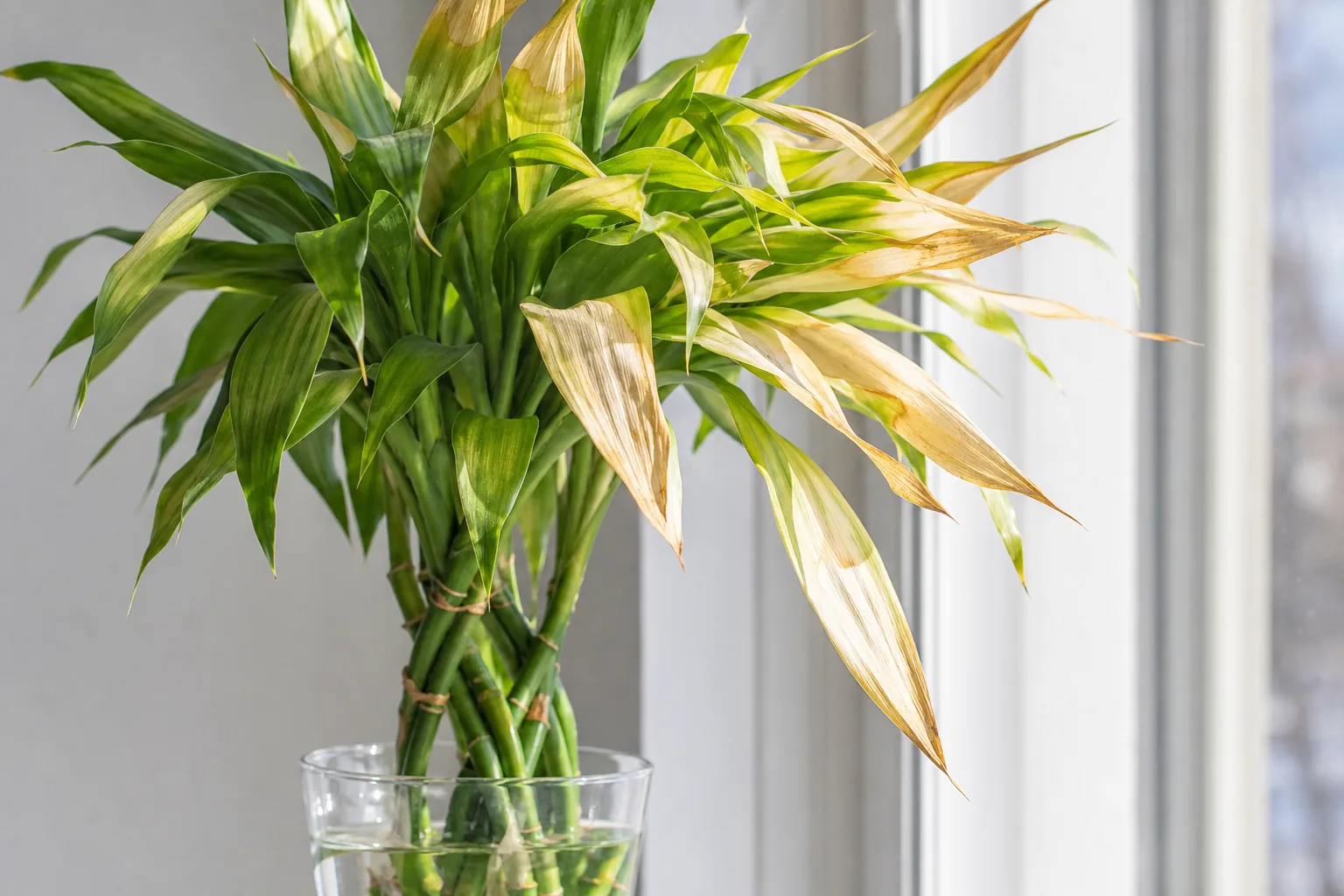
Sunburn & Scorched Leaves on Lucky Bamboo: Causes, Checks & Fixes
This guide covers sunburn / scorched leaves on Lucky Bamboo. See also the general Sunburn / Scorched Leaves guide, watering, and light pages for this plant.
Sunburn & Scorched Leaves on Lucky Bamboo: Causes, Checks & Fixes
Quick answer
Sunburn on Lucky Bamboo (Dracaena sanderiana) happens when direct sunlight hits the leaves - common after a move to a south window, outdoor patio, or a desk grow light placed too close. First step: relocate to bright, indirect light immediately.
Too much direct sun will scorch the foliage. Scorched tissue will not recover - protect new growth instead. For ongoing window placement and acclimation, use the Lucky Bamboo light guide; this page focuses on diagnosing and fixing active scorch.
Observed recovery pattern: A seven-cane braided vase on an unfiltered south sill showed outer-cane bleach within 48 hours while inner stems stayed green (June 2026 desk observation). After sheer curtain filtering and weekly filtered-water changes per the watering guide, clean new leaves emerged from upper nodes in roughly three weeks - old bleached tissue remained cosmetic until trimmed or replaced naturally.
What sunburn looks like on Lucky Bamboo
Healthy Lucky Bamboo leaves are narrow, strap-shaped, and evenly green along each cane. Sunburn damage is directional and dry - it hits the side facing the light source first.
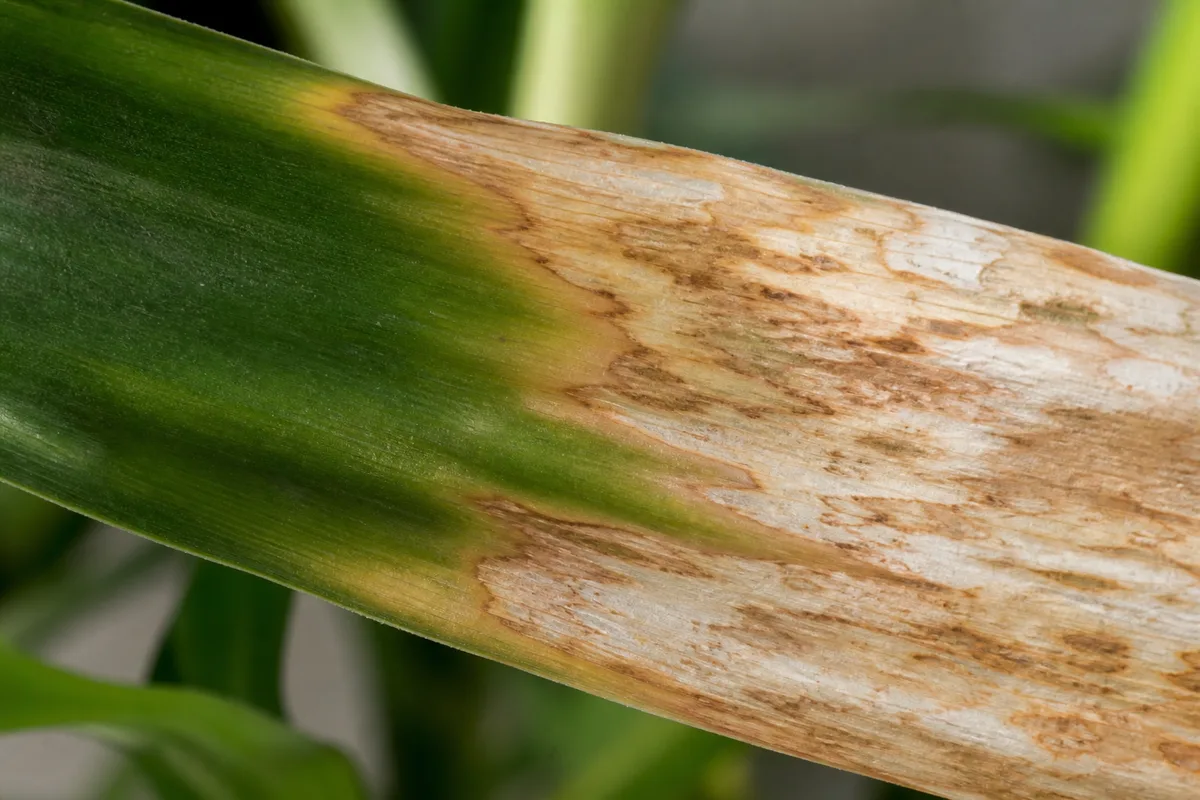
Sunburn Scorched Leaves symptoms on Lucky Bamboo - compare with healthy tissue on the same plant.
Early sunburn: Pale yellow or white patches on leaf surfaces facing the sun. Leaves may feel papery or slightly curled at the hottest spots.
Advanced scorch: Tan, brown, or crispy sections covering large parts of strappy leaves. One side of the arrangement - the sun-facing side - shows damage while shaded leaves may still look green. On braided forms, outer canes bleach before inner stems because they catch the full beam.
In water culture, rapid leaf desiccation can outpace root water uptake when sun is intense - especially in clear glass vases where water heats at the waterline. In soil culture, the foliage pattern is the same; wet soil does not prevent sunburn because damage is a light issue, not a watering one.
Unlike fluoride tip burn, which concentrates at leaf margins from tap water and affects multiple leaves evenly, sunburn creates irregular bleached patches on the sun-exposed leaf face. When tips brown without face bleaching, see brown tips instead.
Why Lucky Bamboo gets sunburn
Lucky Bamboo evolved for part shade to shade understory conditions in tropical western Africa. Indoor leaves lack the thick cuticle of outdoor-hardened plants, so sudden direct rays cause cell collapse.
Common triggers:
- Moving from a dim office to an unfiltered west window
- Placing a vase on a sunny windowsill for “better growth” after leggy stretch
- Setting arrangements outdoors in summer without acclimation
- Desk grow lights mounted fewer than 12 inches above cane tips - leaf edges crisp only under the bulb while shaded canes stay green
- Seasonal sun-angle shifts - the same south sill safe in winter becomes scorching when spring and summer sun climbs higher and glass intensifies heat
Owners sometimes confuse “needs more light” with direct sun. Bright, indirect light is best - brighter indirect exposure per the light guide, not sunbeams on leaves.
How to confirm the cause
Work through these checks before repotting, fertilizing, or emptying vase water:
- Light direction - Is damage worst on the side toward the window, grow lamp, or outdoor sun?
- Timing - Did it appear within days of a move, curtain removal, or seasonal sun shift?
- Pattern - Bleached patches on leaf faces vs. uniform tip browning from fluoride?
- Root check - Firm roots and clear vase water rule out root rot as the primary cause.
- Location history - Was the plant outdoors, on an unshaded sill, or under a close grow light?
- New growth - Do tips emerging after the move already show pale or crispy edges?
If damage is uniform on all leaves regardless of orientation and tips brown first, suspect fluoride in tap water and cross-check the brown-tips page.
First fix for Lucky Bamboo
Move out of direct sun to bright indirect light now.
Shift to an east-facing exposure or a bright room with filtered light. If coming from deep shade, increase brightness gradually over one to two weeks per the light acclimation plan - but remove from direct beams first.
Trim only fully dead, crispy leaf sections with clean scissors. Leave partially green tissue; it still photosynthesizes.
For vase plants, change water weekly with filtered water while leaves recover - do not empty the vase and leave roots dry unless water has turned cloudy or smells sour. For soil plants, water when the top inch dries per the watering guide; burned plants use water differently but still rot if kept soggy.
Step-by-step recovery
- Relocate immediately out of direct sun beams and away from close grow lights.
- Filter or diffuse west and south windows with sheer curtains.
- Remove only fully necrotic leaf portions; sterilize scissors between cuts.
- Maintain bright, indirect light and rotate weekly for even exposure on braids.
- Hold fertilizer until new leaves emerge unstressed.
- Monitor new growth for two weeks - clean new leaves confirm the fix.
- If moving outdoors seasonally, bring indoors before nighttime temperatures drop below 65°F and keep in shade only.
Recovery timeline
New leaves should emerge normal within two to four weeks after proper placement. Old scorched tissue remains cosmetic until leaves are replaced naturally or trimmed.
Severe bleaching on many leaves may cause temporary leaf drop from lower nodes - firm canes usually resprout within three to six weeks in corrected light. Water-culture specimens sometimes show faster cosmetic collapse than soil-grown canes under the same sun beam because heated vase water adds stress at the waterline; recovery still follows the same light correction.
Causes to rule out
| Problem | Key pattern | What to check | Next step |
|---|---|---|---|
| Sunburn | Bleached or tan patches on sun-facing leaf faces; one-sided on braids | Recent window move, outdoor sun, close grow light | This page - move to filtered bright light |
| Fluoride / chlorine | Brown tips and margins on multiple leaves; yellow band above dead edge | Tap water source; damage not one-sided | Brown tips |
| Root rot | Yellow wilting, soft cane base, cloudy vase water | Root firmness, water smell, wet soil | Root rot |
| Radiator / vent heat | Dry brown edges near vents without window-side pattern | Proximity to HVAC | Relocate; see draft stress |
| Cold draft | Sudden chill after open windows; outer leaves affected | Winter glass contact | Move away from cold pane |
| Not enough light | Pale stretch over weeks, not sudden bleach in days | Dim corner placement | Not enough light after scorch heals |
What not to do
Do not return to direct sun to “dry out” burned leaves. Avoid heavy pruning of green tissue. Do not apply oil sprays on sun-stressed foliage near bright windows - oils can intensify heat on thin Dracaena leaves. Do not overwater burned plants in compensation; overwatering can cause yellowing and stem rot.
Do not move to a dark corner after scorch - that trades one problem for insufficient light. Stay in bright indirect light.
How to prevent sunburn next time
Default to bright, indirect light - never unfiltered afternoon sun on leaves. Use sheer curtains on south and west windows per the light guide.
When increasing light from dim corners, move closer to windows in stages over two weeks. Outdoor summer displays need full shade and filtered water only.
For desk arrangements, keep full-spectrum grow lights 12 to 18 inches above the tallest cane tip on an 8–10 hour timer - if only leaves directly under the bulb crisp, raise the fixture. Rotate braided vases weekly so outer canes do not repeatedly face the hottest beam.
Winter vs. summer: Lower winter sun may allow closer sill placement; reassess every spring when the sun angle rises and afternoon heat through glass intensifies.
Lucky Bamboo care cross-check
Sunburn and insufficient light sit on opposite sides of the same spectrum. Lucky Bamboo needs brighter indirect light than a dark corner provides, but direct sun scorches foliage. Aim for the middle: visible window light without sunbeams touching leaves - the placement range described in the light guide.
If the plant was leggy before scorch, fix sunburn first, then hold in bright filtered light - not direct sun - to rebuild compact growth per the leggy-growth page.
When to worry
Sunburn is rarely fatal if stems stay firm and you shade the plant quickly. Escalate if canes soften at the base - that suggests root rot compounded with stress, not sun alone.
Lucky bamboo is toxic to cats and dogs - discard trimmed leaf debris safely. Contact your veterinarian promptly if a pet ingests trimmed leaves or cane tissue.
Related Lucky Bamboo guides
- Light - ongoing placement, acclimation, and grow-light distance
- Watering - filtered water and weekly vase changes during recovery
- Brown tips - fluoride lookalike when tips brown without face bleaching
- Not enough light - opposite problem after recovery
- Leggy growth - why owners push plants into direct sun
- Root rot - when soft canes accompany yellowing
- Lucky Bamboo overview - hub for all care topics