Fungus Gnats on Lucky Bamboo: Causes, Checks & Fixes
Quick answer
Fungus gnats affect soil-grown Lucky Bamboo when the top layer stays wet too long. First step: let the top inch of soil dry before watering, set yellow sticky traps for adults, and confirm larvae with a potato-slice test if flies persist.
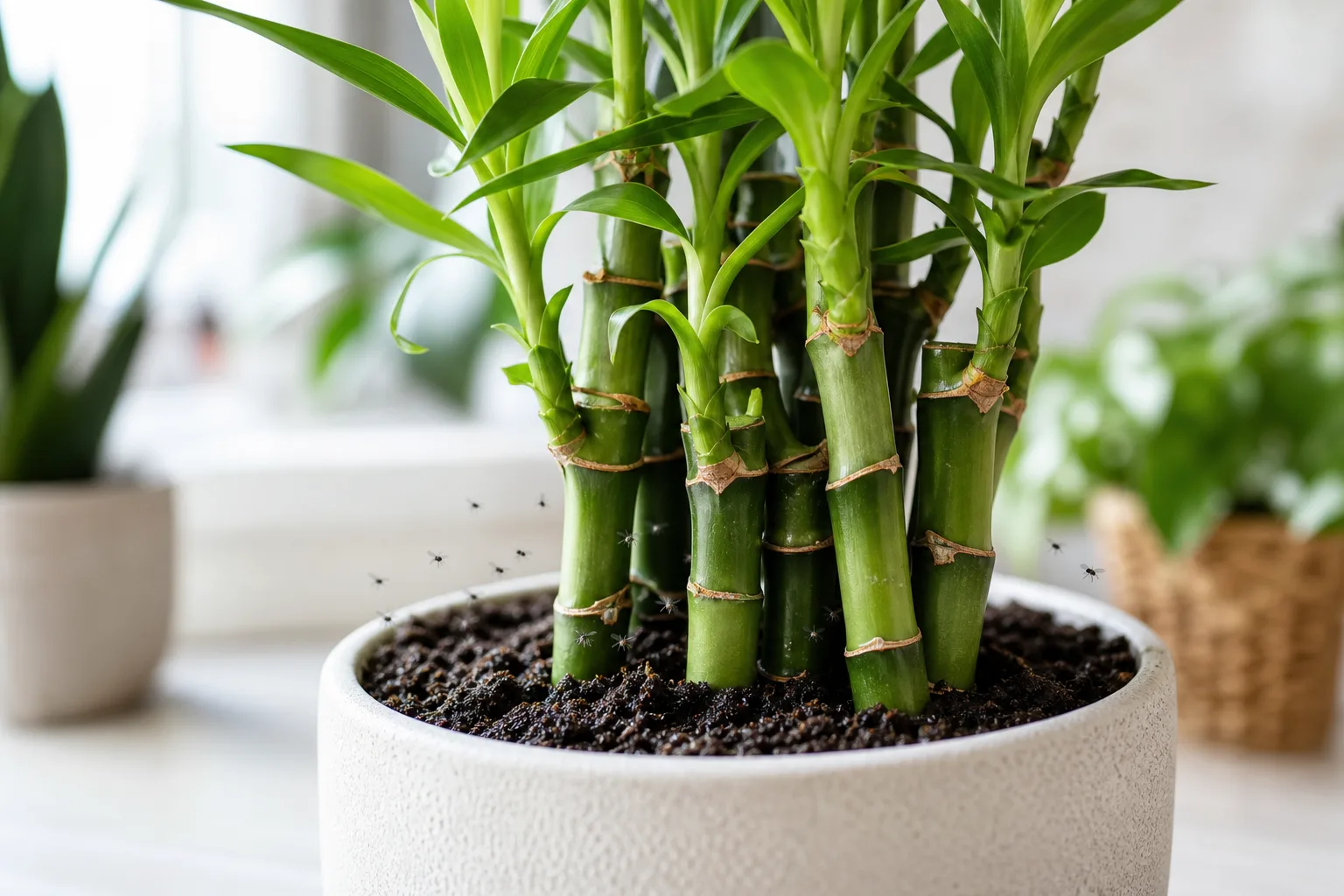
Fungus Gnats on Lucky Bamboo: Causes, Checks & Fixes
This guide covers fungus gnats on Lucky Bamboo. See also the general Fungus Gnats guide, watering, and light pages for this plant.
Fungus Gnats on Lucky Bamboo: Causes, Checks & Fixes
Quick answer
Fungus gnats on Lucky Bamboo (Dracaena sanderiana) almost always affect soil-grown plants with a chronically wet surface layer. First step: water when the top inch of soil is dry per the watering guide and deploy yellow sticky traps for adult flies.
Plants in water and pebbles only rarely harbor fungus gnats - no organic soil means no larval habitat. If flies hover near a vase, the source is usually a neighboring potted plant, spilled soil in the saucer, or decorative moss wrapped around cane bases that still holds wet mix.
| Culture | Gnats possible? | First check |
|---|---|---|
| Soil pot | Yes - larvae need moist organic mix | Top inch wet for days? |
| Vase + pebbles only | Rare - no soil surface | Neighbor pots, spilled mix on pebbles |
| Recent soil-to-vase transition | Temporary - residue on roots | Rinse roots and pebbles thoroughly |
What fungus gnats look like around Lucky Bamboo
Adult flies: Small dark mosquito-like insects, roughly 1/8 inch long, that rise in a cloud when you water or bump a soil pot. They are weak fliers - often noticed first near keyboards, monitors, and windows close to the plant. Adults do not bite people or pets.
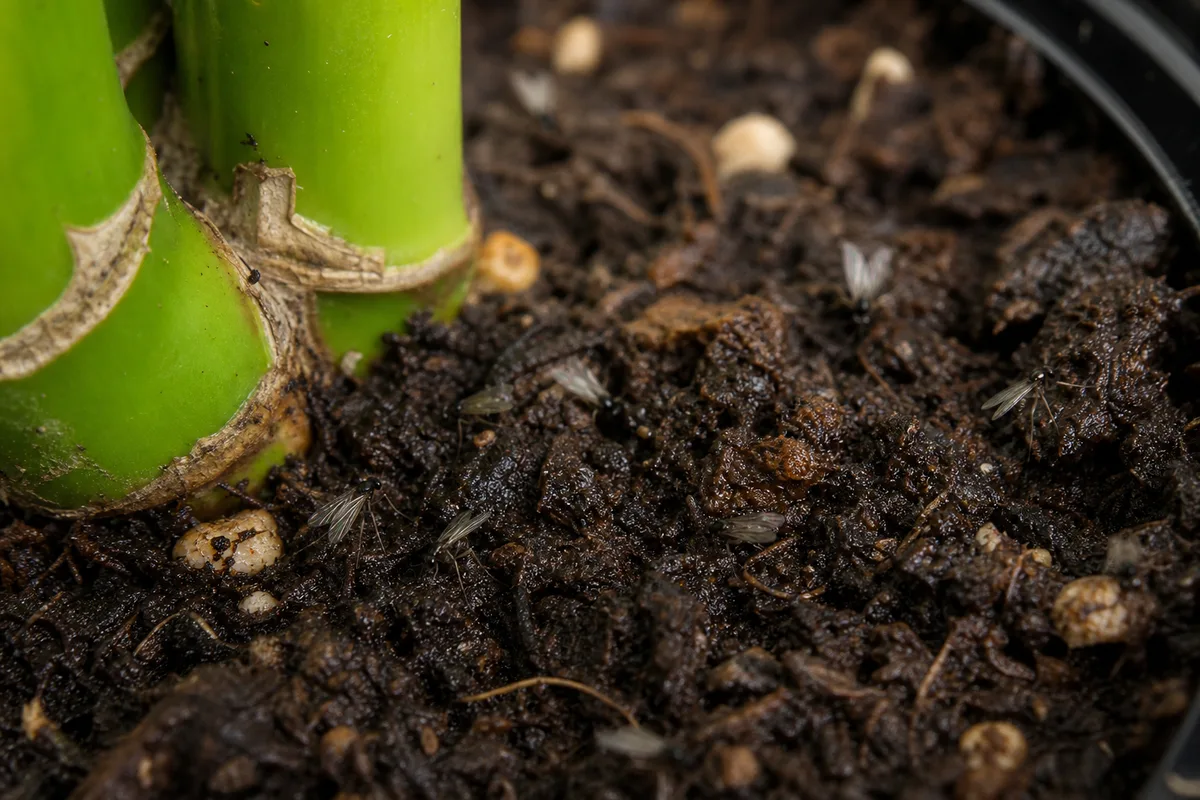
Fungus Gnats symptoms on Lucky Bamboo - compare with healthy tissue on the same plant.
Larvae: Translucent wormlike larvae with dark head capsules in the top quarter-inch of soggy soil - they feed on fungi, decaying organic matter, and fine roots. Visible when you scratch back wet surface mix or flip a potato test slice.
Plant symptoms: Lucky Bamboo may show no obvious leaf damage in mild cases. Chronic wet soil plus gnats overlaps with overwatering that yellows leaves and rots stems - see the overwatering guide if yellowing spreads. Stunted new growth on soil-grown canes suggests combined root stress. White fungal film on the surface often appears alongside gnats; treat both with dry-down and see mold on soil if fuzz is the main concern.
Vase-culture Lucky Bamboo with only pebbles and water should not support gnat larvae unless potting mix was left on roots during a recent transition from soil.
Gift-shop moss-wrapped pots breed gnats faster than plain nursery pots because the moss sleeve traps moisture against the stem base and hides wet pockets inside braided cane clusters.
Why Lucky Bamboo gets fungus gnats
Fungus gnat larvae need moist organic soil to reproduce. Colorado State Extension notes that adult females lay eggs in cracks of growing media, especially peat-rich mixes that hold surface moisture. Overwatering soil-grown Lucky Bamboo - especially in low light where mix dries slowly - creates ideal breeding conditions.
Decorative moss, top dressings, and cachepots without drainage keep surfaces wet. Easily grown in evenly moist soil means appropriate moisture after a proper dry-down - not constant saturation of the top layer. That distinction matters: the watering guide calls for moist mix at the root zone, but gnat triage requires the surface to dry between drinks until trap counts fall.
Gnats spread from new bagged plants, reused wet soil, and shared saucers. UC IPM reports fungus gnats commonly arrive on newly purchased or recently repotted houseplants. One infested office neighbor can seed flies around your vase arrangement even when your Lucky Bamboo has no soil.
Braided Lucky Bamboo in soil with tight cane clusters may hide wet pockets near the stem base where water runs down bundled canes and cannot evaporate. Low light on a desk slows transpiration, so a pot that would dry in five days near a window may stay wet for two weeks in a dim office.
How to confirm the cause
Work through these checks in order:
- Culture type - Soil pot vs. pure water vase. Use the table in Quick answer if unsure.
- Fly behavior - Adults emerge when you water or disturb soil, not when you shake leaves.
- Surface moisture - Stick a finger to the first knuckle. Has the top inch stayed wet for days?
- Larva check - Scratch top soil. White larvae present?
- Potato-slice test - CSU Extension recommends inserting 1/4-inch potato wedges into the wet surface. Check the underside after two to three days for larvae feeding. This confirms larvae in your Lucky Bamboo mix, not random flies in the room.
- Sticky trap count - Place a yellow sticky card at soil level. Catching small dark flies over 24 to 48 hours confirms active adults breeding in that pot.
- Neighbor pots - Other plants with the same flies? Treat the source pot, not just the Lucky Bamboo display.
- Root health - Firm white roots vs. mushy brown tissue when investigating wet soil. Soft cane bases mean escalate to root rot.
If traps stay empty, soil dries normally, and flies only appear near the kitchen, your Lucky Bamboo may not be the source.
First fix for Lucky Bamboo
Dry the top soil layer and trap adults.
Allow the top inch to dry before every watering per Clemson guidance and the watering guide. Empty saucers completely after each drink. UC IPM lists allowing soil to dry between waterings as the primary fungus gnat management tactic.
Place yellow sticky traps near the pot to reduce adult breeding cycles. Remove decorative moss if it stays soggy.
For vase-grown plants, clean spilled soil from pebbles and treat the actual soil source nearby - not the water vase itself.
Do not repot into fresh mix on day one without fixing the watering habit. Moisture discipline comes first; repotting wet soil into new mix only relocates larvae.
Step-by-step recovery
After the initial dry-and-trap step, work through these based on severity:
Light infestation
A few flies on traps, firm canes, no yellowing:
- Continue top-inch dry-down before every watering.
- Replace sticky traps weekly until catches drop to zero for two consecutive weeks.
- Move to bright, indirect light so soil dries predictably.
- Resume normal watering rhythm from the watering guide only after trap counts stay low for two weeks - do not jump back to calendar watering.
Moderate infestation
Clouds of flies on watering, larvae visible in top soil, occasional yellow lower leaf:
- All light steps above.
- Bottom-water from a saucer when the top inch is dry - keeps the surface drier while still hydrating roots. Useful for braided arrangements where top watering soaks the whole surface every time.
- Apply BTI if larvae persist after ten to fourteen days of dry surface soil - see BTI protocol below.
- Scrape and discard the top quarter-inch of very wet surface soil if larvae are dense; top-dress with dry fresh mix from the soil guide if needed.
Heavy infestation
Trap counts rise weekly, sour-smelling soil, multiple yellow leaves, larvae on potato test after dry-down attempts:
- All moderate steps above.
- Unpot carefully and inspect roots. Trim mushy tissue with sterilized scissors; if most roots are brown and stems are soft, switch to the root rot guide that day.
- Repot into fresh well-drained potting mix if infestation persists after four weeks of dry-down discipline and BTI cycles.
- Quarantine the pot from other houseplants until trap counts fall for two consecutive weeks.
Hold fertilizer briefly while correcting moisture - soft flushes in wet soil extend gnat cycles.
BTI protocol for soil-grown Lucky Bamboo
When dry-down and traps are not enough, use products containing Bacillus thuringiensis subsp. israelensis (BTI), such as Mosquito Bits or Gnatrol, as a soil drench. Wisconsin Horticulture Extension and UC IPM recommend applying with enough water to reach the top 2 to 3 inches where larvae live.
- Mix per label directions - typically a measured scoop dissolved in your watering can.
- Drench the soil surface until excess drains; empty the saucer.
- Repeat every five to seven days for two to three weeks because BTI does not affect eggs or pupae and does not persist indoors.
- Continue top-inch dry-down between BTI applications - wet surface soil defeats every larval treatment.
Skip hydrogen peroxide or neem soil drenches on rot-prone Dracaena sanderiana with soft roots unless a product is explicitly labeled for your situation. Fix moisture and inspect roots first.
Recovery timeline
Adult flies may linger two to three weeks as sticky traps catch them. Larvae decline once the top layer dries consistently for ten to fourteen days.
CSU Extension notes the full fungus gnat life cycle can complete in three to four weeks at room temperature - expect two to six weeks of consistent drying plus larval control before counts stay low.
Root damage from combined overwatering and larvae heals slowly - watch for new leaf tips over a month. Judge progress by trap counts and whether the top inch dries between waterings, not by whether every fly disappears overnight. One moist watering can restart the cycle.
When gnat triage ends
Gnat triage is over when sticky traps catch zero flies for two consecutive weeks and the top inch dries between waterings in your normal light conditions. Then return to the standard top-inch check from the watering guide - not a fixed calendar. If gnats return within a month, the mix may be holding moisture too long; consider repotting into the soil guide perlite blend or switching to water culture.
Lookalike symptoms to rule out
| Pest / issue | Where it appears | Key difference from fungus gnats |
|---|---|---|
| Fruit flies | Kitchen, fruit bowls | Vinegar traps catch them; not tied to Lucky Bamboo soil |
| Shore flies | Wet surfaces, algae | Shorter bristle-like antennae; more common in greenhouses |
| Vase algae | Cloudy standing water | Bacterial cloudiness, not flying insects from soil |
| Whiteflies | Leaf undersides | Fly from foliage when shaken; leave sticky honeydew |
| Mold on soil | White fuzz on surface | Often co-occurs with gnats; see mold on soil |
Fruit flies hover near food waste, not consistently at a Lucky Bamboo pot. Gnats do not produce webbing or honeydew.
What not to do
Do not pour sand on soil without fixing watering - surface crust can worsen root oxygen issues and overlaps poor drainage problems. Avoid watering on a fixed calendar in dim light. Do not assume vase water changes fix gnats on a neighboring soil pot.
Do not resume calendar watering the day adult flies disappear. Pupae in soil can restart the population within a week.
Do not treat vase-grown Lucky Bamboo with soil drenches - there is no mix to treat. Find and fix the soil source instead.
How to prevent fungus gnats next time
Match watering to dryness checks from the watering guide. Use well-drained indoor potting mix with perlite. Empty saucers. Quarantine new plants two to three weeks before placing them near Lucky Bamboo arrangements.
Remove decorative moss sleeves once you bring a gift pot home - they hide wet mix against braided canes.
If gnats are recurring on soil-grown plants, consider growing Lucky Bamboo in water culture with weekly filtered water changes per the overview - rinse all soil residue from roots first so no organic debris remains in pebbles.
In fall and winter, CSU Extension notes gnats often peak indoors because Lucky Bamboo slows growth and uses less water while watering habits stay the same. Cut back frequency when days shorten.
Lucky Bamboo care cross-check during treatment
Fungus gnats signal overwatering in soil culture - the same conditions that cause stem rot on Dracaena sanderiana. Fix moisture rhythm and gnats usually fade together.
| Check | Healthy target | Gnat-friendly mistake |
|---|---|---|
| Water timing | Top inch dry before each drink | Calendar watering every few days regardless of dryness |
| Culture | One path - soil or vase | Moss-wrapped soil pot beside untreated vase display |
| Light | Bright indirect; tolerates low light with slower drying | Dim desk plus frequent watering |
| Mix | Airy, well-draining with perlite | Dense peat that stays wet a week |
| Pot | Drainage holes open; saucer emptied | Cachepot with no drainage |
| New plants | Quarantined two to three weeks | Placed directly on the Lucky Bamboo shelf |
Related Lucky Bamboo guides
- Lucky bamboo overview
- Lucky bamboo watering
- Lucky bamboo soil
- Overwatering
- Root rot
- Mold on soil
- Poor drainage
When to worry
Escalate if soil stays wet despite dry-down attempts - check blocked drainage per the poor drainage guide. Switch to root rot rescue the same day if stems feel mushy, soil smells sour, or yellowing climbs multiple nodes.
Lucky bamboo is toxic to pets - store sticky traps away from animals. If a pet ingests leaves, soil, or water from a treated pot, contact your veterinarian promptly and call the ASPCA Animal Poison Control Center at (888) 426-4435 for guidance.
Fungus gnats on Lucky Bamboo mean wet soil surfaces on potted plants - not vase water alone. Dry the top inch before watering, trap adults, improve light and drainage, and repot if larvae persist after moisture discipline. Once trap counts stay low for two weeks, return to the standard top-inch rhythm from the watering guide - not a fixed calendar.