Small Flowers on Lucky Bamboo: Causes, Checks & Fixes
Quick answer
Most small growth at the cane tip on Lucky Bamboo is new leaves, not flowers. True blooms are tiny white clusters on mature plants and are rare indoors - first step: confirm leaf shoots vs real flowers, then adjust expectations rather than chasing larger blooms.
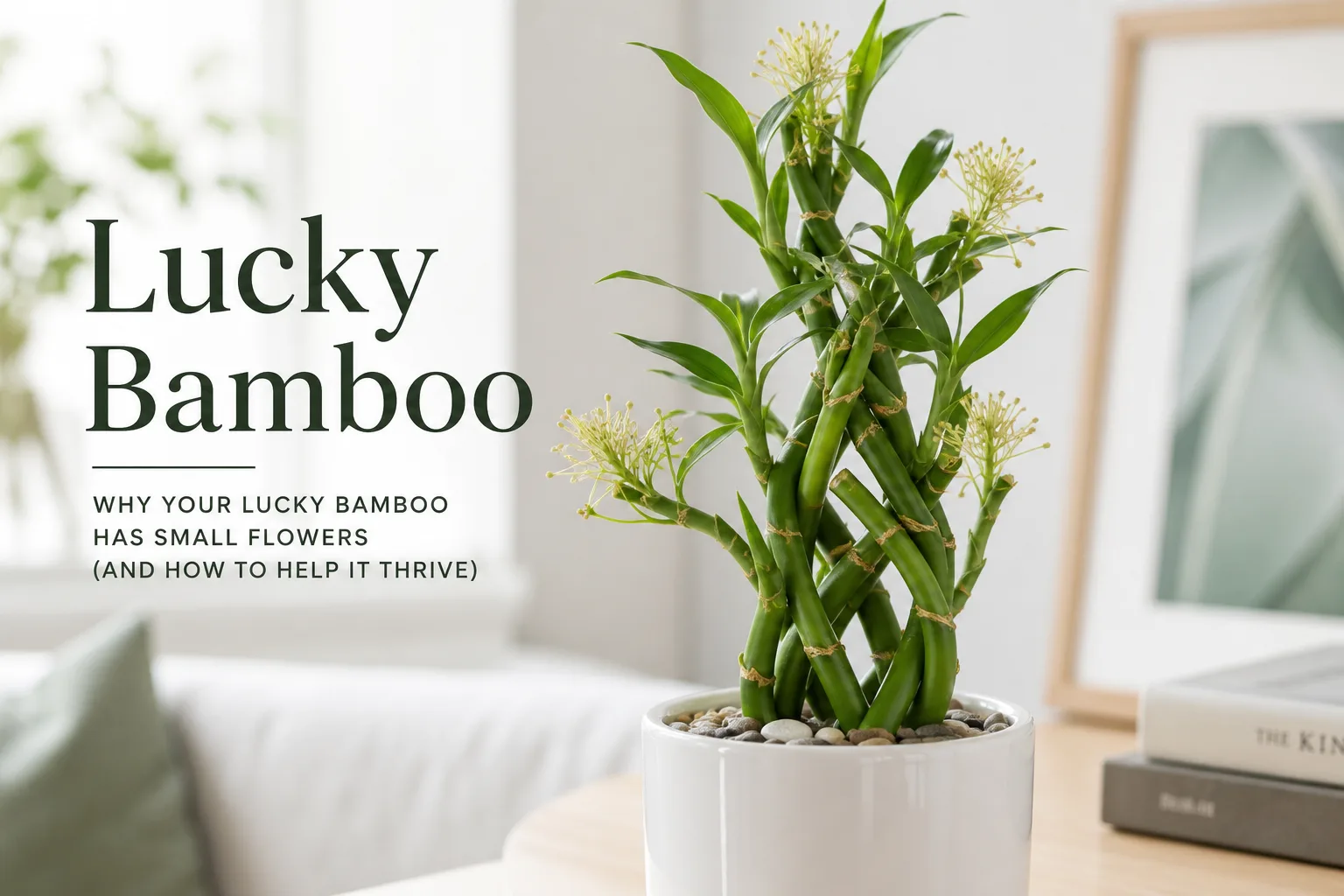
Small Flowers on Lucky Bamboo: Causes, Checks & Fixes
This guide covers small flowers on Lucky Bamboo. See also the general Small Flowers guide, watering, and light pages for this plant.
Small Flowers on Lucky Bamboo: Causes, Checks & Fixes
Quick answer
Most “small flowers” on Lucky Bamboo are new leaves, not blooms. On desk plants and gift arrangements, the green rolled point at the top of the cane is usually a leaf spear unfolding, not a flower bud. True flowers on Dracaena sanderiana are small white clusters and are not typically seen indoors.
If you expected bigger flowers, the issue is usually identification, not plant health. First, confirm whether you have a true bloom or normal leafy growth. Then decide whether any care change is needed.
What a real Lucky Bamboo flower looks like
True lucky bamboo flowers are:
- White to creamy white, not bright green
- Clustered, not a single pointed spear
- Short-lived and modest, with Missouri Botanical Garden describing them as insignificant
- Rare indoors, especially on young canes grown permanently in water
By contrast, a normal new leaf shoot is:
- Bright green from the start
- Tightly rolled at the cane tip
- Attached directly to the growing crown
- Expected on healthy gift-shop and office plants
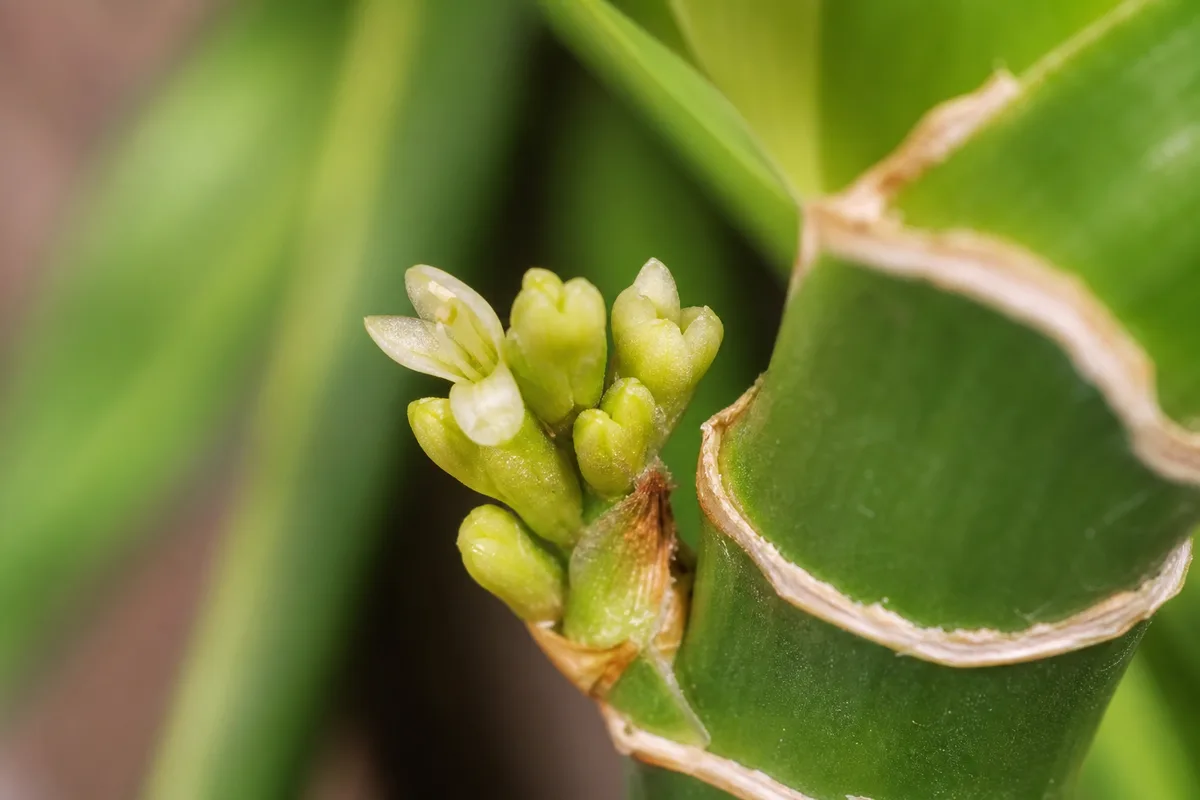
Small Flowers symptoms on Lucky Bamboo - compare with healthy tissue on the same plant.
Why most indoor plants never bloom
NC State notes that lucky bamboo rarely flowers as a houseplant. That is not a failure of your care routine. It is mostly a function of how the plant is sold and grown.
Three factors matter most:
- Immature stock. Most retail lucky bamboo is a young cutting shaped for stem form, not a mature plant grown to reproductive age.
- Water culture. Pebble-and-vase setups keep the plant alive and decorative, but they do not usually support the long, steady maturity of a soil-grown dracaena.
- Indoor conditions. Flowering dracaenas generally need sustained bright indirect light, maturity, and environmental cues most offices and living rooms never provide.
Healthy, flowerless foliage is the normal success case for lucky bamboo.
How to tell “small flowers” from new growth
Use this quick check before changing anything:
| What you see | Likely diagnosis | What to do |
|---|---|---|
| Green pointed cone at cane tip | New leaf shoot | Nothing; this is normal growth |
| White clustered growth on a mature cane | True flower cluster | Enjoy it; size is naturally modest |
| Brown leaf margins | Salt or fluoride burn | See brown tips |
| Tan or brown dry cluster after white stage | Spent bloom | Trim if desired; see faded flowers |
| Soft, dark, mushy tissue | Rot or tissue damage | See flowers turning brown or root rot |
If the structure is green, pointed, and unfolding into strap-like leaves over a few days, you are looking at normal vegetative growth, not undersized flowers.
Do small flowers mean something is wrong?
Usually, no. If you are seeing a genuine flower, small size is normal for the species. You cannot turn lucky bamboo into a showy blooming plant with more fertilizer or more sun.
Where growers go wrong is treating normal bloom size as a deficiency:
- adding “bloom booster” fertilizer
- moving the plant into harsh direct sun
- cutting off the growing crown
- repotting repeatedly to chase a bloom response
Those interventions create stress without solving the actual question.
What to do if you want the best chance of flowering
Indoor flowering is still uncommon, but you can improve the odds on a mature plant:
- Give the plant bright indirect light, not direct midday sun, per Clemson HGIC.
- Use filtered, distilled, or rainwater if your tap water causes tip burn, following Ask Extension guidance.
- Consider soil culture for long-term plants rather than permanent water culture.
- Keep water-grown plants clean with weekly water changes if you stay with a vase setup.
- Judge progress by firm canes and healthy new leaves, not by whether flowers appear.
Even with excellent care, many indoor lucky bamboo plants will never bloom.
When to worry instead of just adjusting expectations
Small flowers are not the real problem if:
- the cane tip stops producing leaves
- yellowing moves down the stem
- tissue softens or turns black
- vase water clouds quickly
- the “flower” was never white in the first place
Those point to a care or tissue-health issue, not a bloom-size issue. Start with watering, light, or flowers turning brown depending on the symptom.
Pet safety
ASPCA lists Dracaena as toxic to cats and dogs. Flowering does not change that risk. Keep lucky bamboo out of reach of chewing pets whether the plant is blooming or not.
Conclusion
On lucky bamboo, “small flowers” usually means one of two things: you are either seeing normal small white blooms on a rare mature plant, or you are seeing new leaf growth and calling it a flower. In both cases, the correct response is usually restraint. Confirm what you are looking at, avoid bloom-chasing fixes, and judge the plant by cane firmness, clean water, and healthy new leaves.
Related Lucky Bamboo guides
- Lucky Bamboo overview
- Lucky Bamboo light
- Lucky Bamboo watering
- Faded flowers on Lucky Bamboo
- Flowers turning brown on Lucky Bamboo
- Brown tips on Lucky Bamboo
Related tool
Use the Plant Problem Diagnosis Tool to narrow causes for small flowers on this plant before changing multiple variables at once.