Faded Flowers on Lucky Bamboo: Causes, Checks & Fixes
Quick answer
Indoor Lucky Bamboo rarely blooms, so faded flowers are uncommon. If you do see small white clusters fading to tan, improve light and stable care - but focus on healthy foliage, which is the normal indoor display.
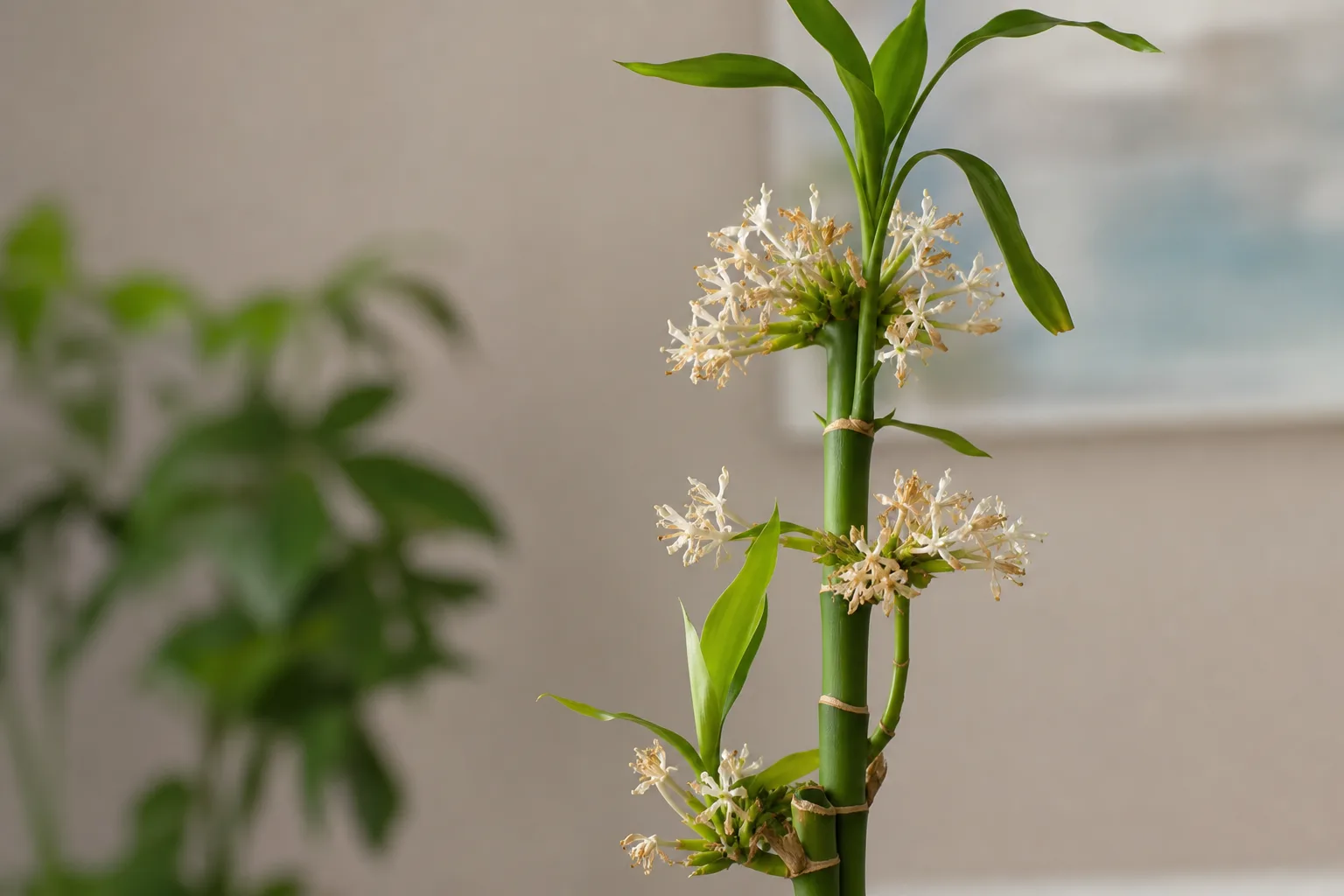
Faded Flowers on Lucky Bamboo: Causes, Checks & Fixes
This guide covers faded flowers on Lucky Bamboo. See also the general Faded Flowers guide, watering, and light pages for this plant.
Faded Flowers on Lucky Bamboo: Causes, Checks & Fixes
Quick answer
Faded flowers on Lucky Bamboo (Dracaena sanderiana) matter only if you actually have blooms - and lucky bamboo rarely blooms as a houseplant. Clemson notes small white flowers that are not typically seen indoors. If white clusters do appear and quickly turn tan, first step: improve bright indirect light, refresh vase water or soil moisture rhythm, and accept that blooms are short-lived even under good care.
No flowers? That’s normal indoors. Most searches for “faded flowers” on desk Lucky Bamboo are really about brown cane tips, old leaf sheaths, or mineral crust - not petals. Route to brown tips or flowers turning brown if you never saw white clusters.
Most “faded flower” searches are lookalikes - quick visual guide
Before chasing blossom recovery, compare what you see at the cane node:
| Stage | What it looks like | Firmness test | Likely ID |
|---|---|---|---|
| Peak bloom | Tiny white clustered florets on a firm cane | Cane solid; petals soft | True flowers (rare indoors) |
| Day 2–4 fade | White shifts to cream, then tan | Cane still firm; dry papery clusters | Normal flower senescence - this page |
| No white stage | Papery brown ring at a node | Cane firm; ring static | Old leaf sheath - not a faded bloom |
| Chalky deposit | White crust at water line on pebbles | Scrapes off with fingernail | Hard-water mineral - not petals |
| Brown margins | Crisp brown on leaf tips, not a cluster | Leaves affected, not a flower head | Fluoride or salt burn - see brown tips |
Editorial note: On typical gift-shop braided or spiral arrangements in pebble vases, we almost never see confirmed indoor bloom events. Tan or brown tissue at nodes is overwhelmingly spent sheath material or mineral buildup, not fading petals.
What faded flowers look like on Lucky Bamboo
True Lucky Bamboo flowers are small, white, and clustered, held on mature canes - Missouri Botanical Garden describes them as not particularly showy. Indoors they may last only two to five days at peak white before fading to cream, tan, or light brown. That color shift is irreversible senescence, not a care failure you can reverse by watering differently.
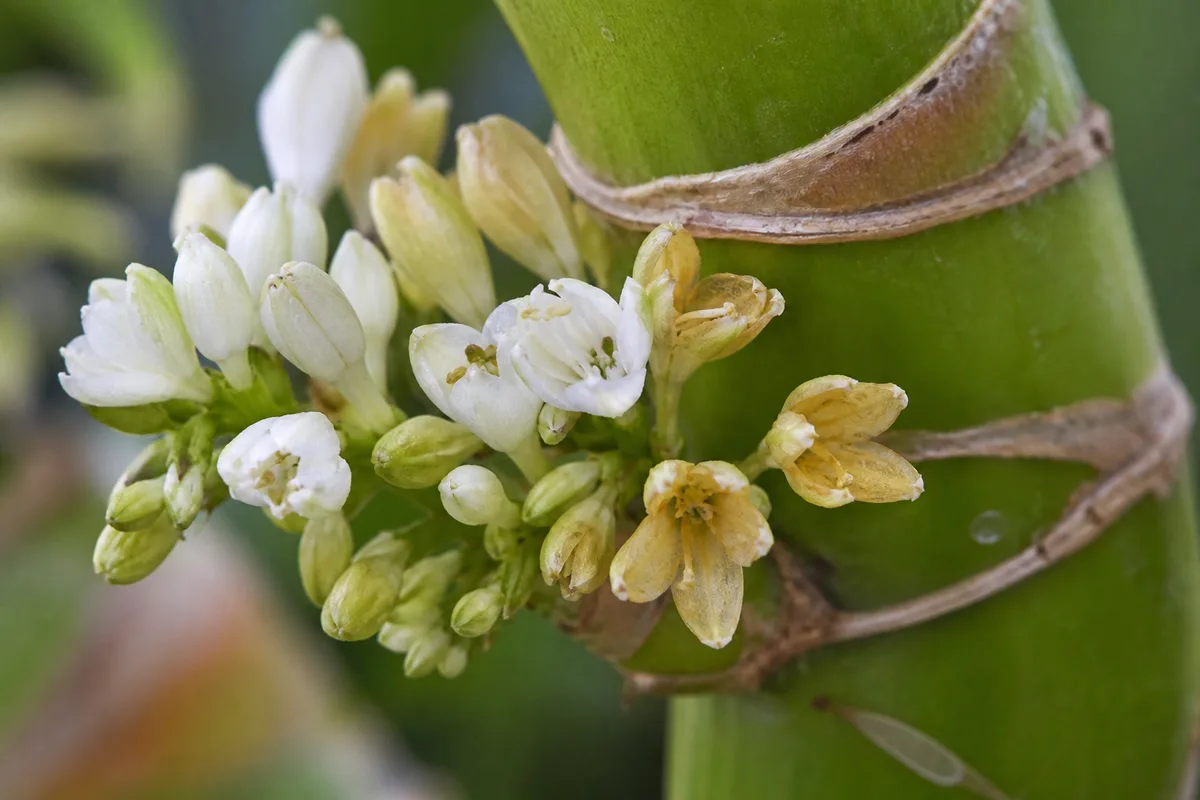
Faded Flowers symptoms on Lucky Bamboo - compare with healthy tissue on the same plant.
Day-by-day fade on a confirmed indoor bloom (rare)
- Day 0–1 - Clusters open white; florets feel soft and slightly fragrant
- Day 2–3 - Cream or ivory tone; some florets collapse inward
- Day 4–5 - Tan to light brown; tissue dries papery but cane stays firm
- Day 6+ - Dry brown cluster remains; trim if unsightly - it will not re-green
If there are no flowers and never were, your plant is behaving normally. Plants grown indoors rarely flower - faded petals are not a problem you need to fix. For size and ID of true blooms vs leafy crowns, see small flowers.
Why Lucky Bamboo flowers fade quickly indoors
Even when blooming occurs, indoor conditions shorten display life:
- Low light - Bright, indirect light supports overall health; dim corners produce weak blooms that collapse fast.
- Dry air - Heating seasons desiccate small white clusters overnight.
- Stale vase water - Bacteria stress the cane while flowers open (change water weekly).
- Salt or fluoride buildup - Dracaena species are sensitive to salt and fluoride, weakening tissue as flowers senesce.
- Overfertilization - Extra nitrogen can push brief flowering followed by rapid fade and tip burn.
Outdoor mature plants in frost-free zones may bloom in fall or winter per NC State - a schedule most indoor rooms never replicate. Cool-night temperature shifts and seasonal light changes that trigger dracaena flowering outdoors are absent on a year-round desk. Chasing rebloom on young braided, spiral, or straight gift canes in permanent water culture is structurally unlikely regardless of bloom-booster fertilizer - immature cuttings prioritize roots and foliage over reproduction.
How to confirm the cause
Work through this list:
- Are these flowers? Tiny multi-floret clusters vs. a single papery sheath - see small flowers for ID.
- Plant age - Blooms appear on older, thicker canes, not fresh propagation cuts from gift arrangements.
- Culture - Vase or soil? Cloudy water and faded tips suggest culture stress, not petal age alone.
- Light level - Can you read comfortably without a lamp near the plant? See the light guide.
- Water quality - Tap water with fluoride vs. filtered water history per the watering guide.
- Stem firmness - Soft tips mean rot; firm tips with dry brown clusters mean spent blooms or sheaths.
If the “fade” is uniform brown leaf tips on a flowerless plant, shift diagnosis to fluoride, low humidity, or draft - not blossom senescence.
Lookalike comparison table
| What you see | True faded bloom | Leaf sheath aging | Mineral crust | Fluoride tip burn | Stem rot |
|---|---|---|---|---|---|
| Color path | White → tan → dry brown | Green → papery brown | Chalky white | Brown leaf margins | Black or dark brown |
| Location | Cluster at node or short stalk | Ring where leaf detached | Water line, pebbles | Leaf tips | Water line or soil surface |
| Cane feel | Firm throughout | Firm | Firm | Firm | Soft, may smell sour |
| Bloom history | You saw white clusters | Never white | Never white | No bloom stage | May follow injury |
| Action | Trim dry cluster; optimize care | None - normal | Scrub pebbles, change water | Filter water | Urgent - see root rot |
| Read next | This guide | Small flowers | Watering | Brown tips | Flowers turning brown |
Do not submerge cane tips to “refresh” faded flowers - that invites rot at the node. Trimming spent tan clusters is cosmetic only; senescence cannot be reversed.
First fix for Lucky Bamboo
Optimize foliage culture rather than chasing rebloom indoors.
Move to bright, indirect light per the light guide. For vases, fully change water with filtered or distilled water and rinse pebbles per the watering guide. For soil, water when the top inch dries and use well-drained indoor mix.
Snip spent brown flower clusters with clean scissors if they look unsightly - they will not green up again. Hold extra fertilizer until new leaf tips look healthy.
Step-by-step care when blooms fade
- Identify true flowers vs. sheaths or mineral crust using the table above.
- Trim dry brown clusters at the node without gouging green cane tissue.
- Refresh vase water completely or adjust soil watering to avoid soggy roots.
- Switch to low-fluoride water if leaf tips also brown.
- Fertilize lightly - every other month at one-quarter strength in water or monthly in soil during active growth only.
- Accept that rebloom indoors is uncommon; judge success by new green leaf sheaths.
- Monitor for mealybugs and mites that can leave waxy residue mistaken for faded petals - see mealybugs.
Recovery timeline
Spent flowers dry within two to five days - that timeline is normal senescence, not decline. New foliage should emerge from cane tips over two to six weeks if culture is sound.
Do not expect a second flush indoors on a typical gift arrangement. Long-term health shows as upright firm canes and green strappy leaves, not recurring white clusters. Reblooming, if it happens at all on a mature soil-grown plant, may take multiple seasons - not weeks.
Causes to rule out
Tip browning without flowers may be:
- Fluoride damage - Brown leaf margins with no bloom history; see brown tips.
- Low humidity - Browning of leaf tips in dry winter air.
- Direct sun - Direct sunlight damages leaves, turning them brown.
- Scale or mealybug residue - White bumps that smear when crushed.
- Normal sheath aging - Brown papery rings at nodes on healthy canes.
What not to do
Do not apply bloom booster fertilizers heavily - salts burn Dracaena roots and high-phosphorus formulas still fail on vegetative dracaena crowns. Do not submerge cane tips to “refresh” flowers. Avoid assuming every brown tip is a faded blossom; most indoor plants never bloom. Do not discard a healthy plant because flowers faded - foliage is the intended indoor show.
How to prevent premature flower fade
If your plant does bloom, stable light, weekly filtered water, and keeping clusters away from heating vents that desiccate small florets overnight are the only fade-specific levers. For the majority who will never see flowers, prevention is simply consistent foliage care - not specialty flowering products.
Related lucky bamboo flower issues
This page covers senescence after a confirmed bloom - white clusters shifting to tan on firm cane tissue. Sibling guides handle different symptoms:
| Your main concern | Start here |
|---|---|
| Whether growth at the tip is a flower or new leaves | Small flowers |
| Brown or mushy tissue, rot smell, or brown tips without ever seeing white blooms | Flowers turning brown |
| Brown leaf margins mistaken for spent blooms | Brown tips |
| Window placement and bright indirect light | Light guide |
| Vase changes, filtered water, soil watering | Watering guide |
Fade vs. brown: Faded flowers describe a color shift on true white clusters over days on firm canes. Brown flowers or tips without a white stage point to sheath aging, fluoride, rot, or injury - different diagnosis paths.
When to worry
Escalate if cane tips soften, blacken, or smell sour after trimming “flowers.” That is stem decay, not senescence - see flowers turning brown and root rot. Lucky bamboo is toxic to pets - discard trimmed material safely if pets chew plants.
Healthy foliage on a flowerless desk arrangement is success, not failure. For ongoing care, pair the light guide with the watering rhythm that matches your culture.
When to use this page vs other Lucky Bamboo guides
- Lucky Bamboo watering guide - Use for routine moisture checks before assuming faded flowers is the main issue.
- Lucky Bamboo problems hub - Browse all 41 common issues on this species.