Transplant Shock on Lucky Bamboo: Causes, Checks & Fixes
Quick answer
Lucky Bamboo transplant shock shows as drooping leaves and paused growth after repotting or moving from water to soil. First step: keep bright indirect light, use filtered water, and avoid fertilizing until roots stabilize.
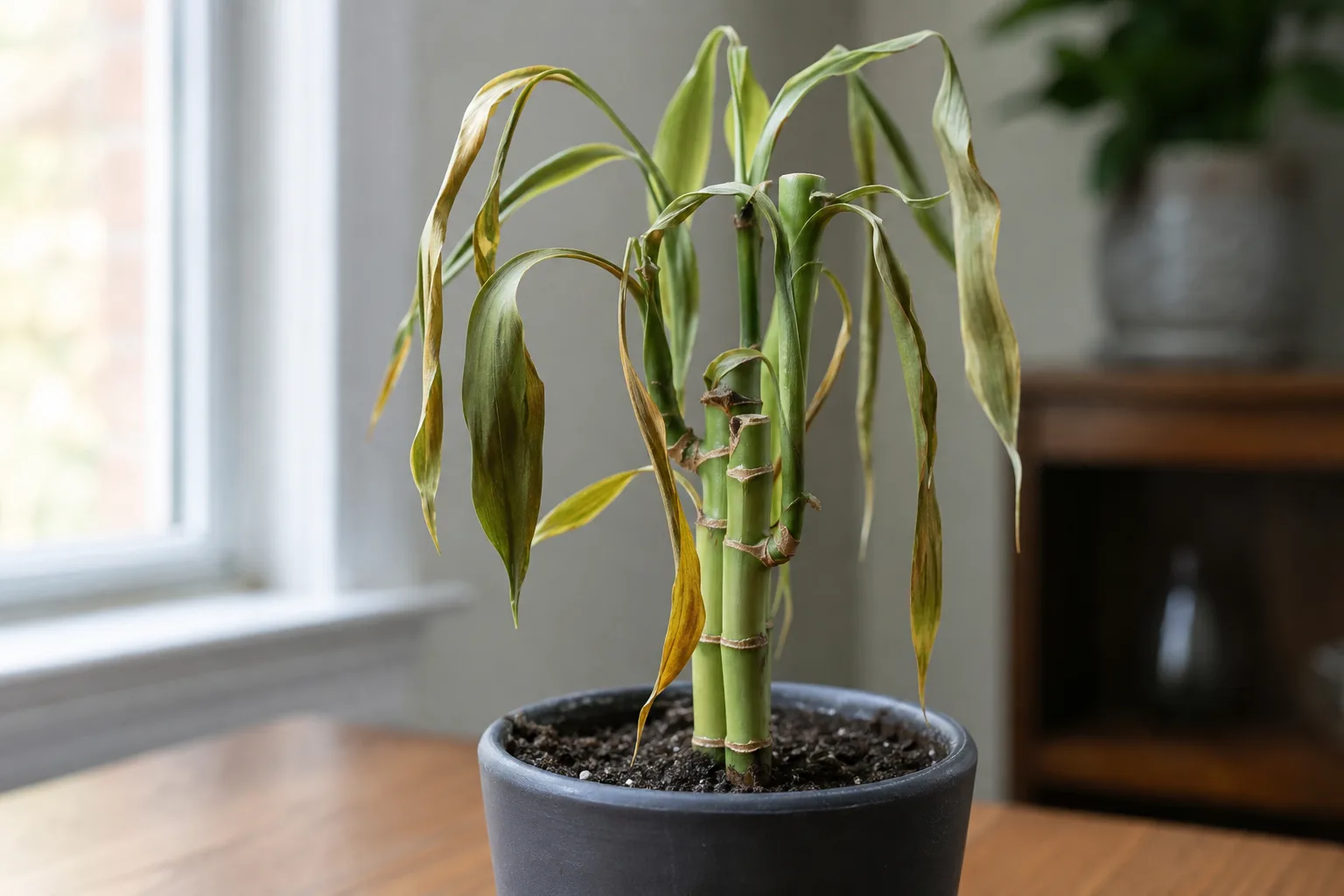
Transplant Shock on Lucky Bamboo: Causes, Checks & Fixes
This guide covers transplant shock on Lucky Bamboo. See also the general Transplant Shock guide, watering, and light pages for this plant.
Transplant Shock on Lucky Bamboo: Causes, Checks & Fixes
Quick answer
Transplant shock on Lucky Bamboo (Dracaena sanderiana) appears as drooping leaves and stalled growth after Lucky Bamboo repotting guide or switching between water vases and soil. First step: place in bright, indirect light, use filtered water, and hold fertilizer until roots re-establish.
Moving from vase to soil is a major shift - Dracaena sanderiana is much less difficult to maintain in soil long term, but roots adapted to water need time to function in mix. Shock is temporary if stems stay firm.
What transplant shock looks like on Lucky Bamboo
Early shock: Leaves droop or curl slightly within one to three days of repotting, root trimming, or medium change. Growth pauses - no new leaves for two to four weeks despite warm conditions.
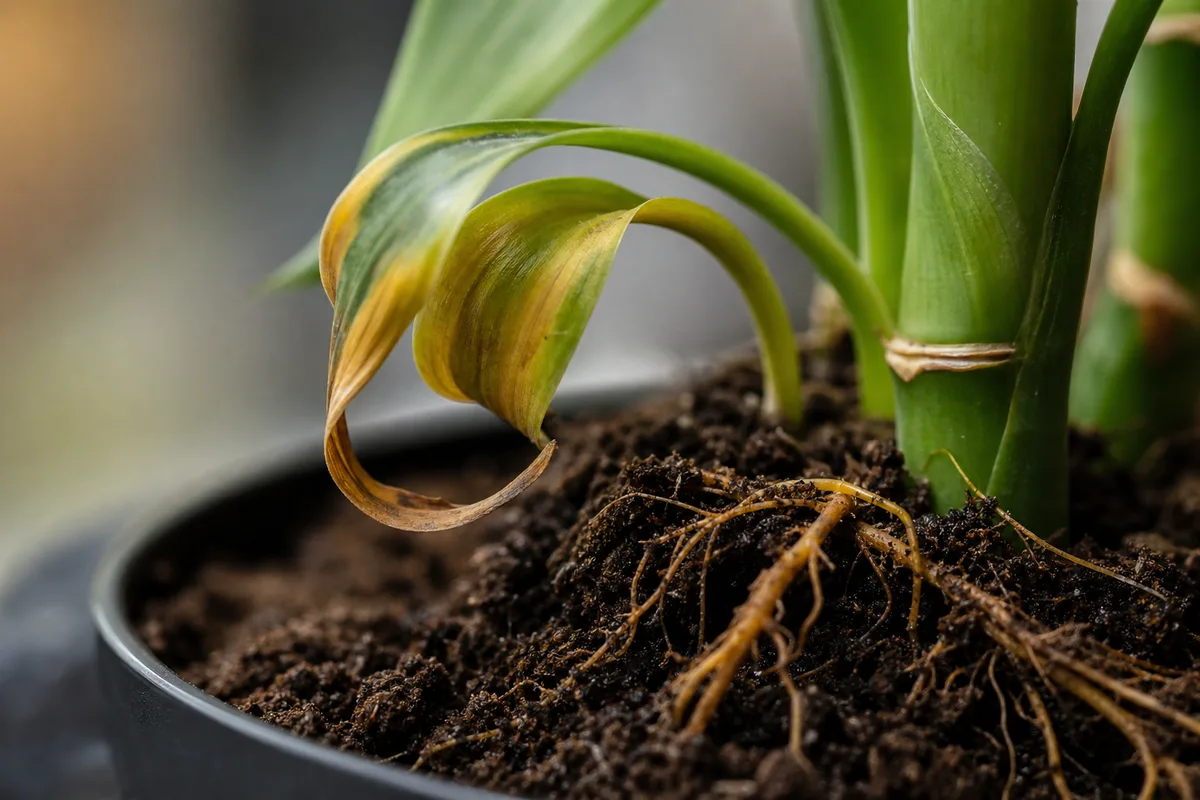
Transplant Shock symptoms on Lucky Bamboo - compare with healthy tissue on the same plant.
Versus rot: Stems remain firm and green at nodes. Roots may look shortened after trimming but should not be uniformly mushy. Vase water stays relatively clear if changed promptly.
In water culture after disturbance: canes may wilt until new water roots stabilize on trimmed sections. In soil culture after moving from vases: soil roots are underdeveloped - leaves droop while fine roots grow into mix.
Braided arrangements shock unevenly when one cane’s roots were damaged more than others - outer stems may droop while inner canes look fine.
Normal post-repot pause differs from decline: shock ** stabilizes** within two weeks; rot ** worsens** with yellow climbing stems and soft tissue.
Why Lucky Bamboo gets transplant shock
Root disturbance breaks the water uptake pathway. Even gentle repotting severs fine root hairs that absorb moisture - leaves wilt until replacements form.
Water-to-soil transitions shock most because roots morphologically adapted to submerged culture must grow new tissue for aerated mix. New roots will usually form within 2 to 3 weeks from healthy cane cuttings - full soil establishment can take longer on whole plants.
Soil-to-water moves also shock: soil roots rot if submerged without acclimation. Always rinse soil fully and trim damaged roots before vase placement.
Repotting into dry mix then flooding, or into wet mix in dim light, extends shock. Easily grown in evenly moist soil means consistent moisture - not bone-dry then saturated cycles.
Over-fertilizing immediately after repot burns tender new root tips on a slow-growing species still recovering.
How to confirm the cause
- Timing - Symptoms began within days of repotting or medium switch?
- Stem firmness - Solid nodes vs. mushy base tissue.
- Water clarity - Clear vase water after change vs. immediate cloudiness indicating rot.
- Soil moisture - Evenly moist, not waterlogged; pot drains freely.
- Root appearance - Shortened but firm white roots vs. brown slime.
- Pre-repot health - Was the plant stressed by rot or pests before the move?
If mushy stems or cloudy water appear without a repot event, suspect overwatering and stem rot instead.
First fix for Lucky Bamboo
Stabilize environment - do not disturb again.
Keep in bright, indirect light. For soil: water when the top inch of soil is dry - slightly drier than usual while roots grow. For vases: change water weekly with filtered or distilled water; submerge roots and one inch of stem.
Stake tall drooping canes loosely until roots anchor. No fertilizer for four weeks minimum.
Step-by-step recovery
- Confirm firm stems; if soft, treat as rot - trim and repot fresh.
- For new soil plants: verify drainage holes; water lightly once, then wait for dry-down.
- For new vase plants: full water change; rinse pebbles; correct submersion depth.
- Maintain stable temperature - avoid nights below 65°F during recovery.
- Resist repotting again - double disturbance kills recovery.
- After four weeks, apply quarter-strength fertilizer once if new growth appears.
- For failed water-to-soil moves, propagate firm cane sections in clean water as backup.
When transitioning to soil long term, use well-drained potting soil in a pot only slightly larger than the root mass.
Recovery timeline
Same-medium repots: drooping often resolves within one to two weeks. Water-to-soil transitions: two to six weeks before upright leaves and new shoots.
New roots will usually form within 2 to 3 weeks on cane cuttings - whole-plant soil transitions may match or exceed that window.
Causes to rule out
- root rot on Lucky Bamboo from wet repot - Cloudy water, mushy roots, climbing yellow leaves.
- underwatering on Lucky Bamboo - Dry pot, light weight, wrinkled canes with no recent repot.
- Fluoride shock - Tip burn after first tap-water fill post-repot; stems stay firm.
- Pests - Stippling or webbing unrelated to repot timing.
What not to do
Do not repot again out of impatience. Do not fertilize heavily to “boost” recovery. Avoid direct sun on stressed plants - direct sunlight damages leaves. Do not keep soil soggy to fix droop. Do not submerge soil roots deep in vase water without acclimation.
How to prevent transplant shock next time
Repot during active warm-season growth when possible. Pre-moisten well-drained potting soil before filling. When switching water to soil, rinse all old medium from roots and trim any decay first.
For vase culture after soil removal, place in water immediately - minimize air exposure. Change water weekly throughout transition.
Lucky Bamboo care cross-check
Transplant shock and rot both droop leaves - firm stems and clear water distinguish shock. Pair any medium change with filtered water and Lucky Bamboo light guide; Dracaena species are easily affected by fluoride during vulnerable recovery windows.
When to worry
Escalate if drooping worsens after two weeks, stems soften, or vase water fouls rapidly. Lucky bamboo is toxic to pets - secure plants and discard trimmed root debris after repotting.
Conclusion
Transplant shock on Lucky Bamboo is temporary wilting after root disturbance or medium changes between water and soil. Keep firm-caned plants in bright indirect light with conservative filtered watering, avoid repeat repots and fertilizer, and expect new roots within two to six weeks before growth resumes.
When to use this page vs other Lucky Bamboo guides
- Lucky Bamboo watering guide - Use for routine moisture checks before assuming transplant shock is the main issue.
- Lucky Bamboo problems hub - Browse all 41 common issues on this species.
- Leaf Drop on Lucky Bamboo - Different entry point when symptoms overlap with transplant shock.