Soil Too Alkaline on Lucky Bamboo: Causes, Checks & Fixes
Quick answer
Alkaline soil on Lucky Bamboo locks iron and causes yellowing leaves with green veins. First step: test soil pH, repot into slightly acidic indoor potting mix, and switch to filtered water - then hold fertilizer until new growth greens up.
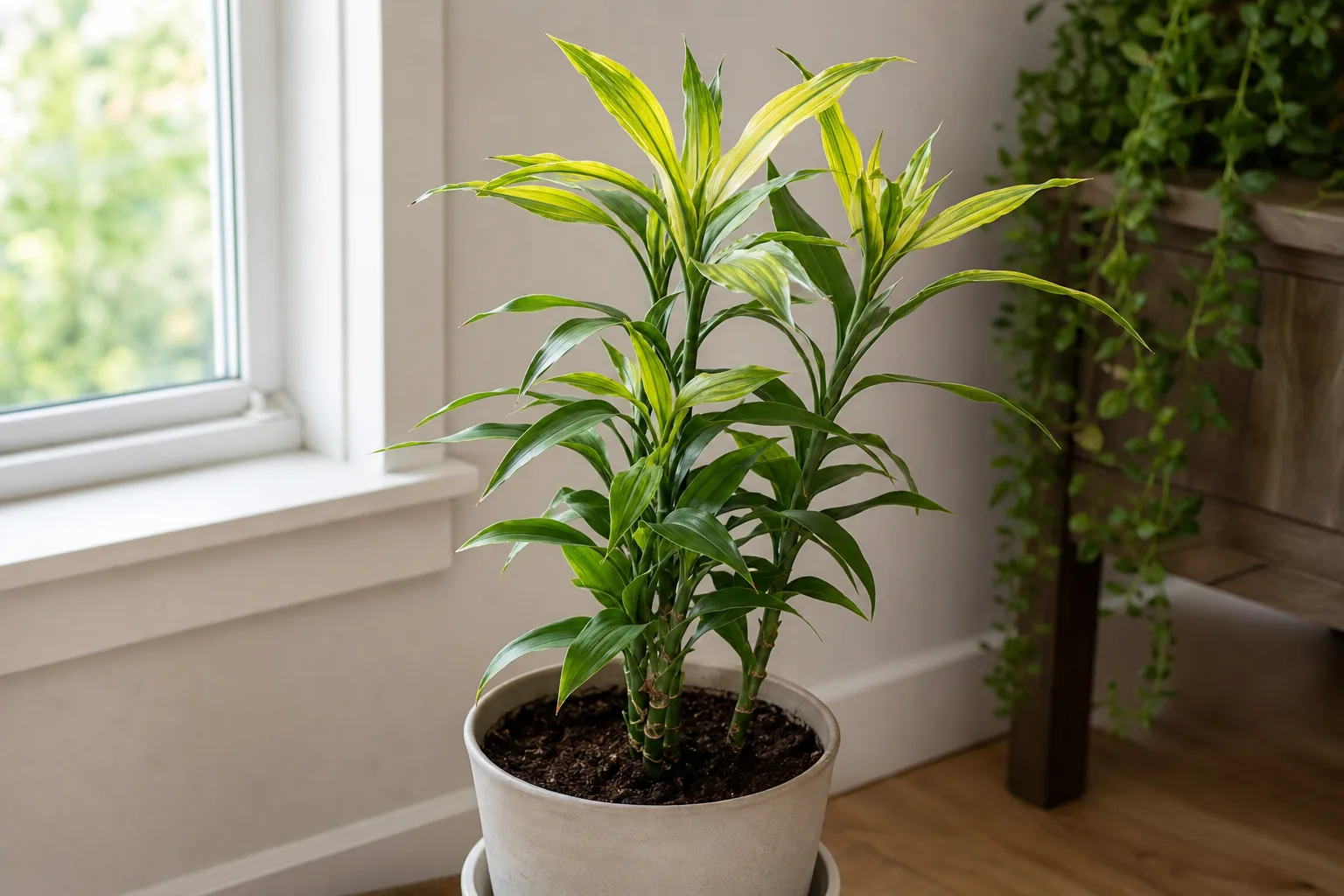
Soil Too Alkaline on Lucky Bamboo: Causes, Checks & Fixes
This guide covers soil too alkaline on Lucky Bamboo. See also the general Soil Too Alkaline guide, watering, and light pages for this plant.
Soil Too Alkaline on Lucky Bamboo: Causes, Checks & Fixes
Quick answer
Soil too alkaline for Lucky Bamboo (Dracaena sanderiana) causes interveinal chlorosis - yellow leaves with green veins - because iron becomes unavailable. First step: test soil pH, repot into slightly acidic well-drained potting soil, and water with filtered or distilled water.
Dracaena sanderiana tolerates acid, neutral, and alkaline soil pH ranges in the landscape, but chronically high pH in containers combined with hard tap water pushes indoor plants into nutrient lockout. Water-culture plants do not face soil alkalinity - switch diagnosis to fluoride sensitivity if tips brown in vases.
What alkaline soil looks like on Lucky Bamboo
Soil-grown Lucky Bamboo in overly alkaline mix shows yellowing new leaves while veins stay green - classic iron chlorosis. Older leaves may remain green initially while the newest tips pale. Growth slows as the plant cannot produce chlorophyll efficiently.
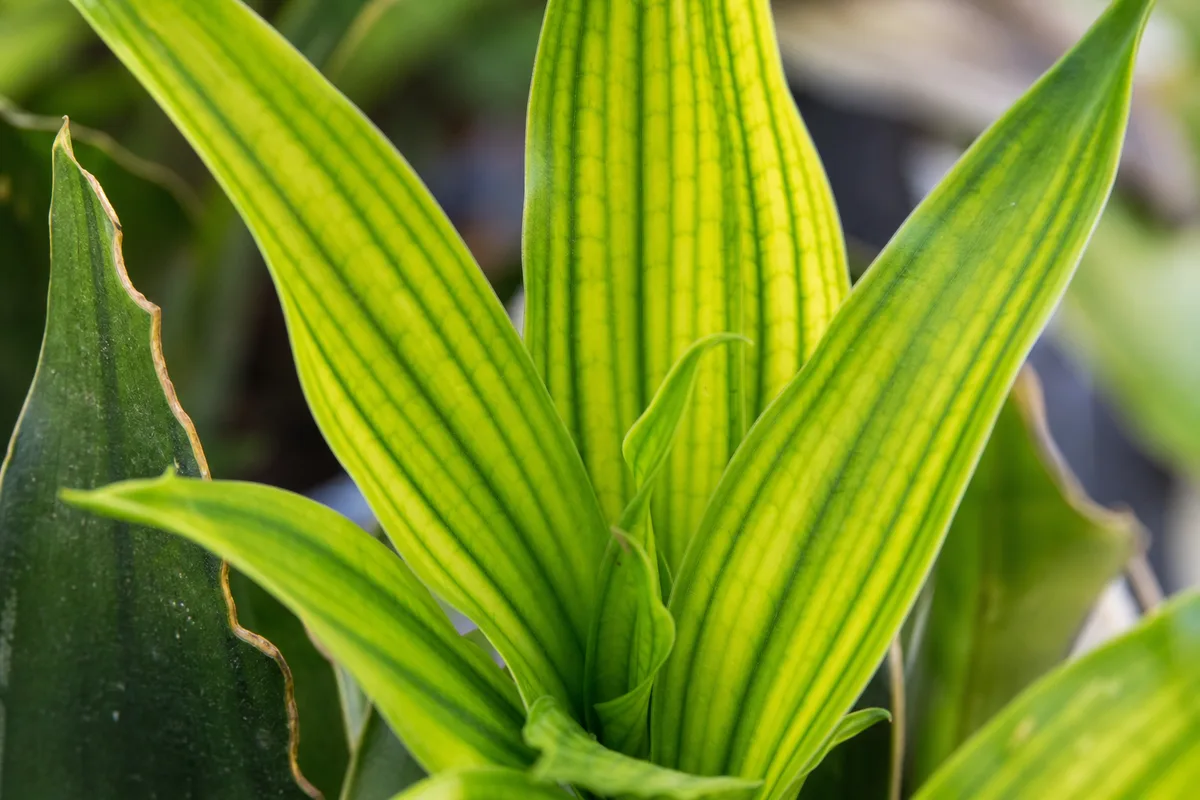
Soil Too Alkaline symptoms on Lucky Bamboo - compare with healthy tissue on the same plant.
Leaf tips may also brown from fluoride in tap water, which compounds alkaline-soil stress. Stems usually stay firm unless overwatering accompanies the pH problem.
In water culture, alkalinity does not apply to soil chemistry. Yellowing in vases more often traces to fluoride, chlorine, or stagnant water - not pH. Confirm culture type before Lucky Bamboo repotting guide for alkalinity.
Advanced chlorosis turns entire new leaves yellow-white. Without correction, the plant stops producing healthy foliage entirely.
Why Lucky Bamboo soil becomes too alkaline
Container soil alkalinity rises from hard tap water depositing calcium and magnesium, limestone in potting mix or top-dressing, and concrete or clay pots leaching minerals over time.
Lucky bamboo requires a moist potting mix - frequent watering with alkaline city water gradually shifts pH upward in the limited soil volume of a houseplant pot.
Generic “all purpose” mixes with added lime suit many vegetables but push dracaenas toward the upper pH range indoors. Gift plants repotted into garden soil or cactus mix with excess limestone worsen the trend.
Dracaena species are easily affected by fluoride in tap water - alkaline water often carries both high pH minerals and fluoride, producing combined tip burn and leaf yellowing that confuses diagnosis.
How to confirm the cause
Confirm in this order:
- Culture type - Alkalinity applies to soil pots only.
- pH test - Reading above 7.0–7.5 with chlorosis confirms alkaline conditions; below 6.5 with chlorosis suggests other nutrient issues.
- Leaf pattern - Interveinal yellowing on new leaves points to iron lockout from high pH; uniform yellowing may be overwatering.
- Water source - Hard, alkaline tap water supports the diagnosis.
- Mix review - Check label for limestone or dolomite; garden soil in pots often runs alkaline.
- Root health - Firm roots with chlorosis means pH stress; mushy roots mean rot instead.
Fluoride tip burn alone with green leaves and firm roots is a water-quality issue, not alkalinity.
First fix for Lucky Bamboo
Repot into fresh slightly acidic indoor potting mix and switch to filtered or low-mineral water.
Choose a mix labeled for indoor tropical plants without added lime. Use well-drained potting soil with perlite for porosity. Water when the top inch of soil is dry using filtered water consistently.
Hold fertilizer for four weeks after repotting - feeding stressed plants before pH stabilizes adds salt without fixing chlorosis.
Step-by-step recovery
- Test current soil pH to confirm alkalinity before repotting.
- Remove plant from old mix; rinse roots gently with filtered water.
- Repot into acidic to neutral indoor mix in a pot with drain holes.
- Water thoroughly once with filtered water; empty the saucer.
- Place in bright, indirect light to support new leaf production.
- Watch new leaf tips - they should emerge greener within three to six weeks.
- Resume modest fertilizer only after new growth looks healthy.
Avoid iron foliar sprays unless you understand the underlying pH issue - they mask symptoms temporarily without fixing soil chemistry.
For water-culture yellowing: fully change water weekly with filtered water instead of repotting for pH.
Recovery timeline
New leaves should show improved color within three to six weeks after repotting and water correction. Older chlorotic leaves rarely re-green fully.
Severe long-term alkalinity may require a second repot after six months if hard tap water continues without filtration. Easily grown in evenly moist soil in appropriate pH supports steady recovery once conditions align.
Causes to rule out
| Lookalike | Key difference from alkaline soil |
|---|---|
| Overwatering | Yellow leaves with wet mix and possible stem rot |
| Fluoride damage (vase) | Brown tips with green leaves; no soil pH issue |
| Nitrogen deficiency | Uniform older-leaf yellowing, not interveinal on new growth |
| Low light | Pale overall growth, not vein-specific chlorosis |
What not to do
Do not add vinegar to soil repeatedly - pH swings stress roots. Do not use garden lime or eggshell top-dressing. Avoid repotting into succulent mix with high pH unless amended. Do not fertilize heavily on chlorotic plants - salts accumulate in stressed root zones.
How to prevent alkaline soil next time
Use indoor tropical potting mix without limestone and water with filtered, rain, or distilled water. Flush soil every two to three months by watering until runoff clears.
Change vase water weekly for water-culture plants to avoid confusing water-quality yellowing with soil pH issues. Test pH annually on long-term soil specimens.
Consider soil culture with filtered water long term - Dracaena sanderiana is much less difficult to maintain in soil when pH and drainage stay consistent.
Related Lucky Bamboo problems
- Brown tips - fluoride in water culture vs. soil chlorosis
- Nutrient lockout - salt crust with pale growth
- Overwatering - yellow leaves on wet mix
- Salt build-up - mineral deposits from hard water
Lucky Bamboo care guides
- Soil - acidic indoor mix selection
- Watering - filtered water habit
- Fertilizer - resume after pH stabilizes
- Overview - vase vs. soil routing
When to worry
Escalate if chlorosis spreads to every new leaf within weeks, stems soften, or growth stops entirely. Lucky bamboo is toxic to pets - keep repotting debris away from cats and dogs.
Conclusion
Alkaline soil on Lucky Bamboo causes interveinal chlorosis by locking iron in container mix, especially when hard tap water deposits minerals over time. Confirm with pH testing on soil-grown plants, repot into slightly acidic indoor mix, use filtered water, and judge recovery by the color of new leaves.
When to use this page vs other Lucky Bamboo guides
- Lucky Bamboo watering guide - Use for routine moisture checks before assuming soil too alkaline is the main issue.
- Lucky Bamboo problems hub - Browse all 41 common issues on this species.