Thrips on Lucky Bamboo: Causes, Checks & Fixes
Quick answer
Thrips on Lucky Bamboo cause silvery stippling, distorted new leaves, and black specks on strappy foliage. First step: isolate the plant, rinse all leaf surfaces above the water line, and treat with insecticidal soap or neem oil weekly.
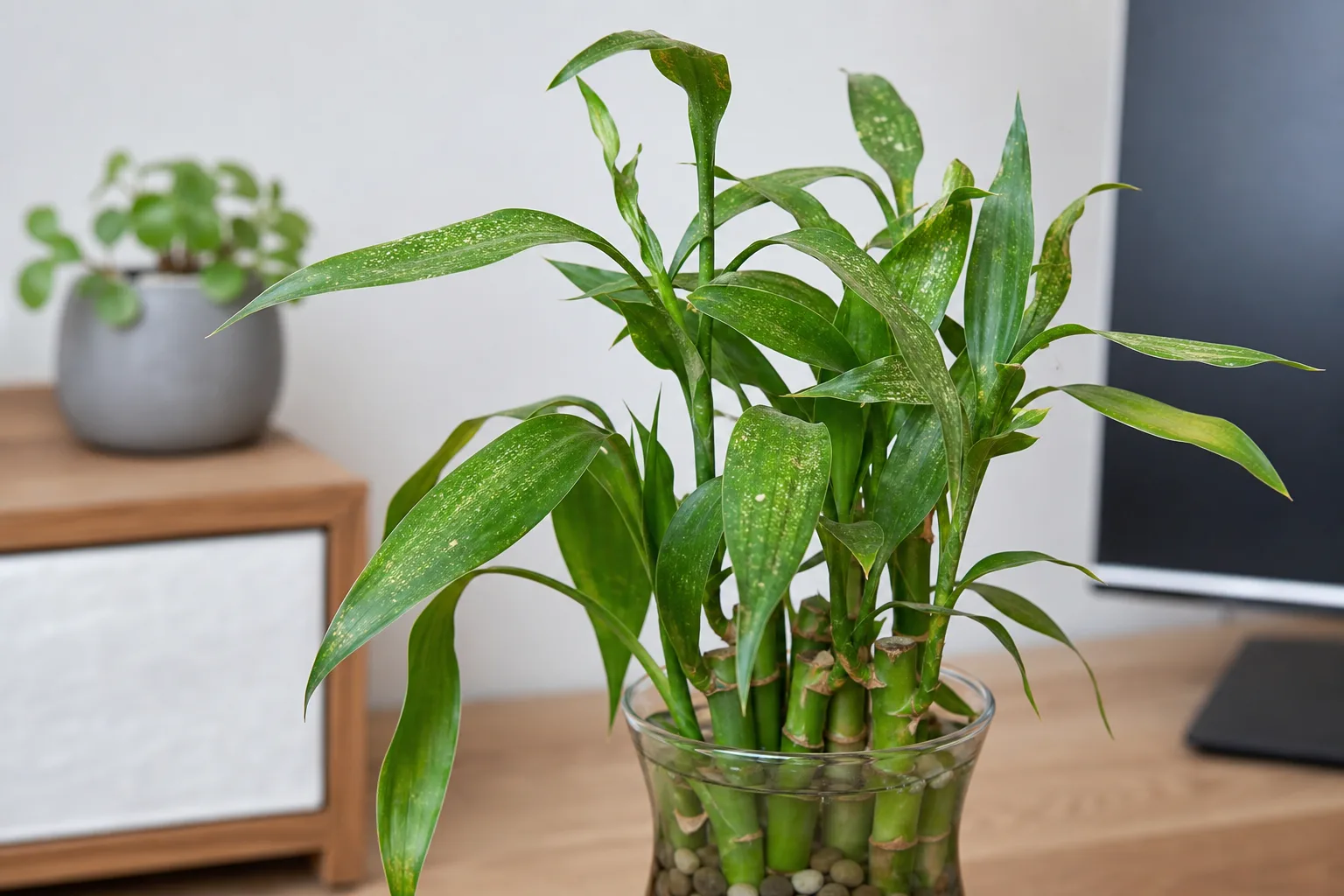
Thrips on Lucky Bamboo: Causes, Checks & Fixes
This guide covers thrips on Lucky Bamboo. See also the general Thrips guide, watering, and light pages for this plant.
Thrips on Lucky Bamboo: Causes, Checks & Fixes
Quick answer
Thrips on Lucky Bamboo (Dracaena sanderiana) show up as silvery stippling, twisted new leaves, and black specks on strappy foliage. First step: isolate the plant, rinse the leaves off above the water line, and apply neem oil or insecticidal soap per label directions.
Clemson Extension lists common pests on lucky bamboo that can be removed by hand, by rinsing, or by using neem oil or insecticidal soap. NC State notes banded greenhouse thrips among insect problems on Dracaena sanderiana - thrips require the same close inspection on new growth as mites and mealybugs.
What thrips look like on Lucky Bamboo
Thrips are slender insects less than 1/20 inch long - often yellow, brown, or black. They rasp leaf surfaces and suck cell contents, leaving silvery or bronze streaks on strappy Dracaena leaves.
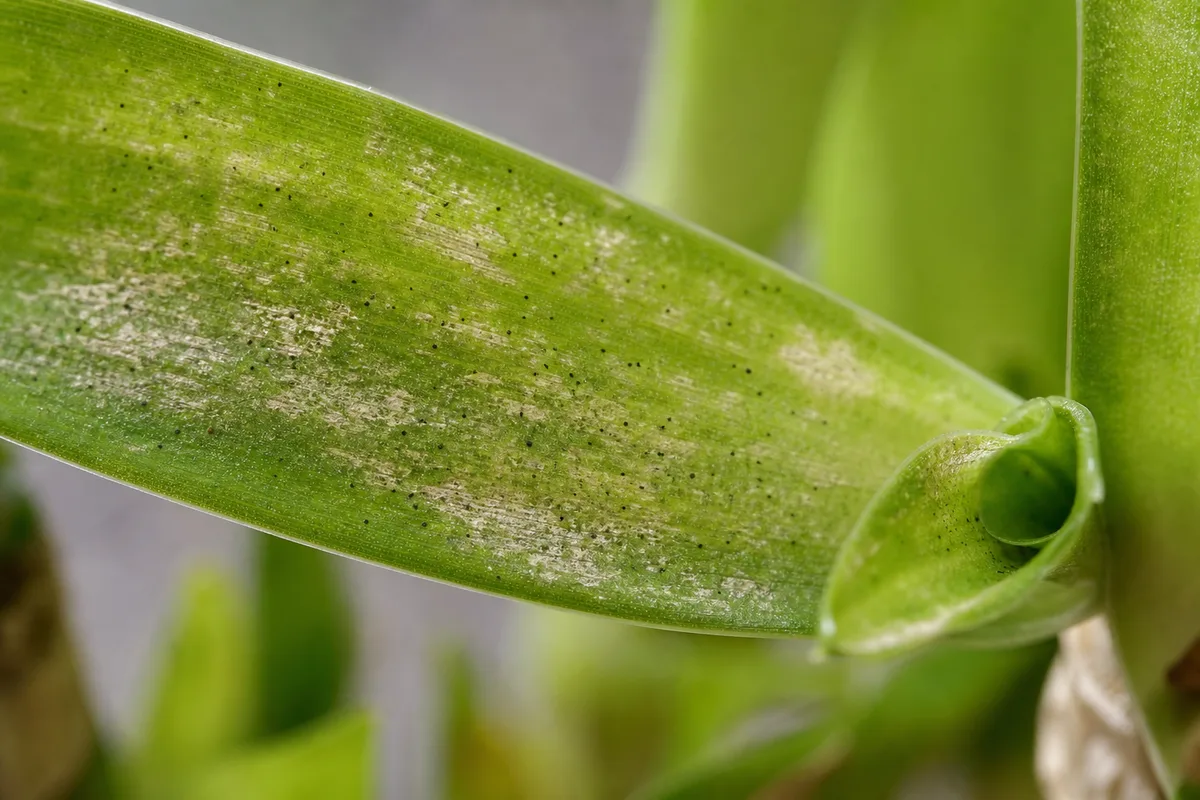
Thrips symptoms on Lucky Bamboo - compare with healthy tissue on the same plant.
Early signs: Pale speckling scattered across leaf faces, not confined to tips like fluoride burn. New leaves at cane tips may emerge streaked, curled, or smaller than normal. On narrow strap leaves, early dulling is easy to miss until stippling spreads across the blade.
Advanced damage: Widespread stippling, distorted leaf shape, and tiny black fecal dots on upper leaf surfaces. Lower leaves may yellow and drop while pests concentrate on tender top growth.
In water culture, thrips live on foliage above the water line - vase water clarity does not prevent infestation. In soil culture, pests colonize leaves and stem joints the same way; wet soil alone does not wash them off.
Unlike spider mites, thrips leave no silk webbing at leaf bases. Unlike mealybugs, there are no white cottony masses - just speckling and slender moving insects under magnification.
Why Lucky Bamboo gets thrips
Thrips arrive on new purchases, cut flowers, or infested neighbors. They fly weakly between plants on the same desk or windowsill.
Warm, dry indoor air stresses Dracaena foliage. Low humidity can cause browning of leaf tips on this species - the same dry conditions that weaken leaves help pest populations persist after initial contact. Office Lucky Bamboo beside monitors or HVAC vents faces extra low-humidity stress that slows recovery between treatments.
Braided and spiral Lucky Bamboo traps thrips in cane crevices where rinsing misses. Dim corners produce weak stretched growth that tolerates lower light with slower recovery from pest damage.
Lucky Bamboo in decorative vases with crowded leaves offers many feeding sites on new shoots - thrips prefer tender tissue at expanding tips.
How to confirm the cause
- Stippling pattern - Silvery specks across leaf face vs. marginal tip burn from tap water.
- Tap test - Shake foliage over white paper to dislodge thrips; they fall as tiny moving threads.
- New growth - Distorted or streaked emerging leaves strongly suggest thrips.
- Fecal specks - Black dots on leaves distinguish thrips from mite stippling alone.
- Webbing check - No silk at leaf axils rules out spider mites as primary pest.
- Neighbor plants - Stippling on nearby houseplants confirms spreading infestation.
Lookalike symptoms on Lucky Bamboo
| Symptom pattern | Thrips | Spider mites | Fluoride tip burn | Mealybugs | Physical abrasion |
|---|---|---|---|---|---|
| Speckling location | Across leaf face | Across leaf face | Tips and margins only | Around nodes | Random scrape lines |
| Webbing | None | Fine silk at leaf bases | None | None | None |
| Black fecal dots | Yes | Rare | No | No | No |
| Insects visible | Slender threads | Tiny dots | None | White cotton | None |
| New growth distortion | Common | Possible | No | Clustered at tips | No |
First fix for Lucky Bamboo
Isolate, rinse thoroughly, and apply insecticidal soap or neem oil weekly.
Move the arrangement away from other plants. Shower or wipe every leaf surface and cane crevice with lukewarm water. After drying, spray neem oil or insecticidal soap - Clemson notes these pests can be removed by hand, by rinsing, or by using neem oil or insecticidal soap.
Repeat weekly for at least four weeks. Thrips hatch on staggered cycles - in warm rooms the life cycle from egg to adult can complete in about two weeks, so one treatment rarely clears an infestation.
Step-by-step recovery
- Isolate infested Lucky Bamboo immediately.
- Vase-safe rinse (water culture):
- Cover the vase mouth with plastic wrap and tape it around each cane below the lowest leaf.
- Tilt the arrangement over a sink and rinse all foliage with lukewarm water - aim at undersides and braid crevice gaps.
- Do not raise the water level to wet leaves; keep roots submerged as usual.
- Let foliage dry fully before removing the wrap.
- If soap or oil dripped past the seal, dump and refill with filtered water rather than leaving residue in the reservoir.
- Soil-culture rinse - Shower the whole plant, including stem joints; let excess water drain before spraying.
- Separate tight braid sections if inner canes still show stippling after the first rinse.
- Apply labeled insecticidal soap or neem; coat undersides where thrips hide. Spray in a ventilated room - oils can leave residue on nearby surfaces.
- Keep in bright, indirect light while recovering - avoid direct sun on treated foliage.
- Re-treat weekly; inspect with magnification between cycles. Repeat applications are often needed until live thrips disappear for two consecutive checks.
- Treat neighboring plants if any stippling appears - check aphids and mealybugs on shared shelves.
- Resume weekly water changes with filtered water after soap residues rinse off vase plants.
For soil-grown plants, water when the top inch of soil is dry - avoid overwatering on Lucky Bamboo stressed foliage.
Recovery timeline
Light infestations may clear within three to four weekly treatment cycles. Braided plants with hidden thrips in inner canes can take six to eight weeks if stems are not separated for full coverage.
Stippled old leaves do not revert to solid green - judge success by clean, undistorted new leaves at nodes.
What not to do
Do not return to a shared shelf before two thrip-free weeks. Avoid undiluted household sprays not labeled for plants. Do not apply oil treatments in direct hot sun - direct sunlight damages leaves. Do not ignore inner braid canes. Do not let soap or neem drip into vase water on treatment days. Do not fertilize heavily while pests feed on tender new tissue.
How to prevent thrips next time
Quarantine new Lucky Bamboo and nearby plants for two weeks. Rinse foliage monthly in lukewarm water. Inspect new growth weekly with a hand lens.
Hang blue or yellow sticky traps beside shelf arrangements to catch flying adults - traps monitor spread but do not replace leaf rinsing.
Keep plants in bright, indirect light with stable humidity - stressed slow-growing Dracaena recover slowly from reinfestation. Move desk plants away from dry heat vents; see low humidity when tips brown between pest cycles.
Related Lucky Bamboo problems
- Spider mites - stippling with webbing, not black fecal dots
- Mealybugs - white cotton at nodes
- Brown tips - fluoride margins without insects
- Aphids - sticky honeydew on new shoots
- Low humidity - dry air that slows recovery
- Watering - filtered water and weekly vase changes after treatment
Lucky Bamboo care guides
- Overview - vase vs. soil culture hub
Lucky Bamboo care cross-check
Thrip control fails if fluoride in tap water keeps leaves stressed while pests feed on new shoots. Pair rinsing treatments with filtered water and proper light for best recovery in both water and soil culture.
When to worry
Escalate when new leaves consistently fail to open after four treatment cycles - consider discarding severely infested side shoots and propagating firm cane sections in clean water. Partially unbraid multi-cane arrangements when inner stippling persists after two full treatment rounds. Lucky bamboo is toxic to pets - rinse plants where pets cannot drink treatment runoff; contact a veterinarian if a pet ingests treated foliage.
Conclusion
Thrips on braided vase Lucky Bamboo often hide on inner rear canes the first rinse misses. Cover the vase, rinse and spray every leaf base above the water line, and partially open tight braids when stippling returns - clean new shoots at the nodes are the sign treatment is working.
When to use this page vs other Lucky Bamboo guides
- Lucky Bamboo watering guide - Use for routine moisture checks before assuming thrips is the main issue.
- Lucky Bamboo problems hub - Browse all 41 common issues on this species.
- Brown Tips on Lucky Bamboo - Different entry point when symptoms overlap with thrips.
- Yellow Leaves on Lucky Bamboo - Different entry point when symptoms overlap with thrips.