Transparent Leaves on Lucky Bamboo: Causes, Checks & Fixes
Quick answer
Transparent leaves on Lucky Bamboo usually mean waterlogged tissue from overwatering, cold exposure, or edema from uneven watering. First step: check roots and soil moisture or vase water clarity, then correct watering before leaves fail.
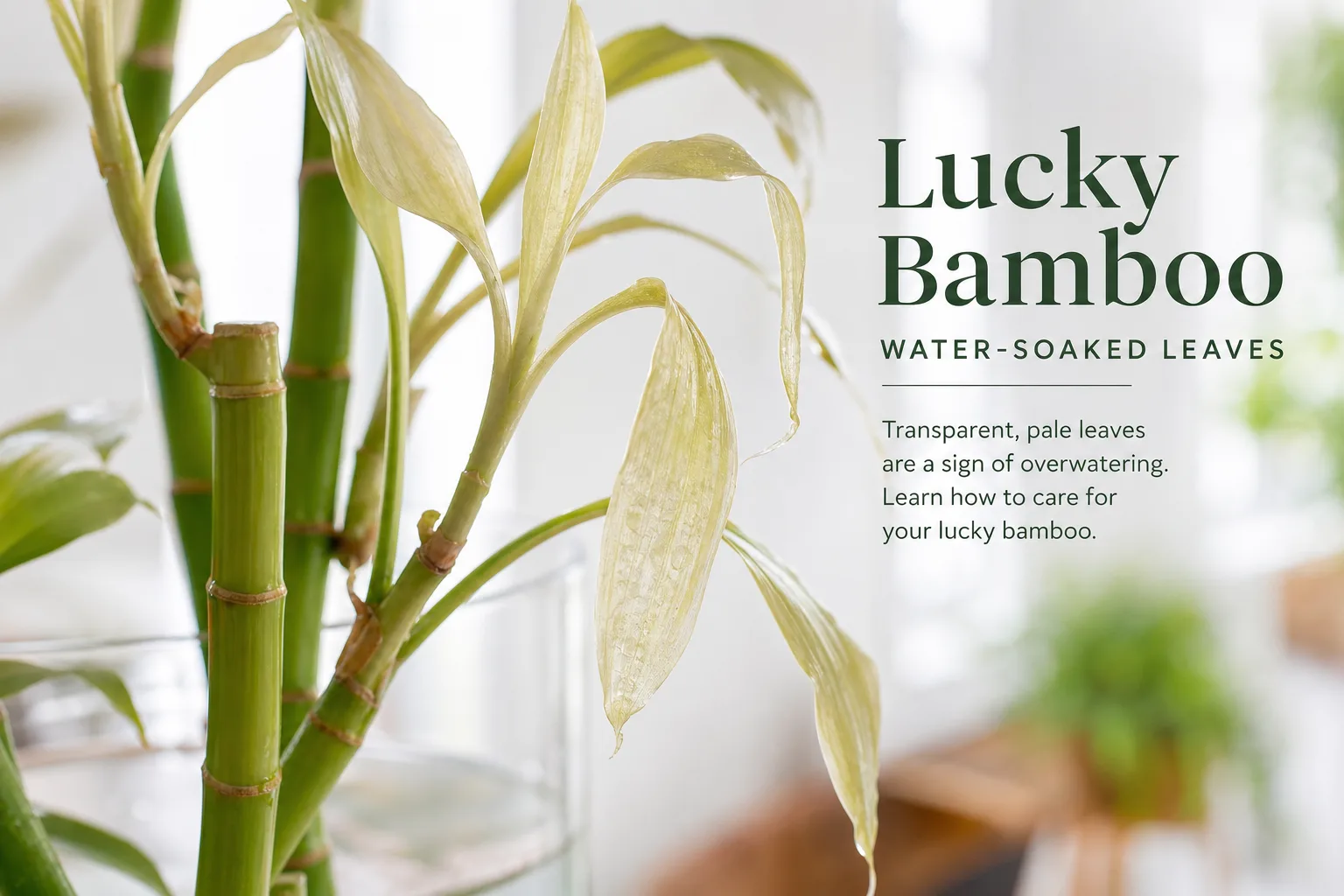
Transparent Leaves on Lucky Bamboo: Causes, Checks & Fixes
This guide covers transparent leaves on Lucky Bamboo. See also the general Transparent Leaves guide, watering, and light pages for this plant.
Transparent Leaves on Lucky Bamboo: Causes, Checks & Fixes
Quick answer
Transparent leaves on Lucky Bamboo (Dracaena sanderiana) are an early moisture warning - glassy, water-soaked patches often appear before yellowing spreads and signal cells took up more water than the leaf can hold. Common triggers are chronic wet roots from overwatering, stagnant vase water, cold drafts after watering, or edema when uptake outpaces transpiration in dim rooms.
First step: inspect roots and check whether soil stays wet below the surface or vase water is cloudy - then stop adding moisture. Water soil when the top inch is dry or fully change vase water with filtered water. Transparent tissue will not re-green; recovery shows up as solid new leaves, not repaired glassy patches.
What transparent leaves look like on Lucky Bamboo
Early glassy patches
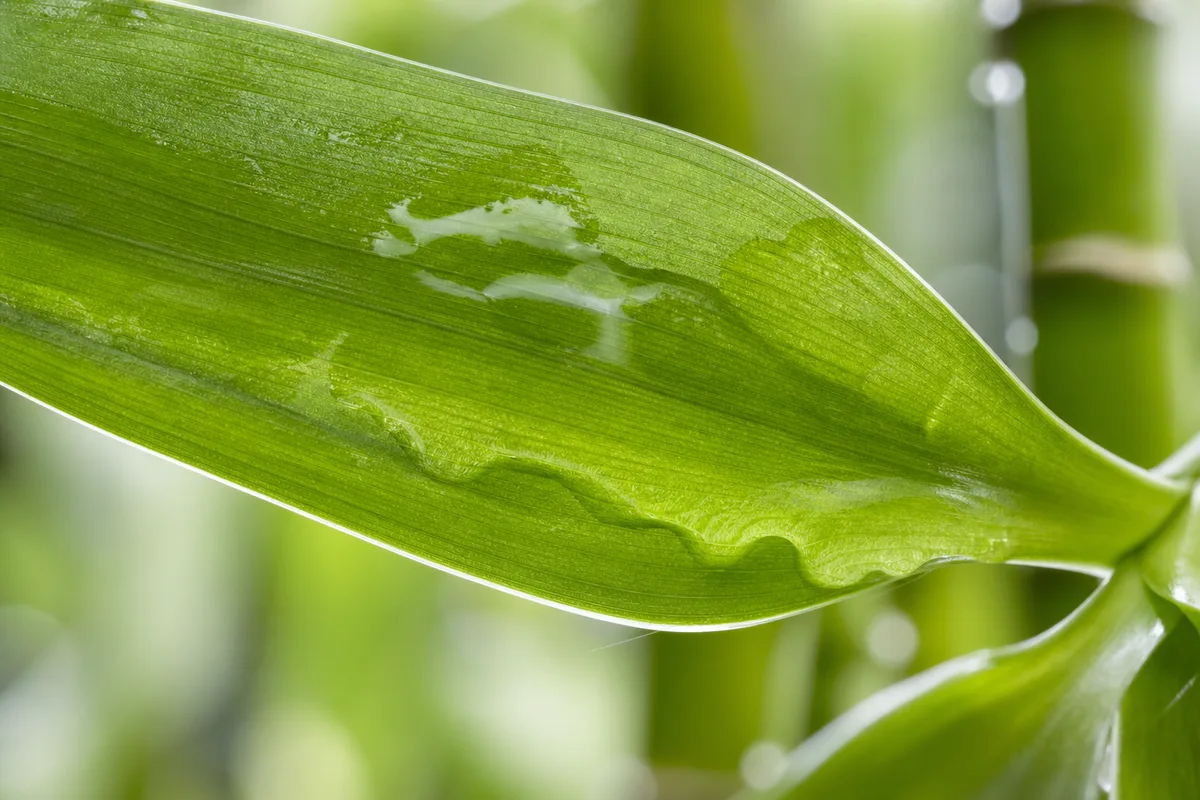
Transparent Leaves symptoms on Lucky Bamboo - compare with healthy tissue on the same plant.
Patches of leaf tissue turn lighter, glassy, or semi-transparent - as if water sits inside the cells. Newer leaves near cane tips show damage first because they are most turgid and vulnerable. Press gently; affected areas feel mushy rather than firm.
Advanced collapse
Transparent sections brown and collapse into papery spots. Leaves may feel soft or limp despite wet soil or full vase water. Lower leaves yellow while upper leaves show water-soaked streaks - a pattern that often precedes wider yellow-leaf failure if moisture stays wrong.
Soil culture signs
Saturated mix for days produces the classic overwatering pattern on strappy Dracaena foliage. A sour smell from the drain hole and a heavy pot that has not dried for a week support wet-root diagnosis. Unlike fluoride tip burn, transparency crosses leaf faces in blotches, not just margins.
Vase culture signs
Chronic stagnant water with bacterial bloom can weaken roots so leaves lose normal structure. Transparency may pair with cloudy water that indicates bacteria. Topping off old water without a full weekly change mimics overwatering even when the vase looks full.
Why Lucky Bamboo gets transparent leaves
Chronic wet roots and cell burst
Soil kept constantly wet deprives roots of oxygen. Damaged roots cannot regulate water uptake, so leaves absorb excess moisture until cells burst - creating transparent or edema-like patches. Overwatering can cause yellowing of the leaves and rotting of the stems in soil-grown Dracaena; glassy tissue is often the first visible sign.
Easily grown in evenly moist soil does not mean soggy. Pots without drainage, saucers holding runoff, or watering on a calendar regardless of dry-down all cause saturation. See the overwatering guide for wet-root rescue depth beyond early glassy patches.
Cold draft after watering
Cold damage also produces water-soaked tissue. Bring indoors before nighttime temperatures drop below 65°F - chill near drafty windows after watering can leave leaves glassy overnight. Vase water on a cold windowsill conducts chill into roots faster than soil insulation. When roots stay firm but leaves glassed up after a known cold night, read the cold-damage guide for chill-specific recovery.
Edema with firm roots
Edema happens when the plant absorbs water faster than it transpires - common after a heavy soak in a dim office or sealed humid corner. Leaves show water-soaked blotches while roots remain firm and white. Low light slows water use, so dim wet soil stays saturated longer and extends the edema window.
Adding more water or heavy misting to “help” already glassy leaves in a cold room worsens cell burst and feeds vase bacterial bloom - the plant cannot release moisture it already holds.
Low light and winter slowdown
In winter, cool room temperatures plus short days slow transpiration. A vase that needed weekly changes in summer may look fine on day ten in a dim office while bacteria build invisibly on submerged stems. Soil pots in the same corner stay wet longer between drinks, producing the same transparent-tissue pathway as bright-room overwatering.
Fluoride in tap water on wet roots
Dracaena species are sensitive to fluoride in tap water. Fluoride alone usually browns tips, but chronic fluoride exposure in a vase that is never fully changed can weaken leaf tissue while roots sit in stale chemistry - glassy patches and tip burn may overlap. Switch to filtered or distilled water during recovery; details on tip-only burn sit in the brown-tips guide.
How to confirm the cause
- Moisture check - Soil wet below the top inch for many days? Vase water cloudy or foul?
- Root firmness - Mushy brown roots confirm overwatering; firm white roots suggest cold or edema alone.
- Temperature history - Recent cold window night or AC blast after watering?
- Light level - Dim corner plus frequent watering supports chronic wet roots or edema.
- Pattern - Water-soaked blotches vs. tip-only fluoride burn vs. uniform yellow without glassiness.
- Timeline - Appeared after a heavy soak, skipped water change for weeks, or a known chill event?
Lookalike comparison table
| Symptom pattern | Transparent leaves (this page) | Overwatering | Cold damage | Yellow leaves | Brown tips (fluoride) | Root rot |
|---|---|---|---|---|---|---|
| Leaf look | Glassy, water-soaked blotches | Yellow droop, may follow glassy stage | Pale or glassy after chill event | Uniform yellow, less glassy | Crispy tip margins, firm body | Yellow climb, wilt on wet roots |
| New vs. old growth | Newer tip leaves first | Lower leaves often first | Exposed side or all canes at once | Lower or widespread | Tip margins only | Lower fail, stem base soft |
| Root check | Mushy = wet roots; firm = edema/cold | Mushy brown roots | Often firm initially | Varies | Firm roots | Mushy, slimy roots |
| Vase water | Cloudy if stagnant | Cloudy, sour | May be cold, not always cloudy | Clear or cloudy | Usually clear | Cloudy, fast return |
| First move | Stop water, dry-down or full change | Dry-down or weekly change | Warm stable spot | Fix moisture + light | Filtered water | Root rot protocol |
| Read next | This guide | Overwatering | Cold damage | Yellow leaves | Brown tips | Root rot |
First fix for Lucky Bamboo
Dry out soil or refresh vase water - do not add more moisture.
For soil plants: stop watering until the top inch dries. If mix stays wet for a week, unpot, trim mushy roots, and repot into well-drained potting soil with open drainage.
For vase plants: dump all water, rinse pebbles, trim brown roots, and refill with filtered or distilled water. Submerge roots and one inch of stem only.
Move away from cold drafts. Place in bright, indirect light to help the plant use water at a healthy rate.
Mild, moderate, and severe branches
Mild - Firm canes, glassy patches on a few newer leaves, roots white and firm, vase water clear or only slightly hazy: withhold soil water until the top inch dries, or perform one full vase water change with pebble rinse. Re-check new growth in seven to ten days.
Moderate - Multiple glassy leaves, soil wet five-plus days, vase water cloudy, or some brown slimy roots but firm stem bases: unpot or lift canes, trim decayed roots with sterilized scissors, repot or refill with filtered water, remove fully collapsed transparent leaves. Follow the weekly change protocol.
Severe - Stem bases soft, transparency climbing nodes, or vase water clouds again within 48 hours of a full clean: follow root rot rescue the same day. Dry-down alone will not save mushy tissue. Braided displays where one cane softens in shared water may need separating firm sections before rot spreads through the bundle.
Step-by-step recovery
- Assess roots - trim decay; keep firm tissue only.
- For soil: repot if necessary; water lightly once, then wait for top-inch dry-down per the watering guide.
- For vases: full water change and pebble rinse; establish weekly schedule.
- Remove leaves that are fully collapsed and transparent - sterilize scissors between cuts.
- Hold fertilizer until new growth looks normal for two weeks.
- Adjust watering to light - brighter spots need more frequent checks, not more volume per drink.
- Monitor new leaves for two weeks; glassy tissue on fresh growth means moisture still too high.
If step 1 reveals mostly mushy roots and soft stem bases, stop here and switch to the root rot guide - do not wait for another dry-down cycle on rotting tissue.
Recovery timeline
Once watering corrects, new leaves should emerge solid green within three to six weeks. Old transparent patches brown and remain until trimmed or replaced naturally - they will not turn green again.
Root rot recovery from severe overwatering may take four weeks before any new leaf appears - patience after drainage fixes matters. Cool winter rooms slow that timeline even when watering is correct.
Causes to rule out
- Thrips or mite stippling - Silvery specks with insects visible; not water-soaked blotches.
- Fluoride damage - Brown crispy tips with firm leaf bodies; see brown tips.
- Sunburn - Bleached tan patches on sun-facing side only.
- Normal leaf aging - Lower leaves yellow uniformly without glassy tissue.
- Advancing root rot - Mushy stem bases and fast-returning cloudy water; see root rot.
What not to do
Do not water wilting transparent leaves without checking roots first - wilt from rot looks like thirst. Do not mist heavily in cold rooms on already glassy tissue. Avoid repotting into oversized pots. Do not top up cloudy vase water without a full change. Do not expect glassy patches to re-green - trim or wait for replacement growth.
How to prevent transparent leaves next time
Water when the top inch of soil is dry for potted plants. Change vase water weekly with filtered water per the watering guide.
Match watering to season and light. Empty saucers after every soil watering. Keep nighttime temps above 65°F for vase and soil plants alike. In dim winter offices, check soil or vase clarity on a calendar even when the plant looks fine - slow transpiration extends wet windows.
Related Lucky Bamboo guides
- Lucky bamboo overview
- Lucky bamboo watering
- Overwatering
- Cold damage
- Root rot
- Yellow leaves
- Brown tips
- Light
- Soil
When to worry
Escalate when transparency climbs stems, nodes soften, or vase water clouds again within 48 hours of changing. Lucky bamboo is toxic to cats and dogs - discard removed leaf tissue safely, wash hands after handling, and contact a veterinarian promptly if a pet ingests leaves or vase water.
Conclusion
Transparent Lucky Bamboo leaves mean cells took up too much water from wet roots, stagnant vase water, cold stress, or edema in slow-transpiration conditions. Confirm with moisture and root checks, correct watering rhythm, refresh water or repot with drainage, and judge recovery by solid new leaves - not by reversing glassy old tissue. If stems stay mushy 48 hours after a full reset, use the root-rot guide - not another top-up of cloudy water.