Yellow Seedlings on Lucky Bamboo: Causes, Checks & Fixes
Quick answer
Yellow seedlings on Lucky Bamboo are new side shoots or propagation cuttings turning pale or yellow before they root. First step: check water quality and light, trim any mushy tissue, and reroot firm green sections in fresh filtered water.
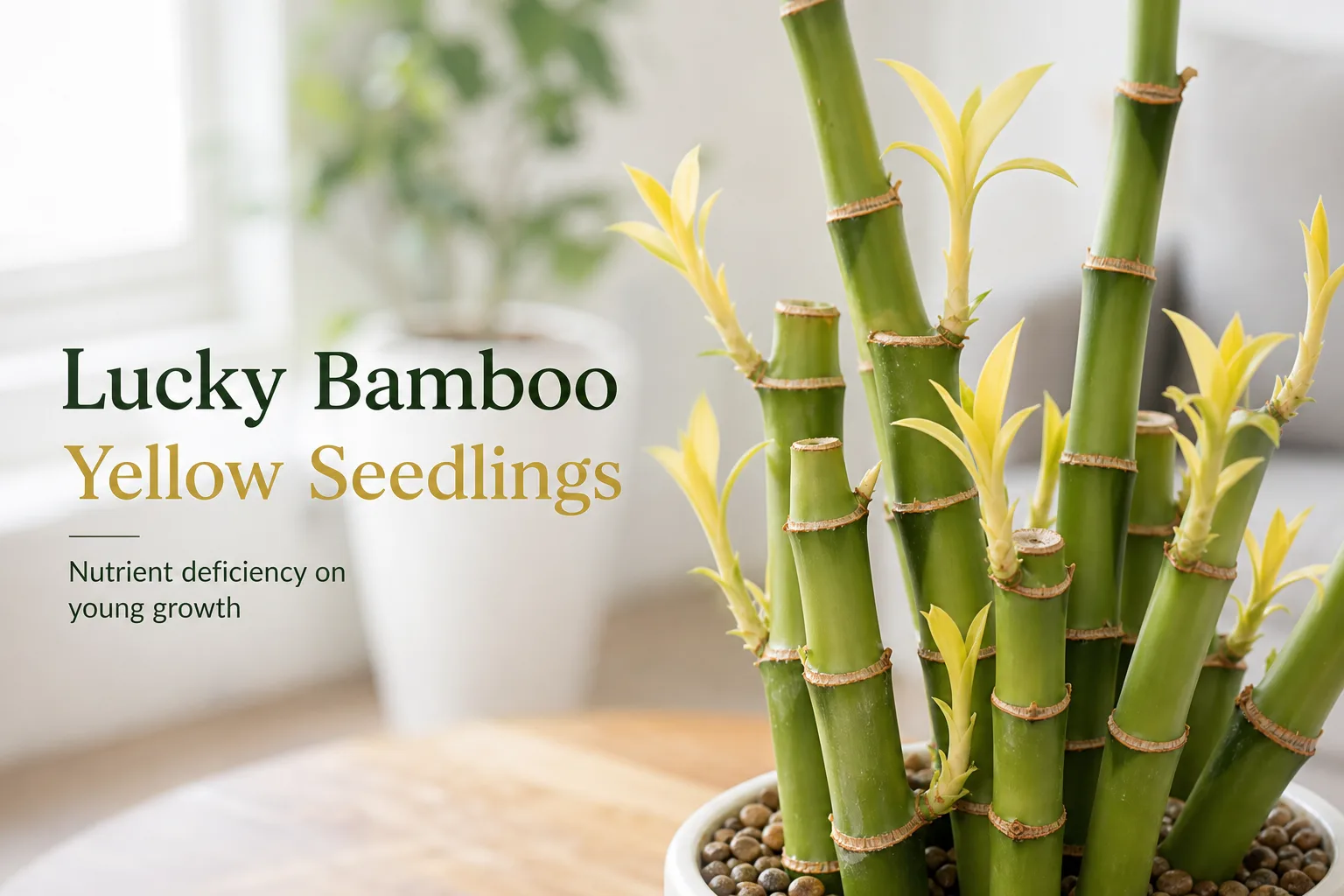
Yellow Seedlings on Lucky Bamboo: Causes, Checks & Fixes
This guide covers yellow seedlings on Lucky Bamboo. See also the general Yellow Seedlings guide, watering, and light pages for this plant.
Yellow Seedlings on Lucky Bamboo: Causes, Checks & Fixes
Quick answer
Yellow seedlings on Lucky Bamboo (Dracaena sanderiana) are new side shoots or propagation cuttings that turn pale, yellow, or lime-green before establishing roots. First step: switch to filtered or distilled water, move to bright, indirect light, and trim mushy tissue before rerooting firm green sections.
Lucky Bamboo is propagated from stem cuttings, not true seedlings - the term here means young offshoots. Dracaena species are easily affected by fluoride in tap water, which yellows tender new growth faster than mature canes.
What yellow seedlings look like on Lucky Bamboo
On the parent plant, small shoots emerge from nodes - often after pruning or when braids open. Healthy sprouts are bright green and firm. Yellow seedlings show uniform pale or yellow color on the new shoot while older cane tissue stays darker green.
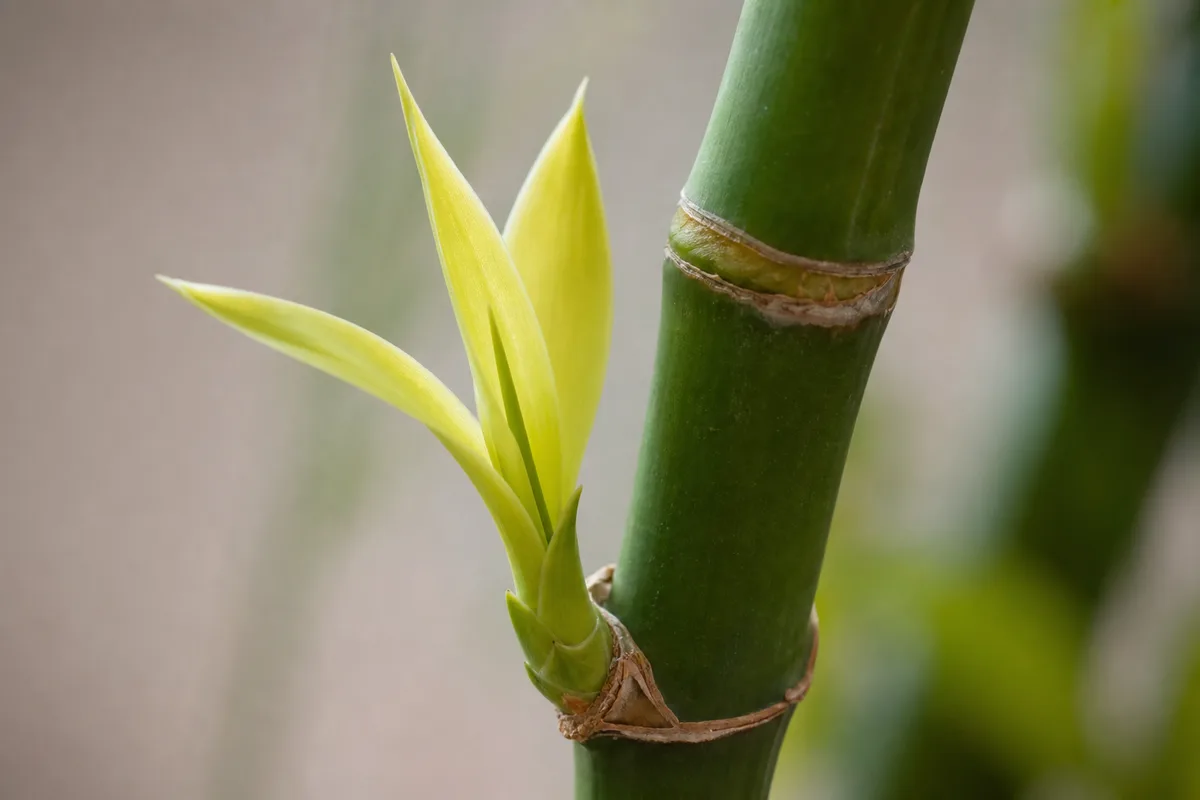
Yellow Seedlings symptoms on Lucky Bamboo - compare with healthy tissue on the same plant.
In water culture, cuttings in shared glasses may yellow from the base up if water is stale or chlorinated. Leaves on the sprout may yellow before roots appear.
In soil culture, new side shoots shaded inside tight braids yellow from lack of light while outer canes look fine.
Advanced failure turns shoots soft and brown at the attachment point - that is rot climbing from roots or submerged tissue, not cosmetic yellowing.
Why Lucky Bamboo seedlings turn yellow
Tap water chemistry is the top cause for water-rooted cuttings. Fluoride, chlorine, and chloramine accumulate in small propagation glasses. Change water weekly and use low-fluoride sources.
Low light on new shoots - especially sprouts trapped inside braided forms - cannot photosynthesize enough to stay green. Lucky Bamboo tolerates lower light with slower growth but new tissue yellows first.
Over-fertilization in propagation water burns tender shoots. Hold fertilizer until roots are at least two inches long.
Submerged leaves on cuttings rot and yellow the whole sprout. Only the cut end and bare nodes should sit below the water line - remaining foliage must stay above.
Stagnant water breeds bacteria that attack unrooted tissue, similar to cloudy vase rot on mature plants.
Cold water or drafts shock small shoots. Use room-temperature water when refilling propagation vases.
How to confirm the cause
- Sprout type - Attached side shoot vs. detached cutting in water.
- Water source - Tap vs. filtered; when water was last changed.
- Submersion depth - Leaves underwater yellow and rot quickly.
- Light exposure - Inner braid shoots vs. outer canes color comparison.
- Firmness - Soft yellow tissue is rot; firm yellow tissue is often water or light stress.
- Parent cane health - Yellow only on sprouts while parent stays green narrows to local conditions on the shoot.
First fix for Lucky Bamboo
Refresh water, correct light, and reroot firm cuttings.
For yellow cuttings in water: discard cloudy water, rinse the container, trim yellow or mushy tissue back to firm green, and refill with filtered water covering nodes but not leaves. Place in Lucky Bamboo light guide.
For attached yellow shoots: expose the sprout to more light by gently repositioning braids or pruning blocking foliage. If the shoot stays firm, change parent vase water weekly.
For soil sprouts: ensure the parent is not waterlogged - overwatering causes yellowing on Dracaena sanderiana.
Step-by-step recovery
- Identify each yellow shoot - cutting, side sprout, or both.
- Remove submerged leaves on cuttings; leave two to three nodes bare below the water line.
- Trim soft yellow tissue; sterilize scissors between cuts.
- Refill with room-temperature filtered water or repot soil sprouts into well-drained potting soil if parent roots are healthy.
- Move to bright indirect light - avoid direct sun on tender shoots.
- Wait to fertilize until roots reach two inches on cuttings.
- For failed sprouts, cut firm green tops at least three inches above mushy zones and start fresh water - new roots form in 2 to 3 weeks.
- Seal parent pruning wounds with paraffin if you do not want repeat shoots at the same node - optional shaping step.
Recovery timeline
Firm shoots with corrected water and light may green up within two to three weeks. New roots on cuttings typically appear in two to eight weeks depending on temperature and light.
Fully yellow soft shoots will not revert - treat them as propagation failures and restart from green tissue. Parent canes remain healthy when rot has not spread.
Causes to rule out
- Normal parent yellowing - Whole cane decline from root rot on Lucky Bamboo, not isolated new shoots.
- Fluoride on mature leaves only - Tip burn on old foliage without yellow sprouts.
- Mealybugs on new growth - Cottony masses, not uniform yellow tissue.
- Leggy pale stretch - Long internodes with pale but not yellow shoots in deep shade.
- Fertilizer on parent only - Parent tips burn while sprouts stay green rules out shared over-feeding.
What not to do
Do not add fertilizer to yellow unrooted cuttings. Do not leave leaves submerged “for humidity.” Do not use tap water if fluoride has yellowed parent leaves before. Do not detach every side shoot at once on a stressed parent plant.
How to prevent yellow seedlings next time
Propagate in filtered water with weekly changes. Keep cuttings in bright, indirect light at stable room temperatures.
When shaping parent plants, leave new shoots enough light or remove them promptly for separate propagation. For soil culture, water when the top inch dries so parent roots stay firm while sprouts develop.
Lucky Bamboo care cross-check
Yellow seedlings are a propagation and offshoot problem - fix water chemistry before assuming disease. Mature cane yellowing from root rot needs a different guide; here, isolated new shoots point to local water, light, or submersion errors.
When to worry
Escalate when yellow spreads into the parent cane, vase water clouds within 48 hours, or multiple cuttings fail in the same glass - discard shared water and containers. Lucky bamboo is toxic to pets - keep propagation glasses away from curious animals.
Conclusion
Yellow seedlings on Lucky Bamboo are young shoots or cuttings stressed by tap water, submerged leaves, dim light inside braids, or stale propagation water. Trim mushy tissue, reroot firm green sections in filtered water with weekly changes, and delay fertilizer until roots anchor - then expect green new growth within weeks.
When to use this page vs other Lucky Bamboo guides
- Lucky Bamboo watering guide - Use for routine moisture checks before assuming yellow seedlings is the main issue.
- Lucky Bamboo problems hub - Browse all 41 common issues on this species.