Whiteflies on Jasmine: Causes, Checks & Fixes
Quick answer
Whiteflies on jasmine cluster on leaf undersides along twining stems and fly in a cloud when disturbed. First step: isolate the vine and inspect lower leaf backs with a hand lens before spraying anything.
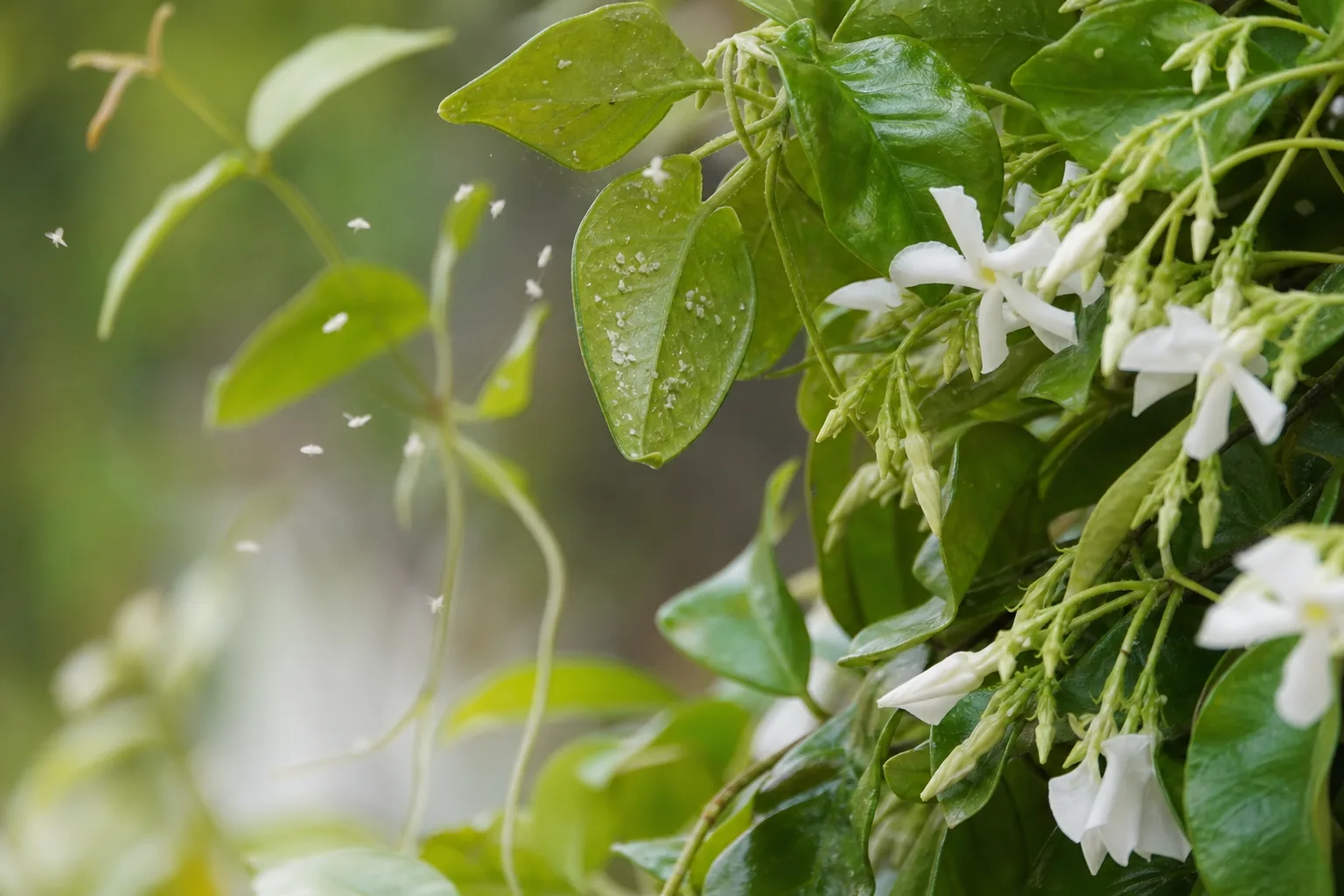
Whiteflies on Jasmine: Causes, Checks & Fixes
This guide covers whiteflies on Jasmine. See also the general Whiteflies guide, watering, and light pages for this plant.
Whiteflies on Jasmine: Causes, Checks & Fixes
Quick answer
Whiteflies on jasmine are tiny sap-feeding insects that live on leaf undersides along twining stems. Disturb the vine and adults rise in a white cloud, then resettle. Nymphs look like flat pale scales; feeding produces sticky honeydew that can grow black sooty mold on upper leaves and buds.
First step: isolate the vine and inspect the undersides of lower leaves with a hand lens before you spray anything. Confirm flat nymphs, flying adults, or fresh honeydew. Powdery mildew and dust do not fly when shaken.
Why jasmine gets whiteflies
Jasmine’s climbing habit creates layered foliage where lower leaf backs stay shaded and sheltered-exactly where whiteflies concentrate. Common jasmine (Jasminum officinale) is often grown in conservatories, sunny windows, and greenhouses where temperatures stay warm year-round. Whiteflies reproduce continuously indoors because heated rooms lack the cold break that kills outdoor populations.
The indoor winter rhythm makes jasmine especially vulnerable. Plants moved inside after summer outdoors often carry whiteflies on undersides you never see from above. During the cool rest period jasmine needs for future buds, growth slows but whiteflies can keep reproducing in stable warmth near a window. Dense twining stems hide colonies until honeydew appears on upper leaves or nearby surfaces.
Stressed vines tolerate heavier infestations. Jasmine in weak winter light, with soil staying wet too long, or recovering from Jasmine repotting guide pushes less vigorous new growth while old leaves become long-term feeding sites. Excess nitrogen produces soft tender shoots that many sap feeders prefer-avoid heavy feeding on a pest-hit plant.
Ants complicate control. Ants harvest honeydew and protect whitefly colonies from predators. Ant trails on pot rims, trellis wires, or window sills often show up before you notice flying adults on the vine itself.
What whiteflies look like on jasmine
Adult whiteflies:
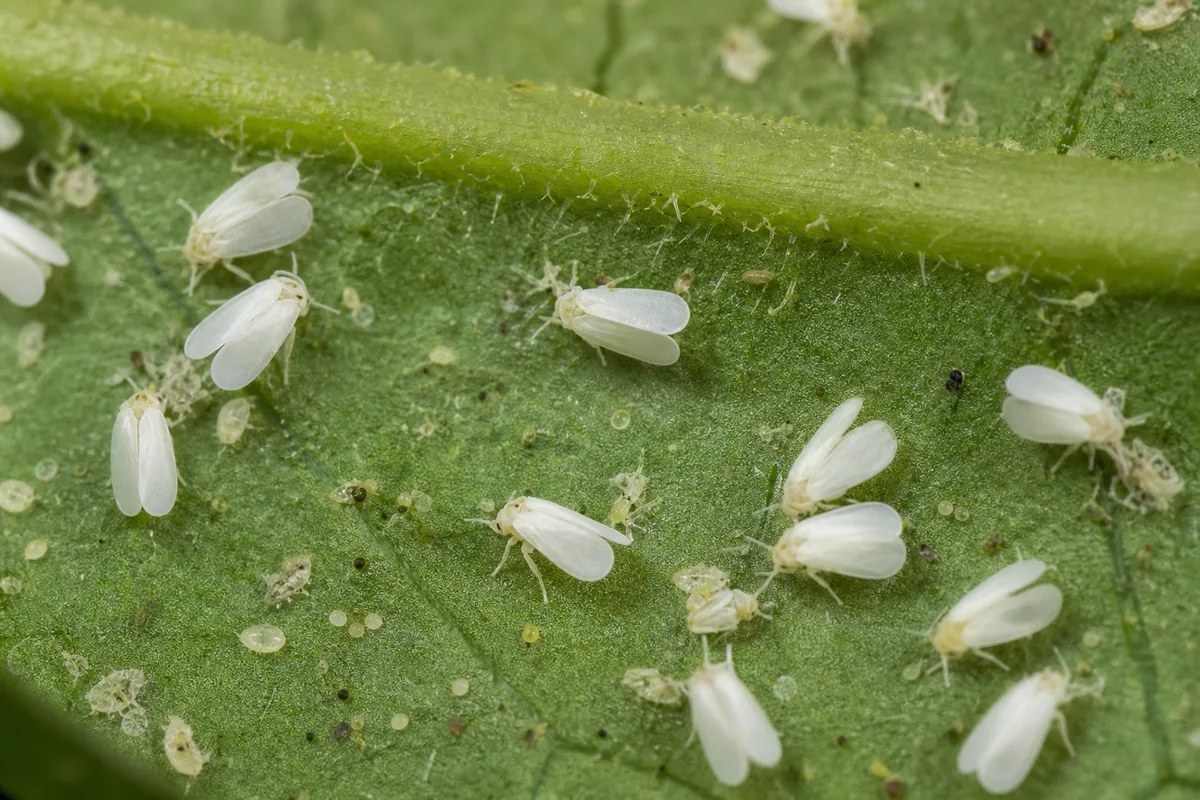
Whiteflies symptoms on Jasmine - compare with healthy tissue on the same plant.
- Tiny white moth-like insects, about 1–2 mm long
- Rise in a cloud when stems are shaken, then return to undersides
- Often concentrated on lower, sheltered leaves and stem joints
Nymphs and eggs:
- Flat, oval, pale green to translucent scales stuck to leaf undersides
- Do not move when touched-unlike powdery mildew, which wipes off as dry powder
- Eggs are tiny and laid in arcs on the underside surface
Damage signs on jasmine:
- Sticky honeydew on upper leaves, stems, window sills, or floor below the pot
- Black sooty mold that smears when rubbed-grows on honeydew, not inside leaf tissue
- Yellowing or pale patches on upper leaves where nymphs feed below
- Distorted or slowed new growth on twining tips when feeding is heavy
- Ant activity on the pot or support structure
Sooty mold does not infect jasmine tissue directly but can block light on heavily coated leaves. On fragrant indoor jasmine, honeydew on unopened buds is the bigger concern-it can interfere with bloom quality and cause bud drop before flowers open.
How to confirm the cause
Work through these checks in order:
- Flight test - Gently shake a lower stem over white paper. A small cloud of white insects that resettle on the vine confirms whiteflies. If nothing flies, look elsewhere.
- Underside inspection - Lift twining stems and examine the backs of lower leaves with a hand lens. Flat immobile pale scales are nymphs; powdery white patches that do not move are likely mildew.
- Honeydew check - Rub an upper leaf. Sticky residue or black smear points to sap feeders. Dry white powder that wipes off without stickiness suggests mildew.
- Ant trails - Ants marching up the trellis or pot strongly suggest honeydew producers are present on the vine above.
- Distribution pattern - Whiteflies cluster on undersides, especially lower sheltered leaves. Spider mites cause stippling and fine webbing in hot dry air-not typically heavy flying clouds.
- Recent plant history - New nursery jasmine, mixed greenhouse purchases, or vines brought indoors from patio summer often explain sudden outbreaks.
If you confirm flying adults plus nymphs on undersides, you have whiteflies-not thrips, which are slender and do not fly in clouds, and not aphids, which stay as soft clusters and rarely produce the same flight response.
First fix for jasmine
Isolate the vine away from other houseplants and hang yellow sticky traps just above the canopy.
Move the affected jasmine to a separate room or bench so flying adults cannot spread to neighbors. Yellow traps attract and catch adult whiteflies while you inspect and plan treatment-one trap per couple of plants is a reasonable starting point for a single container vine.
Do not spray insecticide on day one if you have not confirmed nymphs on undersides. Do not fertilize a pest-hit jasmine hoping to push new growth-that produces tender shoots whiteflies prefer. Do not trim heavily before you have a control plan; pruning without treating undersides leaves nymphs on remaining stems.
Step-by-step recovery
After isolation and trapping:
- Vacuum adults on heavy outbreaks - On a dry morning, gently vacuum flying adults from leaf surfaces. Missouri Extension notes vacuuming can reduce localized populations when done carefully without damaging tender jasmine stems.
- Apply insecticidal soap to undersides - Cover lower leaf surfaces thoroughly; soap kills only insects it contacts. Repeat every five to seven days for four to five applications to catch newly hatched nymphs.
- Wash honeydew and sooty mold - Once feeding stops, rinse upper leaves with plain water. Mold does not spread without fresh honeydew.
- Control ants - Sticky barriers on trellis posts or pot rims help predators reach nymphs. Ant control alone does not replace underside sprays.
- Inspect weekly - Check the lowest leaves first. Traps show whether adult numbers are falling.
- Prune only after control holds - Remove heavily coated leaves that no longer photosynthesize well once nymph counts drop for at least a week.
For conservatory or greenhouse jasmine with recurring outbreaks, biological controls such as Encarsia formosa parasitic wasps can supplement soap sprays in warm stable conditions-less practical for a single windowsill vine but worth considering if you overwinter many plants together.
Recovery timeline
Yellow sticky traps show fewer adults within several days when combined with isolation. A full soap cycle typically takes three to four weeks with label-interval repeats because eggs and pupae are less susceptible than nymphs and adults.
Honeydew dries up within one to two weeks once feeding stops. Sooty mold stops spreading immediately; rinsing clears light coatings. Judge recovery by clean new twining tips and healthy bud set-not old yellow leaves that may never fully green again.
Fragrance and bloom quality recover on the next flower cycle if buds were not heavily coated before opening. Buds already damaged by thick honeydew or mold may drop rather than open sweetly.
Lookalike symptoms to rule out
Powdery mildew forms dry white powder on leaf surfaces. It does not fly when shaken and lacks honeydew or ants.
Aphids cluster as soft green or black groups on tender shoots. They produce honeydew but do not rise in clouds when disturbed.
Spider mites cause fine stippling and webbing in dry indoor air-common on jasmine during winter heat. Confirm with a tap test; mites are tiny moving dots, not flying insects.
Dust or mineral residue from hard water wipes off dry. It is not sticky and has no nymphs underneath.
Mistakes to avoid
Do not spray only the tops of leaves-nymphs live on undersides along twining stems.
Do not move an infested jasmine back near clean plants after a single soap application. Hold isolation until you see no new nymphs for at least a week.
Do not ignore ants. Whitefly control is harder while ants protect colonies from lady beetles and other predators.
Do not use broad-spectrum pyrethroid sprays indoors as a first choice-they often miss undersides and can harm beneficial insects without clearing whiteflies.
Do not bring outdoor jasmine inside in autumn without inspecting undersides first. Quarantine new plants for one to two weeks before placing them near established vines.
Jasmine care cross-check
Whiteflies exploit care gaps more than they cause them, but weak vines recover slowly. Confirm jasmine still gets enough light for its season-Jasmine light guide to partial shade during active growth. Allow the top inch of mix to dry between waterings; soggy soil stresses roots while whiteflies feed above.
If the vine sits in a warm room year-round without the cool winter period jasmine needs for buds, you may see leggy weak growth that hides pests longer. Fixing light and seasonal rhythm supports recovery after pest control-it does not replace underside treatment.
True Jasminum species are generally non-toxic to cats and dogs, but let sprays dry before pets contact treated leaves.
How to prevent whiteflies next time
Inspect leaf undersides weekly on indoor jasmine from late autumn through spring-the window when outdoor pests hitchhike inside. Quarantine any new jasmine or companion plants before mixing them on a windowsill or trellis.
Inspect and isolate new plants before placing among established ones. A few days of separate placement catches outbreaks before they spread through a collection.
Keep moderate humidity and good airflow around twining stems so foliage does not stay damp and stagnant in overlapping layers. Avoid excess nitrogen during warm indoor months.
When moving jasmine outdoors for summer, scout before bringing it back in autumn. One infested vine can repopulate an entire indoor collection within weeks.
When to worry
Treat as urgent when white clouds appear daily, honeydew coats unopened flower buds, or yellowing climbs the vine despite normal watering. Jasmine grown for fragrance loses the point of keeping the plant if buds drop coated in sooty mold before they open.
Replace severely declining vines that reinfest repeatedly after full soap cycles if the plant is mostly old woody stems with few healthy leaves. Starting fresh with a quarantined clean plant is often less work than endless chemical repeats on a stressed specimen.
Moderate whitefly numbers on an otherwise vigorous vine are manageable-not a death sentence. Confirm severity on undersides before escalating to stronger products.
Conclusion
Whiteflies on jasmine hide on sheltered leaf undersides along twining stems until honeydew or flying adults give them away. Isolate first, trap adults, and treat undersides on a repeat schedule-not tops alone. That path protects fragrant buds, stops sooty mold at the source, and keeps a single infested vine from spreading through your indoor collection.
When to use this page vs other Jasmine guides
- Jasmine watering guide - Use for routine moisture checks before assuming whiteflies is the main issue.
- Jasmine problems hub - Browse all 53 common issues on this species.