African Violet Overview and Care Guide
Streptocarpus sect. Saintpaulia
African Violets bloom continuously with bright indirect light and a high-phosphorus fertilizer. Always water from the bottom-cold water splashed on leaves causes permanent brown spots. Non-toxic to pets.
African Violet Overview and Care Guide
Start with wateringThe most common care mistake for African VioletWatering guide →African Violet care essentials
Light
bright indirect light (north or east-facing window)
Water
Water from the bottom to avoid leaf spots-cold water on leaves causes brown rings. Water when the top inch of soil is dry.
Soil
Light, well-aerated African violet mix or a very light peat-free mix.
Humidity
40–60%
Temperature
18–24°C (65–75°F)
Fertilizer
Use african violet fertilizer (high phosphorus, e. High nitrogen fertilizer produces lush leaves but fewer flowers.
About African Violet
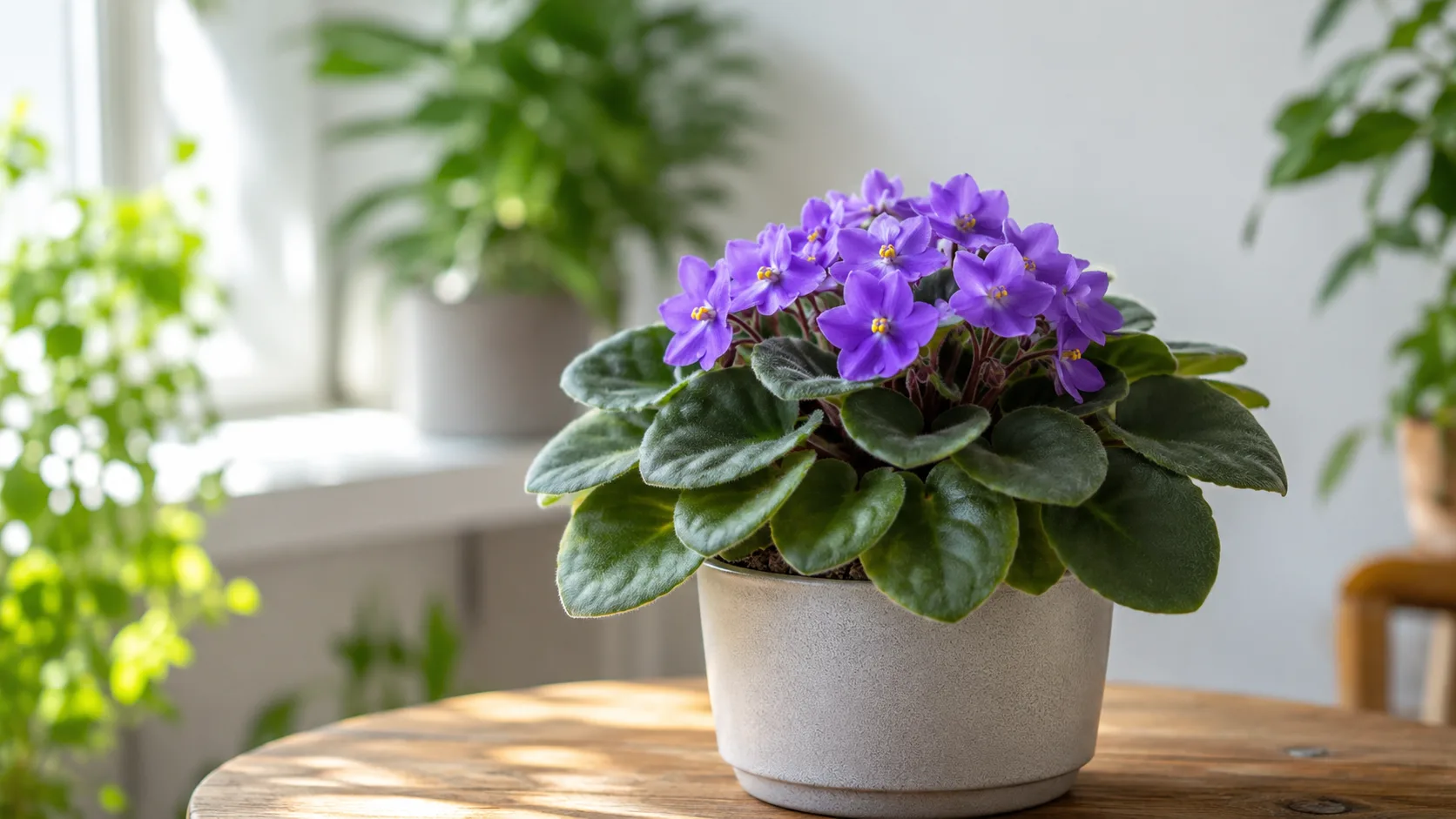
African Violet is native to Tanzania and Kenya (Usambara Mountains-high-altitude tropical cloud forests), typically reaches 4–16 inches wide rosette; compact with velvety leaves indoors, with slow to moderate growth. African Violet has a rosette growth habit and part of the Gesneriaceae family. It is also known as Saintpaulia ionantha, Cape Marigold (incorrect), and Usambara Violet.
| Detail | Information |
|---|---|
| Also known as | Saintpaulia ionantha, Cape Marigold (incorrect), Usambara Violet |
| Native region | Tanzania and Kenya (Usambara Mountains-high-altitude tropical cloud forests) |
| Mature size | 4–16 inches wide rosette; compact with velvety leaves |
| Growth rate | Slow to moderate |
| Growth habit | Rosette |
| Scientific name | Streptocarpus sect. Saintpaulia |
| Family | Gesneriaceae |
African Violet Overview and Care Guide
What an African Violet Is
An African violet is a compact, flowering houseplant best known for its fuzzy leaves, neat rosette shape, and clusters of small blooms in purple, pink, blue, white, red, and bicolor forms. It is usually grown indoors because it prefers the kind of stable warmth, filtered light, and protected environment that many homes can provide. A healthy plant can bloom repeatedly through the year, but it does not bloom on charm alone. It blooms when light, moisture, root space, and nutrition are balanced.
The plant is popular because it gives a lot in a small footprint. It can sit on a windowsill, desk, shelf, plant stand, or under a grow light without needing the space of a large foliage plant. Unlike many flowering plants sold as short-term decor, African violets can be kept for years when cared for well. They are also easy to propagate from leaf cuttings, which is one reason collectors often trade them and keep named varieties going for decades.
A good African violet African Violet overview needs to do more than say “African Violet light guide and don’t overwater.” Those words are technically useful, but they are not enough to help someone understand the plant. African violets have shallow, fine roots, soft crowns, fleshy leaves, and a growth habit that punishes soggy soil more than occasional dryness. Once you understand that structure, the care rules start to make sense instead of feeling like folklore.
Why the Name Can Be Misleading
African violets are not true violets. True violets belong to the genus Viola, while African violets are in the Gesneriaceae family. Many gardeners still know them by the older botanical name Saintpaulia, and that name remains common in plant shops, collector groups, labels, and older care guides. Modern taxonomy has moved African violets into Streptocarpus, with sources such as the Royal Horticultural Society listing African violets under Streptocarpus rather than treating Saintpaulia as a separate genus. (RHS)
This name change matters because a reader may see Saintpaulia ionantha, Saintpaulia spp., Streptocarpus ionanthus, or Streptocarpus sect. Saintpaulia and wonder whether they are different plants. In everyday houseplant language, they usually refer to the plants people call African violets. For practical care, the old and new names do not change the basics. The plant still needs filtered light, a free-draining mix, consistent but careful watering, and protection from cold, harsh sun, and stagnant wet conditions.
The common name comes from the plant’s superficial resemblance to violets and its East African origin. That resemblance is visual, not botanical. This is a useful distinction because it prevents one common mistake: treating African violets like outdoor bedding violets. African violets are frost-tender indoor plants in most climates, not cool-season outdoor annuals.
Where African Violets Come From
Wild African violets are native to parts of eastern tropical Africa, especially Tanzania and nearby regions. Kew’s Plants of the World Online lists Streptocarpus ionanthus subsp. grotei as native to Tanzania’s East Usambara Mountains, where it grows as a lithophyte or perennial in a wet tropical biome. (Plants of the World Online) This origin explains several care preferences: soft filtered light, moisture without waterlogging, warmth, and a humid atmosphere.
The houseplant version is often far removed from wild species because decades of breeding have produced a huge range of flower shapes, colors, foliage types, and growth habits. Still, the plant’s basic instincts remain. It does not want hot desert sun. It does not want a cold draft. It does not want dense garden soil packed around its roots. It wants conditions closer to a protected ledge in a warm, humid, bright-but-shaded environment.
There is also a conservation story behind the familiar potted plant. Wild African violets and related species are associated with the Eastern Arc mountain forests of Kenya and Tanzania, habitats that have faced pressure from agriculture and forest clearing. Research on African violet relatives has described them as endangered and restricted mainly to Eastern Arc mountain biodiversity hotspots. (PMC) The plant on a windowsill may be common in cultivation, but its wild relatives are part of a much more fragile ecological picture.
What African Violets Look Like
African violets grow as low, compact plants with leaves arranged around a central crown. The leaves are usually rounded to oval, fleshy, and covered in fine hairs that give them a soft, velvety feel. This fuzzy leaf texture is attractive, but it also affects care. Water sitting on the leaves can leave marks, and constant moisture around the crown can encourage rot or disease, especially when air circulation is poor.
Most standard African violets stay small enough for tabletops and windowsills, though size depends on the variety. Collectors often group them as miniature, semi-miniature, standard, and large-growing types. The central growth point matters. If the crown is damaged, buried, kept wet, or crowded with old leaves and spent blooms, the plant can decline even when the leaves around the edges still look alive.
Leaves, Flowers, Growth Habit, and Size
The typical African violet has a rounded rosette, short leaf stalks, and flower stems that rise above the foliage. The plant’s beauty comes from contrast: soft leaves below, bright blooms above. Healthy leaves should feel firm, not limp or mushy. They may be plain green, darker green, variegated, scalloped, quilted, or slightly reddish underneath depending on the variety.
Flowers are usually small but produced in clusters. A single bloom is not the point; the display comes from repeated flowering and the balance of blooms across the plant. A plant receiving light from only one side may lean toward the window, creating an uneven shape. Rotating the pot slightly every few days or once a week helps maintain symmetry, especially when grown on a windowsill.
The rosette habit also means the plant shows problems clearly. Long leaf stems stretching upward often suggest insufficient light. Pale or scorched leaves can suggest too much direct sun. A tight, distorted center may point to pests such as mites, chemical injury, or stress. Limp leaves can mean the plant is thirsty, but they can also mean roots have rotted and can no longer absorb water. That is why diagnosis should start with the soil and roots, not just the leaves.
Common Flower Colors and Forms
African violet flowers are no longer limited to violet-purple. Modern cultivated varieties include lavender, deep purple, blue-violet, pink, coral, red, white, green-edged, speckled, fantasy-streaked, and bicolor flowers. Flower forms can be single, semi-double, double, star-shaped, ruffled, frilled, or pansy-like. Some varieties are bred for dramatic blooms, while others are valued for variegated foliage or compact growth.
Color can shift slightly depending on temperature, light, plant age, and cultivar stability. A plant bought in heavy bloom may look less intense during the next cycle if the home environment differs from the grower’s greenhouse. That does not necessarily mean anything is wrong. It often means the plant is adjusting to new light and humidity.
For beginners, the best choice is usually not the rarest or most dramatic variety. A healthy, symmetrical plant with firm leaves, no visible pests, and several buds is a better purchase than a stressed collector plant with impressive genetics. Once the basic care rhythm is comfortable, unusual varieties become easier to keep.
Why African Violets Became Popular Houseplants
African violets became popular because they solve a specific indoor plant problem: many people want flowers indoors without needing a large sunny patio, a greenhouse, or seasonal replanting. These plants can bloom in ordinary living spaces when given enough filtered light. They are compact, widely available, affordable, and easy to share through propagation.
They also reward attention without demanding constant drama. A small change in light, watering, or pot size can visibly affect growth. That makes African violets satisfying for people who enjoy observing plants closely. The plant gives feedback quickly: flowers slow down, leaves reach, crowns tighten, or soil stays wet too long. These clues help the grower adjust.
The downside is that African violets have a reputation for being fussy. In reality, they are not difficult once their preferences are respected. Most failures come from a small group of repeated mistakes: dense soil, oversized pots, inconsistent watering, cold windowsills, harsh sunlight, fertilizer buildup, or ignoring pest symptoms until the crown is badly damaged. A simple, steady setup usually works better than constant intervention.
The Care Formula That Actually Works
African violet care works best when you think in systems. Light drives blooming. Soil controls air around the roots. Watering controls both hydration and rot risk. Pot size affects how long the mix stays wet. Temperature and humidity influence stress, disease, and flower performance. Fertilizer helps only after the core conditions are right.
The Royal Horticultural Society describes African violets as plants that thrive with gentle indirect light, consistent warmth, and a humid atmosphere, with regular watering and feeding to encourage flowering. (RHS) That is a useful summary, but the details matter because “regular” does not mean “heavy,” and “humid” does not mean “wet leaves.” The goal is steady comfort, not tropical saturation.
A practical care formula is simple: bright indirect light, a small pot, an airy mix, room-temperature water, modest feeding, and enough airflow to keep the crown dry. If one part is wrong, the others become harder to manage. For example, a plant in low light uses less water, so the same watering routine that worked in summer may cause rot in winter.
Light
African violets need bright indirect light to grow compactly and bloom well. An east-facing window is often ideal because it provides bright morning light without the harsh heat of afternoon sun. A north-facing window can work in bright climates or during warmer months, while a west or south window may need filtering with a sheer curtain or placement away from direct rays. RHS guidance for African violets and related Streptocarpus emphasizes good light while avoiding hot sun. (RHS)
The most common bloom problem is not mysterious: the plant is often not getting enough usable light. African violets can survive in lower light, but survival is not the same as flowering. If the leaves are reaching upward, petioles are lengthening, and the plant looks flat or sparse, light is likely too weak. If leaves are pale, curled, scorched, or marked with dry brown patches, direct sun may be too strong.
Grow lights can work very well for African violets because they create consistency. The key is distance and duration. Lights placed too close can stress leaves, while lights too far away may not trigger bloom. The plant should receive strong but comfortable illumination for a predictable part of the day, with darkness at night. If the plant grows evenly, keeps a compact crown, and produces buds, the light setup is working.
Watering
Watering is where many African violets are lost. The plant wants the potting mix to stay lightly moist but never soggy. The University of Minnesota Extension advises keeping the potting mix moist but not soggy and not letting the plant sit in water. It also recommends room-temperature distilled water, rainwater, or reverse-osmosis water rather than softened or chlorinated water. (University of Minnesota Extension)
The safest rule is to water the plant when the top of the mix feels slightly dry and the pot feels lighter, not because a calendar says it is time. A small plant in a plastic pot under low winter light may need water far less often than a blooming plant in a warm room under bright light. Bottom watering is popular because it keeps water away from the fuzzy leaves and crown. Place the pot in a shallow saucer of room-temperature water, let the mix absorb moisture, then remove the pot before it sits too long in standing water.
Top watering can also work if done carefully with a narrow-spout watering can aimed at the soil, not the crown. The issue is not that water magically kills leaves; the issue is water sitting on hairy foliage or in the crown, especially when the room is cool or airflow is weak. Cold water can also mark leaves. If water spills on the leaves, blot gently and improve air movement rather than panicking.
Wick watering is useful for consistent growers, but it demands an airy mix. If the soil holds too much moisture, wick watering can keep roots constantly wet. The African Violet Society of America notes that humidity and growing conditions affect watering frequency, and its watering guidance emphasizes adapting technique to the plant and mix rather than following one rigid schedule. (African Violet Society of America)
Soil and Pot Size
African violets need a light, free-draining potting mix that holds some moisture but still allows oxygen to reach fine roots. Smithsonian Gardens recommends a light mix for good drainage and gives an ideal blend of equal parts peat, perlite, and vermiculite, with pH balanced around 6.0 to 7.0 when needed. (Smithsonian Gardens) RHS also recommends peat-free houseplant compost or specialist African violet compost and suggests a light, free-draining mix using John Innes No. 2 with a fibrous peat substitute such as coir. (RHS)
The exact recipe matters less than the structure. Dense garden soil is a poor choice because it compacts, drains slowly, and suffocates roots in small indoor pots. A good mix feels fluffy, drains quickly, and does not collapse into a muddy block after repeated watering. Perlite is often useful because it increases air space and reduces the chance of the root zone staying wet for too long.
Pot size is equally important. African violets generally perform better when slightly snug in their pots. An oversized pot holds extra wet mix around a small root system, which raises the risk of root rot on African Violet. A common practical guideline is to choose a pot roughly one-third the diameter of the plant’s leaf spread, though cultivar size and root condition matter. If the plant is 9 inches across, a 3-inch pot may be more appropriate than a 6-inch pot.
Drainage holes are non-negotiable. Decorative cachepots are fine only if the growing pot can be removed after watering. A pot with no drainage turns every watering mistake into a longer problem. If the plant is valuable or already stressed, prioritize function over aesthetics.
Temperature and Humidity
African violets like ordinary indoor warmth. They dislike cold windowsills, cold water, and sudden temperature swings. A plant sitting against winter glass can suffer even if the room feels comfortable to a person. Cold stress can slow growth, damage leaves, and make wet soil more dangerous because roots use water more slowly in cool conditions.
Humidity helps, but it should be managed intelligently. A humid room is useful; a wet crown is not. Pebble trays can slightly increase local humidity if the pot sits above the waterline, not in water. Grouping plants can also create a more stable microclimate. Humidifiers are effective when used with airflow, but still water and crowded leaves can invite fungal issues.
The goal is not to recreate a rainforest in a closed room. The goal is to reduce dry-air stress while keeping foliage and crowns clean, dry, and ventilated. If powdery mildew or gray mold appears, the problem may be less about humidity itself and more about stagnant air, wet flowers, dead plant material, or crowding.
Fertilizer
Fertilizer supports growth and bloom, but it cannot compensate for poor light or rotten roots. A weak, regular feeding routine is usually safer than occasional heavy feeding. African violet fertilizers are widely available, but a balanced water-soluble houseplant fertilizer used at a diluted strength can also work if the plant is actively growing.
Fertilizer problems often show up as crust on the soil surface, brown leaf edges, tight crown growth, or general stress after feeding. Salt buildup becomes more likely when plants are wick-watered, grown in small pots, or watered only from below without occasional flushing. If the plant looks stressed and the mix has visible deposits, fresh mix may help more than another dose of fertilizer.
Feed less when light is low, temperatures are cool, or the plant is recovering from African Violet repotting guide or root loss. Feed more consistently when the plant is actively growing and blooming under bright light. The plant’s growth rate should guide the feeding routine.
Blooming: What Encourages Flowers
African violets bloom when the plant has enough energy, stable roots, and a crown healthy enough to produce flower stems. The biggest bloom trigger is adequate light. A plant in a dim corner may stay alive for months while producing no flowers. Moving it to brighter indirect light often improves blooming more than changing fertilizer.
Blooming also depends on maturity and balance. A newly rooted leaf cutting needs time to become a plant. A recently repotted violet may pause while roots adjust. A plant in a pot that is too large may spend energy filling roots into damp soil instead of flowering. A plant with old, crowded lower leaves may need grooming and repotting before it performs well again.
Spent flowers should be removed cleanly. Dead blooms left in the crown can hold moisture and encourage disease. Old outer leaves can be removed gradually if they are damaged or no longer contributing to the plant’s shape. Good grooming is not cosmetic vanity; it improves airflow and reduces decay around the crown.
Why African Violets Stop Blooming
When an African violet stops blooming, start with light before blaming the plant. If the leaves are healthy but flowers are absent, the plant may not be receiving enough bright indirect light. If the plant has lush leaves but no flowers, overfeeding with nitrogen-heavy fertilizer or low light may be pushing foliage instead of bloom. If the crown is tight, distorted, or brittle, look for pests, chemical stress, or fertilizer issues.
Watering can also suppress flowering. Roots kept too wet may decline quietly, leaving the plant with enough strength to maintain leaves but not enough to bloom. On the other hand, repeated severe drying can interrupt bud development. The ideal is a steady rhythm where the plant dries slightly, receives room-temperature water, and never sits in stale water.
Seasonal changes matter. A plant that bloomed well in summer may slow in winter if daylight drops. That does not always mean it is unhealthy. Adding a grow light, moving it closer to a bright window, or adjusting watering to match slower growth may be enough.
Repotting and Long-Term Maintenance
Repotting African violets is not just about moving to a bigger pot. In many cases, the plant needs fresh mix more than more space. RHS notes that African violets usually need repotting into a slightly larger container every two to three years in spring. (RHS) Some experienced growers refresh their plants more often, especially when using small pots, wick watering, or fertilizer routines that can lead to salt buildup.
A mature African violet can develop a “neck” as older lower leaves are removed and the crown rises above the soil line. This is normal over time, but an exposed neck can make the plant look awkward and less stable. During repotting, the neck can often be set slightly lower into fresh mix so the rosette sits neatly again. This should be done carefully, without burying the crown itself.
Repot when the mix has broken down, the plant dries too quickly, roots circle heavily, growth has slowed without another clear cause, or the plant has developed an obvious neck. Avoid jumping to a much larger pot unless the root system truly needs it. Remove dead roots, keep healthy roots, and use fresh airy mix. After repotting, keep the plant warm and evenly moist but not saturated while it settles.
Long-term maintenance is mostly observation. Remove dead flowers. Remove damaged leaves. Rotate the plant. Check under leaves and around the crown. Watch how quickly the pot dries. A well-kept African violet is not one that is fussed over daily; it is one whose owner notices small changes early.
Propagation from Leaf Cuttings
African violets are famously easy to propagate from leaf cuttings, which is part of their charm. Choose a healthy, mature leaf from the middle row of the plant rather than a very old outer leaf or tiny center leaf. Cut the leaf stem cleanly, leaving about an inch or so of petiole. Insert the stem into a moist, airy propagation mix such as perlite and vermiculite, or a light African violet mix.
The leaf should be firm and supported, with the cut end in the medium and the blade above the surface. Keep the mix lightly moist and the cutting in bright indirect light. A clear cover can help maintain humidity, but it should not create stagnant, moldy conditions. Vent it occasionally if condensation is heavy.
New plantlets usually emerge from the base of the leaf stem after several weeks, though timing varies with temperature, cultivar, and conditions. Once plantlets are large enough to handle and have their own small roots, they can be separated and potted individually. Patience matters. Pulling them apart too early can set them back, while waiting until they are sturdy gives them a better start.
Propagation is also a smart rescue method. If a plant has pests, crown damage, or root problems but still has a clean healthy leaf, a cutting may preserve the variety. In serious pest cases, however, only use leaves that are genuinely clean, and isolate new starts from the rest of the collection.
Common Problems, Pests, and Diseases
Most African violet problems are easier to solve when caught early. The plant’s compact crown can hide trouble, so look closely. Check the center growth, undersides of leaves, flower stems, soil surface, and pot rim. A plant can look fine from across the room while pests are already feeding in the crown.
Clemson Cooperative Extension identifies several African violet disease and pest concerns, including Botrytis blight, powdery mildew, crown and root rot, cyclamen mites, mealybugs, and thrips. Its guidance emphasizes sanitation, better air circulation, avoiding wet foliage and flowers, and controlling mites because Botrytis may follow mite injury. (Home & Garden Information Center) This is important because many plant owners treat the visible mold but miss the underlying stress or pest issue.
Powdery mildew often appears as a white powdery coating on leaves or flowers. It is encouraged by poor air movement and crowded conditions. Root rot and crown rot are usually linked to overly wet conditions, dense mix, cold temperatures, oversized pots, or water sitting in the crown. Mealybugs may look like small white cottony clusters around leaf joints or roots. Thrips can damage flowers and spread pollen around, while mites can distort new growth in the crown.
Fast Diagnosis Table
| Symptom | Likely Cause | Practical Fix |
|---|---|---|
| No flowers, healthy leaves | Too little light | Move to brighter indirect light or use a grow light |
| Limp leaves, wet soil | Root rot or low root oxygen | Check roots, repot into airy mix, reduce watering |
| Brown spots on leaves | Cold water, water sitting on leaves, sun scorch | Use room-temperature water and avoid harsh direct sun |
| Tight distorted center | Cyclamen mites, fertilizer stress, chemical injury | Isolate, inspect closely, consider discarding severe cases |
| White powder on leaves | Powdery mildew | Improve airflow, remove affected material, avoid wet foliage |
| Cottony white patches | Mealybugs | Isolate, treat early, inspect crowns and roots |
| Brown mushy crown | Crown rot | Often difficult to save; propagate clean leaves if possible |
| Long stretched leaves | Insufficient light | Increase bright indirect light gradually |
A diagnosis table is useful, but it should not replace inspection. Limp leaves can mean thirst, but if the soil is wet, watering again makes the problem worse. Brown leaves can mean sun, cold water, old age, fertilizer burn, or root stress. The best growers do not guess from one symptom; they look at the whole plant, the pot, the soil, and the recent care history.
When to Treat and When to Discard
Not every African violet is worth heroic treatment. This sounds harsh, but it protects the rest of a collection. A badly infested violet with a distorted crown, repeated mite symptoms, or root mealybugs can become a source of ongoing problems. Some pests hide so well that treatment becomes frustrating and unreliable for casual growers.
The Montreal Space for Life guidance notes that common African violet pests include cyclamen mites, mealybugs, and thrips, and that cyclamen mite problems can be difficult enough that discarding the infested plant is often easier. It also suggests taking a healthy leaf cutting and discarding the mother plant in certain severe infestations. (Espace pour la vie) That is practical advice, especially for beginners with only a few plants and no desire to run a quarantine operation.
Treatment is more reasonable when the plant is valuable, the pest is identified early, and isolation is possible. Always separate the affected plant first. Clean the growing area, remove dead material, and avoid placing new plants near the suspect plant. For chemical or pesticide treatment, follow label directions exactly and remember that African violet leaves can be sensitive.
Buying and Choosing a Healthy African Violet
Choose an African violet the way you would choose fresh produce: look closely, not casually. The leaves should be firm, evenly arranged, and free from mushy spots, powdery residue, webbing, cottony patches, or distorted center growth. A few spent flowers are not a problem, but dead blooms rotting in the crown are a warning sign. The soil should not smell sour or look waterlogged.
Avoid plants sitting in decorative sleeves full of water. Retail violets are often watered for display convenience, not long-term health. If the pot feels heavy and the leaves are limp, the roots may already be stressed. Also inspect neighboring plants on the same shelf. Pests and diseases rarely respect pot boundaries.
A plant with buds is often a better buy than a plant with every flower fully open. Buds suggest an upcoming bloom period and may adapt better after purchase. Once home, keep the plant separate from other houseplants for a short observation period. This is especially important if you already own multiple African violets, because one hidden pest problem can spread through a collection.
Do not repot immediately unless the plant is in bad soil, standing water, or obvious distress. Give it time to adjust to your home’s light and humidity. Remove damaged leaves and spent flowers, place it in bright indirect light, and watch how quickly the mix dries before setting a African Violet watering guide.
Pet Safety and Household Placement
African violets are generally considered a good choice for homes with pets. The ASPCA lists African violet, Saintpaulia spp., as non-toxic to dogs, cats, and horses. (ASPCA) That does not mean pets should be encouraged to chew them. Plant material can still cause mild stomach upset in some animals, and a chewed crown can permanently damage the plant.
Placement should protect both plant and household. Keep African violets away from cold drafts, hot radiators, air-conditioning vents, and windows where afternoon sun burns leaves. A bright kitchen window may work if humidity is decent and temperatures are stable. A bathroom can work only if it has enough light; humidity without light will not produce a healthy blooming plant.
For homes with cats, a stable shelf or plant stand is better than a narrow sill where the pot can be knocked over. If using grow lights, keep cords safe and avoid heat buildup. If you use fertilizer, pest treatments, or systemic products, store them away from children and pets and follow label instructions.
Conclusion
African violets are small plants with specific needs, not mysterious plants with impossible standards. They want bright indirect light, an airy mix, careful watering, modest root space, warmth, and enough humidity to prevent stress without keeping the crown wet. When those basics are right, they can bloom repeatedly and stay attractive for years.
The best way to care for an African violet is to read the plant. A non-blooming violet is often asking for more light. A limp violet in wet soil is warning you about roots. A distorted crown deserves close pest inspection. A plant in a huge pot is probably sitting in more moisture than its roots can use. Once you connect symptoms to conditions, care becomes much easier.
African violets also offer more than decoration. They carry a botanical history, a taxonomic story, a conservation context, and a collector culture built around sharing beautiful, compact plants. Start with one healthy plant, give it stable conditions, and learn its signals. That single plant can teach you enough to grow many more.
When to use this page vs other African Violet guides
- African Violet overview - Canonical hub for this species - care topics and problems branch from here.
- African Violet problems - Symptom-first path when you already know something is wrong.
Related African Violet guides
- African Violet watering
- African Violet light
- African Violet soil
- African Violet propagation
- African Violet fertilizer
- African Violet repotting
- African Violet pruning
- Aphids on African Violet
- Black Spots on African Violet
- Blight on African Violet
- Brown Leaves on African Violet
- Brown Tips on African Violet
How to care for African Violet?
How much light does African Violet need?
bright indirect light (north or east-facing window)
- bright indirect light (north or east-facing window) - bright indirect light (north or east-facing window).
When should you water African Violet?
Water from the bottom to avoid leaf spots-cold water on leaves causes brown rings. Water when the top inch of soil is dry.
- Check the top inch - Water when the top inch of soil is dry.
- bottom-water by placing pot in a tray of room-temperature water for 30 minutes - Water from the bottom to avoid leaf spots-cold water on leaves causes brown rings.
- then drain
- Drain excess water - Water from the bottom to avoid leaf spots-cold water on leaves causes brown rings.
What soil works best for African Violet?
Light, well-aerated African violet mix or a very light peat-free mix.
- African violet potting mix - Light, well-aerated African violet mix or a very light peat-free mix.
- perlite (20%) - Light white granules that keep soil airy and help prevent compaction.
- vermiculite (10%)
Grower notes for African Violet
What matters most with African Violet
African Violet is easiest to grow when you judge the whole plant: new growth, root-zone moisture, light exposure, and how quickly the pot dries after watering. In practice, the care checkpoint is simple: bright indirect light (north or east-facing window). Pair that with light, well-aerated African violet mix or a very light peat-free mix, and avoid changing water, pot size, and placement all at once.
Best placement in a real home
African Violet belongs where bright indirect light (north or east-facing window) is realistic for most of the day, not only where the pot looks good. Water from the bottom to avoid leaf spots-cold water on leaves causes brown rings. Water when the top inch of soil is dry. If the pot stays wet longer than expected, move the plant into better light or reassess the mix before watering again. Humidity target: 40–60%. Temperature comfort zone: 18–24°C (65–75°F).
Before you buy this plant
Choose African Violet with firm new growth, clean leaf undersides, and soil that does not smell sour or feel compacted. Be cautious if you see no-flowers, sticky residue, collapsed crowns, or a pot that is wet in poor light. Cosmetic old-leaf damage is less worrying than weak roots or active pests.
First month after bringing it home
Do not repot African Violet on day one unless the mix is failing or pests are obvious. Quarantine it, learn how fast the pot dries, and keep care boring while it adjusts. Watch especially for no-flowers, brown spots, and root-rot. If problems appear, correct the condition first rather than stacking fertilizer, repotting, and pruning together.
Pet-aware note for African Violet
African Violet is a better choice for pet-aware homes than toxic ornamentals, but pet safe does not mean the plant should be chewed. Use hanging, shelf, or room placement if pets dig in soil or shred leaves, and choose sturdier plants for high-traffic pet zones.
How to tell African Violet is settling in
Also sold as Saintpaulia ionantha, Cape Marigold (incorrect), and Usambara Violet, this plant should be judged by stable new growth rather than label names alone. If you plan to multiply it later, common methods include Leaf petiole cuttings in water or moist mix. Repot only when you see Neck (bare stem below leaves) visible more than 1 inch and roots completely filling pot. If brown spots shows up early, inspect light, watering, and roots before assuming the plant is permanently weak.
Is it pet safe?
African Violet is generally considered pet safe.
Watering African Violet
For African Violet, check the top inch; bottom-water by placing pot in a tray of room-temperature water for 30 minutes, then drain and water every 7–10 days; check frequently as small pots dry faster. Keep consistent moisture year-round; this plant doesn't have a strong dormancy.
| Detail | Information |
|---|---|
| How often | Every 7–10 days; check frequently as small pots dry faster |
| How to check | Check the top inch; bottom-water by placing pot in a tray of room-temperature water for 30 minutes, then drain |
| Seasonal changes | Keep consistent moisture year-round; this plant doesn't have a strong dormancy |
Signs of overwatering
- Crown rot at the centre of the rosette
- yellowing leaves
- root rot
Signs of underwatering
- Wilting leaves
- dry pot
- fewer flowers
Soil & potting for African Violet
Use a mix of African violet potting mix, perlite (20%), vermiculite (10%) for African Violet. Good drainage with some moisture retention. Target soil pH around 5.8–6.2. Repot every 1–2 years; keep in small pots-African violets bloom better when slightly root-bound, ideally in any time; can repot while in bloom.
| Detail | Information |
|---|---|
| Recommended mix | African violet potting mix, perlite (20%), vermiculite (10%) |
| Drainage | Good drainage with some moisture retention |
| Soil pH | 5.8–6.2 |
| Repotting frequency | Every 1–2 years; keep in small pots-African violets bloom better when slightly root-bound |
| Best season to repot | Any time; can repot while in bloom |
Signs it needs repotting
- Neck (bare stem below leaves) visible more than 1 inch
- roots completely filling pot
- plant not blooming despite good care
Humidity & temperature for African Violet
African Violet prefers 40–60%, though normal home humidity is usually fine. Keep temperatures around 18–24°C (65–75°F).
| Detail | Information |
|---|---|
| Humidity | 40–60% - normal home humidity is fine. |
| Ideal temperature | 18–24°C (65–75°F) |
Fertilizer & pruning for African Violet
Use use african violet fertilizer (high phosphorus, e. High nitrogen fertilizer produces lush leaves but fewer flowers. for African Violet.
| Detail | Information |
|---|---|
| Fertilizer type | Use african violet fertilizer (high phosphorus, e. High nitrogen fertilizer produces lush leaves but fewer flowers. |
Common problems on African Violet
Aphids
MediumLikely cause: Aphids on African Violet: When you find African violet pests attacking your favorite potted plants, you need to take appropriate action. For information on managing African violet insects, including tips for African violet aph
Quick fix: Inspect African Violet, confirm aphids matches your symptoms, then adjust care or treat per authoritative guides.
Full fix guide →Black Spots
MediumLikely cause: Black Spots on African Violet: Fungal Diseases Several fungal diseases can cause black spots on African Violet leaves. These diseases thrive in humid conditions and can spread quickly if left unchecked. Botrytis Blight Botrytis bli
Quick fix: Inspect African Violet, confirm black spots matches your symptoms, then adjust care or treat per authoritative guides.
Full fix guide →Blight
HighLikely cause: Blight on African Violet: African Violets with Botrytis Blight African violets are beloved houseplants with sweet little blooms and engaging fuzzy leaves. The most common diseases of African violet are fungal. Botrytis blight
Quick fix: Inspect African Violet, confirm blight matches your symptoms, then adjust care or treat per authoritative guides.
Full fix guide →Brown Leaves
MediumLikely cause: Brown Leaves on African Violet: This beginner-friendly guide will walk you through some common african violet leaf problems, and what you need to do next.
Quick fix: Inspect African Violet, confirm brown leaves matches your symptoms, then adjust care or treat per authoritative guides.
Full fix guide →Brown Tips
MediumLikely cause: Brown Tips on African Violet: African violets are one of the most popular houseplants around the world. Their beautiful and vibrant blooms add a touch of color to any room. However, if you're an African violet owner, you may
Quick fix: Inspect African Violet, confirm brown tips matches your symptoms, then adjust care or treat per authoritative guides.
Full fix guide →Bud Drop
MediumLikely cause: Bud Drop on African Violet: African violet buds usually fall off because of dry stress, sudden temperature swings, low light, root stress, or moving the plant while it is setting blooms.
Quick fix: Inspect African Violet, confirm bud drop matches your symptoms, then adjust care or treat per authoritative guides.
Full fix guide →Calcium Deficiency
MediumLikely cause: Calcium Deficiency on African Violet: Calcium Deficiency Description Calcium Deficiency is a condition which describes an African Violet that is not getting enough calcium (Ca). Calcium is an essential element for the growth and vitality
Quick fix: Inspect African Violet, confirm calcium deficiency matches your symptoms, then adjust care or treat per authoritative guides.
Full fix guide →Caterpillars
MediumLikely cause: Caterpillars on African Violet: Caterpillars are the larvae of moths and butterflies. They come in various colors and patterns, depending on their species. Some are hairy, while others are not. They generally range in length from 1/
Quick fix: Inspect African Violet, confirm caterpillars matches your symptoms, then adjust care or treat per authoritative guides.
Full fix guide →Cold Damage
MediumLikely cause: Cold Damage on African Violet: In summary, dealing with African violet cold damage involves recognizing the symptoms, taking immediate corrective steps, and establishing a care routine that prevents future issues. By keeping an eye
Quick fix: Inspect African Violet, confirm cold damage matches your symptoms, then adjust care or treat per authoritative guides.
Full fix guide →Compacted Soil
MediumLikely cause: Compacted Soil on African Violet: African violets are among the most rewarding indoor plants, but they are also among the easiest to damage with the wrong potting mix. Their roots evolved in loose, airy forest debris rather than heavy
Quick fix: Inspect African Violet, confirm compacted soil matches your symptoms, then adjust care or treat per authoritative guides.
Full fix guide →Crown Rot
HighLikely cause: Crown Rot on African Violet: The best method for controlling African violet crown rot is prevention-- always let the soil dry to the touch between waterings. Since there really isn't an effective African violet crown rot tre
Quick fix: Inspect African Violet, confirm crown rot matches your symptoms, then adjust care or treat per authoritative guides.
Full fix guide →Damaged Roots
MediumLikely cause: Damaged Roots on African Violet: However, you can take steps to remove the damaged roots and prevent root rot from spreading, which will also give your African violet a chance to recover. How do I know if my African violet has root r
Quick fix: Inspect African Violet, confirm damaged roots matches your symptoms, then adjust care or treat per authoritative guides.
Full fix guide →Damping Off
HighLikely cause: Damping Off on African Violet: If your African Violet seedlings have this symptom, they are probably suffering from Damping Off.
Quick fix: Inspect African Violet, confirm damping off matches your symptoms, then adjust care or treat per authoritative guides.
Full fix guide →Drooping Leaves
MediumLikely cause: Drooping Leaves on African Violet: This post unpacks three common culprits and cures and for an African violet with droopy leaves. Let's dive in!
Quick fix: Inspect African Violet, confirm drooping leaves matches your symptoms, then adjust care or treat per authoritative guides.
Full fix guide →Edema
MediumLikely cause: Edema on African Violet: Your African violet leaves will develop yellow and brown spots if you do not provide magnesium or nitrogen. Overwatering can sometimes cause edema, caused by the plant consuming too much water.
Quick fix: Inspect African Violet, confirm edema matches your symptoms, then adjust care or treat per authoritative guides.
Full fix guide →Exposed Roots
MediumLikely cause: Exposed Roots on African Violet: By creating a consistent, comfortable environment, you give your African violets the best chance to thrive—roots and all. We've covered a lot about African violet roots, from understanding their
Quick fix: Inspect African Violet, confirm exposed roots matches your symptoms, then adjust care or treat per authoritative guides.
Full fix guide →Fertilizer Burn
MediumLikely cause: Fertilizer Burn on African Violet: Want massive blooms? Discover the secrets to fertilizing African violets. We cover liquid vs. granules, organic options, and how to fix fertilizer burn.
Quick fix: Inspect African Violet, confirm fertilizer burn matches your symptoms, then adjust care or treat per authoritative guides.
Full fix guide →Fungus Gnats
MediumLikely cause: Consistently moist surface soil from frequent watering
Quick fix: Bottom-water only; allow surface to dry; use neem oil soil drench
Full fix guide →Heat Stress
MediumLikely cause: Heat Stress on African Violet: In this article, we'll explore the heat tolerance of African Violets, answering the burning question: What temperature is too hot for these charming plants? Along the way, we'll share practi
Quick fix: Inspect African Violet, confirm heat stress matches your symptoms, then adjust care or treat per authoritative guides.
Full fix guide →High Humidity
MediumLikely cause: High Humidity on African Violet: African Violets thrive in medium humidity levels, ideally around 40% - 60%. Excessively high humidity can cause fungal issues, while low humidity may result in dehydration and slowed growth. Achieving
Quick fix: Inspect African Violet, confirm high humidity matches your symptoms, then adjust care or treat per authoritative guides.
Full fix guide →Iron Deficiency
MediumLikely cause: Iron Deficiency on African Violet: Iron Deficiency Description Iron Deficiency is a condition which describes an African Violet that is not getting enough iron (Fe). While considered a micronutrient, iron is essential to the growth and
Quick fix: Inspect African Violet, confirm iron deficiency matches your symptoms, then adjust care or treat per authoritative guides.
Full fix guide →Leaf Drop
MediumLikely cause: Leaf Drop on African Violet: 10 Causes of African Violet Leaves Falling Off Overwatering Overwatering is a common mistake that can lead to African violet leaf loss. When the soil is excessively wet, the roots can become waterlogg
Quick fix: Inspect African Violet, confirm leaf drop matches your symptoms, then adjust care or treat per authoritative guides.
Full fix guide →Leaf Miners
MediumLikely cause: Leaf Miners on African Violet: If this is leaf miner how should I go about saving the plant from pest if I can't spray with neem or insecticidal soap since leaves cannot be wet?
Quick fix: Inspect African Violet, confirm leaf miners matches your symptoms, then adjust care or treat per authoritative guides.
Full fix guide →Leaf Spot Disease
MediumLikely cause: Leaf Spot Disease on African Violet: Learn the most common African violet diseases, their symptoms, causes, and simple prevention tips to keep your plant healthy.
Quick fix: Inspect African Violet, confirm leaf spot disease matches your symptoms, then adjust care or treat per authoritative guides.
Full fix guide →Leggy Growth
LowLikely cause: Leggy Growth on African Violet: A step by step guide on how to fix leggy African violets. Everything you need to know about this common problem and how to address it.
Quick fix: Inspect African Violet, confirm leggy growth matches your symptoms, then adjust care or treat per authoritative guides.
Full fix guide →Low Humidity
MediumLikely cause: Low Humidity on African Violet: African Violets thrive in medium humidity levels, ideally around 40% - 60%. Excessively high humidity can cause fungal issues, while low humidity may result in dehydration and slowed growth. Achieving
Quick fix: Inspect African Violet, confirm low humidity matches your symptoms, then adjust care or treat per authoritative guides.
Full fix guide →Magnesium Deficiency
MediumLikely cause: Magnesium Deficiency on African Violet: Magnesium Deficiency Description Magnesium Deficiency is a condition which describes an African Violet that is not getting enough magnesium (Mg). Magnesium is an essential element for the growth and v
Quick fix: Inspect African Violet, confirm magnesium deficiency matches your symptoms, then adjust care or treat per authoritative guides.
Full fix guide →Mealybugs
MediumLikely cause: Mealybugs nest in the compact rosette centre
Quick fix: Apply isopropyl alcohol with a fine brush directly to insects; repeat weekly
Full fix guide →Mosaic Virus
HighLikely cause: Mosaic Virus on African Violet: Some of the most notorious viruses known to attack African Violets are Stunt and Tobacco Mosaic. These and other viruses often accompany other pests and pathogens. Such is the case with Aphids, Mealy
Quick fix: Inspect African Violet, confirm mosaic virus matches your symptoms, then adjust care or treat per authoritative guides.
Full fix guide →Nitrogen Deficiency
MediumLikely cause: Nitrogen Deficiency on African Violet: Even in the worst cultural conditions, African violets are efficient at storing and transferring scarce nutrients to maintain life in the center of the crown. As a result, the symptoms of deficiency d
Quick fix: Inspect African Violet, confirm nitrogen deficiency matches your symptoms, then adjust care or treat per authoritative guides.
Full fix guide →No Drainage Hole
MediumLikely cause: No Drainage Hole on African Violet: Inadequate drainage may be the result of a number of causes. It may be that your pot has no drainage holes at all, or maybe they are simply too small. Alternatively, there may be something obstructing
Quick fix: Inspect African Violet, confirm no drainage hole matches your symptoms, then adjust care or treat per authoritative guides.
Full fix guide →No Flowers
MediumLikely cause: Insufficient light is the most common cause; also lack of phosphorus, overcrowding, or root-bound plant
Quick fix: Move to brighter indirect light (north or east window); fertilize with African violet fertilizer; remove suckers
Full fix guide →Overfertilization
MediumLikely cause: Overfertilization on African Violet: A good fertilizer is vital for the health of African Violets. A good fertilizer replenishes soil that has been depleted of the essential elements which make plants grow, while maintaining a fully-deve
Quick fix: Inspect African Violet, confirm overfertilization matches your symptoms, then adjust care or treat per authoritative guides.
Full fix guide →Overwatering
HighLikely cause: Overwatering on African Violet: What's Happening Overwatering in African violets is fundamentally about frequency, not volume. The succulent root system and water-storing leaf cells evolved for the well-draining cloud forest co
Quick fix: Inspect African Violet, confirm overwatering matches your symptoms, then adjust care or treat per authoritative guides.
Full fix guide →Pale Leaves
MediumLikely cause: Pale Leaves on African Violet: This beginner-friendly guide will walk you through some common african violet leaf problems, and what you need to do next.
Quick fix: Inspect African Violet, confirm pale leaves matches your symptoms, then adjust care or treat per authoritative guides.
Full fix guide →Poor Drainage
MediumLikely cause: Poor Drainage on African Violet: Your african violet has soil drainage? Don't panic — African violet root systems are fine, fibrous, and shallow—evolutionarily adapted to…. Here's exactly how to fix it.
Quick fix: Inspect African Violet, confirm poor drainage matches your symptoms, then adjust care or treat per authoritative guides.
Full fix guide →Potassium Deficiency
MediumLikely cause: Potassium Deficiency on African Violet: Potassium Deficiency is a condition which describes an African Violet that is not getting enough potassium (K), also referred to as potash. Potassium is an essential element for the growth and vitalit
Quick fix: Inspect African Violet, confirm potassium deficiency matches your symptoms, then adjust care or treat per authoritative guides.
Full fix guide →Powdery Mildew
MediumLikely cause: Powdery Mildew on African Violet: African violets are some of the most popular houseplants due to their striking and unique appearance. These flowers require specific care to stay healthy and bloom, and if they aren't taken care
Quick fix: Inspect African Violet, confirm powdery mildew matches your symptoms, then adjust care or treat per authoritative guides.
Full fix guide →Purple Leaves
MediumLikely cause: Purple Leaves on African Violet: Devotion Devotion is a stunning purple African violet that blooms with large, showy flowers. This variety has double-bloom flowers and its petals are a rich shade of deep purple with darker veins. Its
Quick fix: Inspect African Violet, confirm purple leaves matches your symptoms, then adjust care or treat per authoritative guides.
Full fix guide →Root Bound
MediumLikely cause: Root Bound on African Violet: Stop wondering, "Do African violets like to be root-bound?" and start learning how and when to repot these beautiful houseplants.
Quick fix: Inspect African Violet, confirm root bound matches your symptoms, then adjust care or treat per authoritative guides.
Full fix guide →Root Rot
HighLikely cause: Overwatering or soil that retains too much moisture
Quick fix: Repot in fresh African violet mix; trim rotted roots
Full fix guide →Salt Build-up
MediumLikely cause: Salt Build Up on African Violet: Salt buildup in African violet soil appears first as a faint, chalky white or grayish crust along the pot's inner rim and surface soil—often within 2-3 weeks of using tap water or standard fertil
Quick fix: Inspect African Violet, confirm salt build up matches your symptoms, then adjust care or treat per authoritative guides.
Full fix guide →Scale Insects
MediumLikely cause: Scale Insects on African Violet: Scale are insects which measure between 1/16 and 1/4 inch. They are slow moving and have round, oyster-shaped bodies that come in various colors, including white, gray, black, brown and yellow. Scale
Quick fix: Inspect African Violet, confirm scale insects matches your symptoms, then adjust care or treat per authoritative guides.
Full fix guide →Spider Mites
MediumLikely cause: Spider Mites on African Violet: Spider mites can be the sneaky little troublemakers of the plant world, especially when they decide to set up camp on your cherished African violets. These tiny pests might be hard to spot at first, b
Quick fix: Inspect African Violet, confirm spider mites matches your symptoms, then adjust care or treat per authoritative guides.
Full fix guide →Stunted Growth
MediumLikely cause: Stunted Growth on African Violet: A pest infestation can cause the leaves of African Violet to be brittle, stunted, and distorted. One of the serious pests causing problems in African Leaves is Cyclamen mites. They're extraordina
Quick fix: Inspect African Violet, confirm stunted growth matches your symptoms, then adjust care or treat per authoritative guides.
Full fix guide →Thrips
MediumLikely cause: Thrips on African Violet: Thrips are tiny insects which measure about 1/50 inch. While the most common species known to feed on African Violets is yellow in color, they may also be brown or black. Thrips thrive on the flowers
Quick fix: Inspect African Violet, confirm thrips matches your symptoms, then adjust care or treat per authoritative guides.
Full fix guide →Transplant Shock
MediumLikely cause: Transplant Shock on African Violet: This stress, known as transplant shock, is a common reason why African violets wilt after repotting. Imagine being uprooted from your cozy spot and placed somewhere unfamiliar—it's a bit unsettli
Quick fix: Inspect African Violet, confirm transplant shock matches your symptoms, then adjust care or treat per authoritative guides.
Full fix guide →Underwatering
MediumLikely cause: Underwatering on African Violet: Underwatering African violets can lead to several adverse effects, undermining the plant's health and vitality. Consequences include wilted leaves, dry and brittle roots, reduced flowering, and i
Quick fix: Inspect African Violet, confirm underwatering matches your symptoms, then adjust care or treat per authoritative guides.
Full fix guide →White Spots
MediumLikely cause: White Spots on African Violet: White spots on African Violet leaves can result from issues like powdery mildew, pests, nutrient deficiency, hard water minerals, sunburn, or chemical burns. Prevention involves proper care, including
Quick fix: Inspect African Violet, confirm white spots matches your symptoms, then adjust care or treat per authoritative guides.
Full fix guide →Whiteflies
MediumLikely cause: Whiteflies on African Violet: Whiteflies are small, flying insects which measure 1/16 to 1/8 inch in length. As their name suggests, they are white in color. Whiteflies feed on the juices of African Violets, particularly on the un
Quick fix: Inspect African Violet, confirm whiteflies matches your symptoms, then adjust care or treat per authoritative guides.
Full fix guide →Wilting
MediumLikely cause: Wilting on African Violet: There can be several reasons to ask why is my African violet wilting, ranging from watering issues to pest infestations
Quick fix: Inspect African Violet, confirm wilting matches your symptoms, then adjust care or treat per authoritative guides.
Full fix guide →Yellow Leaves
MediumLikely cause: Yellow Leaves on African Violet: When African violet leaves are yellow, the plant is signaling trouble. Knowing how to take care of yellowing African violets can minimize issues but may also be a natural part of the growth process. T
Quick fix: Inspect African Violet, confirm yellow leaves matches your symptoms, then adjust care or treat per authoritative guides.
Full fix guide →Faded Flowers
MediumLikely cause: Faded flowers on African Violet are often normal bloom aging-each blossom lasts about one to three weeks before petals pale at the edges. When every open flower dulls overnight or wilts early, check f
Quick fix: See plant-specific guide for step-by-step fixes.
Full fix guide →Mold on Soil
MediumLikely cause: Surface mold on African violet soil is usually harmless saprophytic fungus-but on this plant it signals the peat top layer stayed wet too long, often from bottom-watering too long or a full wick reser
Quick fix: See plant-specific guide for step-by-step fixes.
Full fix guide →Not Enough Light
MediumLikely cause: An African violet in too little light stays alive but looks dark green, reaches upward, and often stops blooming. First fix: move within about a foot of bright indirect light or add a grow light on a
Quick fix: See plant-specific guide for step-by-step fixes.
Full fix guide →Slow Growth
MediumLikely cause: Slow growth on African Violet means the crown produces few or no new leaves for weeks while older foliage stays static-not a normal winter pause if light and warmth are adequate. First fix: audit dail
Quick fix: See plant-specific guide for step-by-step fixes.
Full fix guide →Small Flowers
MediumLikely cause: Small African violet flowers are often normal on mini cultivars-or a care signal when standard plants bloom tiny with thin dark leaves and long petioles. First step: confirm cultivar type, then increa
Quick fix: See plant-specific guide for step-by-step fixes.
Full fix guide →Curling Leaves
MediumLikely cause: Common curling leaves pattern on African Violet under indoor care stress.
Quick fix: Inspect roots, watering, light, and pests; adjust one variable and monitor new growth.
Full fix guide →Holes in Leaves
MediumLikely cause: Common holes in leaves pattern on African Violet under indoor care stress.
Quick fix: Inspect roots, watering, light, and pests; adjust one variable and monitor new growth.
Full fix guide →Distorted Leaves
MediumLikely cause: Common distorted leaves pattern on African Violet under indoor care stress.
Quick fix: Inspect roots, watering, light, and pests; adjust one variable and monitor new growth.
Full fix guide →