Edema on African Violet: Causes, Checks & Fixes
Quick answer
Edema on African Violet shows as water-soaked blisters on leaf undersides that turn brown and corky when roots take up more water than velvety leaves can release. First fix: stop bottom-watering until the top inch of mix is dry.
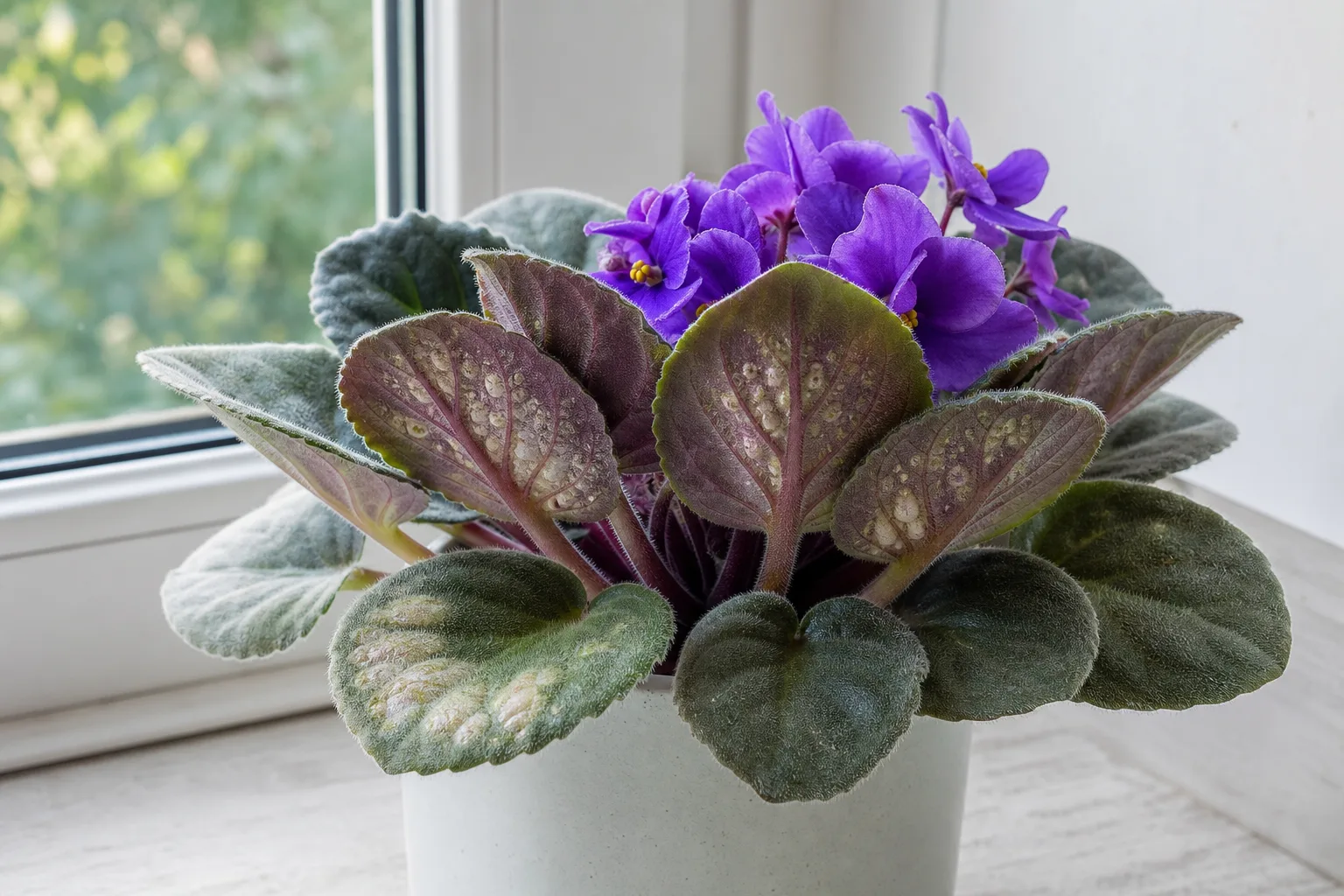
Edema on African Violet: Causes, Checks & Fixes
This guide covers edema on African Violet. See also the general Edema guide, watering, and light pages for this plant.
Edema on African Violet: Causes, Checks & Fixes
Quick answer
Edema on African Violet is a physiological water-uptake problem, not a fungus, pest, or nutrient disease. Roots absorb more water than the leaves can release through transpiration, causing wart-like bumps on lower leaf surfaces. On velvety African Violet foliage, that imbalance shows first as tiny blisters on the underside-not as spots from splashed cold water on top.
First fix: stop watering until the top inch of mix is dry, then resume bottom-watering only. Do not mist leaves, spray fungicide, or add fertilizer while the plant is processing excess moisture.
What edema looks like on African Violet
Early edema appears as pale, water-soaked blisters 1–2 mm wide on the underside of fuzzy leaves, often near the leaf base or along veins. Affected leaves at first develop tiny blisters, especially on the undersides. Many blisters merge into larger corky brown patches that feel rough and dry to the touch-not soft or spreading like fungal rot.
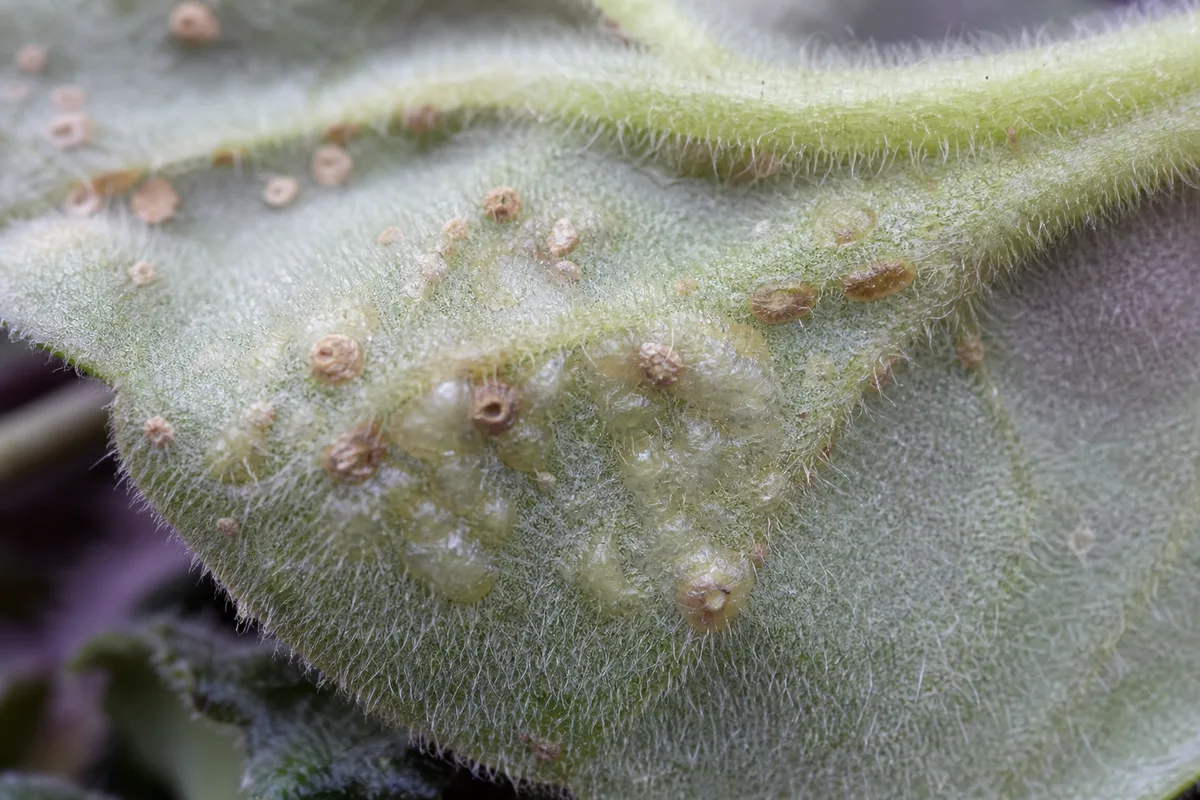
Edema symptoms on African Violet - compare with healthy tissue on the same plant.
On African Violet, edema usually hits older, lower leaves before the tight center rosette. The upper leaf surface may show slight indentations above engorged cells below. Compare these patterns:
- Edema - raised corky bumps underneath; dry texture; tracks to recent heavy watering in cool, humid conditions.
- Cold-water ring spots - pale rings or lines on the upper surface where cold water touched fuzzy leaves; not raised blisters underneath.
- Botrytis blight - water-soaked patches on the surface, sometimes with gray fuzzy mold; spreads faster between plants in stagnant humid air.
- Fungal leaf spot - discrete brown lesions that may carry spores; unrelated to a single overwatering on African Violet stretch.
Edema damage is cosmetic on an otherwise firm plant. It becomes serious only when the wet-soil pattern that triggered it continues long enough to invite crown or root rot on African Violet.
Why African Violet gets edema
African Violets are among the houseplants prone to edema when root uptake outpaces leaf transpiration. Three traits make African Violet overview especially vulnerable:
- Velvety leaf surfaces - the dense hair layer slows moisture loss compared with smooth-leaved plants, so excess root water backs up into leaf cells instead of evaporating quickly.
- Shallow, fine roots in small pots - African Violets prefer evenly moist mix in properly sized containers. Frequent bottom-watering without letting the surface dry keeps the entire root zone saturated longer than the plant can use.
- Indoor winter conditions - edema tends to occur when the soil is warm and very moist while the air is cool and humid, as often happens on overcast days. Closed windows, short daylight, and cool room temperatures reduce transpiration just when conscientious growers keep watering on a summer schedule.
Overwatering is the usual trigger, but the mechanism is uptake-versus-release-not drowning alone. A pot can feel only moderately wet yet still produce edema if the plant cannot transpire fast enough. Heavy peat mix, blocked drainage holes, oversized pots that stay damp at the center, and grouping violets in stagnant humid corners all extend the wet window.
This is separate from the leaf-spot problems caused by cold water on fuzzy leaves or overhead watering. Those spots form on the upper surface from contact damage; edema blisters start underneath from internal cell pressure.
How to confirm the cause
Work through these checks before treating edema as a disease:
- Inspect leaf undersides in good light - gently lift lower leaves and look for raised blisters or corky patches with no insect movement, webbing, or powdery coating.
- Review recent watering - if bottom-watering ran every few days while windows stayed closed on cool overcast weeks, timing fits edema better than a sudden pest attack.
- Feel the mix and pot weight - the surface may read slightly moist while the pot still feels heavy. Excess soil moisture is a contributing factor to edema, which appears as swollen bumps on the lower side of leaves that later turn brown and corky.
- Check the crown and roots - slide the plant partway out of the pot. Firm pale roots and a solid rosette center mean edema without active rot. Mushy roots or a soft crown mean overwatering has escalated-address rot first.
- Rule out lookalikes - no gray mold, no concentric fungal rings, no sticky residue, and no pattern tied to cold-water splashes on upper leaves.
If bumps appeared on multiple plants simultaneously after a humid spell and heavy watering, edema is likely. If one plant shows spreading soft lesions with odor, investigate rot or blight instead.
First fix for African Violet
Let the top inch of mix dry before the next bottom-water session, and drain saucers fully so the pot never sits in runoff.
That single watering correction rebalances uptake and transpiration without stressing an already water-logged plant further. Allow adequate drying time between watering schedules, especially when growing media temperatures are cool and air temperatures are warm.
Do not compensate by misting leaves or pouring water over the crown-moisture on fuzzy foliage causes separate spot problems. Hold fertilizer until new center growth looks normal; the plant is already managing excess water internally.
Step-by-step recovery
After the first watering pause, add these steps in order-one at a time, not all on the same day:
- Empty standing water - remove the pot from any cache tray, wick reservoir, or self-watering well until the surface dries.
- Resume bottom-watering only - set the pot in a shallow tray of room-temperature water until the surface feels moist, then remove and drain. Never leave the plant submerged indefinitely.
- Improve airflow without wetting leaves - space pots apart, open a vent, or run a fan on low nearby. Avoid pebble trays that raise humidity around foliage during an edema episode.
- Trim only fully corky lower leaves if they crowd the base - use clean, dry scissors. Cosmetic damage does not need mass pruning.
- Reassess light - if the violet sits in dim winter light, move it to a brighter north- or east-facing window so the pot dries predictably between drinks. Do not jump to direct sun, which causes separate scorch problems.
Skip fungicides, oil sprays, and African Violet repotting guide on day one unless roots are actively rotting or mix is clearly waterlogged and sour-smelling.
Recovery timeline
Existing corky patches remain on old leaves permanently-they will not green up or flatten. New center leaves should emerge clean within two to three weeks once watering matches soil dryness and airflow improves.
If fresh blisters keep forming on new growth, the mix is still too wet, the pot may be oversized for the root mass, or humidity and low light are still suppressing transpiration. If lower leaves yellow and the crown softens despite corrected watering, shift focus to crown or root rot-edema was an early warning, not the final diagnosis.
Lookalike symptoms
- Overwatering without edema yet - limp leaves, yellow lower foliage, sour soil smell; may precede or accompany corky bumps.
- Root rot - wilt despite wet soil, brown mushy roots; urgent repot and root trim needed.
- Botrytis blight - fuzzy gray mold on flowers or leaves; requires airflow and fungal cleanup, not just watering reduction.
- Cold damage - watersoaked upper-surface patches after chill; no corky underside blisters.
- Cyclamen mites - tight, stunted center with crinkled new leaves; no raised corky texture.
- Magnesium or nitrogen deficiency - yellowing between veins on older leaves; not blistered corky tissue.
Mistakes to avoid
Do not treat edema with fungicide-it is not an infection. Do not increase watering because corky patches look “dry”; that deepens the uptake imbalance. Minimize problems with edema by avoiding overwatering during humid, overcast weather.
Do not pour cold water on leaves to rinse bumps off-cold water causes white blotches and ring patterns on African Violet leaves. Do not repot into a larger container to “dry things out”; extra mix holds moisture longer. Do not fertilize a stressed plant hoping to push new growth while soil is still saturated.
African Violet care cross-check
Edema is a symptom of moisture imbalance in this plant’s normal care system. After correcting watering, confirm the rest of the setup supports steady transpiration:
- African Violet watering guide - keep the potting mix moist but not soggy, and never let your plant sit in water. Wait for the top inch to dry, not a fixed calendar day.
- Light - African Violet light guide from a north- or east-facing window helps the pot dry between bottom-water sessions.
- Mix and pot - light African violet mix with perlite in a properly sized pot with open drainage holes; avoid dense garden soil or decorative pots without drainage.
- Temperature - African Violets grow best around 65–75°F; cool rooms slow drying and extend edema risk after watering.
- Humidity - 40–60% is comfortable; extra humidity trays are unnecessary while recovering from edema and can slow leaf drying.
How to prevent edema next time
Match watering to how fast the pot actually dries in your room, not to how often you watered last month. Bottom-water when the surface is dry, drain fully, and reduce watering frequency during prolonged cool, cloudy weather.
Use room-temperature water, keep leaves dry, maintain gentle airflow between grouped plants, and flush the pot occasionally with plain water to prevent salt buildup from bottom-watering-only routines. Occasional dry surface intervals are healthier for African Violet roots than constantly saturated mix-especially in winter.
When to worry
Edema alone rarely kills a plant. Worry when:
- The rosette center feels soft or water-soaked.
- Leaves collapse despite wet soil and a sour smell rises from the pot.
- Corky bumps keep appearing on brand-new center leaves after three weeks of corrected watering.
- Lower leaves yellow in clusters and pull away easily-possible advance toward crown rot.
If the crown is firm, roots are pale, and only older leaves carry corky patches, slow down watering and monitor new growth. The plant should outgrow the damage.
When to use this page vs other African Violet guides
- African Violet watering guide - Use for routine moisture checks before assuming edema is the main issue.
- African Violet problems hub - Browse all 52 common issues on this species.
- Yellow Leaves on African Violet - Different entry point when symptoms overlap with edema.
- Brown Tips on African Violet - Different entry point when symptoms overlap with edema.