Root Rot on African Violet: Causes, Checks & Fixes
Quick answer
Root rot on African Violet starts when shallow roots sit in soggy mix too long. Stop watering immediately, unpot the plant, and inspect roots before repotting or fertilizing.
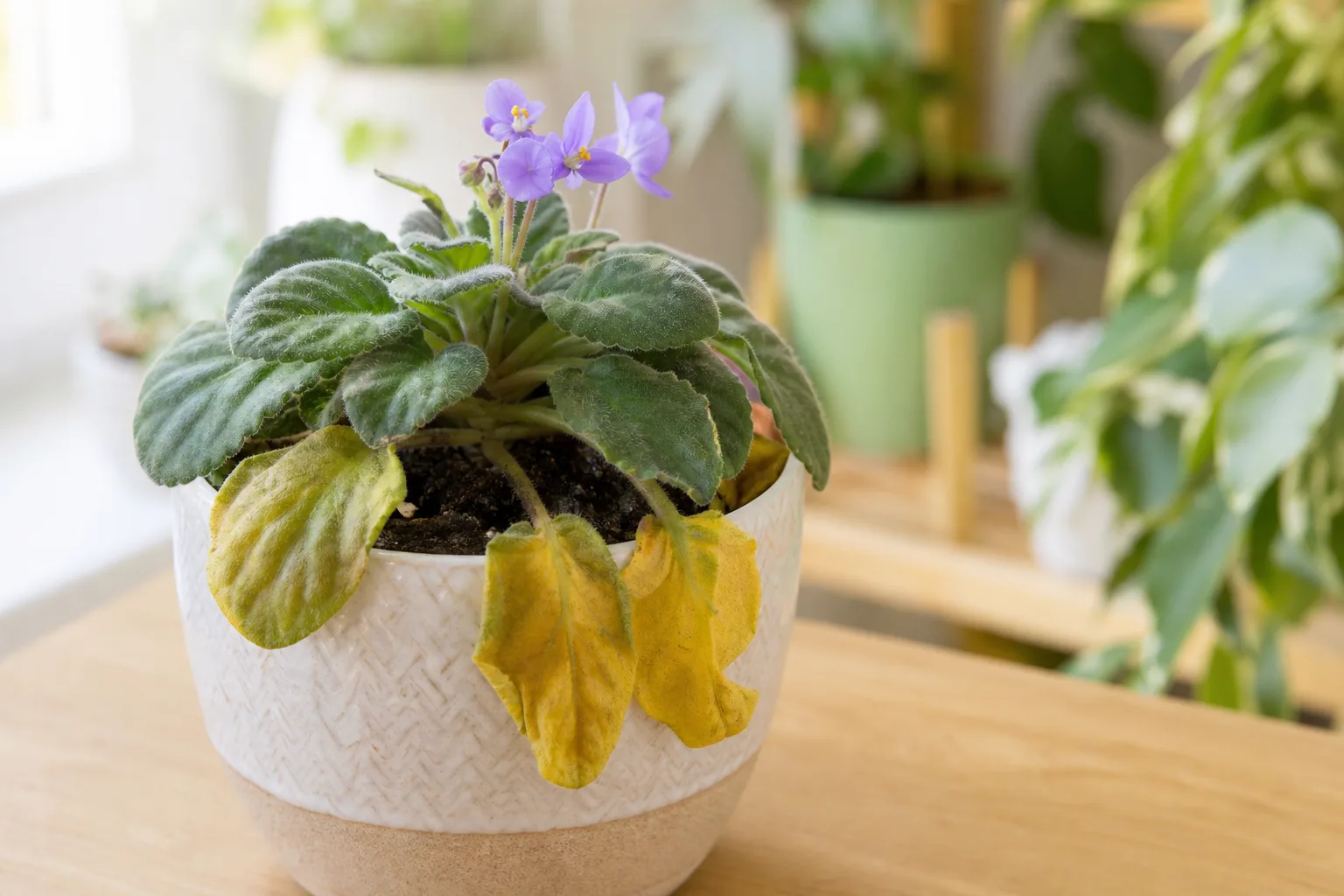
Root Rot on African Violet: Causes, Checks & Fixes
This guide covers root rot on African Violet. See also the general Root Rot guide, watering, and light pages for this plant.
Root Rot on African Violet: Causes, Checks & Fixes
Quick answer
Root rot on African Violet is decay in the shallow, fibrous root system-not a leaf disease you can spray away. It almost always follows mix that stays wet too long in a small pot. Lower leaves turn yellow and droop first, then the plant wilts even though the soil feels moist, because damaged roots cannot move water upward. Your first move is to stop watering and inspect the root zone-not to add more water because the leaves look thirsty.
What root rot looks like on African Violet
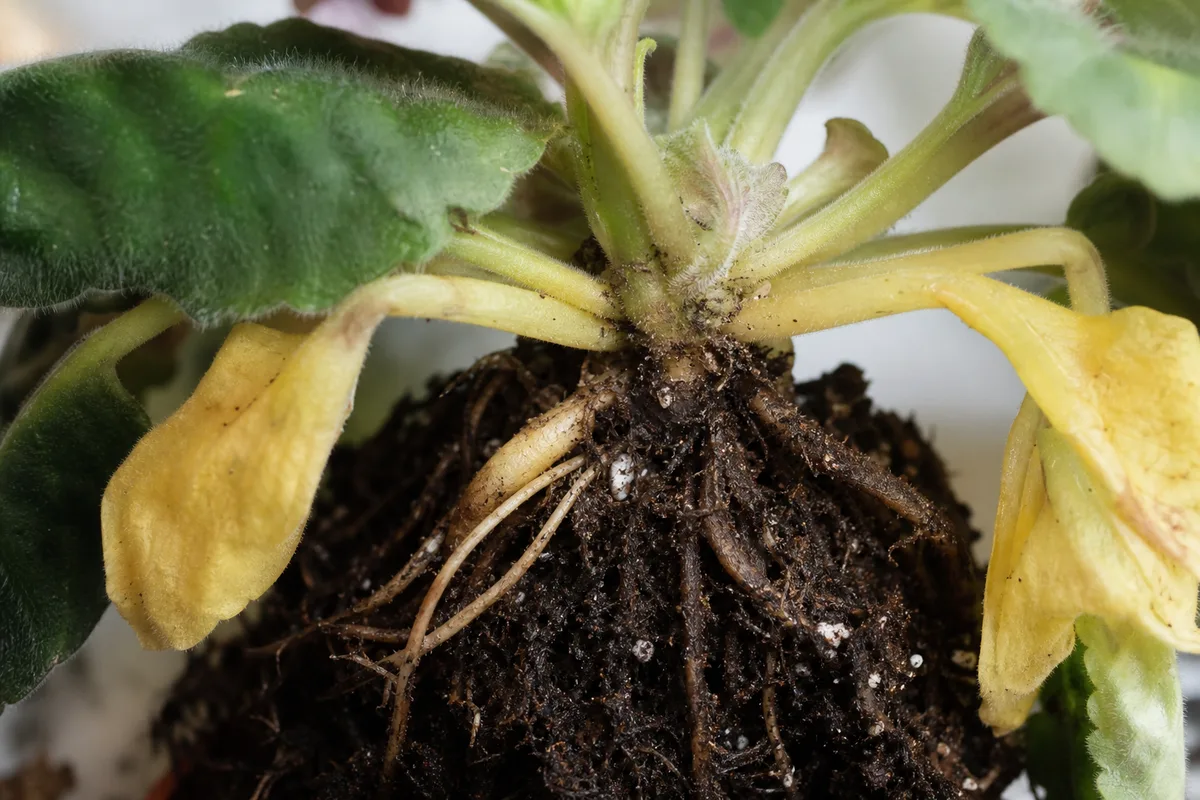
Brown discolored roots at the soil line with yellow limp lower leaves - early root rot after the mix stayed soggy too long.
On a healthy African Violet, older bottom leaves age out one at a time while the rosette center stays firm. Root rot breaks that pattern. Symptoms usually start on the lower leaves: several bottom leaves yellow, go limp, and may turn brown and mushy at once. The plant can look wilted and underwatering on African Violet while the pot still feels heavy and damp.
Above the soil line, the crown often stays firm longer than the roots fail-this is one way root rot differs from crown rot, where the youngest center leaves collapse first. Advanced root rot may still reach the stem base, but the early warning is a cluster of failing lower leaves plus wet mix. A sour or swampy smell when you lift the plant from its pot is a strong rot signal. Fungus gnats hovering around the surface often appear alongside chronic wet soil, though gnats alone do not prove rot.
Why African Violet gets root rot
African Violet evolved in loose, fast-draining cloud-forest debris. Its roots are fine, shallow, and confined to small pots in most homes. That combination leaves little room for error when watering.
The most common trigger is overwatering on African Violet, not a random fungus attack. Root and crown rot can occur when roots stay too wet-even when no specific disease organism is present. Saturated mix drives out oxygen; roots stop functioning and decay. Pathogens such as Pythium thrive in those same wet conditions and can accelerate collapse.
Several habits push African Violets into that zone:
- Watering on a calendar instead of checking whether the top inch of mix is dry
- Leaving the pot in a full saucer after bottom-watering so the root zone reabsorbs standing water
- Heavy or compacted mix that holds moisture long after the surface looks dry
- An oversized pot with extra wet soil the small root ball cannot use quickly
- Cool, low-African Violet light guide where the plant drinks slowly but gets watered as often as in summer
African violets are highly subject to root and crown rot if overwatered. Because the first visible sign is droopy leaves, many growers respond by watering more-which deepens the damage.
How to confirm the cause
Work through these checks before trimming roots or African Violet repotting guide:
- Weigh the pot. A heavy pot with limp leaves suggests wet roots, not drought.
- Feel the top inch of mix. Constant dampness with failing lower leaves supports rot over simple underwatering.
- Smell the drainage hole. A sour odor means active decay in the root zone.
- Unpot gently. Slide the plant out and shake away wet mix. Healthy roots are firm, pale, and resilient. Rotted roots are brown, translucent, slimy, or hollow.
- Check the crown separately. If the center is firm and only lower roots are mushy, you likely have root rot that has not yet destroyed the crown. Soft tissue at the heart points toward crown rot instead.
- Review recent care. Saucer standing water, top-watering that soaked the crown, repotting into dense mix, or a blocked drainage hole all support a rot diagnosis.
If the pot is dry and light, roots are firm, and only one old bottom leaf is yellow, rule out normal leaf aging before cutting tissue.
First fix for African Violet
Stop watering immediately. When roots are rotting, adding water because leaves look wilted makes the problem worse. Do not fertilize, mist, or repot until you have seen the roots.
Once watering stops, unpot the plant in daylight and rinse away old mix so you can tell firm tissue from mush. That inspection-not guesswork from leaf color alone-decides what happens next.
Step-by-step recovery
When some healthy roots remain:
- Trim all decayed roots with sterile scissors until only firm white or tan tissue remains. Disinfect blades between cuts.
- Remove mushy lower leaves that pull away easily; they will not recover and can hold moisture against the stem.
- Let cut surfaces air-dry for an hour if the root mass was heavily trimmed-African Violet tissue is delicate, but a brief dry period reduces reinfection risk in fresh mix.
- Repot into fresh, light African violet mix with perlite in a clean pot only slightly larger than the remaining root ball. Do not bury the crown deeper than before.
- Bottom-water lightly only after the top inch of new mix feels dry. Place the container in a tray with about 1 inch of water and remove it once the surface is moist, then discard excess from the saucer.
- Hold fertilizer until new center leaves look firm and normal-sized-usually three to four weeks after roots stabilize.
When most roots are gone but the crown and several healthy leaves remain, reroot the crown in fresh mix. Some growers enclose the repotted plant in a clear bag for two to four weeks to reduce moisture loss while new roots form; use this only when the new mix is moist but not soggy.
If the root mass is mostly mush and the crown is soft, salvage two or three healthy middle-row leaves with petioles for propagation instead of trying to save the main plant.
Recovery timeline
Mild cases with firm crown tissue and partial healthy roots may stabilize within one to two weeks after repotting and corrected watering. New white root tips and a firm center leaf are the signs that matter-not whether old yellow bottom leaves green up again.
Severe root loss means weeks of slow rerooting before normal growth resumes. Expect four to eight weeks before the plant looks like its old self, and longer if it was kept in low light during recovery. If wilt spreads upward, the crown softens, or no new roots appear after four weeks in corrected conditions, the plant is unlikely to recover.
Lookalike symptoms
- Underwatering - Pot feels light, mix is dry throughout, and wilted leaves feel papery rather than mushy; roots stay firm when inspected.
- Crown rot - Youngest center leaves fail first with sour smell at the heart while lower leaves may still look partly green.
- Normal lower-leaf aging - One or two old bottom leaves yellow and detach while the crown stays firm and roots look healthy.
- Transplant shock - Wilt appears days after repotting into fresh mix with firm roots and no sour odor.
- Cold damage - Watersoaked leaf patches after chill exposure without progressive root mush or sour smell from the pot.
Mistakes to avoid
Do not keep watering because leaves look wilted when soil is already wet. Do not repot into a much larger pot after root loss-the extra wet mix will rot what remains. Do not use dense garden soil or a decorative pot without drainage holes. Do not fertilize a rotting plant; salts in saturated mix add stress. Do not assume a fungicide drench fixes the problem while keeping the same soggy routine and blocked drainage.
How to prevent root rot next time
Allow the soil surface to dry to the touch before watering again. Use a light, well-drained African violet mix with perlite, keep drainage holes open, and match pot size to the root mass-African Violets bloom well slightly root-bound, so bigger is not better.
Bottom-water from a shallow tray, remove the pot when the surface is moist, and empty the saucer. Never leave the plant sitting in runoff. Place it in bright indirect light so the small pot dries predictably between drinks, and reduce watering frequency in cool or low-light seasons when growth slows.
When to give up and start over
Dispose of the plant when the crown is soft, most roots are mush with no firm tissue left after trimming, and wilt keeps spreading despite dry corrected care. Before discarding, take healthy outer leaves for cuttings so you keep the variety without risking nearby violets on the same shelf. Prevention is the easiest and most successful cure-once rot consumes the root system and crown, salvage through leaf propagation is usually more realistic than waiting for a full recovery.
When to use this page vs other African Violet guides
- African Violet watering guide - Use for routine moisture checks before assuming root rot is the main issue.
- African Violet problems hub - Browse all 52 common issues on this species.
- Overwatering on African Violet - Different entry point when symptoms overlap with root rot.
- Yellow Leaves on African Violet - Different entry point when symptoms overlap with root rot.
- Wilting on African Violet - Different entry point when symptoms overlap with root rot.