Poor Drainage on African Violet: Causes, Checks & Fixes
Quick answer
Poor drainage on African Violet keeps fine roots waterlogged even when you water carefully. First fix: confirm open drainage holes and a cache pot not holding standing water, then repot into light perlite-amended mix in a shallow pot.
Poor Drainage on African Violet: Causes, Checks & Fixes
This guide covers poor drainage on African Violet. See also the general Poor Drainage guide, watering, and light pages for this plant.
Poor Drainage on African Violet: Causes, Checks & Fixes
Quick answer
You water lightly, yet the mix stays wet for days and leaves wilt anyway-that wet-soil paradox is poor drainage on Saintpaulia, not necessarily careless watering. Drainage is one of the most important considerations in preparing a media mixture for African violets, and when holes are blocked, peat has broken down, or a decorative cache pot traps runoff, fine roots suffocate even on a careful schedule. First fix: confirm open drainage holes and that no outer pot is holding standing water, then repot into light, perlite-amended mix in a shallow container.
What poor drainage looks like on African Violet
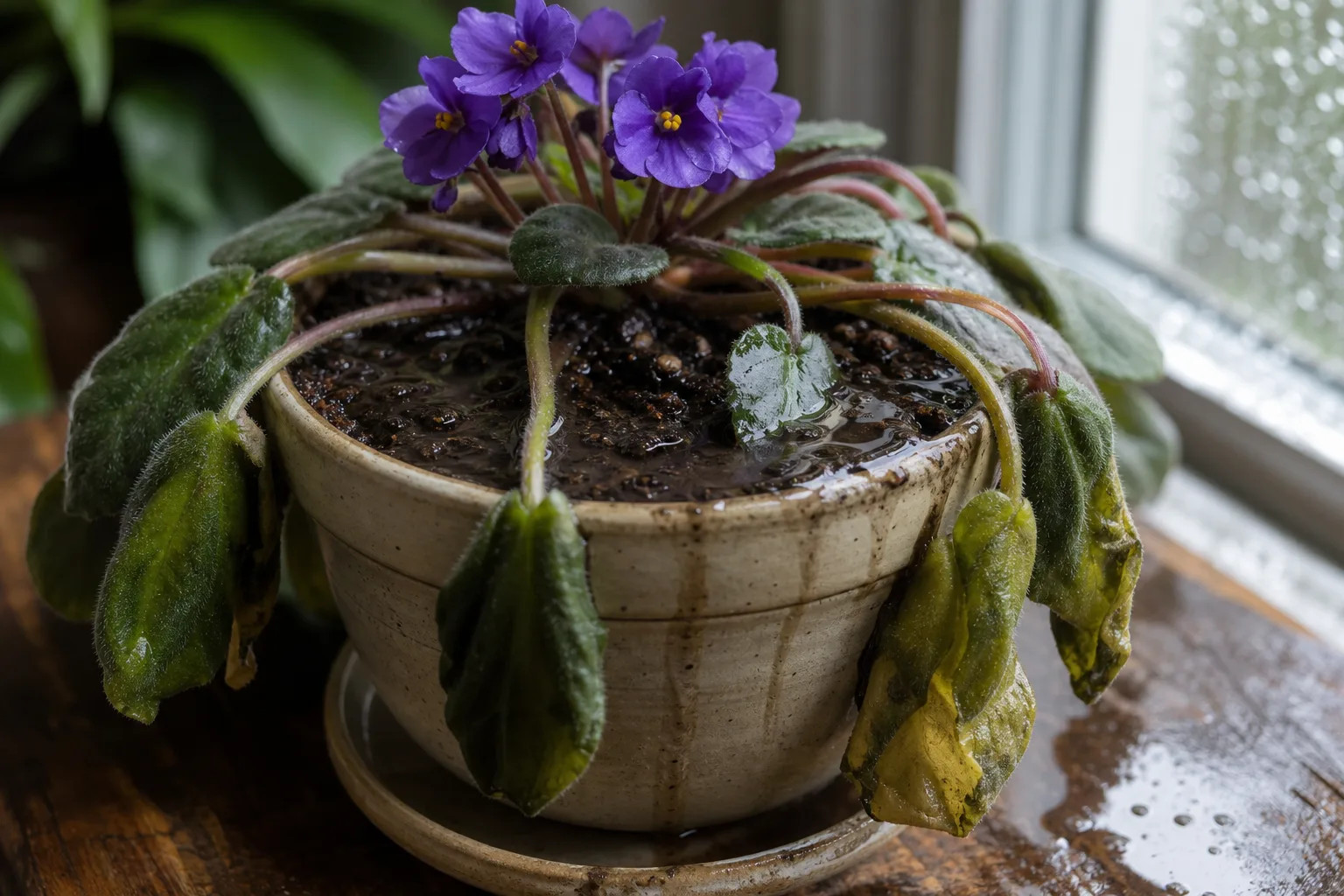
On a healthy violet, the top inch of mix dries within a few days in normal room light and the center stays firm. Poor drainage breaks that rhythm. Expect limp leaves while the pot still feels heavy, yellowing lower leaves in clusters, and stalled or dropped buds. Plants that are limp and wilted even when soil is moist are usually suffering from overwatering, poor drainage, and root rot from constantly wet roots-the same wilt-with-wet-soil pattern, but here the trigger is the pot or mix, not how often you pour.
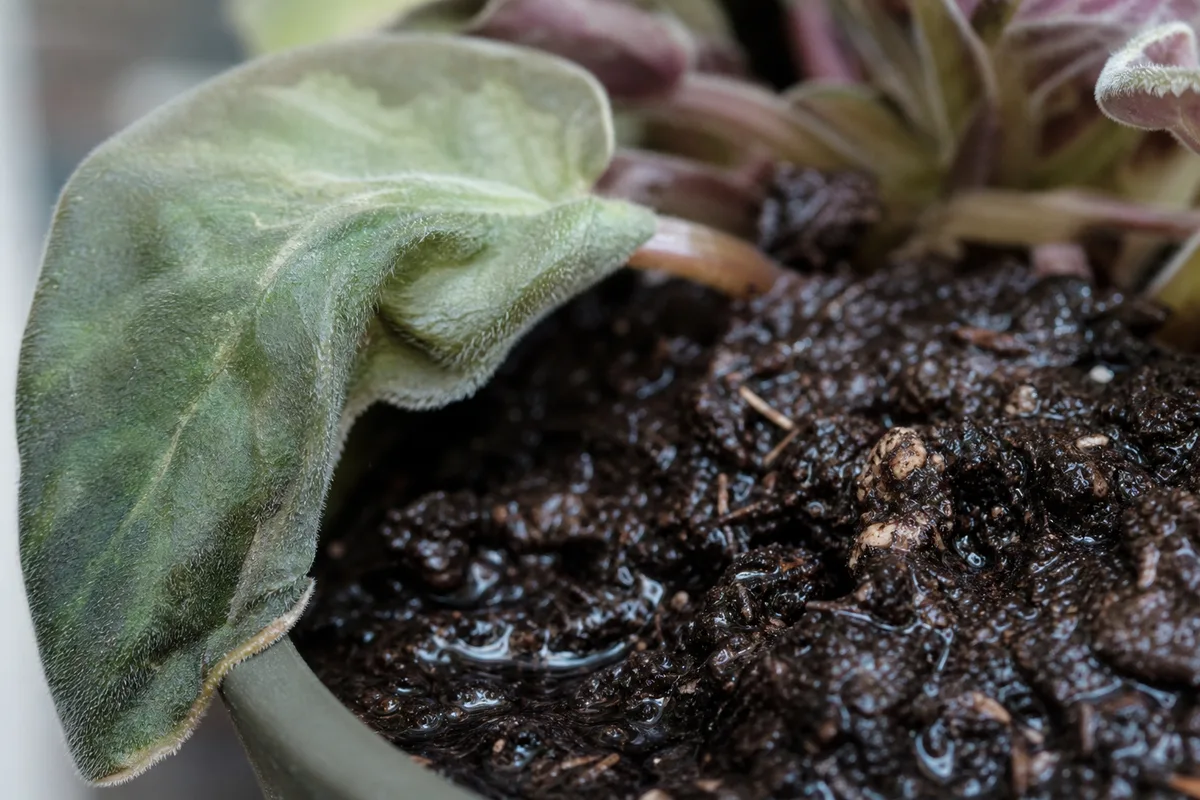
Poor Drainage symptoms on African Violet - compare with healthy tissue on the same plant.
A sour smell from the pot, fungus gnats near the surface, and white mold on mix often follow. A dry-looking surface with a wet core underneath is a classic compaction signal-water cannot move through the profile. Compare with underwatering: a lightweight dry pot and wilted but firm leaves point away from trapped moisture.
Why African Violet suffers from poor drainage
African Violet evolved on rocky, fast-draining cloud-forest ledges-not in heavy, water-holding soil. African violets have fine roots and require well-drained, soilless potting mixes with a pH of about 6.2 to 6.5. Indoors, that shallow root system needs air pockets as much as moisture.
Old peat-based mix compacts after a year, turning sponge-like and holding water at the root zone while the surface looks merely damp. Decorative pots without holes, oversized containers with a wet unused center, garden soil, and sealed cache pots that never drain all keep roots saturated. Wick and self-watering setups help many growers but become drainage failures when the reservoir stays full while mix is already heavy-see the watering guide for how bottom-watering should still let the top inch dry between drinks.
How to confirm poor drainage vs. overwatering, compaction, and root rot
Work through these checks in order before repotting:
- Drainage holes. Turn the pot over. Pots must have drainage holes-confirm they are open, not plugged by roots, pebbles, or a glued-in liner.
- Cache pot trap. Lift the inner grow pot from any decorative outer pot. Standing water in the cache means roots sit in a bath even when you bottom-water correctly-related to no drainage hole setups on show displays.
- Mix squeeze test. Slide the plant out gently. Dense, sour-smelling mix that releases water when squeezed has failed. Crumbly mix that drains freely when you water from above supports healthy roots.
- Surface vs. core moisture. A dry top inch with a wet, brick-like core points to compacted soil-often the upstream cause of poor drainage.
- Root color. Pale, firm roots suggest drainage stress caught early. Brown, slimy roots mean root rot has advanced; drainage failure may have caused it, but treatment shifts to aggressive trimming.
Symptom lookalike comparison
| What you see | Most likely cause | Key differentiator |
|---|---|---|
| Limp leaves + wet mix + you water on a calendar | Overwatering | Fresh crumbly mix and open holes; problem is frequency |
| Limp leaves + wet mix + mix over a year old or hydrophobic surface | Compacted soil | Water beads on surface; dense core when probed |
| Limp leaves + blocked holes or cache pot standing water | Poor drainage (this page) | Fixes when holes open and mix is refreshed-not just less water |
| Limp leaves + mostly brown mushy roots | Root rot | Advanced stage; may need crown assessment |
| Wilt + lightweight dry pot | Underwatering | Mix is dry throughout; leaves feel firm |
If you water conservatively, holes are open, and mix is fresh yet soil still stays soggy, the mix itself is too dense-amend with perlite per the soil guide before blaming your habits.
First fix: repot into fresh free-draining mix
Repotting is the first fix when holes are open but mix is dense, sour, or more than a year old. Stopping water alone rarely cures a failed potting profile-the wet zone stays in the root ball.
Mix recipe and shallow-pot selection
Use light, soilless mix with extra aeration:
- Equal parts peat moss, vermiculite, and perlite, or
- A blend of 50 percent commercial African violet potting mix and 50 percent perlite
Commercially prepared packaged media mixtures are available although many are too rich, hold too much water and too little air-amend heavy bags before use. Pre-moisten until crumbly, not dusty and not dripping. Choose a shallow pot one size appropriate to the root mass-not a deep or oversized container. African violet roots generally do not grow deep or wide; shallow pots match the rosette better than tall ones.
Step-by-step repot protocol
When roots still have firm pale tissue:
- Water lightly a day ahead so the root ball releases more easily-see the repotting guide for timing detail.
- Invert the pot and tap gently to slide the plant out. Shake off outer wet, dense mix; keep the root ball intact if rot is mild.
- Trim brown, translucent, or slimy roots with sterile scissors. Leave firm white roots.
- Set the crown at the same depth in a clean shallow pot with open holes. Pile fresh mix loosely around roots-never pack the mix down, which eliminates air pockets.
- Bottom-water with plain room-temperature water until the surface feels moist, then remove the pot and discard saucer water.
- Hold fertilizer for two weeks. Wait until the top inch dries before the next drink.
If most roots are mushy but the crown is still firm, follow the same steps. If the crown feels soft, see the crown rot guide-drainage failure may have progressed beyond simple mix refresh.
Recovery timeline and what old leaves will not fix
Mild drainage stress may stabilize within one to two watering cycles once mix breathes and saucers stay empty. Severe root loss can take four to eight weeks before new center leaves look normal. Judge progress by firm crown growth, lighter pot weight between waterings, and pale firm roots-not whether yellow lower leaves re-green. Those damaged leaves will not recover fully; remove them after the plant stabilizes. Blooms often pause until the next growth cycle after a hard repot.
What not to do
Do not add gravel at the bottom of the pot instead of fixing the mix-a gravel layer rarely improves drainage and can keep the root zone saturated. Do not repot into a much deeper or larger container; extra wet mix makes saturation worse. Do not fertilize a waterlogged plant before correcting the profile. Do not keep the inner pot sealed inside a cache that holds runoff. Do not assume less watering alone fixes dense, year-old peat-refresh the mix.
How to prevent poor drainage next time
Re-pot plants in fresh potting mix once a year at minimum, and more often in small pots per society schedules. Keep the potting mix moist but not soggy, and never let your plant sit in water. Empty saucers within 30 minutes of bottom-watering.
For cache-pot displays, lift the grow pot to drain after every watering or use a liner that does not seal the bottom. If you wick-water or use self-watering reservoirs, confirm the top inch dries between refills-if not, add perlite and shorten wick length. Match routine mix choices to the African Violet soil guide and repot on the schedule in the repotting guide so peat never collapses into a waterlogged core.
When to worry
Treat poor drainage as urgent when the crown softens, multiple center leaves collapse within days, or roots are mostly brown and slimy on inspection. If roots are mushy, brown, and slimy, the plant is not likely to survive due to the loss of roots. At that point, take healthy outer leaves for propagation before discarding the main plant.
If drainage is corrected-fresh mix, open holes, empty saucers-but the violet wilts again within one repot cycle, contact your local UF/IFAS Extension office or an African Violet society chapter for hands-on diagnosis. Chronic failure despite good hardware usually means an advanced rot issue or a crown problem, not a simple hole blockage.
When to use this page vs other African Violet guides
- African Violet watering guide - Use for routine moisture checks before assuming poor drainage is the main issue.
- African Violet problems hub - Browse all 52 common issues on this species.