No Drainage Hole on African Violet: Causes, Checks & Fixes
Quick answer
A pot with no drainage hole traps water at the crown and roots even when you water lightly. First step: move the plant into a container with open drain holes and airy African violet mix-do not wait for more yellow leaves.
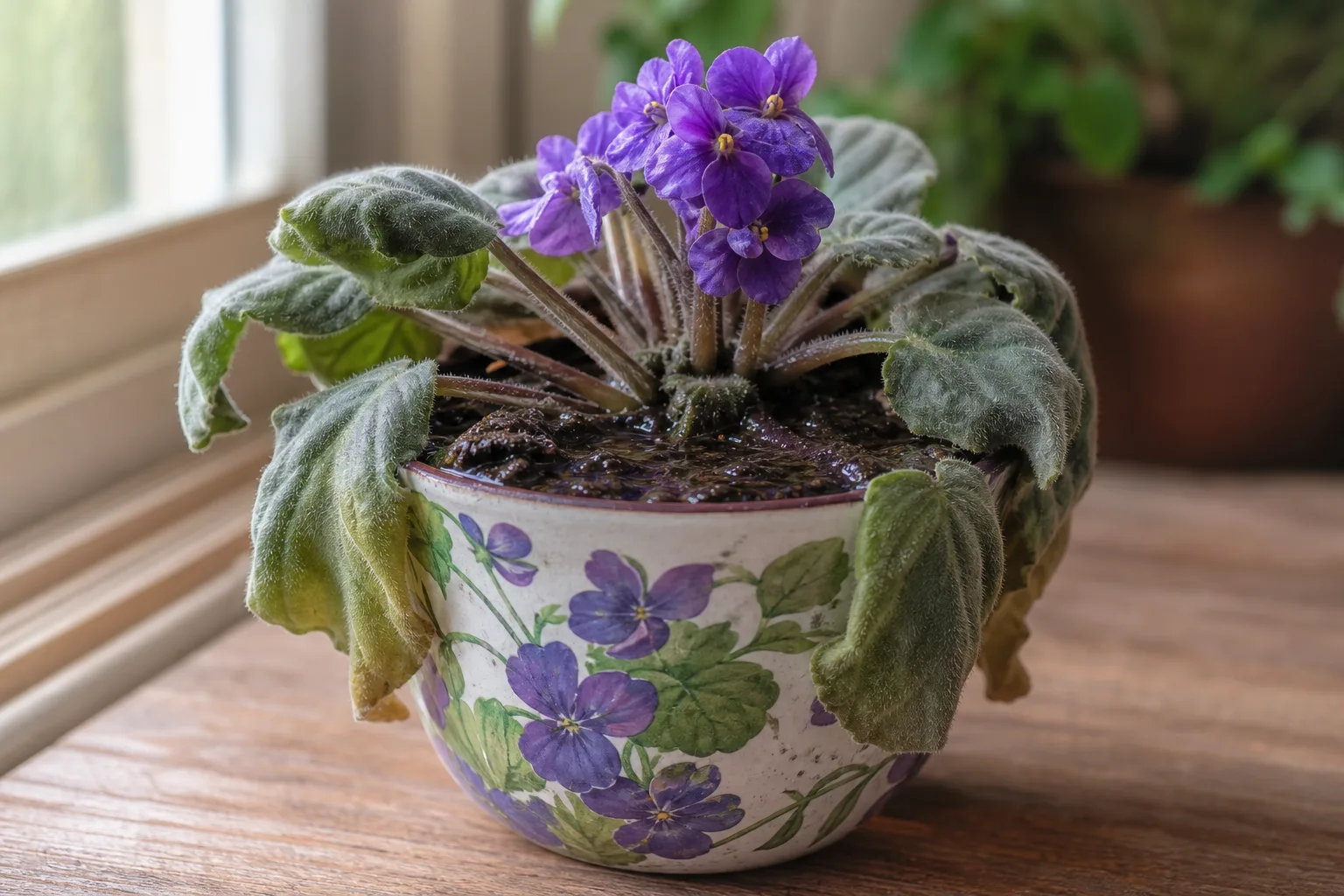
No Drainage Hole on African Violet: Causes, Checks & Fixes
This guide covers no drainage hole on African Violet. See also the general No Drainage Hole guide, watering, and light pages for this plant.
No Drainage Hole on African Violet: Causes, Checks & Fixes
Quick answer
Your African violet looked perfect in the glazed cache pot from the florist-tight rosette, fresh blooms, no holes in the bottom. Three weeks later the center leaves limp while the soil still feels damp and the crown softens when you press it. Sealed containers trap water where fine violet roots meet the crown, and that is where rot starts first on Saintpaulia.
First step: move the plant into a container with open drain holes and airy African violet mix-do not wait for more yellow leaves. For mix ratios, see the African violet soil guide. If the crown is already soft, pair repotting with the crown rot and root rot workflows.
Saintpaulia needs a well-drained, soilless potting mix and containers that let excess water drain. A sealed decorative pot turns careful bottom-watering into chronic crown suffocation-especially when a cache shell holds runoff you cannot see under the leaf rosette.
By sai-ananth · Reviewed by LeafyPixels Review Board · Last expert review: June 2026
What a sealed pot does to African violet
Unlike succulents that store water in thick tissue, African violets keep moisture in fine roots and a compact crown. When water has nowhere to exit:
- The crown softens while outer leaves still look green for a few days.
- Lower leaves yellow and go limp even though you reduced watering-deep mix stays saturated.
- The pot feels heavy for days after a single bottom-water.
- Surface mold or fungus gnats appear because the soilless mix never dries through.
- Wilting happens while soil is wet-limp even when soil is moist because rotten roots cannot move water upward.
These signs mirror overwatering, but the trigger is often the container setup, not your calendar. A violet in a draining pot with good mix can still fail if the saucer or cache pot holds standing water-see poor drainage when holes exist but water cannot leave.
Why African violet is especially vulnerable
Crown and root physiology - Violet roots are fine and need oxygen between drinks. Standing water at the pot bottom creates anaerobic conditions where crown and root rot develop-often before you notice leaf damage because the tight rosette hides the soil surface.
Cache-pot and gift-pot culture - African violets are sold in attractive sealed planters for gift tables and windowsill displays. Those pots often lack holes. Treating the display pot as the permanent home ignores that violets need steady moisture without a wet root zone-culture details in the African violet overview.
Bottom-watering habit - Many growers bottom-water to keep water off fuzzy leaves. That works only when excess drains away completely. Water sitting in a saucer or outer cache pot keeps the bottom third of mix saturated; tight rosette leaves can hide standing water until the crown fails.
Wick-watering failure modes - Wick systems draw steady moisture into the mix. They fail when the blend is too peat-heavy, the wick stays constantly wet, or the reservoir never allows a dry-down cycle. The crown waterlogs the same way as in a holeless pot-even though the setup looks “self-watering.” Match wick culture to porous mix per the watering guide.
What no drainage hole looks like on African violet
Early signs overlap overwatering: yellow lower leaves, limp foliage despite moist soil, and a heavy pot that stays wet for days. Advanced cases show a soft crown, brown collapsed center leaves, and sour-smelling mix when you lift the plant.
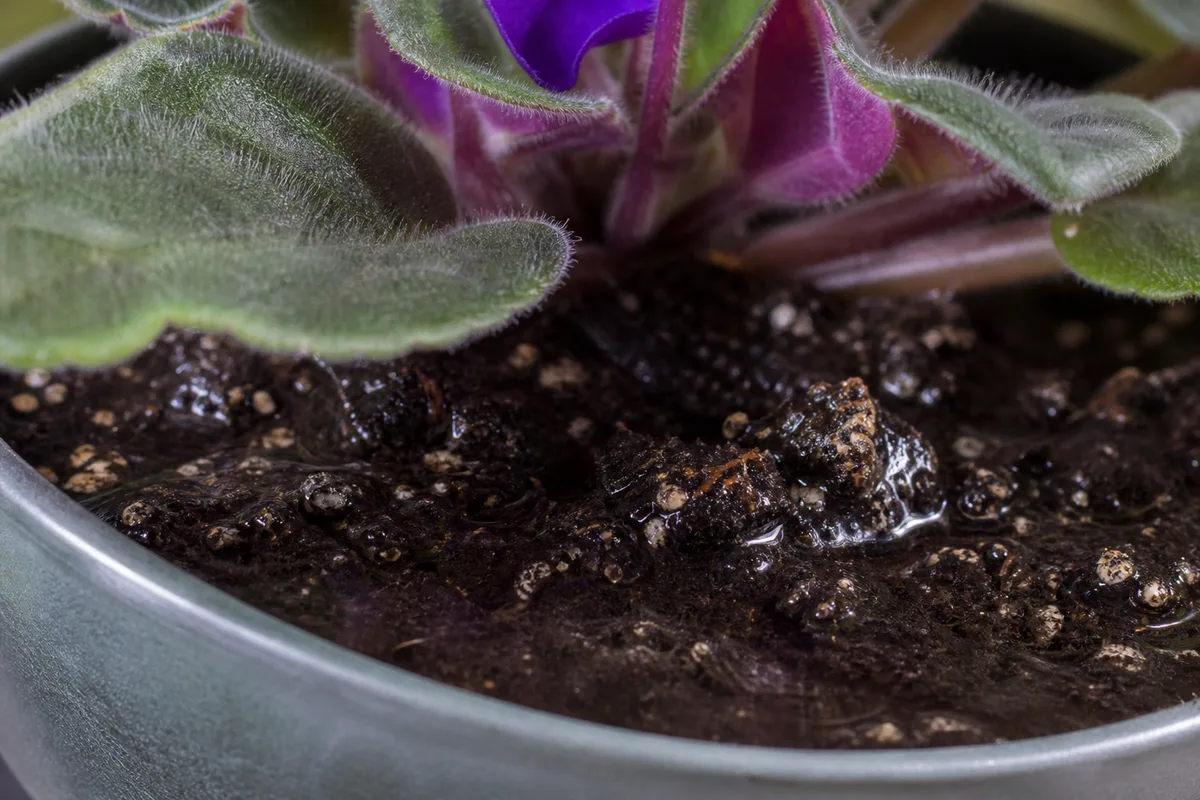
No Drainage Hole symptoms on African Violet - compare with healthy tissue on the same plant.
A violet in a sealed decorative pot may look fine briefly after purchase, then fail suddenly after repeated top- or bottom-watering without emptying the shell. Wet wilt-limp leaves with wet soil-is the hallmark; do not add more water.
| Symptom | Sealed pot / no drainage | Overwatering in holed pot | Underwatering | Poor heavy mix |
|---|---|---|---|---|
| Pot weight days after water | Stays heavy | Often heavy if saucer not emptied | Light | Heavy despite holes |
| Crown feel | Softens early | Softens if chronic | Firm | Softens over time |
| Soil smell | Sour at bottom | Sour if stagnant | Neutral, dry | Musty, never dries |
| Leaf pattern | Lower yellow, center limp last | Similar | Dry, crisp edges | Yellow, limp, wet base |
| First check | Flip pot-no holes or clogged | Saucer water, schedule | Dry throughout | Mix texture, perlite content |
How to confirm the cause
Run a five-minute pot audit before changing light, fertilizer, or watering volume:
- Hole check - Flip the pot. No holes, holes smaller than one-eighth inch on a two-inch pot, foil-wrapped bases, or roots plugging exits all fail.
- Pour test - Water until runoff should appear. If none exits in two minutes, drainage is blocked or absent.
- Cache-pot check - Lift the inner pot. Water sitting in the outer shell means roots breathe wet air continuously.
- Weight test - A pot that never lightens days after watering signals trapped moisture-not a light deficit.
- Crown and root smell - Remove the plant gently. Firm pale roots are healthy; brown slimy roots and a sour crown confirm damage from trapped water.
If the crown is firm, the pot drains freely, and saucers are emptied after each bottom-water, look elsewhere (underwatering, not enough light, pests). If the pot fails the pour test, container setup is the diagnosis.
First fix: repot or add drainage holes
Move the African violet into a pot with open drainage holes sized to the root mass-this is the single first action, not a bundle of pruning, feeding, and spraying.
Steps:
- Choose a pot only slightly wider than the root ball-not oversized to match leaf span. Oversized pots hold excess wet mix even with holes.
- Use fresh airy African violet mix with perlite or vermiculite per the soil guide-not heavy garden soil or dense bagged mix alone.
- Hole sizing - Rough guide: one open hole on a one-inch pot, two on a two-inch pot, four quarter-inch holes on a four-inch pot.
- Trim mushy roots with a clean blade; discard saturated old mix. Do not bury the crown deeper than before.
- Hold fertilizer until new center growth appears-see fertilizer guide.
- Water only when the top inch of mix feels dry; after bottom-watering, allow excess water to drain and empty the saucer within 30 minutes.
For step-by-step technique and neck management, continue to the African violet repotting guide.
Drilling holes vs. repotting
| Situation | Best move |
|---|---|
| Thin plastic nursery pot | Add holes with a heated screwdriver from the bottom-work in ventilation, avoid breathing fumes |
| Unglazed terra cotta | Slow drill from the bottom outward; support the pot on wood |
| Glazed ceramic gift pot | High crack risk-use a tile/glass bit, drill slowly with water lubrication, or repot into a nursery pot and use the glazed pot as a dry cache only |
| Plant already limp with soft crown | Repot immediately into a draining container-drilling alone does not fix rotted tissue |
If you love the decorative pot, keep it as a dry cache-lift the draining nursery pot out to water, let runoff finish, empty the shell, then return.
Cache-pot routine that works
Nest a holed nursery pot inside the décor shell. Water the inner pot in a saucer or bowl; when the surface is moist, lift it out, let it drain completely, wipe the shell dry, then replace. Never let the plant sit in water in a sealed outer pot with the inner pot sitting in accumulated runoff.
If rot has already started
When the crown is soft, repotting into a draining pot is still urgent-but add rot surgery:
- Stop all watering and work over newspaper. Avoid splashing water into the crown.
- Unpot and rinse away old saturated mix.
- Cut away brown, mushy roots and soft crown tissue with a clean sharp blade; sterilize between cuts.
- Repot in fresh sterile mix in a draining pot sized to remaining roots.
- Do not fertilize until firm new center leaves appear.
If the stem center collapses or smells foul through the rosette, disposal is often more reliable than prolonged rescue-see crown rot for escalation detail.
Recovery timeline
| Stage | What to expect |
|---|---|
| Days 1–3 | No fertilizer; crown should stop softening if drainage fix worked |
| Weeks 1–2 | Firm crown, possible lower leaf loss as plant stabilizes |
| Weeks 2–4 | New center leaves signal root recovery |
| Month 2+ | Normal even-moisture rhythm; blooms return after sustained healthy growth |
Worsening crown softness, spreading mush, or sour odor mean rot advanced. Damaged outer leaves rarely re-green-judge success by firm crown and new center growth, not saved lower foliage.
Mistakes to avoid
- Keeping the florist gift pot forever because it matches the windowsill.
- Bottom-watering into a sealed cache pot without lifting the inner container.
- One tiny drilled hole in a large glazed bowl-insufficient for a moisture-sensitive violet.
- Adding gravel at the bottom instead of real holes-do not put stones in the bottom of the pot; they reduce root space without fixing perched water.
- Stacking fixes - fungicide, fertilizer, and pruning on the same day as emergency repot. Fix drainage first; watch the crown one week.
- Continuing the same water volume in a sealed pot through cool winter months when the plant drinks slowly.
How to prevent sealed-pot problems
- Buy or repot into draining containers before rot starts-annual refresh is routine violet culture per the repotting guide.
- Empty saucers within 30 minutes after every bottom-water-overwatering is among the top causes of violet loss.
- Inspect drain holes each season-fine roots can block exits on root-bound plants.
- Quarantine new gift plants still in sealed décor; establish lift-and-drain routine or repot within the first week.
- Pair airy mix + open holes + even moisture-violets tolerate brief dryness at the surface far better than a constantly wet root zone. See the African violet overview for the full care rhythm.
Crown firmness reminder
Water must be able to leave the pot; the crown must stay firm. A draining container with porous soilless mix is not an optional upgrade for serious African violet growers-it is the baseline that makes bottom-watering and wick systems safe.
When to use this page vs other African Violet guides
- African Violet watering guide - Use for routine moisture checks before assuming no drainage hole is the main issue.
- African Violet problems hub - Browse all 52 common issues on this species.