Overwatering on African Violet: Causes, Checks & Fixes
Quick answer
Overwatering on African Violet means the mix stays wet too long-not that you poured too much at once. Stop watering, let the top inch dry, and inspect roots before repotting or fertilizing.
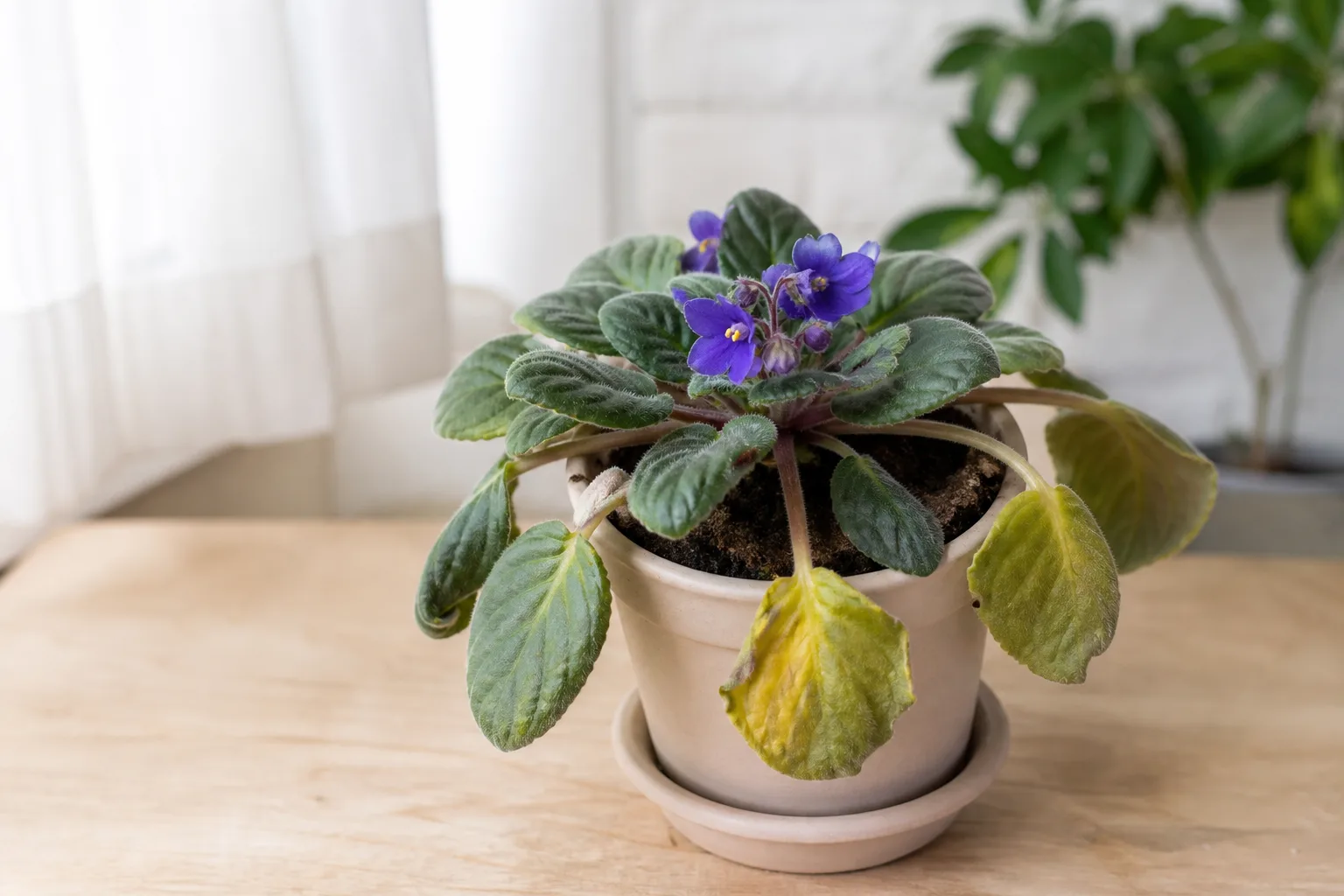
Overwatering on African Violet: Causes, Checks & Fixes
This guide covers overwatering on African Violet. See also the general Overwatering guide, watering, and light pages for this plant.
Overwatering on African Violet: Causes, Checks & Fixes
Quick answer
Overwatering on African Violet is almost always about watering frequency, not how much you pour at once. Root rot from overwatering is one of the most common reasons African violets die. The telltale pattern is limp, wilted leaves while the soil still feels moist-because saturated roots cannot take up water properly. Stop watering immediately, let the top inch of mix dry, and inspect roots before African Violet repotting guide or fertilizing.
What overwatering looks like on African Violet
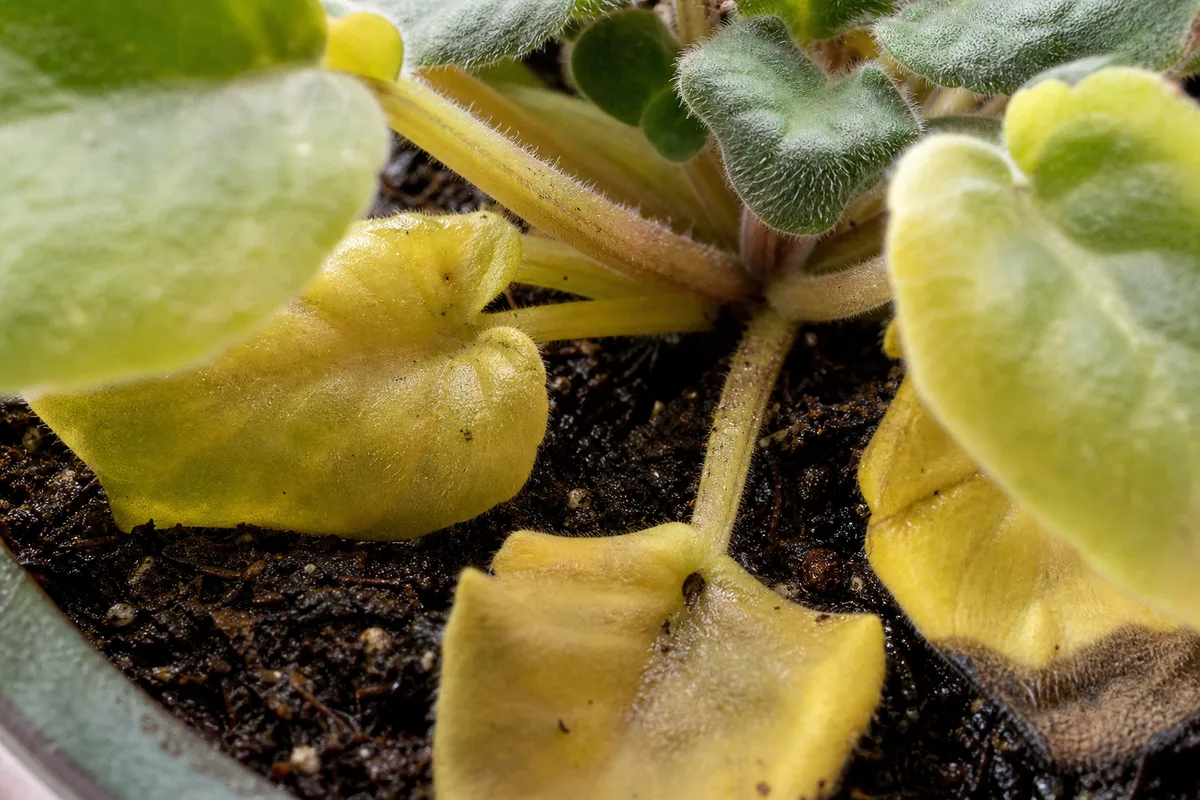
Several yellow, limp lower leaves while the potting mix still feels moist - the wilt-with-wet-soil pattern that points to saturated roots.
On a healthy African Violet, lower leaves age out one at a time while the center stays firm. Overwatering breaks that pattern. The lower leaves turn yellow and droop as root rot fungi destroy the roots, often several at once. The plant may look thirsty even though the pot feels heavy and the surface is damp.
Early signs include soft lower leaves, stalled flowering, and soil that stays wet for days after watering. Advanced overwatering brings a sour smell from the mix, fungus gnats hovering near the surface, and white mold on soil. The crown-the tight center where new leaves emerge-may feel soft if water has pooled there from top-watering. Compare with underwatering on African Violet: a dry lightweight pot and wilted but firm leaves point away from excess water.
Why African Violet gets overwatered
African Violet evolved in cloud-forest conditions with loose, fast-draining debris around shallow, fine roots. African violets require a moist, well-drained soil-if soils are too wet, the plants may rot. Indoors, that balance is easy to break.
The most common trigger is watering on a schedule instead of checking the pot. A routine that worked in bright summer light can leave winter soil soggy when growth slows and small pots dry more slowly in cool rooms. Excessive watering is one of the most common problems of African violets, and African violets are highly subject to root and crown rot if overwatered.
Other frequent causes fit this shallow-rooted rosette: heavy commercial mix without perlite, blocked drainage holes, decorative cache pots holding runoff, and leaving the pot submerged in a full saucer after bottom-watering. Self-watering reservoirs and wick systems help some growers but can oversaturate mix if the reservoir never empties. Top-watering or misting that leaves water in the leaf cup adds crown stress on top of wet roots.
How to confirm the cause
Work through these checks before repotting or cutting roots:
- Weigh the pot. A heavy pot days after watering confirms saturation; a light pot with wilted leaves suggests drought.
- Feel the top inch. Moist surface soil that never dries between your usual watering days supports overwatering.
- Smell the mix. A sour or musty odor means anaerobic conditions-not normal potting soil smell.
- Review recent care. Calendar watering, saucer standing water, repotting into dense mix, or moving the plant to a dimmer spot all raise wet-soil risk.
- Inspect roots. Slide the plant out gently. Firm pale roots with only a few yellow outer leaves may mean mild stress; brown, slimy roots confirm advanced damage.
Plants that are limp and wilted even when soil is moist are usually suffering from overwatering, poor drainage, and root rot from constantly wet roots. If the crown is firm and only one old bottom leaf is yellow, rule out normal aging before treating for overwatering.
First fix for African Violet
Stop watering. That single step breaks the wet cycle and gives roots a chance to breathe. Allow the top inch of soil to dry before sub-irrigating again. Do not add water because wilted leaves make the plant look thirsty while soil is already saturated-watering a wilted plant with rotting roots makes the problem worse.
Once watering stops, empty any saucer water and move the plant to African Violet light guide so the small pot dries predictably. Only after the top inch feels dry should you consider the next steps: trimming mushy roots, repotting into fresh light mix, or bottom-watering lightly. Hold fertilizer until new center growth looks firm.
Step-by-step recovery
When roots still have healthy white tissue:
- Knock the plant gently from its pot and shake off wet old mix.
- Trim brown, translucent, or slimy roots with sterile scissors; keep firm pale roots.
- Let cut surfaces air-dry for an hour if rot was extensive.
- Repot into fresh African violet mix with perlite in a clean pot one size appropriate to the root mass-not a much larger container.
- Bottom-water by placing the pot in about 1 inch of room-temperature water until the surface feels moist, then remove and discard excess.
- Wait until the top inch dries again before the next drink; hold fertilizer for several weeks.
If most roots are mushy but the crown is still firm, the same steps may save the plant. If the crown feels soft, see the crown rot guide-overwatering may have progressed beyond simple root stress.
Recovery timeline
Mild overwatering caught early may stabilize within one to two weeks once the mix dries and watering stays conservative. Root rot symptoms initially develop on lower leaves and spread upward if conditions stay poor. Judge progress by firm new leaves from the center and a lighter pot weight between waterings-not by whether old yellow leaves re-green.
Severe root loss can take six to ten weeks before normal growth resumes. Plants with soft crowns rarely recover fully; salvage healthy outer leaves for propagation instead.
Lookalike symptoms
- Underwatering - Light pot, dry mix, wilted but firm leaves; fixes with a thorough bottom soak, not less water.
- Root rot (advanced stage) on African Violet - Same wet-soil wilt pattern; overwatering is usually the cause, but treatment shifts to aggressive root trimming once rot is confirmed.
- Crown rot - Mushy center leaves with sour smell; often follows overwatering into the rosette.
- Transplant shock - Wilt after repotting with firm roots and appropriately moist-not soggy-mix.
- Cold water damage - White ring spots on leaves from splashed cold water; crown stays firm without rotten odor.
- Normal lower-leaf aging - One or two bottom leaves yellow and detach while the center stays healthy.
Mistakes to avoid
Do not keep watering wilted plants when soil is already wet. Do not repot into garden soil, a pot without drainage, or a much larger pot “to dry things out”-extra wet mix makes saturation worse. Do not fertilize a stressed plant; salts in saturated soil add injury. Do not top-water or mist while recovering. Do not return the plant to a self-watering reservoir until roots are clearly healthy and the pot dries on a normal schedule.
How to prevent overwatering next time
Keep the potting mix moist but not soggy, and never let your plant sit in water. Allow the soil surface to dry to the touch before watering African violets. Use a light, well-drained African violet mix with perlite, keep drainage holes open, and bottom-water to keep fuzzy leaves dry.
Reduce watering frequency in winter or dim rooms when the pot stays heavy longer. Empty saucers within 30 minutes of bottom-watering. If you use wicks or self-watering pots, monitor that the reservoir does not stay full while mix is already saturated. Place the plant where bright indirect light helps the small pot dry between drinks-usually every seven to ten days in active growth, but always check the top inch first.
When to worry
Treat overwatering as urgent when the crown feels soft, multiple center leaves collapse, or roots are mostly brown and slimy on inspection. If roots are mushy, brown, and slimy, the plant is not likely to survive due to the loss of roots. At that point, take healthy outer leaves for cuttings before discarding the main plant so you keep the variety without risking nearby violets on the same shelf.
When to use this page vs other African Violet guides
- African Violet watering guide - Use for routine moisture checks before assuming overwatering is the main issue.
- African Violet problems hub - Browse all 52 common issues on this species.
- Root Rot on African Violet - Different entry point when symptoms overlap with overwatering.
- Yellow Leaves on African Violet - Different entry point when symptoms overlap with overwatering.
- Wilting on African Violet - Different entry point when symptoms overlap with overwatering.