Underwatering on African Violet: Causes, Checks & Fixes
Quick answer
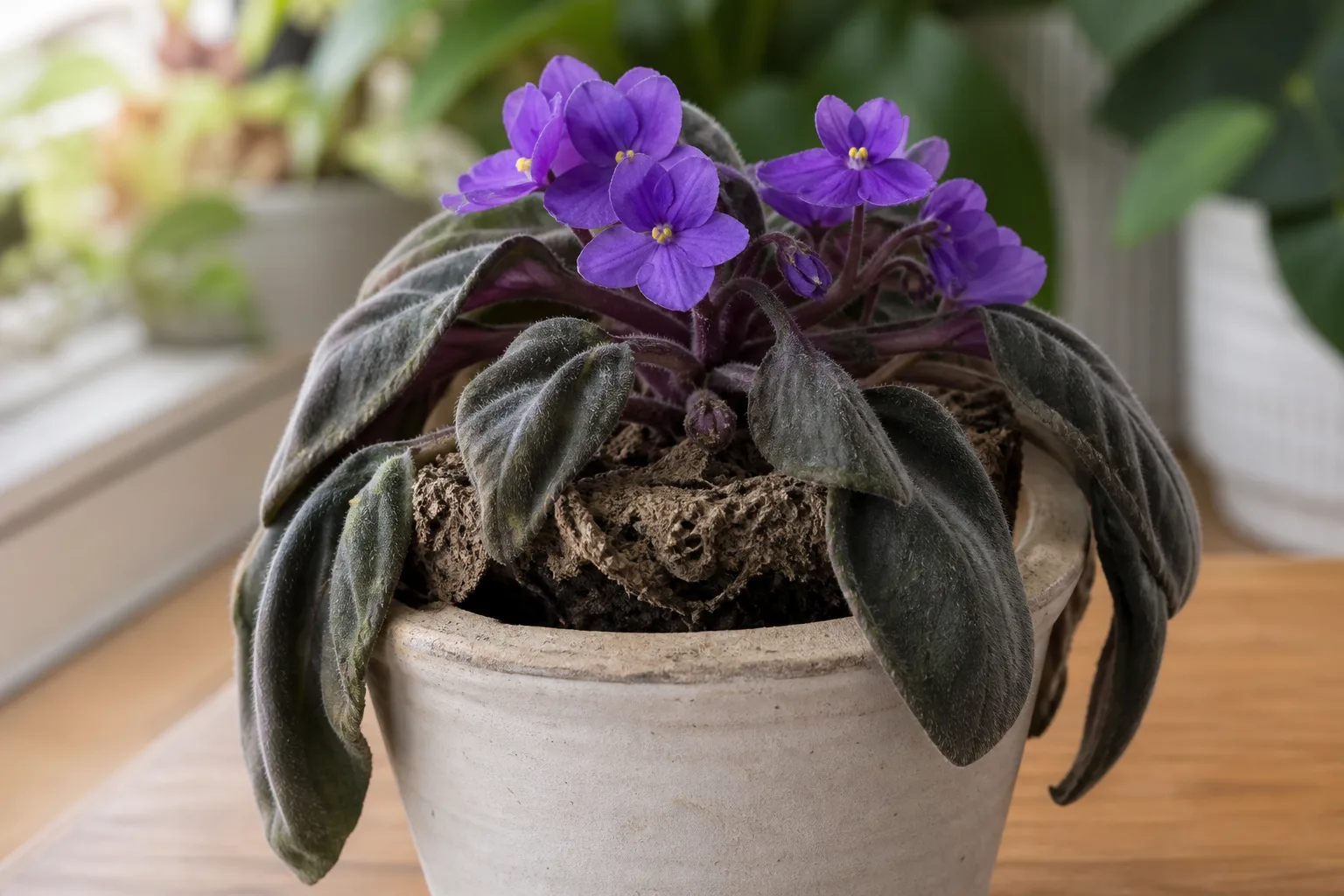
On African violet, underwatering usually means limp leaves plus a very light pot and dry, pull-away mix. First fix: rehydrate gradually instead of flooding dry roots.
Underwatering on African Violet: Causes, Checks & Fixes
This guide covers underwatering on African Violet. See also the general Underwatering guide, watering, and light pages for this plant.
Underwatering on African Violet: Causes, Checks & Fixes
Quick answer
On African violet, underwatering usually shows up as limp leaves plus dry mix, not limp leaves plus soggy mix. Start with one first action: rehydrate gradually, because very dry roots do not absorb a sudden flood well (AVSA watering guidance). If your soil is wet and the plant is still limp, switch to an overwatering/crown-rot check instead of adding more water (AVSA watering guidance).
What underwatering looks like on African violet
The classic pattern is:
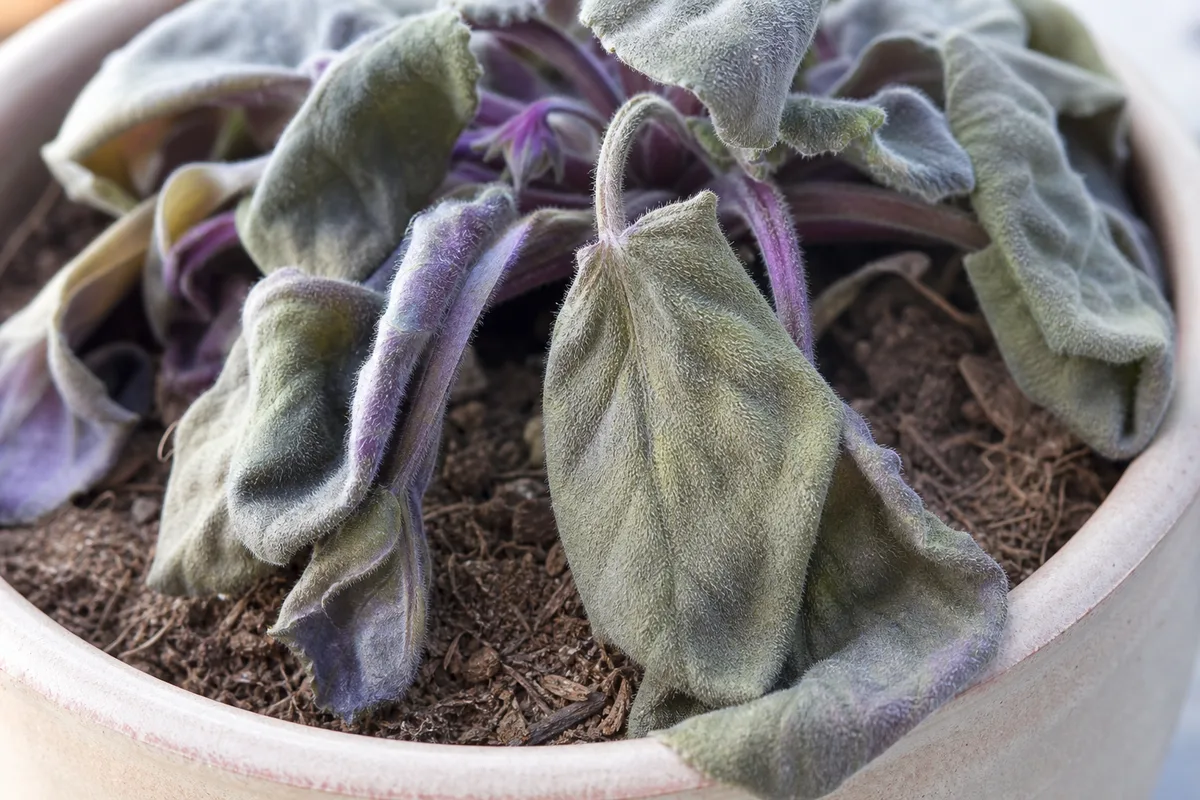
Underwatering symptoms on African Violet - compare with healthy tissue on the same plant.
- leaves that feel soft, droopy, or slightly folded
- potting mix that has shrunk from the pot edge
- a pot that feels much lighter than your normal “just watered” weight
- delayed flowering when drought stress repeats
Wilting and reduced bloom can occur when violets are kept too dry (University of Minnesota Extension). A drought-stressed violet can perk up quickly once moisture is restored, while chronic dryness causes repeated leaf-edge damage and stalled growth.
Why African violet gets underwatered
African violets are often grown in small containers and peat-based mixes that can swing from ideal moisture to “too dry” quickly, especially under indoor heat and bright lights. The watering target is lightly dry at the surface, not bone dry through the root ball (AVSA watering guidance, UGA Extension).
Common triggers:
- skipped watering checks during travel or busy weeks
- warm, low-humidity rooms that increase dry-down rate
- wick or self-watering setups allowed to run dry
- old peat-heavy mix that has turned water-repellent after drying
AVSA notes that once peat-based violet mix goes fully dry, it can be difficult to re-wet evenly and may need correction or African Violet repotting guide (AVSA Violets 101).
How to confirm the cause
Use this order so you do not confuse underwatering with overwatering:
- Feel the mix: top layer should be dry to touch, not cool and wet.
- Lift the pot: drought-stressed plants feel markedly lighter than usual (AVSA watering guidance).
- Check the crown firmness: a firm center with dry mix points toward underwatering.
- Rehydrate and reassess: if leaves begin to recover within hours to a day, underwatering was likely.
- If still limp in wet mix: evaluate roots/crown for rot rather than adding more water.
If needed, compare against the related page on overwatering in African violet, because wilt alone is not diagnostic.
Lookalikes to rule out first
| Symptom pattern | More likely issue | What to check next |
|---|---|---|
| Limp leaves + dry, lightweight pot | Underwatering | Begin gradual rehydration |
| Limp leaves + wet/heavy pot | Overwatering | Remove excess moisture and inspect roots |
| Soft center/crown + persistent collapse | Crown rot | Urgent cleanup and possible restart |
| Brown/spotty damage after splashing cold water | Water/temperature injury | Correct watering method and temperature |
RHS also notes that both too much and too little water can produce limp foliage, so moisture context matters more than wilt alone (RHS African violet guide).
First fix for African violet
First action: restore moisture slowly. AVSA recommends not flooding a wilted, very dry violet because dry roots need time to “plump up” and resume uptake (AVSA watering guidance).
Practical sequence:
- add a small amount of room-temperature water first
- repeat in small increments over the next hours, or bottom-water in a shallow tray
- stop soaking once the root zone is moist; do not leave the pot standing in water
Bottom watering is a strong choice for violets because it hydrates the mix while reducing crown and leaf wetting risk (RHS African violet guide).
Step-by-step recovery (first 7 days)
Day 0 to Day 1
Rehydrate gently, then let excess drain. Expect some leaf lift within several hours if drought was the main issue. Keep light bright but indirect, and avoid feeding immediately.
Day 2 to Day 4
Check whether leaf firmness is improving from the center outward. Remove only fully collapsed outer leaves; do not over-prune a stressed rosette. Keep moisture even, not saturated.
Day 5 to Day 7
If growth point remains firm and new leaves look normal, resume normal watering rhythm. If the center softens or wilt worsens despite moist soil, move to rot troubleshooting instead of repeating rescue soaks.
If the mix turned hydrophobic
When water beads, channels down the pot wall, or drains quickly without wetting the core, the mix may be hydrophobic. UC Master Gardeners (UCANR) describe this as common in dry peat-based potting media and recommend prolonged bottom-watering or full-pot rewetting, followed by better moisture consistency (UCANR hydrophobic soil guidance).
For severe cases on African violet:
- re-wet gradually first
- if the core still stays dry, repot into fresh airy violet mix
- reset your watering cadence before drought cycles repeat
Recovery timeline
Typical recovery follows this pattern:
- hours to 24 hours: leaves become less limp if roots were still viable
- 3 to 10 days: rosette posture stabilizes and new stress spotting stops
- 1 to 3 weeks: new buds or stronger growth resumes under stable care
Crispy or necrotic tissue does not rehydrate back to healthy green tissue; evaluate recovery by new growth quality, not by old damaged leaves.
What not to do
Do not make these common mistakes:
- flooding a fully dry root ball in one go (AVSA watering guidance)
- leaving the pot in standing water after hydration (RHS African violet guide)
- adding fertilizer before water balance is restored
- misting or splashing leaves and crown while troubleshooting
If the plant is limp but the soil is wet, adding more water pushes risk toward rot, not recovery.
How to prevent underwatering next time
Build a repeatable moisture routine:
- check moisture and pot weight on a schedule, then adjust by season
- water when surface dryness is present but before full root-ball drought
- use room-temperature water and drain excess after bottom watering (AVSA watering guidance, UGA Extension)
- if your home is very dry, consider wick watering with regular monitoring (do not let reservoirs run dry repeatedly) (AVSA Violets 101)
For fuller care context, see the African violet watering guide and drooping leaves guide.
When to worry
Escalate quickly if you see any of these:
- crown softening
- foul odor at the crown or roots
- no improvement 24 hours after careful rehydration
- continuing collapse despite moist (not dry) soil
At that point, handle as potential rot rather than “more underwatering.”
When to use this page vs other African Violet guides
- African Violet watering guide - Use for routine moisture checks before assuming underwatering is the main issue.
- African Violet problems hub - Browse all 52 common issues on this species.
- Wilting on African Violet - Different entry point when symptoms overlap with underwatering.
- Brown Tips on African Violet - Different entry point when symptoms overlap with underwatering.
- Yellow Leaves on African Violet - Different entry point when symptoms overlap with underwatering.