African Violet Watering: How Often and How Much
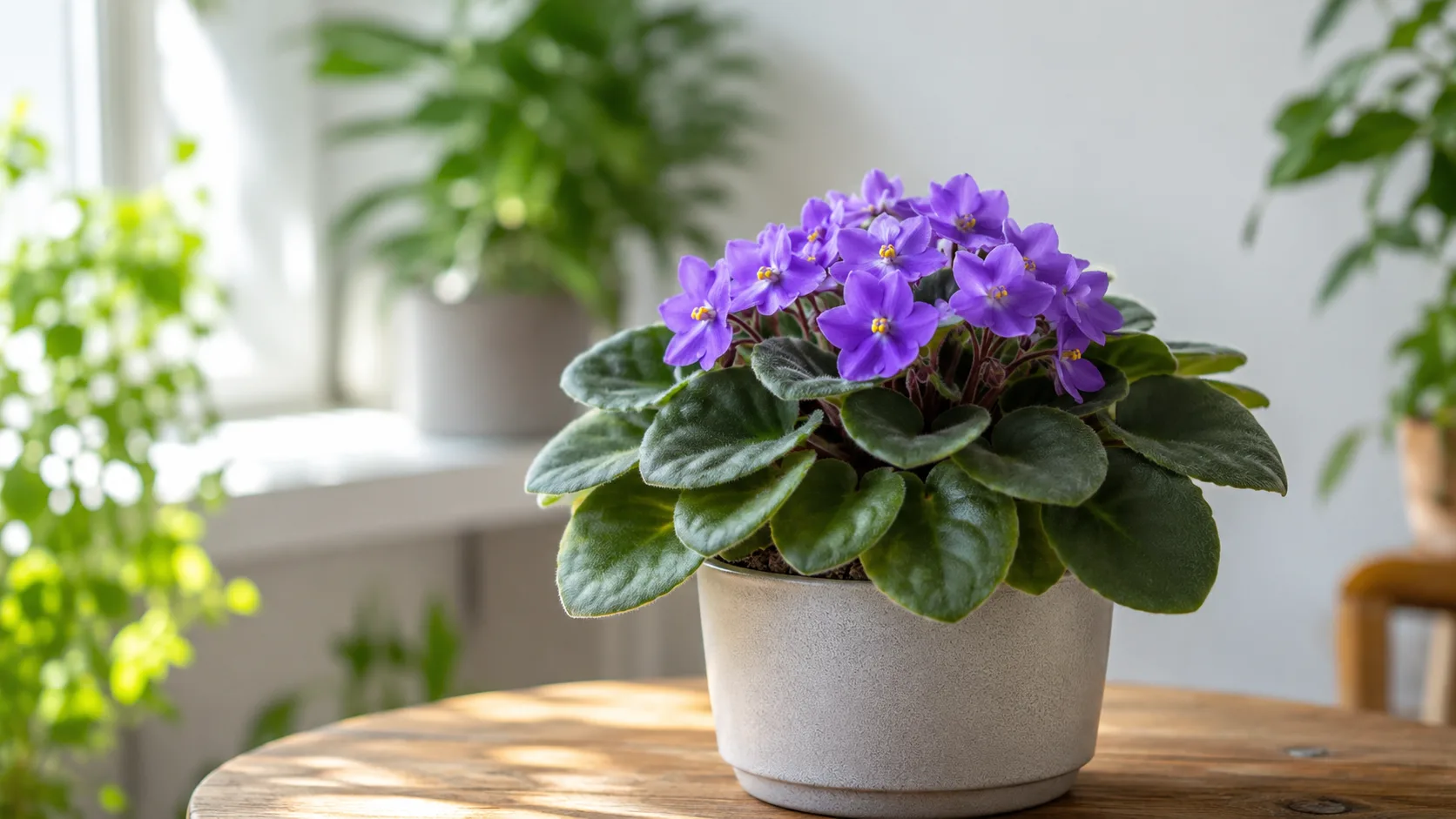
African Violet Watering: How Often and How Much
African Violet Watering: How Often and How Much
Quick Answer: The Right Way to Water African Violets
Water an African violet (Streptocarpus sect. Saintpaulia) when the top half inch of potting mix feels somewhat dry and the pot feels lighter than it did after the last drink. For many standard African violets in 4-inch pots, that check may land every 5 to 10 days - but the calendar is only a reminder to look, not a rule. The African Violet Society of America recommends watering when the top half inch of soil is somewhat dry, using a finger test or pot-weight test instead of a fixed schedule. (African Violet Society of America)
Use room-temperature water, keep moisture on the mix rather than the fuzzy leaves, and never let the pot sit in standing water after it has finished absorbing. Bottom watering is popular because it keeps water off the crown, but top watering is also safe with a narrow spout. Smithsonian Gardens recommends setting the pot in a saucer of water for 15 to 30 minutes and removing it before prolonged standing water invites root rot. (Smithsonian Gardens)
The goal is evenly moist, airy soil - not soggy mix. African violets need moisture around shallow roots, but they also need oxygen. Waterlogged peat suffocates roots and creates the classic trap: limp leaves on wet soil. University of Minnesota Extension lists root rot from overwatering on African Violet as one of the most common reasons African violets die. (University of Minnesota Extension)
Before you pour: Is the top half inch dry? Does the pot feel light? Are drainage holes open and the cachepot empty? If the plant wilts while the mix is still wet, skip water and inspect roots - see the root rot guide before adding another soak.
Why African Violet Watering Feels Tricky
African violets earned a fussy reputation because small pots, peat-based mix, and fuzzy leaves punish the same mistakes that tougher houseplants shrug off: random calendar watering, saucers left full overnight, cold tap water on leaves, or a rescue flood after weeks of neglect. A 4-inch plastic pot on a warm grow-light shelf can dry in four or five days; the same cultivar in a cool north room may stay damp for two weeks.
The plant also sends mixed signals. Limp leaves can mean thirst or root damage. Dry-looking edges can come from underwatering on African Violet, salt buildup, cold water rings, or low humidity. Leaf spots often follow water sitting on foliage in bright light. Good watering means reading the whole setup - mix, pot weight, crown, and recent light level - not reacting to one drooping leaf.
The Root Zone Needs Moisture and Air
Healthy African violet mix holds moisture while staying porous - usually peat with perlite or vermiculite. Purdue University Cooperative Extension notes that African violet soil should stay loose and well drained, listing sphagnum peat with perlite, vermiculite, or calcined clay as suitable components. (Purdue University)
Roots respire as well as absorb water. When mix stays waterlogged, air spaces collapse, fine roots fail, and leaves wilt even though the pot feels wet. The right interval depends on your soil porosity: peat-heavy plastic pots hold moisture longer; mixes with extra coarse perlite dry faster but suit wick systems better. An oversized pot keeps a large wet volume around a small root ball - a common overwatering trigger Smithsonian Gardens warns against when recommending slightly root-bound plants in appropriately sized containers. (Smithsonian Gardens)
The Crown and Leaves Punish Careless Watering
The crown - where leaves emerge at the soil line - must stay dry. Repeated saturation there raises crown rot risk. Smithsonian Gardens specifically warns that African violets are susceptible to crown rot and that the crown should not be saturated with water. (Smithsonian Gardens) SDSU Extension notes that African violets are very susceptible to root and crown rot when overwatered. (SDSU Extension)
Fuzzy leaves hold droplets. University of Minnesota Extension says water left on leaves can cause leaf spots and recommends bottom watering to avoid wetting foliage. (University of Minnesota Extension) Cornell Cooperative Extension adds that water that is too hot or too cold can cause white rings on leaves. (Cornell Cooperative Extension)
One accidental splash rarely kills a plant. Blot droplets and keep the plant out of strong direct light until foliage is dry. The failure mode is repeated crown wetting, cold water on leaves, or wet foliage under harsh light - not a single misting.
How Often to Water an African Violet
Frequency follows the plant, not a phone reminder. A blooming violet under bright indirect light or grow lights uses more water than one in a cool dim corner. Wick-watered plants behave differently from hand-watered ones. Check twice weekly at first; after two or three weeks you will see your home’s pattern.
Cornell Cooperative Extension recommends allowing soil to dry only slightly before watering, then watering from below and draining extra saucer water after about an hour. (Cornell Cooperative Extension) African violets are not succulents - bone-dry cycles stress roots - but they are also not peace lilies that tolerate constantly wet mix.
Use the Finger Test
Press gently into the top half inch. Cool and damp means wait; lightly dry means water; dusty, shrunken mix pulling from the pot edge means careful rehydration, not a flood.
Surface color lies in peat mixes. Combine the finger test with pot weight. Avoid jamming a finger deep into a small pot - use a wooden skewer near the edge for a deeper read. Moisture meters help some growers but often misread loose peat; treat them as one signal among several.
Use the Pot Weight Test
Lift the pot right after a proper watering, then daily until it feels noticeably lighter. Heavy pot plus dry-looking surface often means the root zone is still wet - wait. This test shines when you grow multiple violets: same room, different canopy size, bloom stage, or pot material means different days.
Adjust for Season, Light, Pot Size, and Room Conditions
Water use rises with warmth, brighter light, and active bloom. Winter windowsills and short days slow growth and keep mix wet longer. Purdue Extension notes that water amount and frequency vary with soil mixture, pot size, drainage, and environment. (Purdue University)
University of Minnesota Extension gives an optimal room-temperature range of 60°F to 80°F, ideally around 70°F. (University of Minnesota Extension) Avoid watering cold plants on cold glass - move them inward or water earlier in the day so the pot is not cool and wet all night.
Worked example: 4-inch pot, east windowsill, February vs July
Imagine one standard African violet in a 4-inch plastic pot with drainage, same African violet mix, same east windowsill. In February, short days and cool glass may mean checks twice weekly but water only every 10 to 14 days - the pot stays heavy longer. In July, stronger light and warmth may push the same plant to need water every 5 to 7 days after the top half inch dries and weight drops. Copying July’s calendar in February is a common route to crown rot; copying February’s schedule in July produces chronic wilt. Record check dates for one month in your home before trusting any day count.
| Factor | Tends to shorten dry-down | Tends to lengthen dry-down |
|---|---|---|
| Light | Grow lights, east/south bright window | Dim north corner, interior shelf |
| Pot | Small plastic, extra perlite | Large pot, dense peat, glazed ceramic |
| Season | Warm summer room | Cool winter windowsill |
| Plant | Active bloom, large leaf canopy | Resting, recently repotted |
Best Water for African Violets
Use room-temperature water low in problematic salts - not chemically softened. University of Minnesota Extension recommends room-temperature distilled water, rainwater, or reverse-osmosis water, and advises against softened or heavily chlorinated water for African violets. (University of Minnesota Extension)
Tap water works in many homes if brought to room temperature first. Some growers let tap water stand overnight; Cornell Cooperative Extension notes this can dissipate chlorine. (Cornell Cooperative Extension) Chloramine does not evaporate as easily - standing alone is not a complete fix for every municipal supply.
Water Temperature Matters More Than Most People Think
Cold tap water shocks roots and leaves. Smithsonian Gardens recommends room-temperature water. (Smithsonian Gardens) Water that feels neither cold nor warm to your hand is usually fine. Never use hot water to “wake up” a struggling plant.
Chlorine, pH, Softened Water, and Mineral Buildup
The African Violet Society of America suggests testing water pH periodically and gives an ideal range of 6.5 to 7.5 for African violet water. (African Violet Society of America) Softened water often adds sodium that accumulates in small pots - especially dangerous in wick systems where minerals concentrate in the reservoir.
White crust on soil or pot rims signals salt buildup. University of Minnesota Extension recommends flushing monthly with plain water to remove excess fertilizer. (University of Minnesota Extension) Illinois Extension recommends an occasional thorough top watering every few months to leach soluble salts, even if you usually water from below. (Illinois Extension)
Best African Violet Watering Methods
The best method keeps mix evenly moist, protects crown and leaves, drains fully, and fits your routine.
| Method | Best for | Main risk | Key rule |
|---|---|---|---|
| Bottom watering | Beginners, fuzzy leaves | Leaving pot in water too long | Remove when surface feels moist; drain fully |
| Top watering | Flushing salts | Wetting leaves or crown | Narrow spout; water mix only |
| Wick watering | Collections, steady moisture | Mix too dense / pot too large | Porous mix with ≥50% coarse perlite per AVSA |
| Capillary mat | Many small pots on one bench | Constant saturation in low light | Match mat wetness to mix porosity; lift pots to check |
Bottom Watering Step-by-Step
Place the drainage pot in room-temperature water about 1 inch deep - enough to wet the lower mix without submerging the whole container. University of Minnesota Extension describes setting the pot in a bowl until the soil surface feels moist, then draining. (University of Minnesota Extension)
Leave the pot until the surface feels lightly moist - often 15 to 30 minutes, longer if peat was extremely dry. Smithsonian Gardens warns not to let the pot sit in water more than 30 minutes to avoid root rot. (Smithsonian Gardens)
Remove, drain completely, and never return a dripping pot to a sealed decorative cachepot. Water that collects in an outer pot with no exit holes is one of the fastest routes to chronic wet roots - the inner pot may drain while the shell holds an inch of stale water.
Bottom watering can leave salts near the top because moisture moves upward. Occasional top flushing addresses buildup. If peat repels water after going bone dry, lightly mist the surface or add small amounts gradually before a full bottom soak so moisture penetrates instead of channeling around the root ball.
Top Watering Without Wetting the Crown
Use a narrow-spout bottle, syringe, or baster directed at the mix, not the crown. University of Minnesota Extension recommends watering only the potting mix and brushing off accidental droplets. (University of Minnesota Extension)
Top watering’s advantage is flushing: the African Violet Society of America notes that thorough top watering helps leach excess salts and promotes healthier roots. (African Violet Society of America) Pour slowly around the inner edge, let water drain through, empty the saucer.
Wick Watering, Self-Watering Pots, and Capillary Mats
Wick watering pulls water from a reservoir through synthetic wick into the mix. University of Minnesota Extension describes threading nylon or polyester string through the pot into a fertilizer reservoir. (University of Minnesota Extension)
The African Violet Society of America warns that wick watering can rot plants if pot size or mix is wrong, recommending very porous mix with at least 50 percent coarse perlite for wick systems. (African Violet Society of America) Shared community reservoirs can spread soil mealybugs and fungi such as Phytophthora and Rhizoctonia between plants - individual reservoirs are safer for casual collections.
Capillary mats - absorbent fabric benches wet from a reservoir - suit growers with many small pots. Moisture rises into drainage holes when the mat stays evenly damp. The same rules apply: porous mix, appropriate pot size, and enough light that the plant uses water. Mats can keep mix too wet in dim winter rooms; lift pots weekly to confirm weight and crown dryness.
Self-watering ceramic inserts and reservoir pots vary by design. They are convenient but not forgiving of oversized pots, dense mix, or low light.
Watering After Repotting and New Purchases
Fresh repotting changes how fast mix dries. New volume holds moisture longer until roots explore it - expect longer intervals for the first few weeks even in summer.
Routine repot into fresh mix with minimal root disturbance: many growers water once lightly from the bottom to settle mix around roots, then return to check-based watering when the top half inch dries - often within a few days in active growth.
Heavy root work - trimming rot, bare-rooting a long neck, or major mix change: be cautious and avoid saturating the mix immediately so trimmed tissue can dry; confirm the crown is firm before the first modest bottom soak, then wait for normal dryness checks before the next drink. Hold fertilizer until new growth shows - most fresh African violet mixes already contain starter nutrients, matching the recovery guidance in the repotting guide.
New nursery plants need observation, not an immediate repot-and-soak stack. Quarantine, learn dry-down speed in your home, and water only when checks pass unless mix is clearly failing or pests are visible - matching the first-month guidance on the overview page.
Do not simultaneously change window, pot size, mix, and watering frequency after repotting. Stabilize light and one variable at a time.
Troubleshooting African Violet Watering Problems
Read soil, weight, crown, and history together - one yellow leaf is not a diagnosis.
Limp + dry soil: Rehydrate gradually. The African Violet Society of America advises against flooding a severely dry, wilted plant because dry roots cannot absorb immediately; add small amounts, repeat, and use extra humidity during recovery. (African Violet Society of America)
Limp + wet soil: Stop watering, dump standing water, improve drainage. University of Minnesota Extension says limp plants in moist soil often reflect overwatering, poor drainage, and root rot from constantly wet roots. (University of Minnesota Extension) Open the root rot guide if roots are mushy or the mix smells sour.
Bottom-watered but still light after 30 minutes: Peat may be hydrophobic. Mist the surface lightly, try a second short soak, or top-water a few tablespoons at the rim until absorption restarts - then resume bottom watering on schedule.
Overwatered vs Underwatered African Violet Signs
| Signal | Underwatered | Overwatered |
|---|---|---|
| Pot weight | Light | Heavy days after “watering” |
| Top mix | Dry, may pull from pot | Wet or cool at depth |
| Leaves | Soft, droopy; soil dry | Limp despite wet mix; yellow lower leaves |
| Crown | Usually firm | Mushy center = crown rot emergency |
| Smell | Neutral | Sour anaerobic mix |
University of Minnesota Extension notes that if roots are mushy, brown, and slimy, the plant may not survive because of root loss. (University of Minnesota Extension) Leaf spots after watering usually mean droplets sat on foliage - shift to bottom watering or a narrow spout.
Related African Violet Care
Watering connects to the rest of the cluster:
- African violet overview - species profile, first-month quarantine, and full care rhythm
- Soil - porosity, wick suitability, and why mix drives dry-down
- Light - window placement and grow lights that change how fast pots dry
- Repotting - when to repot and how fresh mix slows watering
- Fertilizer - feed only on evenly moist soil, not as a substitute for fixing watering
- Root rot - wet-soil wilt and crown failure escalation
How We Wrote and Verified This Guide
This page targets indoor African violet growers who need check-based watering - half-inch dryness, pot weight, method comparison, water chemistry, post-repot holds, and rot triage without calendar guesswork. Recommendations were checked against African Violet Society of America, Smithsonian Gardens, University of Minnesota Extension, Purdue, Cornell, Illinois Extension, and SDSU Extension references cited inline, cross-checked against sibling African violet cluster pages, then validated with a claims audit before publication.
Author: sai-ananth - plant-care content editor focused on gesneriad moisture diagnostics
Reviewer: LeafyPixels Review Board - editorial review against extension and society references
Methodology: Guide recommendations are reviewed against botanical or extension references, LeafyPixels plant-care data, and practical indoor growing constraints before publication.
FAQs
How often should I water an African violet?
Water when the top half inch of potting mix feels somewhat dry and the pot feels lighter than after the last watering. Many indoor African violets in 4-inch pots need water every 5 to 10 days in active growth, but light, temperature, pot size, humidity, mix, and season change the interval. Check twice weekly; do not water by calendar alone.
Is bottom watering better for African violets?
Bottom watering is often easier and safer because it keeps water off fuzzy leaves and the crown. Place the pot in shallow room-temperature water until the surface feels moist, then remove and drain fully. Do not leave the plant sitting in water after the mix has absorbed enough - empty cachepots and saucers.
Can I water African violets from the top?
Yes, with a narrow spout directed at the mix only. Top watering is useful for flushing fertilizer salts. Water slowly, let excess drain, empty the saucer, and blot any droplets on leaves. Avoid pouring into the crown.
Why is my African violet wilting when the soil is wet?
Wilting on wet soil usually means overwatering, poor drainage, or root rot - damaged roots cannot move water even though moisture is present. Stop watering, remove standing water, let the pot drain, and inspect roots if decline continues. See the root rot guide for salvage steps.
Should I water right after repotting an African violet?
After a routine repot with minimal root damage, one light bottom watering to settle fresh mix is fine, then wait until the top half inch dries before watering again. After heavy root trimming, avoid saturating the mix immediately until the crown is firm and trimmed surfaces look dry, then bottom-water modestly. Hold fertilizer until new growth appears.
Conclusion
When an African violet wilts on wet soil, stop the calendar and inspect roots today - do not add another soak. Open the root rot guide if the mix smells sour or the crown softens; if roots are firm and only the surface looked dry, pause water and confirm the cachepot is not holding hidden runoff.
When the pot never dries between checks, fix upstream conditions first - more porous soil, brighter light, or a smaller appropriately sized pot - before chasing a different watering method. Track finger depth, pot weight, and check dates through one full wet-to-dry cycle this month; that single observation teaches more than a year of weekly reminders and keeps the crown dry while roots stay evenly moist.
When to use this page vs other African Violet guides
- African Violet overview - Start here for whole-plant context before deep-diving this topic.
- African Violet problems hub - Jump to symptom-specific fix guides when this care topic does not resolve the issue.
- Overwatering on African Violet - Escalate here when watering adjustments are not enough.
- Underwatering on African Violet - Escalate here when watering adjustments are not enough.
- Root Rot on African Violet - Escalate here when watering adjustments are not enough.
Related African Violet guides
- African Violet overview
- African Violet light
- African Violet soil
- African Violet propagation
- African Violet fertilizer
- African Violet repotting
- Overwatering on African Violet
- Underwatering on African Violet
- Root Rot on African Violet
- Wilting on African Violet
- Drooping Leaves on African Violet
- African Violet problems