Drooping Leaves on African Violet: Causes, Checks & Fixes
Quick answer
Drooping leaves on African Violet usually mean roots are failing to move water-most often from overwatering, but also from a dry pot, cold drafts, or crown rot. Lift the pot and feel the top inch of mix before you water again.
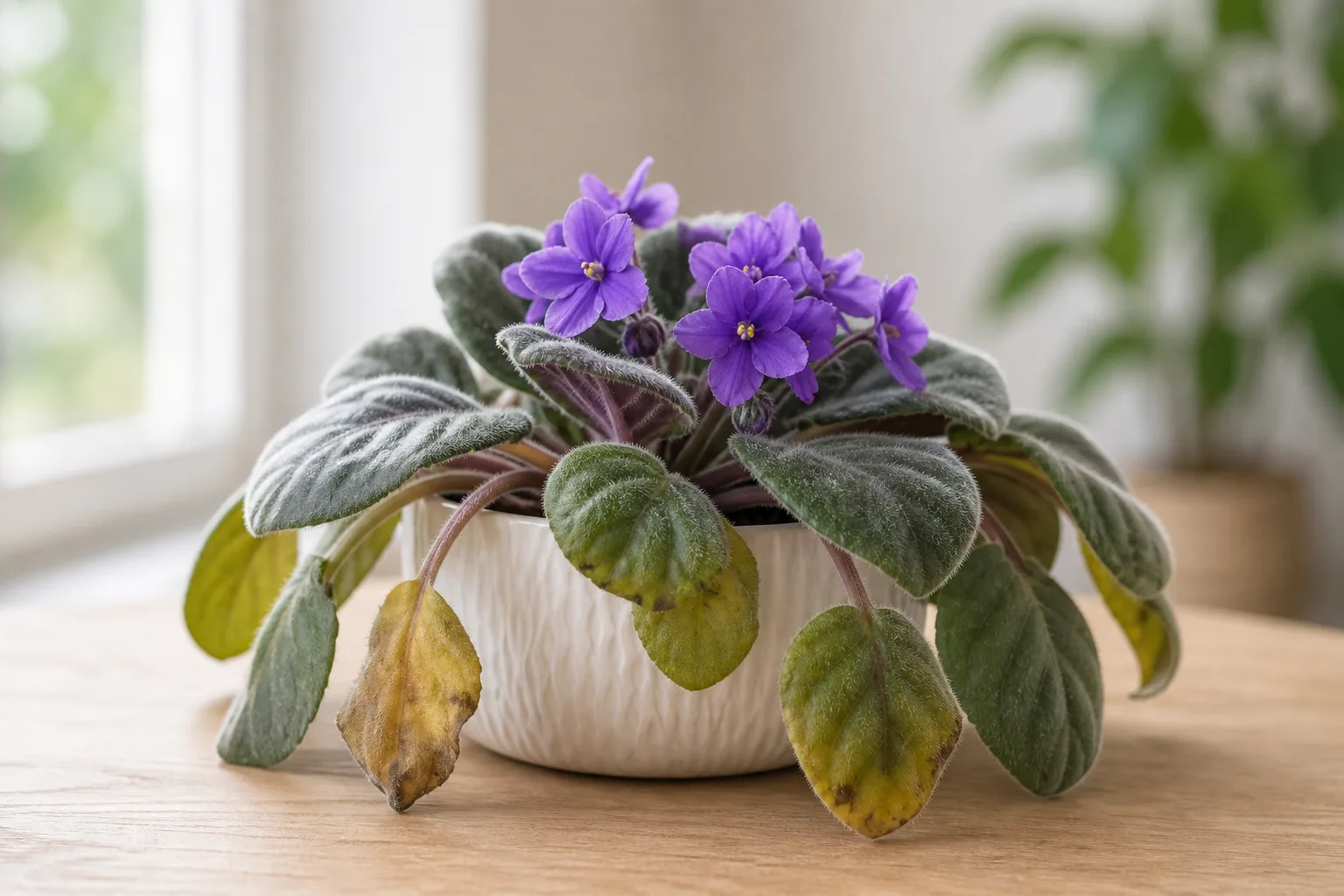
Drooping Leaves on African Violet: Causes, Checks & Fixes
This guide covers drooping leaves on African Violet. See also the general Drooping Leaves guide, watering, and light pages for this plant.
Drooping Leaves on African Violet: Causes, Checks & Fixes
Quick answer
Drooping leaves on African Violet are a root-zone signal, not a leaf disease. The velvety rosette hangs when petioles lose turgor because roots cannot supply water-whether the mix is too wet, too dry, or recently shocked by cold. Before you water, lift the pot and feel the top inch of mix. A heavy wet pot needs drying and root inspection; a light dry pot needs a careful bottom-water.
What drooping leaves look like on African Violet
On a healthy African Violet, leaves form a tight, upward cup around the crown. When they droop, petioles angle downward and the rosette looks flattened or lopsided. The pattern matters:
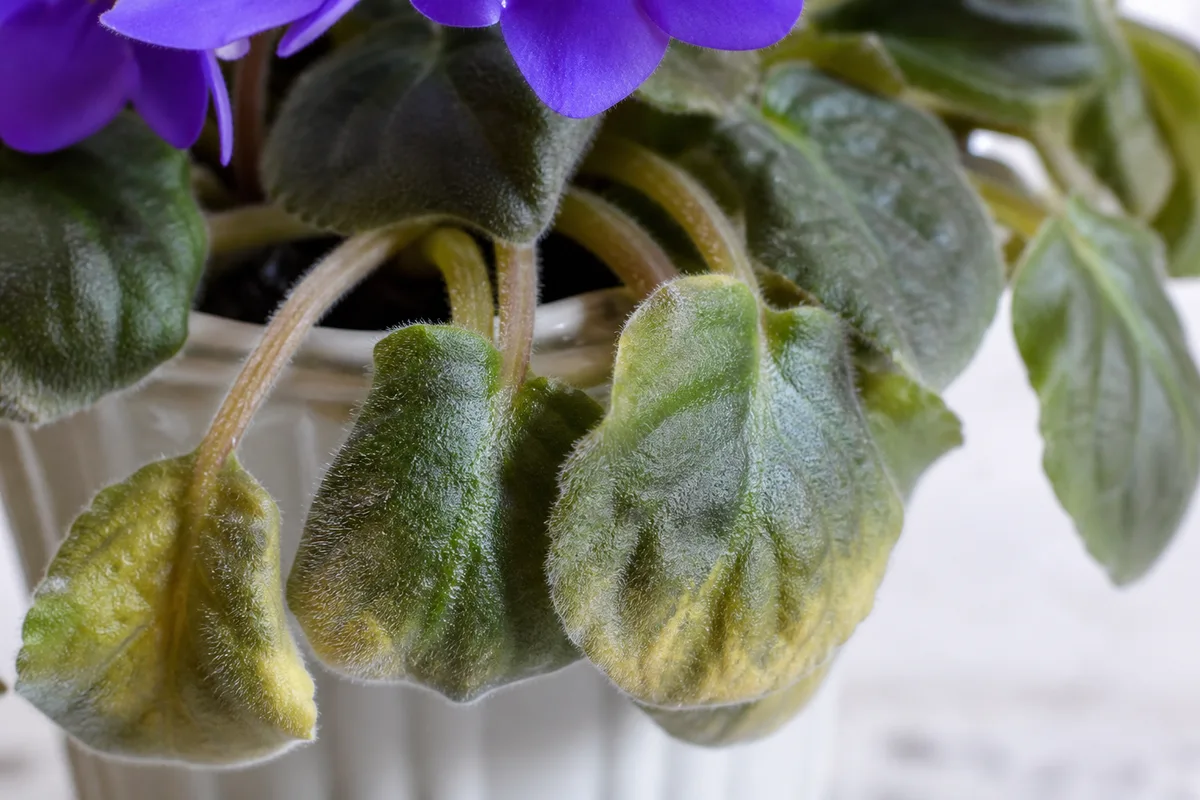
Lower leaves losing their upward cup with petioles angling down - a common early sign of root-zone water stress on African Violet.
- Lower leaves first, often yellowing: classic early root rot on African Violet. Lower leaves turn yellow and droop as root rot fungi destroy roots Upper velvety leaves may still look fine while roots fail underneath.
- Whole rosette limp, soil pulling away from the pot edge: dry stress. Leaves feel soft but not mushy; buds may drop and flowering slows.
- Sudden flop after African Violet repotting guide or a cold night: transplant shock or cold damage. Leaves stay green but lose structure without the sour smell of rot.
- Center leaves water-soaked and collapsing: crown rot at the fuzzy heart of the plant-a different emergency than simple droop.
Drooping is easy to confuse with wilting. Both mean failed water delivery, but drooping often describes a slower sag-especially on lower, older leaves-while severe wilt makes the entire plant collapse quickly. Leaf drop is the next stage when damaged petioles detach; droop is the warning before that happens.
Why African Violet gets drooping leaves
African Violets evolved in cloud-forest conditions with fine, shallow roots in loose, airy debris. They want evenly moist mix-not a swamp and not bone-dry desert. That narrow window makes droop common when care drifts.
overwatering on African Violet and root rot
This is the most frequent cause. Root rot from overwatering is one of the most common reasons African violets die When mix stays saturated, roots lose oxygen and rot fungi destroy the root system. Lower leaves turn yellow and droop first because those petioles are farthest from a failing root mass. Because the first symptom of root rot is droopy leaves, a natural reaction is to water the plant more-and that accelerates decay.
underwatering on African Violet and dry mix
Small pots dry fast, especially under grow lights or near heating vents. When the mix pulls away from the pot wall, roots cannot re-wet evenly even after you pour water. The rosette droops from genuine drought-not rot-but the visual flop looks similar from across the room.
Cold drafts and temperature swings
African Violets prefer steady air temperatures between 65 and 80°F. Cold water directly on the leaves will damage them quickly, and a drafty winter window or AC vent can make foliage go limp without any root disease. The damage often hits outer leaves first.
Crown rot
Overwatering, watering into the crown, or repotting into wet heavy mix can rot the central stem where new leaves emerge. Crown rot causes the main stem and lower leaves to appear water-soaked, shrivel, and die Lower leaves droop while the center turns dark, soft, and water-soaked. Crown rot is harder to reverse than root rot alone.
Transplant shock
Repotting disturbs fine roots. Even with good technique, leaves may droop for days while the plant re-establishes. This is temporary if the crown stays firm and you keep humidity steady without soaking the mix.
Salt buildup from fertilizer
White crust on the pot rim or soil surface can pull moisture out of roots through salt stress. Leaves droop despite what looks like adequate watering because roots cannot function normally in salty mix.
How to confirm the cause
Work through these checks in order-each one narrows the diagnosis before you change care.
- Weigh the pot. Heavy and wet with limp lower leaves: suspect root rot. Light with dry surface and limp whole rosette: suspect underwatering.
- Poke the top inch. If it feels moist and has stayed that way for several days, do not add water. If it is dusty dry and the pot feels hollow, drought is likely.
- Smell the mix. A sour or stale odor from the drainage hole confirms rotting organic matter-not simple thirst.
- Inspect the crown. Press gently at the center. Firm and dry: good. Soft, dark, or mushy: crown rot-stop overhead watering immediately.
- Review recent events. Repotted in the last week? Moved to a cold window? Switched to a self-watering pot that stays constantly wet? Context often explains droop faster than guessing.
If wet soil and droop persist together, gently slide the plant from its pot. A plant that is limp and wilted even when soil is moist is caused by overwatering, poor drainage, and root rot Healthy African violet roots are pale, firm, and fibrous. Brown, slimy, or hollow roots confirm rot and require trimming before any repot.
First fix to try
Stop and assess moisture before watering. This single step prevents the biggest mistake-adding water to an already wet, rotting root zone because droopy leaves look dehydrated.
- Dry pot, limp leaves: sub-irrigate by placing the plant in a saucer of water and allowing it to soak up water from the bottom for about 30 minutes until the surface feels moist, then drain all runoff from the saucer.
- Wet pot, limp lower leaves: hold all water until the top inch dries. If roots are mushy on inspection, trim decayed tissue and repot into fresh light African violet mix-one correction at a time.
- Droop after cold exposure: move to stable 65–75°F away from drafts. Do not mist velvety leaves; keep the crown dry while the plant recovers.
- Droop after repotting: place in African Violet light guide, cover loosely with a clear bag or dome for humidity, and wait-avoid fertilizing until leaves firm up.
Do not pour cold water over leaves to “refresh” the plant. Cold water on fuzzy foliage causes permanent spots and adds stress to an already weak rosette.
Step-by-step recovery
Once you know the cause, follow the matching path.
For underwatering
Set the pot in a tray of room-temperature water shallow enough to wet the mix from below without submerging the crown. When the surface feels evenly moist, remove the pot and let it drain completely. Check again in a few hours-leaves often begin re-cupping the same day. If mix was severely dry, repeat bottom-watering once rather than flooding from the top.
For overwatering and root rot
Stop watering until the surface dries. Unpot, shake off wet mix, and cut away brown or slimy roots with clean scissors. Repot into fresh, sterile African violet mix in a pot sized to the remaining root mass-not a large pot that will stay wet longer. Bottom-water lightly and wait for firm new center growth before resuming a normal schedule.
For crown rot
If the center is soft, salvage may require cutting above healthy tissue and rerooting a crown cutting-or discarding the plant if decay has spread through the stem. Prevention beats rescue here: keep the crown dry and let the surface dry between waterings.
For salt buildup
Flush the pot with room-temperature water from the top occasionally to leach salts, then resume bottom-watering. Pause fertilizer until new growth looks normal and the white crust is gone.
Recovery timeline
| Cause | What improvement looks like | Typical timeframe |
|---|---|---|
| Underwatering | Leaves re-cup within hours; soil stays evenly moist after one bottom-water | Same day to 48 hours |
| Mild root stress | Lower droop stops spreading; new center leaves stay firm | 1–2 weeks after drying and trim |
| Transplant shock | Gradual firming without crown softening | 1–3 weeks under stable humidity |
| Severe crown rot | Little to no new firm growth from center | Often not recoverable |
Old drooping leaves may never return to a perfect cup even after the plant stabilizes. That is normal-track recovery by new center leaves, not by forcing every outer leaf upright.
Lookalike symptoms
- Wilting: on African Violet full loss of turgor, often faster and more dramatic. Same root causes, but drooping describes the early sag before total collapse.
- Leaf drop: petioles detach after prolonged stress. Fix the root zone before lower leaves fall off in numbers.
- Leggy growth: long necks and stretched petioles from low light-not the same as a limp rosette on an otherwise compact plant.
- Mealybugs or cyclamen mites: distorted, brittle, or stunted leaves with hidden pests-not simple droop from water alone. Check leaf axils and flower buds if droop persists after moisture is corrected.
Mistakes to avoid
- Watering because leaves look wilted when soil is already wet-the classic root-rot accelerator.
- Misting velvety leaves instead of fixing root-zone moisture. Surface mist does not rehydrate roots and can invite fungal spots.
- Repotting, pruning, and fertilizing on the same day while the plant is still drooping.
- Using heavy garden soil or an oversized pot that stays soggy for days.
- Leaving the pot in a saucer of standing water after bottom-watering.
How to prevent drooping leaves next time
Allow the top inch of the soil to dry before sub-irrigating again-not on a fixed calendar. Bottom-water with room-temperature water, drain saucers fully, and select a light, well-drained potting mix when potting or repotting African violets in a pot matched to the root ball. Keep temperatures steady, avoid cold splashes on leaves, and remove spent lower leaves so moisture does not collect in a crowded crown. Empty saucers after every session so the plant never sits in stale runoff.
When to worry
Seek aggressive action-not another routine watering-when:
- The crown feels soft or smells sour.
- Drooping spreads upward quickly while soil stays wet.
- Most roots are brown and mushy on inspection.
- Lower leaves turn mushy and detach in clusters.
If the crown is still firm and you catch root rot early, rescue is realistic. If the center has collapsed, focus on saving a healthy leaf cutting rather than the original rosette.
When to use this page vs other African Violet guides
- African Violet watering guide - Use for routine moisture checks before assuming drooping leaves is the main issue.
- African Violet problems hub - Browse all 52 common issues on this species.
- Underwatering on African Violet - Different entry point when symptoms overlap with drooping leaves.
- Overwatering on African Violet - Different entry point when symptoms overlap with drooping leaves.
- Root Rot on African Violet - Different entry point when symptoms overlap with drooping leaves.