African Violet Propagation: Complete Beginner Guide
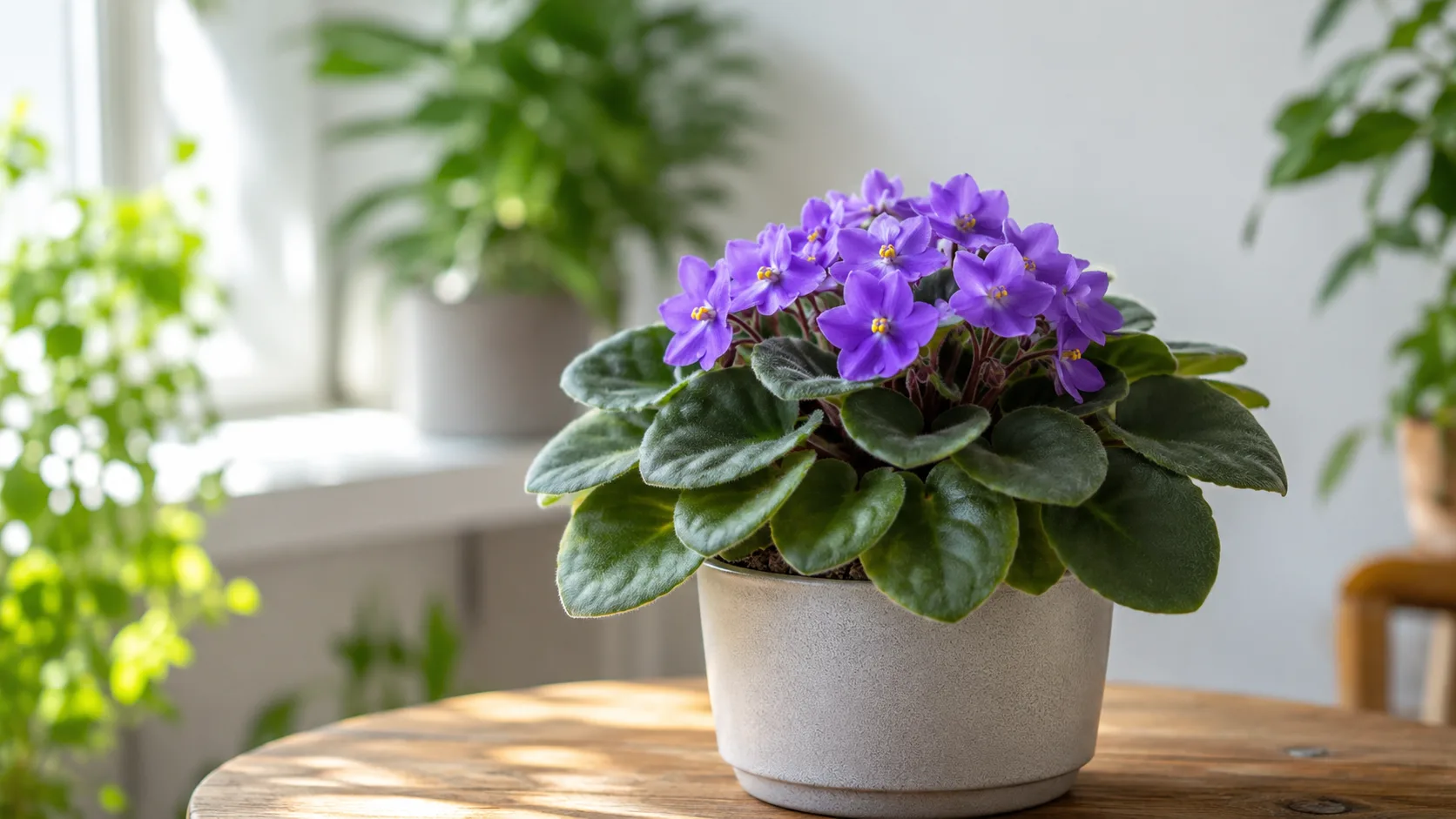
African Violet Propagation: Complete Beginner Guide
African Violet Propagation: Complete Beginner Guide
African violet propagation is one of the most satisfying forms of houseplant propagation because a single healthy leaf can produce a cluster of new plants. The basic method is simple: take a firm leaf with part of its stem, place it in a moist rooting medium or water, keep it warm and bright without direct sun, then wait for roots and baby rosettes. The part many beginners underestimate is not the cutting itself. It is the patience, moisture control, sanitation, and timing needed after the cutting is made.
African violets are commonly still called Saintpaulia, but current botanical treatment places the former Saintpaulia group within Streptocarpus sect. Saintpaulia, part of the Gesneriaceae family. Kew’s Plants of the World Online lists African violet relatives in Streptocarpus and notes their importance in horticulture, with more than 2,000 cultivars marketed under the African violet name. (Plants of the World Online) The Gesneriad Society also explains that plants long known as Saintpaulia are now properly treated within Streptocarpus, although gardeners still use the familiar common name. (Gesneriads)
That taxonomy detail matters only because it explains why African violets behave differently from “true violets” in the garden. They are tropical gesneriads, not outdoor Viola species. They root readily from leaf tissue, prefer stable indoor warmth, and resent heavy, soggy soil. Once you understand those three points, propagation becomes much less mysterious.
What African Violet Propagation Means
African violet propagation means creating new African violet plants from existing plant material. For home growers, that usually means leaf cuttings, where a leaf and its petiole produce roots and then new plantlets at the cut end. It can also mean dividing suckers, separating crowns from trailer varieties, or using less common methods such as blossom stalk propagation for specific types. Seed propagation exists, but it is not the usual choice for someone trying to clone a favorite plant because seedlings may not look like the parent.
Most people propagate African violets because they want more of a plant they already love. Maybe the parent has a flower color that is hard to find locally. Maybe it is an old family plant. Maybe it has started forming extra crowns and needs cleaning up. Leaf propagation gives you a low-cost backup plant, which is useful because mature African violets can decline from overwatering on African Violet, pests, crown damage, or old age.
The key phrase is “new plants,” not “instant plants.” A healthy leaf can root in weeks, but visible babies take longer. The African Violet Society of America notes that a healthy leaf may take about a month to produce roots, then another month or so before tiny plants reach the soil surface, followed by several more months before they are large enough to separate. (African Violet Society of America) That timeline is normal. A cutting that looks unchanged for several weeks is not automatically failing.
The Best Propagation Method for Most Growers
The best propagation method for most African violet growers is a leaf cutting rooted directly in a light, moist medium. It is simple, inexpensive, and reliable when the leaf is healthy and the medium is not waterlogged. Missouri Botanical Garden states that African violets are easily propagated from leaf cuttings in media such as vermiculite, perlite, sphagnum peat moss, sand, or combinations of those materials. It also notes that cuttings may root in water, but stronger plants generally develop when placed directly in rooting medium. (Missouri Botanical Garden)
That does not mean water propagation is wrong. Water rooting is popular because it lets you watch roots form, which helps beginners feel confident that something is happening. The trade-off is that water roots can be more fragile when moved into potting mix. Soil or soilless rooting mix hides the roots, but it creates a more natural transition for the plantlets because they are already adapted to a solid medium.
A practical rule works well: use soil propagation when you want stronger starts and fewer transplant steps; use water propagation when you are learning, experimenting, or saving a leaf and want visual feedback. Both can work. The best method is the one you can manage consistently without letting the cutting dry out or rot.
Why Leaf Cuttings Are the Standard Method
Leaf cuttings are the standard method because African violet leaves can produce plantlets from tissue near the cut petiole. A single leaf can sometimes produce several babies, giving you more than one new plant from one cutting. Iowa State University Extension describes African violets as easy to propagate by leaf cuttings and recommends selecting a firm, healthy leaf, then cutting it with a sharp knife while leaving about 1 to 1½ inches of petiole. (Yard and Garden)
The best leaf is not the newest tiny leaf in the center and not the oldest tired leaf at the bottom. The youngest leaves are still feeding the crown and may be too small to support propagation. The oldest leaves often root slowly, rot more easily, or produce weaker babies. Choose a mature, firm, clean leaf from the middle row of the plant: old enough to have stored energy, young enough to be vigorous.
Leaf cuttings also help preserve a plant without damaging the main crown. You can remove one or two leaves and still leave the parent attractive and productive. For a treasured plant, this is safer than cutting off the crown unless the plant already needs serious rejuvenation. It is also useful if you suspect the parent plant is declining but still has a few healthy leaves.
When Division Is Better Than Leaf Cuttings
Division is better than leaf cuttings when the African violet has already produced suckers, pups, or multiple crowns. In that case, the plant has done part of the propagation work for you. Instead of waiting for a leaf to create new babies, you can separate a small side plant with its own growing point and root it in a small pot.
Division is especially useful for trailer African violets, which naturally form multiple crowns. Single-crown African violets are usually grown as one centered rosette, so extra suckers are often removed to keep the plant symmetrical. Those suckers can become new plants if they are large enough and handled carefully. The main risk is separating them too early, before they have enough tissue to recover.
Division can also be the better choice for plants with traits that may not reproduce predictably from leaf cuttings. Some specialty African violets, especially certain chimeras, do not reliably pass their flower pattern through leaf propagation. In those cases, crown division, sucker propagation, or blossom stalk methods may be used by experienced growers, depending on the plant type.
What You Need Before You Start
You do not need a greenhouse to propagate African violets. You need a healthy parent plant, a small clean container, a suitable rooting medium, room-temperature water, a sharp clean blade, and a bright location out of direct sun. A clear plastic bag, humidity dome, or lidded propagation container can help if your home is dry, but it should not turn the cutting into a sealed swamp.
The container should be small. A 2-inch pot, tiny plastic cup with drainage holes, seedling cell, or shallow propagation cup is usually enough for one leaf. Oversized pots hold too much moisture around the petiole, which raises the risk of rot. African violet babies start small and prefer a modest root zone.
The environment matters as much as the equipment. African violets grow best in African Violet light guide, and University of Florida IFAS Extension describes bright light around 1,000 foot-candles without direct sunlight as suitable for strong growth and flowering. (Ask IFAS - Powered by EDIS) For propagation, that means a bright windowsill with filtered light, a shelf under gentle grow lights, or a spot near an east-facing window. Direct hot sun can cook a sealed cutting quickly.
Choosing the Right Leaf
A good propagation leaf should be firm, mature, clean, and free from obvious pest damage. Look for a leaf that sits in the middle or lower-middle row of the plant. It should have good color, no mushy spots, no yellowing edges, no powdery mildew, and no distorted growth. If the plant has recently been stressed by drought, overwatering, pests, or shipping, wait until it stabilizes before taking cuttings.
The petiole should be long enough to insert into the medium while leaving the leaf blade mostly above the surface. Too long a stem wastes energy and may curve awkwardly. Too short a stem is harder to anchor and leaves less tissue near the cut where plantlets form. A practical range is about 1 to 1½ inches, which matches extension guidance and gives enough stem for planting without burying the leaf too deeply. (Yard and Garden)
Avoid taking a leaf from a plant with active pest problems. Mealybugs, mites, and fungal issues can travel with the cutting into the propagation container. Clemson Cooperative Extension notes that mealybugs can infest leaves, stems, and leaf crotches, feeding on sap and causing stunted or distorted growth. (Home & Garden Information Center) If you propagate from a contaminated plant, you may multiply the problem along with the plant.
Choosing the Right Rooting Medium
The best rooting medium for African violet cuttings is light, airy, evenly moist, and fast-draining. It should hold some moisture around the cut stem but still allow oxygen to reach developing roots. Straight garden soil is a poor choice because it compacts, stays wet, and may contain pathogens or pests. Heavy potting soil can also suffocate a small cutting if it remains saturated.
Good options include vermiculite, perlite, sphagnum peat moss, fine seed-starting mix, African violet mix amended with extra perlite, or a blend of these. Missouri Botanical Garden specifically lists vermiculite, perlite, sphagnum peat moss, sand, and combinations as suitable rooting media for African violet leaf cuttings. (Missouri Botanical Garden) University of Minnesota Extension also notes that some growers use a blend of 50 percent commercial African violet potting mix and 50 percent perlite for African violet growing. (University of Minnesota Extension)
A simple beginner mix is half African violet potting mix and half perlite. It is forgiving, easy to find, and airy enough for small roots. If your home is very dry, add a little vermiculite to hold moisture. If you tend to overwater, increase the perlite. The goal is not a magic recipe; it is a medium that stays slightly moist without becoming dense or sour.
Cleaning Tools and Preventing Rot
Rot is the most common propagation failure, and it often starts before the leaf goes into the pot. Use a clean, sharp blade or snips so the petiole is cut cleanly rather than crushed. A ragged or bruised stem gives fungi and bacteria more damaged tissue to invade. Wash your hands, clean the tool, and avoid reusing dirty water or old soggy potting mix.
Letting the cut end rest for a few minutes before planting can reduce surface wetness, but do not leave the leaf out so long that it wilts. Some growers use rooting hormone, and it can help encourage roots, but African violets usually do not require it. If you use hormone powder, tap off the excess. A heavy coating can clump, hold moisture, and work against you.
Drainage is non-negotiable. If your propagation cup has no holes, you must be extremely careful with water, and beginners should avoid that setup. A cutting wants humidity around the leaf, not stagnant water around the stem. Moist air helps the leaf avoid wilting; soggy medium kills the petiole.
How to Propagate African Violets from Leaf Cuttings
The cleanest beginner method is to root the leaf in a small pot of moist propagation mix. Fill the pot lightly, water the mix, let excess water drain, and make a narrow planting hole with a pencil, chopstick, or plant label. Insert the petiole into the hole so the cut end is buried, then firm the mix gently around it. The leaf blade can rest slightly above the surface or sit at a gentle angle.
Label the pot if you care about the cultivar name. African violet collections become confusing fast, especially when several leaves look identical during propagation. Add the date too. This keeps you from disturbing a cutting after three weeks because you feel it is “taking too long,” when in reality it is right on schedule.
After planting, place the cutting in bright indirect light and stable warmth. If humidity is low, cover it loosely with a clear plastic bag or dome, but keep the cover from pressing against the leaf. Open it periodically for air exchange and check for condensation. Heavy condensation every day is a sign the setup may be too wet.
Step 1: Cut the Leaf Correctly
Remove the leaf cleanly from the parent plant, then trim the petiole to about 1 to 1½ inches. Make the cut at a slight angle so there is more exposed tissue at the base. Use a sharp knife, razor blade, or clean snips. Do not pinch the stem with your fingernails because bruised tissue is more likely to rot.
The leaf blade should remain intact unless it is very large. Some experienced growers trim the top of a large leaf to reduce moisture loss and encourage plantlet production, but beginners do not need to do this. A full healthy leaf has energy reserves that support rooting. If the leaf is floppy, damaged, or already declining, start with a better leaf.
Insert only the petiole into the medium, not the crown of the future plantlets because there are no plantlets yet. The babies will emerge near the base of the leaf where the petiole is buried. Planting too deep can slow emergence and increase rot risk. The leaf should be stable but not buried like a plug plant.
Step 2: Root the Cutting in Soil
To root in soil or soilless mix, pre-moisten the medium until it feels like a wrung-out sponge. It should not drip when squeezed, and water should not pool at the bottom of the pot. Make a hole first, place the petiole into the hole, and firm gently. This prevents the medium from scraping the cut end as you push it down.
Covering the pot can help maintain humidity, especially in air-conditioned rooms or dry climates. Use a clear bag, plastic cup, or propagation dome, but avoid sealing a wet cutting in stale air for weeks without checking it. If you see mold, remove the cover for more airflow and reduce moisture. If the leaf wilts badly, restore humidity but inspect the stem for rot.
Soil propagation requires patience because you cannot see roots forming. Resist tugging on the leaf. A tug test can break new roots before they do their job. Instead, watch the leaf. A leaf that stays firm and upright is usually alive. New plantlets may take several weeks to appear even after roots have formed.
Step 3: Root the Cutting in Water
To propagate in water, place the petiole through a small hole in plastic wrap, foil, or a paper collar over a narrow glass so the leaf stays above the water and only the cut stem sits in water. Use room-temperature water. Keep the leaf blade dry and out of the glass, because a submerged or constantly wet leaf is likely to rot.
Change the water if it becomes cloudy. Keep the glass in bright indirect light, not direct sun. Roots may form in a few weeks, but the timing varies with leaf age, temperature, light, and cultivar. Once roots are visible and reasonably developed, move the cutting into a light potting medium before it becomes a tangled mass of water roots.
The biggest mistake in water propagation is waiting too long to pot the cutting. Long water roots look impressive, but they are delicate and not adapted to air pockets in potting mix. When you move them, keep the medium evenly moist at first so the roots can transition. Do not press the soil hard around them; gentle contact is enough.
Step 4: Care for the Cutting While It Roots
After planting, keep the medium lightly moist. Letting it dry completely can kill new roots, but keeping it wet can rot the petiole. Water from below if possible, then drain excess water. If watering from above, use a narrow spout and aim at the medium, not the leaf. African violet leaves can show damage from cold water or harsh conditions, and stable room-temperature moisture is safer.
Light should be bright but gentle. A north or east window, a bright shelf away from direct sun, or a low-intensity grow light setup works well. If the leaf stretches upward and stays deep green, light may be too low. If it turns pale, scorches, or collapses under a dome, light or heat may be too intense.
Do not fertilize heavily while the leaf is trying to root. A very weak fertilizer solution can be introduced after plantlets have leaves of their own, but fresh roots are sensitive. The cutting’s first job is survival, then rooting, then producing babies. Pushing growth too early often creates weak tissue instead of faster success.
African Violet Propagation Timeline
African violet propagation is slow enough to test your patience but predictable enough to plan around. Under good conditions, roots often begin forming in about three to five weeks, though you may not see them if the cutting is in soil. The African Violet Society of America gives a useful expectation: roughly a month for roots, about another month for tiny plants to reach the soil surface, and several additional months before the plants are ready to separate. (African Violet Society of America)
A healthy cutting may look unchanged for the first month. That is not wasted time. The leaf is building roots and preparing the tissue that will generate plantlets. Visible baby leaves are a later stage, not the first sign of success. This is why many beginners throw away viable cuttings too early.
Temperature, light, leaf age, cultivar, and parent health all change the timeline. A vigorous green leaf in warm, bright conditions may move quickly. An older leaf, a variegated leaf with less chlorophyll, or a cutting taken from a stressed plant may take longer. Slow does not mean failed unless the leaf is mushy, foul-smelling, collapsing, or clearly rotting at the stem.
Roots, Plantlets, Separation, and First Bloom
A realistic propagation timeline looks like this:
| Stage | Typical Timing | What You Should Do |
|---|---|---|
| Leaf adjusts after cutting | Week 1 | Keep humidity steady and avoid direct sun |
| Roots begin forming | Weeks 3–5 | Maintain light moisture; do not tug |
| Plantlets emerge | Weeks 6–10 or later | Increase airflow if covered; keep light bright |
| Babies grow separate rosettes | Months 3–5 | Wait until each has several leaves |
| Separation and potting | Around months 4–6 | Pot into small containers with airy mix |
| First bloom | Often several more months | Provide steady care, light, and modest feeding |
These are working ranges, not deadlines. Some cuttings produce one strong baby; others produce a crowded cluster. Some plantlets appear close to the mother leaf, while others emerge slightly offset. The important thing is to wait until each baby has enough leaf area and root potential to survive separation.
First bloom depends on cultivar, light, nutrition, and how quickly the plant establishes after separation. A propagated plant is not “behind” if it spends time building a symmetrical rosette before flowering. African violets bloom best when they are healthy, slightly snug in the pot, and receiving steady bright indirect light.
How to Separate and Pot African Violet Babies
Separate African violet babies when they have formed recognizable small rosettes, usually with several leaves each. A common practical target is to wait until plantlets have about four to six leaves and are large enough to handle without crushing. Separating too early is one of the fastest ways to lose otherwise successful propagation.
To separate them, remove the whole leaf cutting and root ball from the pot. Gently loosen the mix around the base so you can see where the plantlets attach. Use clean fingers, a small tool, or a sterile blade to tease apart individual babies. Try to keep some roots with each plantlet, but do not panic if a few roots break. Healthy plantlets can recover if potted gently and kept humid for a short transition period.
The original mother leaf may still look alive at this point. You can discard it, or if it remains firm and has enough petiole tissue, you can sometimes reset it to produce more babies. However, second rounds are often slower and weaker. For most beginners, it is better to focus on establishing the first generation well.
Pot Size, Planting Depth, and First Weeks
Use small pots for newly separated African violet babies. A 2-inch pot is usually enough for a small plantlet. Oversized pots stay wet too long, and wet mix around a tiny root system creates rot risk. African violets generally perform better when the pot is proportionate to the plant, not when given a large container “to grow into.”
Plant the baby so the crown sits just above the soil surface. Do not bury the central growing point. The roots should be covered, the stem base should be supported, and the leaves should rest above the mix. If the plant wobbles, use a little extra mix around the base or a temporary support, but keep the crown clear.
For the first couple of weeks, treat the separated babies like recovering cuttings. Give them bright indirect light, light humidity, and evenly moist medium. Avoid heavy fertilizer immediately after separation. Once you see new growth, gradually move them into normal African violet care.
Water vs Soil Propagation
Water and soil propagation both work, but they reward different grower habits. Water propagation is visual, easy to monitor, and emotionally satisfying because you can see roots forming. Soil propagation is less dramatic but often more efficient because the cutting forms roots directly in the medium where the babies will grow. Missouri Botanical Garden’s guidance favors direct rooting medium for stronger plants, while still acknowledging that water rooting can produce roots. (Missouri Botanical Garden)
The real issue is not which method is universally “best.” It is which method reduces your most likely failure. If you forget to water, a covered soil setup may be safer. If you overwater, a very airy mix and a small pot are essential. If you keep pulling cuttings out to check for roots, water propagation may stop you from disturbing soil-grown roots. If you delay transplanting water-rooted leaves, soil propagation may save you trouble.
Use this comparison to choose:
| Method | Best For | Main Advantage | Main Risk |
|---|---|---|---|
| Soil or soilless mix | Strong starts, fewer steps | Roots form in growing medium | Hidden progress can tempt overchecking |
| Water | Beginners who want visibility | Easy to see root growth | Fragile roots and transplant adjustment |
| Division | Plants with suckers or trailers | Faster than leaf babies | Damage if separated too early |
| Blossom stalk or crown methods | Certain specialty plants | Better for some chimera traits | More advanced and less forgiving |
Which Method Should You Choose?
Choose soil propagation if your goal is the strongest practical start. Use a tiny pot, an airy mix, and steady humidity. This method is especially good when you have several leaves to propagate and want a simple system. It also reduces the transplant shock that can happen when water roots move into potting mix.
Choose water propagation if this is your first attempt and you want to see roots before committing the cutting to soil. It is also useful when you receive a loose leaf and cannot pot it immediately. Just move it into a potting medium once roots are developed but still manageable. Do not wait until the glass is full of long roots.
Choose division if the plant already has separate crowns, suckers, or trailer growth. You will get a usable young plant faster than waiting for a leaf cutting to produce babies. The plantlet still needs aftercare, but it starts with a growing point already formed.
Special Cases: Variegated, Chimera, and Trailer African Violets
Not every African violet behaves the same in propagation. Standard green-leaf, single-crown African violets are usually straightforward from leaf cuttings. Variegated plants, chimera flowers, and trailers need more thought because the goal is not just producing a plant. The goal is preserving the trait that made the parent worth propagating.
Variegated African violets can be propagated from leaves, but choose a leaf with enough green tissue to support growth. A leaf that is mostly white, cream, or pink has less chlorophyll and may root slowly or fail to produce strong babies. Plantlets from variegated parents can also emerge very pale. They need patience and good light, but harsh sun will not fix low chlorophyll.
Chimera African violets are a special case. Many chimeras have striped or patterned flowers caused by layered genetic tissue, and leaf cuttings may not reproduce that pattern reliably. A leaf cutting may produce a healthy African violet, but not the same chimera bloom. For true-to-type chimera propagation, experienced growers often use suckers, crown work, or blossom stalk propagation rather than ordinary leaf cuttings.
Trailer African violets naturally produce multiple crowns and branching growth. They can be propagated by cuttings or division, but division often makes more sense when there are already rooted or semi-independent sections. The goal with trailers is not a single perfect central rosette. It is a balanced, branching plant, so propagation and shaping often happen together.
Common African Violet Propagation Problems
Most African violet propagation failures come from a short list of causes: poor leaf choice, dirty tools, heavy medium, too much water, too little light, direct heat, early separation, or pests. The fix is usually not complicated, but you need to identify the problem before repeating the same setup. A cutting that rotted in a sealed wet cup does not need more patience; it needs more air and less water.
If the leaf turns mushy at the base, the petiole has rotted. Remove the cutting and discard the contaminated medium. If the leaf blade is still firm, you can sometimes recut the petiole above the rot and restart it in fresh mix, but success depends on how far the decay has moved. If the whole leaf is limp, translucent, or foul-smelling, start over with a new leaf.
If the leaf stays firm but produces no visible babies for two months, check the conditions before giving up. Is the room cool? Is the light too low? Was the leaf old or heavily variegated? Is the petiole planted too deeply? Slow progress is common, especially in less-than-ideal indoor conditions. A firm green leaf is still a candidate for success.
Rot, No Roots, Weak Babies, and Pest Issues
Rot usually means the medium stayed too wet or the petiole was bruised, dirty, or buried too deeply. Use a cleaner cut, a smaller container, and a more open mix. Keep humidity around the leaf, but do not keep the stem in stale wet conditions. If using a dome, vent it occasionally and remove any fallen debris.
No roots can happen when the leaf is too old, too stressed, too cold, or kept in very low light. Move the cutting to brighter indirect light and stable warmth. Do not place it in direct sun to “speed it up.” African violets prefer bright filtered light, and harsh sun can damage leaves faster than it helps roots.
Weak babies often come from weak leaves, early separation, poor light, or oversized pots after transplanting. Wait longer before separating, use tiny pots, and keep the mix airy. If plantlets are very crowded, separate the strongest ones first and discard runts if they are too weak to handle. Not every baby from a cutting is worth growing.
Pests deserve serious attention because propagation containers can protect insects and mites as well as plants. Cyclamen mites are especially feared by African violet growers because they are extremely small, hard to see without magnification, and damaging to crowns. The African Violet Society of America describes cyclamen mite as one of the most feared violet pests because of its rapid increase, severe plant effects, and difficulty of control. (African Violet Society of America) If a parent plant has distorted crown growth, unexplained stunting, or suspicious pest signs, isolate it and avoid propagating from it until the issue is understood.
Conclusion
African violet propagation works best when you treat it as a slow, clean, moisture-controlled process rather than a quick trick. Start with a firm healthy leaf, cut the petiole cleanly, root it in an airy medium or clean water, and keep it in bright indirect light. Soil propagation is usually the strongest all-around method, while water propagation is useful when you want to watch roots form. Division is faster when the plant already has suckers, pups, or trailer growth.
The biggest skill is knowing when to wait. Roots can take about a month, plantlets can take another month or more to appear, and separation may still be several months away. A firm leaf with no visible babies is often still working below the surface. A mushy stem, stale wet medium, or collapsing leaf is a signal to change the setup.
Once the babies are large enough, separate them gently, pot them small, keep the crown above the mix, and give them steady care. Do that well, and one African violet leaf can become a tray of healthy young plants. The method is simple, but the results improve sharply when you respect the details: clean cuts, airy mix, patient timing, and no soggy shortcuts.
When to use this page vs other African Violet guides
- African Violet overview - Start here for whole-plant context before deep-diving this topic.
- African Violet problems hub - Jump to symptom-specific fix guides when this care topic does not resolve the issue.
- Transplant Shock on African Violet - Escalate here when propagation adjustments are not enough.
- Damping Off on African Violet - Escalate here when propagation adjustments are not enough.
Related African Violet guides
- African Violet overview
- African Violet watering
- African Violet light
- African Violet soil
- African Violet fertilizer
- African Violet repotting
- Transplant Shock on African Violet
- Damping Off on African Violet
- African Violet problems
Related tool
Try the Propagation Success Calculator with african-violet pre-selected to estimate needs for your setup.