Damping Off on African Violet: Causes, Checks & Fixes
Quick answer
Damping off on African Violet seedlings is a fast fungal collapse at the stem base, usually from soggy mix and poor airflow in seed trays. Remove affected seedlings immediately and sterilize the tray before starting again.
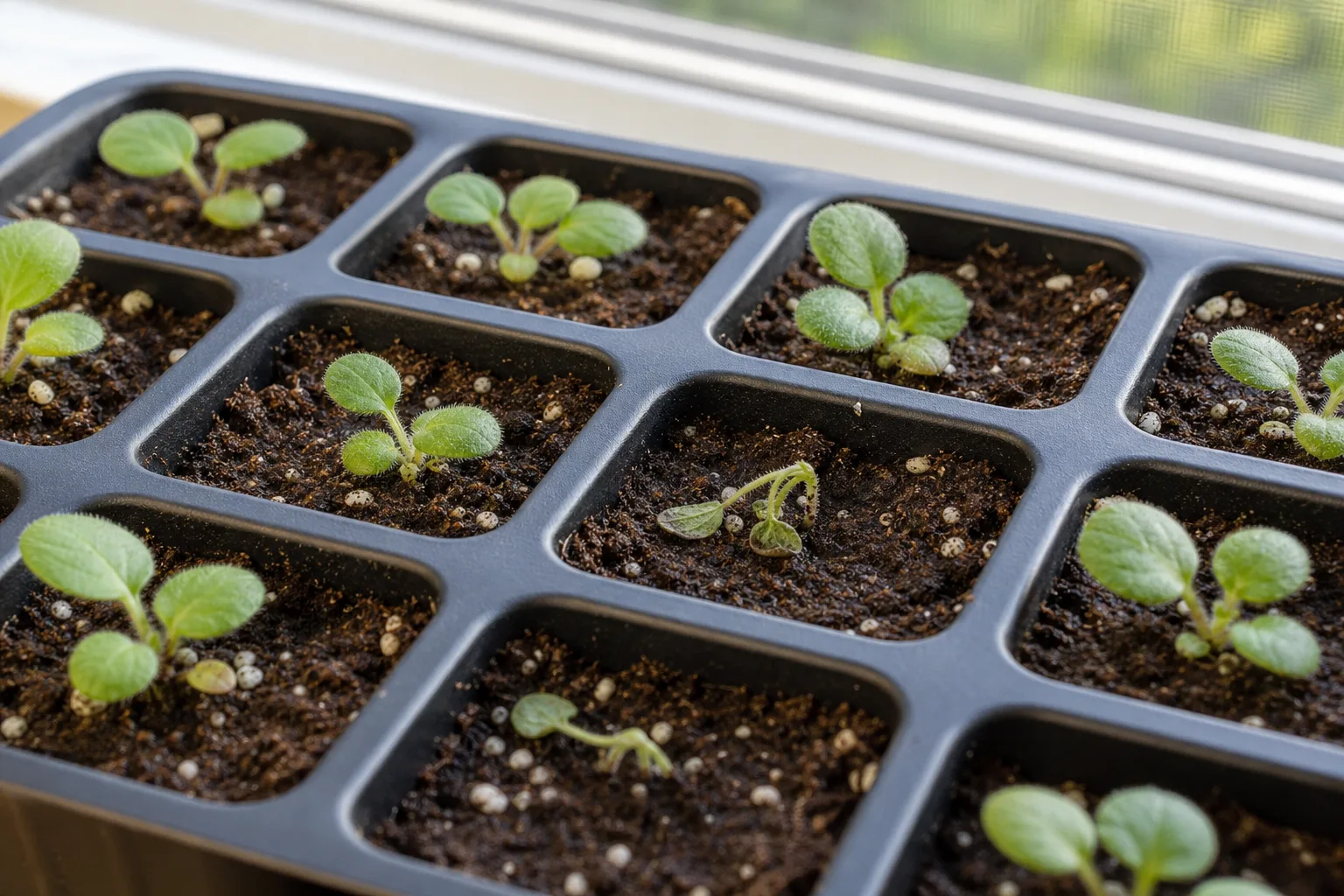
Damping Off on African Violet: Causes, Checks & Fixes
This guide covers damping off on African Violet. See also the general Damping Off guide, watering, and light pages for this plant.
Damping Off on African Violet: Causes, Checks & Fixes
Quick answer
Damping off on African Violet is a seedling disease, not a problem on established blooming rosettes. Soil-borne fungi attack thin young stems at the soil line, causing sudden wilt and collapse when trays stay wet and poorly ventilated. There is no cure for a seedling already pinched at the base. First move: remove every collapsed seedling and its surrounding mix immediately, then sterilize the tray before touching healthy plants elsewhere.
What damping off looks like on African Violet
The classic sign is a seedling that was upright yesterday suddenly flopping over with a thin, water-soaked stem right where it meets the soil. The upper leaves may still look green for a few hours, but the base feels mushy when you pinch it gently between two fingers.
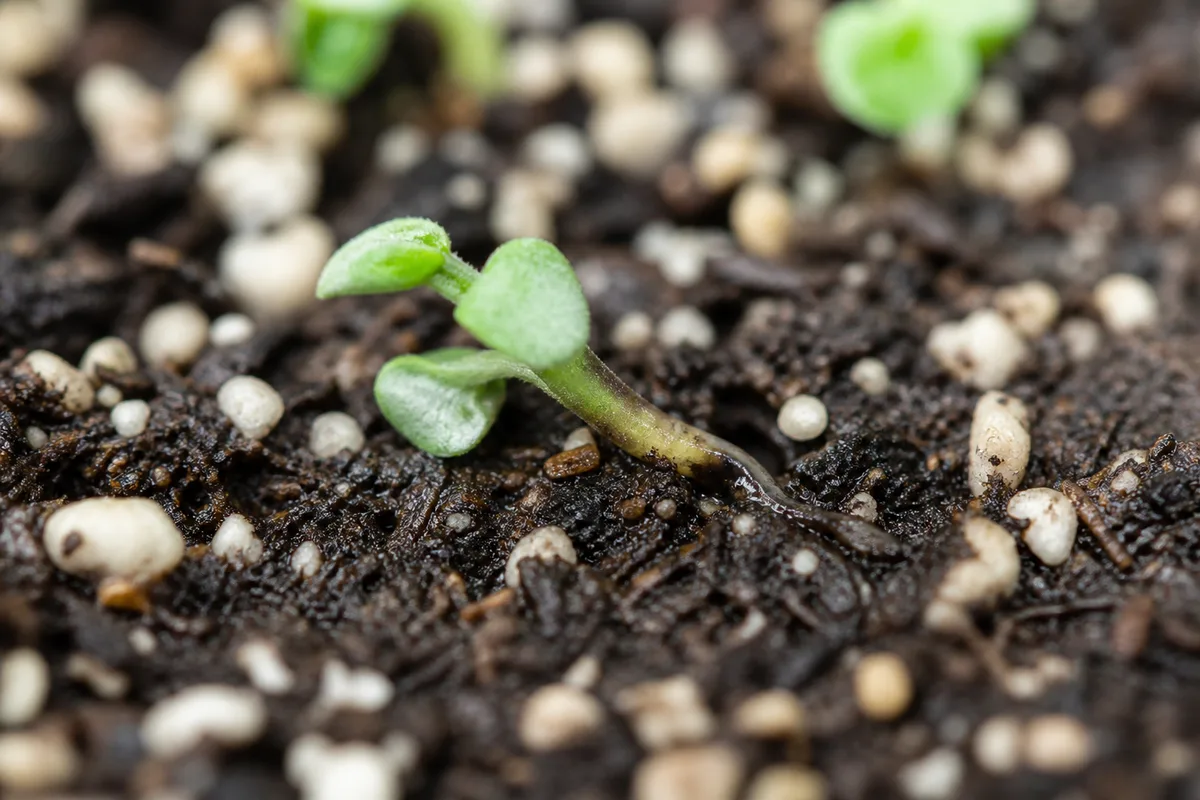
Thin water-soaked stem pinched at the soil surface - the classic damping-off collapse point on African Violet seedlings.
Early cases often hit one cell while neighbors stay firm, which makes the problem easy to dismiss. Within a day or two, adjacent seedlings in the same wet row can collapse the same way. Advanced trays show clusters of fallen stems and sometimes a faint white or gray fungal thread on the soil surface under high humidity.
Compare with leggy seedlings: those stretch toward light with long pale stems but stay firm at the base. Damping-off stems go soft and thread-like at the soil line. On mature African Violets, similar mushiness at the rosette center points to crown rot-a different life stage, though overwatering on African Violet is the shared trigger.
Why African Violet seedlings get damping off
African Violet seeds are tiny and slow to establish compared with vegetables. Seedlings and newly separated plantlets have delicate stems and shallow roots that rot quickly when mix stays saturated. Pythium and Phytophthora are the usual culprits named for African Violet damping off, though Rhizoctonia and Fusarium can cause the same collapse pattern in seed trays.
Several African Violet growing habits raise the risk:
- Humidity domes left on too long after germination trap moisture around stems when seedlings need airflow, not greenhouse steam.
- Heavy peat mix without perlite holds water at the surface-the same moisture-loving media adult violets prefer becomes dangerous when stems are pencil-thin.
- Bottom-watering without dry-down works for mature plants but can keep seed-tray mix cold and wet if you never let the surface lighten between soakings.
- Overhead misting wets fuzzy cotyledons and splashes spores between cells; adult African Violets hate wet leaves for the same reason.
- Cool room temperatures plus wet mix slow growth and extend the vulnerable window after sprouting.
Damping off is rare on a well-established African Violet in a small blooming pot. If your mature rosette is collapsing, look at crown rot or root rot on African Violet instead.
How to confirm the cause
Work through these checks in order:
- Life stage - Are affected plants seedlings, freshly germinated seed, or tiny plantlets in a propagation flat? Damping off targets this stage. Mature rosettes with firm lower leaves rule it out.
- Collapse point - Pinch the stem at the soil line. Mushy, brown, or thread-thin tissue there confirms stem-base rot. Firm base with wilted top leaves suggests underwatering on African Violet or heat stress instead.
- Tray moisture - Press the surface. Soggy, cold mix that smells sour or musty supports a fungal diagnosis. Mix that is dusty-dry points away from damping off.
- Dome and airflow - Was a humidity dome sealed after sprouting? Is the tray crowded on a windowsill with no air movement? Stagnant humid air accelerates spread.
- Spread pattern - One random cell collapsing may be early damping off. Multiple cells failing in a wet section of the same tray strongly confirms it.
If only the rosette center of an adult plant is soft while soil is wet, switch your diagnosis to crown rot and stop top-watering immediately.
First fix for African Violet seedlings
Remove every collapsed seedling and the soil around it right away. Do not wait to see if they rebound-seedlings infected by damping off rarely survive, and spores move through shared wet mix to healthy neighbors.
Bag and discard collapsed plants and the mix they sat in. If several cells in one tray are affected, it is often safer to discard the entire tray contents rather than salvage a few survivors from contaminated media.
Scrub the tray with a 10 percent bleach solution (one part bleach to nine parts water) and let it dry fully before reuse. Wash hands and tools before touching healthy African Violets elsewhere in your home. If the tray is plastic with no drainage holes, drill holes or switch containers-closed-bottom cells are a common setup mistake for violet seedlings.
Protecting remaining seedlings in the same flat
After removal, shift focus to survivors still standing firm:
- Stop overhead misting - Keep moisture in the mix only. African Violet foliage should stay dry.
- Crack or remove the humidity dome - Seedlings need air exchange once cotyledons are up.
- Let the surface dry slightly before the next bottom-water session. Damp mix is the goal; waterlogged peat is not.
- Add gentle airflow - A small fan on low across the room reduces surface moisture without blasting fragile stems.
- Space cells if possible - Crowded leaves trap humidity between plants.
Do not fertilize stressed seedlings. Wait until several true leaves develop, then use quarter-strength African violet fertilizer if your mix has no slow-release feed.
Recovery timeline
Collapsed seedlings will not recover. Healthy neighbors may survive if you act within a day of the first collapse: infected cells removed, surface drying between waterings, and airflow improved. Watch for new upright growth over the next one to two weeks.
If additional cells fall daily despite drier conditions, stop trying to save that tray. Sterilize equipment and restart with fresh mix in a clean container. New sowings in sterilized trays with disciplined watering typically stay upright when the surface dries slightly between bottom-water sessions.
Lookalike symptoms
- Leggy growth - Pale stretched stems reaching for light, but firm at the base. Fix light levels, not fungicide.
- Underwatering - Dry mix, limp seedlings, firm stems. Rehydrate from below; stems should stiffen within hours.
- Crown rot on mature plants - Mushy rosette center on an established African Violet, not a seed flat. Stop watering and inspect the crown.
- Fungus gnats - Small flies over wet soil; larvae in the top inch of mix. Often share the same overwatering habit but do not cause sudden stem pinching on their own.
- Cold damage - Watersoaked leaves after a chill without progressive stem rot at the soil line.
What not to do
Do not leave collapsed seedlings in the tray hoping they recover-each one releases spores into shared wet mix. Do not reuse contaminated soil or skip tray sterilization to save time. Do not pour water on fuzzy leaves while trying to “help” wilted seedlings.
Do not treat damping off on seedlings like crown rot on adults. Mature-plant fixes such as African Violet repotting guide a full rosette do not apply when the problem is a shared seed tray. Do not stack fungicide, fertilizer, and heavy misting on day one; dryness and removal come first.
How to prevent damping off next time
Prevention is far more reliable than rescue for African Violet seedlings:
- Start clean - Sterilize reused trays in 10 percent bleach for 30 minutes. Use fresh commercial seed-starting or African violet mix; do not pull garden soil or old peat from a bag left open in the garage.
- Drainage first - Every cell needs open holes. Bottom-water into a shallow tray, then lift pots out once the surface is moist so they never sit in standing water overnight.
- Light, porous mix - Blend fine African violet mix with extra perlite for seed trays so water moves through quickly.
- Water discipline - Keep mix damp, not soggy. Let the surface lighten slightly before the next soak. Use room-temperature water; cold water slows seedling growth and extends vulnerability.
- Airflow and dome timing - Domes help germination, but remove or vent them once sprouts appear. Run gentle room airflow so leaves and soil surfaces dry between waterings.
- Warm, bright conditions - Seedlings need strong light for 12–16 hours daily and temperatures in the comfortable African Violet range. Weak light and cool wet mix are a high-risk combination.
When seed-starting succeeds, transplant plantlets into small individual pots only after stems thicken and roots hold the plug together-then shift to normal African Violet bottom-African Violet watering guide with the top inch drying between drinks.
When to use this page vs other African Violet guides
- African Violet watering guide - Use for routine moisture checks before assuming damping off is the main issue.
- African Violet problems hub - Browse all 52 common issues on this species.