African Violet Fertilizer: Best Ratio and Schedule
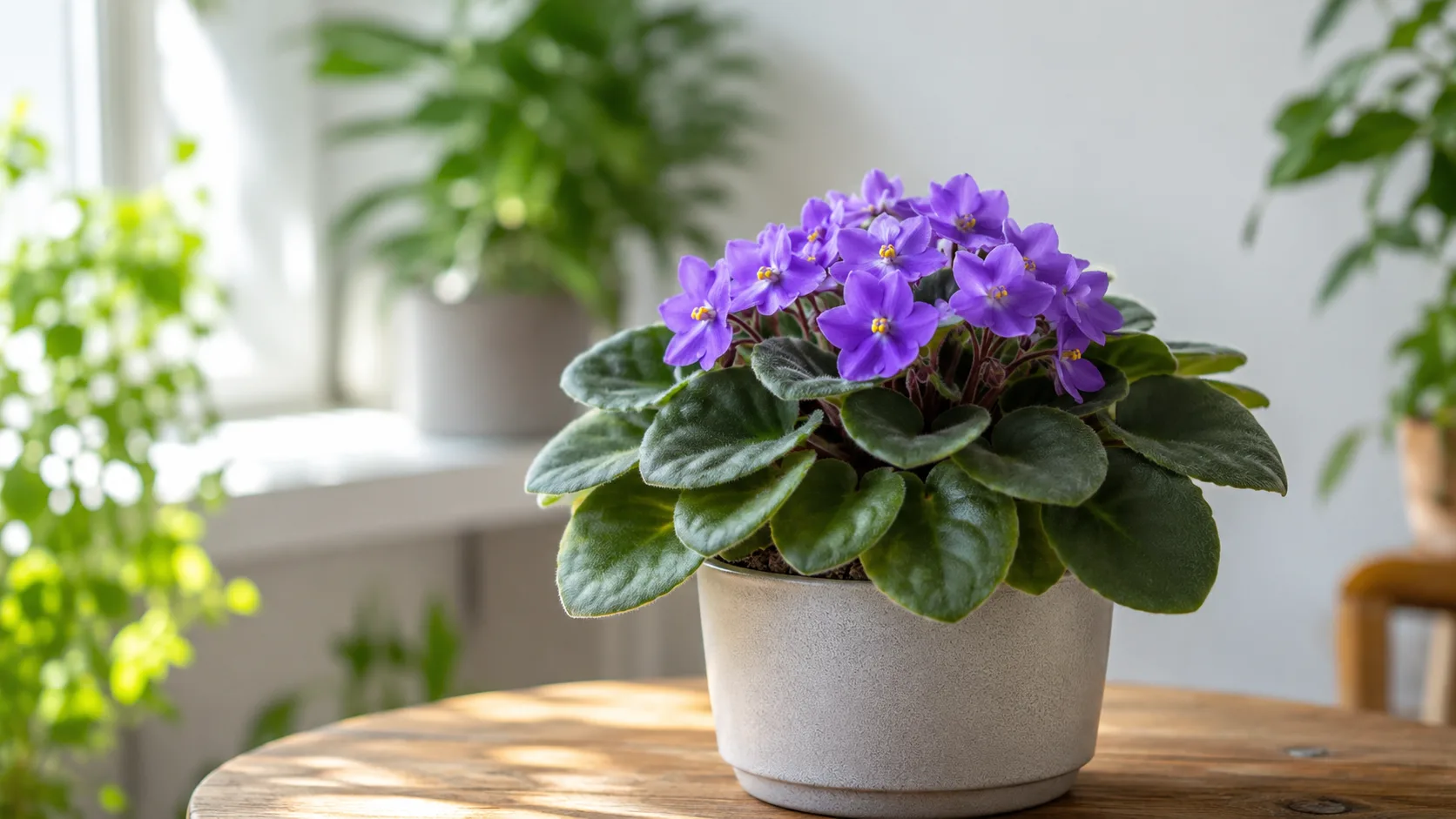
African Violet Fertilizer: Best Ratio and Schedule
African Violet Fertilizer: Best Ratio and Schedule
Reviewed by LeafyPixels Review Board · Author: sai-ananth · Last updated 2026-06-15
African violets do not need heavy feeding. They need steady, diluted nutrition that matches their small root system, compact growth habit, and long blooming cycle. The mistake many growers make is treating fertilizer like a rescue product: the plant stops blooming, so they add more food. That approach often backfires because a non-blooming African violet may be short on light, stressed by watering, chilled by a window, or sitting in tired soil rather than simply “hungry.”
African violets, commonly still called Saintpaulia by many growers, are now treated taxonomically within Streptocarpus by Kew’s Plants of the World Online; Saintpaulia is listed as a synonym of Streptocarpus. (Plants of the World Online) That matters because these plants are not outdoor bedding violets, and they are not fed like heavy garden bloomers. They are fine-rooted tropical houseplants grown in small pots, usually in airy, soilless or peat-based mixes. University of Minnesota Extension notes that African violets have fine roots and prefer well-drained soilless mixes with a pH around 6.2 to 6.5. (University of Minnesota Extension)
The best way to think about African violet fertilizer is simple: it supports active growth; it does not force health into a stressed plant. A healthy violet uses fertilizer to produce firm leaves, new crowns, strong roots, and flower buds. A struggling violet may be unable to use fertilizer efficiently because the roots are damaged, the mix is too wet, the light is too weak, or salts have accumulated around the root zone. Feeding works best when the plant already has the basic conditions it needs - covered in our African violet overview and sibling care guides.
Weak, consistent feeding beats strong occasional feeding for this species. African violets respond better to mild, regular doses than to occasional full-strength applications. Their roots live in a small volume of potting mix, and that mix can accumulate fertilizer salts over time. Smithsonian Gardens recommends applying liquid fertilizer at half or one-quarter strength every time the plant is watered, specifically noting that dilution helps protect delicate roots. (Smithsonian Gardens) University of Minnesota Extension gives similar guidance: use one-quarter of the recommended fertilizer amount at each watering, and flush monthly with plain water to remove excess buildup. (University of Minnesota Extension)
What African Violets Need From Fertilizer
Fertilizer labels show three large numbers: N-P-K, which stand for nitrogen, phosphorus, and potassium. Nitrogen supports leafy growth and overall green color. Phosphorus is involved in root development and flowering processes. Potassium supports general plant function, water regulation, and stress tolerance. African violets need all three, which is why a complete fertilizer is usually safer than trying to push one nutrient aggressively.
The role of NPK in leaves, roots, and flowers
A balanced fertilizer such as 20-20-20 gives equal proportions of nitrogen, phosphorus, and potassium. The African Violet Society of America says many growers succeed with mild fertilizer designed for African violets once a week, and that a balanced 20-20-20 formula or a slightly higher-phosphorus formula such as 15-20-15 can work well in many growing situations. (African Violet Society of America) Smithsonian Gardens also recommends looking for an equal NPK mix such as 20-20-20, while noting that special African violet mixes are available. (Smithsonian Gardens)
The important detail is not just the ratio. It is the strength. A 20-20-20 fertilizer is concentrated. Used full strength too often, it can damage roots, encourage salt buildup, and create tight, brittle growth. Used weakly and consistently, it can be excellent. A bloom-leaning fertilizer can also be useful, but “more phosphorus” is not a magic bloom button. If the plant is not getting enough light, a high-phosphorus product will not make it flower properly - check light needs before changing fertilizer.
Consistency helps because African violets can bloom repeatedly under good indoor conditions. When light, water, temperature, and nutrients line up, many varieties can cycle through bloom for long periods. Fertilizer supports that rhythm, but it should stay mild enough that the plant can keep growing without stress. Do not fertilize a dry, wilted plant; moisten the mix with plain water first to prevent possible root burn. (University of Minnesota Extension)
Best African Violet Fertilizer Ratio
The best African violet fertilizer ratio for most home growers is either a balanced formula such as 20-20-20 or a slightly bloom-leaning formula such as 15-20-15, used at a reduced strength. A dedicated African violet fertilizer is convenient because it is usually designed for smaller houseplants and frequent dilution. A general water-soluble houseplant fertilizer can also work if it is complete, not too strong, and diluted carefully.
For a simple buying decision, choose a complete liquid or water-soluble fertilizer with nitrogen, phosphorus, potassium, and ideally micronutrients. If you want one product and do not want to overthink it, a balanced African violet food is a good default. If your plants grow good leaves but bloom lightly despite strong light and proper care, a slightly higher-phosphorus African violet fertilizer may be worth testing. If your plant is pale, weak, and barely growing, a bloom booster is usually the wrong first move.
The African Violet Society of America notes that soil pH and temperature influence nutrient availability, and says violets generally prefer a soil pH around 6, where macro and micronutrients are available for uptake. (African Violet Society of America) This is why a good fertilizer cannot be separated from the potting mix. If the mix is old, compacted, overly alkaline, sour, or loaded with salts, the plant may show nutrient problems even when you are technically feeding it. In that case, the fix may be repotting into fresh African violet mix rather than increasing fertilizer.
Balanced formulas vs bloom-leaning formulas
A balanced fertilizer such as 20-20-20 is the most versatile option. It supports leaves, roots, and flowers without assuming the plant needs one nutrient far more than another. Used at quarter strength or another mild dilution, balanced fertilizer is a practical default for routine care across standard and semi-miniature plants.
A bloom-leaning fertilizer has a higher middle number, such as 15-20-15 or similar African violet formulas. This can be useful when the plant is otherwise healthy and has enough light to produce flowers. It may help support bud development, but it will not override poor conditions. A violet sitting in dim light will usually keep making leaves and skip flowers, even if the fertilizer label promises blooms.
The real decision is not “balanced or bloom booster forever.” It is “what is the plant doing right now?” A violet with lush, dark leaves and no flowers may not need more nitrogen. It may need more light, a smaller pot, or a mild bloom-leaning formula. A plant with a tight center, crusty soil surface, or brown root tips needs less fertilizer and more flushing, not a stronger product.
Urea-free fertilizer and micronutrients
Many African violet growers prefer urea-free fertilizer, especially for constant feeding, wick watering, and soilless mixes. The African Violet Society of America explains that urea nitrogen is not plant-ready until converted by bacteria that may or may not be present in a potting mix, and that using products with at least two nitrogen forms - such as ammoniacal and nitrate - helps reduce soil pH swings. (African Violet Society of America) Growers who use reverse osmosis or very pure water should also look for micronutrients such as iron, manganese, and zinc in the label, because RO water removes minerals the plant would otherwise receive from tap water.
Urea-free is a useful preference, not a substitute for correct strength, clean watering habits, and fresh potting mix. A harshly concentrated urea-free fertilizer can still burn roots. Micronutrients matter in soilless mixes watered with low-mineral water. Most complete houseplant fertilizers include trace elements, but not all do - check the guaranteed analysis before buying.
How Often to Fertilize African Violets
Most African violets can be fertilized either weekly at a mild dose or with each watering at a very diluted dose. Both methods can work. The right choice depends on your watering style, plant condition, light level, and how consistently the plant is growing. The goal is not to feed as often as possible; the goal is to keep a low, steady nutrient supply without accumulating salts.
The African Violet Society of America says many growers get the best results fertilizing once a week with a mild African violet fertilizer. (African Violet Society of America) Smithsonian Gardens and University of Minnesota Extension both support diluted feeding with watering, with Minnesota specifically recommending one-quarter of the label amount at each watering. These recommendations are not contradictory. They point to the same principle: African violets prefer mild feeding, not heavy feeding.
If you are new to African violets, start conservatively. Use one-quarter strength every watering or half strength every second or third watering, then watch the plant for four to six weeks. Good signs include steady new leaves, normal green color, strong petioles, and buds forming under adequate light. Bad signs include a tight crown, brown leaf edges, white crust on the soil or pot rim, or leaf tips that look scorched.
Weekly feeding and every-watering schedules
A practical weekly schedule is simple: water normally, and include diluted fertilizer once a week when the plant is actively growing. This works well for growers who check plants on a routine and do not use self-watering pots. If your home is warm and bright and the violet dries at a predictable pace, weekly feeding is easy to manage.
An every-watering schedule is also common, but the fertilizer must be weaker. One-quarter strength is a common starting point, and some growers go even weaker for wick watering or very small pots. This approach is useful because the plant receives a small nutrient dose whenever it receives water. It is also easier to overdo if you never flush the pot or if evaporation leaves salts behind.
| Feeding style | Best for | Typical strength | Main risk |
|---|---|---|---|
| Weekly feeding | Hand-watered plants in active growth | Mild label dilution | Forgetting or overcorrecting with strong doses |
| Every watering | Consistent growers, small collections | About one-quarter strength | Salt buildup over time |
| Wick watering | Self-watering setups | Very weak, often below one-quarter strength | Constant exposure to fertilizer salts |
| Occasional full-strength feeding | Rarely ideal for African violets | Not recommended for routine care | Root burn and tight growth |
Semi-miniature violets in 2-inch pots use less total water than standards in 4-inch pots, but they do not need stronger fertilizer - they need weaker concentration because salts concentrate faster in tiny root zones. Watch the plant, not just the calendar.
Seasonal adjustments and when to pause feeding
African violets do not always follow outdoor seasons indoors, but your home still changes through the year. Light drops in winter in many climates, rooms may get colder near windows, and heating systems can dry the air. When light and growth slow, fertilizer demand drops too. Feeding heavily during slow growth can leave unused salts in the mix and increase root stress.
If your violet is actively growing under stable grow lights, you may not need a major seasonal pause. If it sits near a window and growth slows from November through February, reduce feeding strength or frequency by half. A plant that is still making new leaves and buds can keep receiving a weak feed. A plant that has stopped growing, looks stressed, or sits in cool damp mix should not be pushed with fertilizer.
Pause or reduce fertilizer when the plant is freshly repotted, badly wilted, root-rotted, pest-infested, heat-stressed, cold-stressed, or recovering from severe neglect. Fertilizer is useful after recovery begins, not during the crisis. University of Georgia Extension advises not adding fertilizer when potting newly rooted cuttings. (CAES Field Report)
How to Apply Fertilizer Safely
Safe fertilizing starts before the fertilizer touches the pot. Use room-temperature water, dilute the product carefully, and never assume “a little extra” is harmless. African violets have delicate roots and relatively small pots, so dosing errors show quickly.
Always read the label, then decide whether the label strength is appropriate for African violets. Many general fertilizers are written for a broad range of houseplants, some of which tolerate stronger feeding than violets. For African violets, half strength or quarter strength is usually safer than full strength. If you are using fertilizer with every watering, quarter strength is a better starting point than half strength.
Do not fertilize a dry, wilted plant. Moistening dry potting mix with plain water first prevents possible root burn before fertilizing. (University of Minnesota Extension) Dry roots are vulnerable, and fertilizer solution can pull water out of root tissues rather than helping the plant recover. Rehydrate first using proper bottom-watering technique, then feed later when the plant is stable.
Dilution math for common pot sizes
To fertilize safely, mix the fertilizer in water before applying it. Do not pour concentrate directly into the pot. If the label says one teaspoon per gallon for normal feeding, quarter strength would be one-quarter teaspoon per gallon. If the product uses drops per quart, reduce the number of drops proportionally.
Worked example: A 20-20-20 label reads “1 tsp per gallon at full strength.” For African violet routine care at quarter strength, mix ¼ tsp per gallon. For a single 4-inch pot that needs about ½ cup of water, that is roughly 1/32 tsp - impractical to measure precisely, so mix a full gallon batch and use what you need, storing the rest for up to a week. For a 2-inch starter pot using about ¼ cup water, draw from the same dilute batch rather than making a separate stronger mix.
African violets are often watered from below to avoid spotting the fuzzy leaves and wetting the crown. Bottom watering with fertilizer is fine, but the pot should not sit in fertilizer solution for hours. Let the mix absorb what it needs, then empty the saucer. Cornell Cooperative Extension recommends watering from below for routine moisture and flushing fertilizer salts from the top at least once a month, while avoiding wet foliage and draining leftover saucer water. (Cornell Cooperative Extension)
Salt buildup, monthly flushing, and water quality
Fertilizer salts are dissolved minerals left behind as plants use nutrients and water evaporates. Over time, they can accumulate in the potting mix, on the soil surface, or around the pot rim. White crust is the obvious sign, but salt buildup can hurt roots before crust becomes dramatic. Symptoms may include brown leaf edges, limpness after feeding, stalled growth, and a tight center.
Monthly flushing is the simplest prevention. Run plain, room-temperature water through the top of the potting mix and let it drain freely. University of Minnesota Extension recommends flushing monthly with plain water to remove excess fertilizer buildup. (University of Minnesota Extension) This matters even more if you use every-watering fertilizer, wick watering, hard tap water, or small pots.
Water quality can complicate feeding. Hard water may contribute minerals that add to crust and alter pH over time. Very soft or purified water may contain fewer minerals, which can make a complete fertilizer with micronutrients more important. If your plants consistently show salt crust, leaf-edge burn, or poor response despite mild feeding, water quality is worth investigating alongside your soil mix.
Fertilizer Problems and Fixes
Fertilizer problems usually show up slowly. African violets rarely collapse overnight from a mild feeding error, but repeated overfeeding, skipped flushing, or feeding stressed roots can create a pattern of decline. The challenge is that fertilizer problems can look similar to watering, light, pest, or root problems.
Start with three questions. Did the problem appear after changing fertilizer strength, brand, or schedule? Is there white crust on the pot, soil, or wick? Is the plant growing in old mix that has not been refreshed for many months? If the answer is yes, fertilizer or salt buildup may be involved. If the plant is soft, smelly at the crown, or sitting wet for long periods, root rot on African Violet or crown rot may be the bigger issue.
Signs of too much fertilizer
Too much fertilizer often shows as brown leaf tips or edges, a tight center crown, white crust on the soil surface, stunted new leaves, or roots that look brown and damaged instead of pale and firm. The plant may wilt even when the mix is moist because injured roots cannot take up water properly. Blooms may become smaller or fewer, even though the plant is being fed.
The fix is to stop feeding temporarily and flush the pot with plain water. Let the pot drain fully. If salt crust is heavy or the mix is old, repot into fresh African violet mix rather than trying to wash years of buildup out of exhausted medium. Resume feeding only after the plant shows stable new growth, and restart at a weaker dilution than before.
University of Minnesota Extension lists tight plant centers and rusty-colored leaves as signs you may be over-fertilizing, and recommends flushing with plain water and reducing fertilizer to every other watering. (University of Minnesota Extension)
Signs of not enough fertilizer
Too little fertilizer can cause pale leaves, slow growth, weak stems, fewer flowers, and small new leaves. The plant may look generally tired rather than burned. If it has been in the same mix for a long time and watered only with plain water, nutrient depletion is plausible.
Still, do not diagnose nutrient deficiency too quickly. Pale leaves can also come from poor roots, overly wet mix, low light, incorrect pH, cold temperatures, or natural aging of older leaves. The safe fix is to begin a mild, complete fertilizer routine rather than jumping to full strength. Use a balanced or African violet-specific fertilizer at quarter strength for several waterings, then reassess.
Special Situations
Not every African violet should be fertilized the same way. Young plants, recently repotted plants, wick-watered plants, and non-blooming mature plants all need slightly different handling. The most common mistake is treating every plant as if it is a mature, actively growing violet under ideal light.
Young plants, repotting, and wick watering
Young African violets should be fed gently. Once they have established roots and begin active growth, a very diluted fertilizer can support steady development. Avoid strong feeding on tiny plantlets because their small root systems are easy to injure. If the potting mix already contains fertilizer, wait before adding more.
After repotting, give the plant time to settle. Fresh mix may already improve root function, and newly disturbed roots are more sensitive. Many growers wait a few weeks before resuming fertilizer, especially if roots were trimmed or the plant was stressed. See our repotting guide for timing after root work.
Wick watering requires extra caution because the plant has constant access to water and fertilizer solution. University of Minnesota Extension describes wick setups using a reservoir of water and mild fertilizer at about one-eighth recommended strength. (University of Minnesota Extension) Use a weaker fertilizer solution than you would for occasional hand watering. Flush periodically from the top because salts can collect near the upper layer of the mix.
Slow-release, self-watering pots, and bloom troubleshooting
Slow-release or granular time-release fertilizers are generally a poor fit for African violets in small indoor pots. Coated prills release nutrients unpredictably as temperature and moisture change, which makes overfeeding easy - especially for beginners. Liquid or fully water-soluble fertilizers let you control strength at each watering and match feed to visible growth. If a bag of potting mix already contains slow-release prills, skip additional fertilizer for the first two to three months and watch new growth before adding liquid feed.
Self-watering ceramic pots and reservoir systems behave like wick watering: the root zone stays moist longer, and fertilizer salts concentrate as water evaporates from the soil surface. Use weaker dilution than hand-watering schedules suggest, flush from the top monthly, and empty standing water from outer pots so roots do not sit in stagnant solution. Pair reservoir feeding with the same watering discipline you would use for bottom watering - absorb, drain, do not marinate.
A non-blooming African violet is not always hungry. Often, it is underlit. Bright indirect light is essential for buds, and many indoor windows do not provide enough consistent light, especially in winter. South Dakota State University Extension notes that African violets prefer bright indirect light and should be protected from direct light that can burn leaves. (SDSU Extension) If the plant has healthy leaves but no flowers, evaluate light before changing fertilizer. Pot size also matters - oversized pots hold extra moisture and encourage leaf growth at the expense of flowers. The Royal Horticultural Society warns that overly large containers can deter flowering. (RHS)
Conclusion
The best African violet fertilizer is a complete liquid or water-soluble product used weakly and consistently - not the strongest bottle on the shelf. Start with quarter-strength dilution, flush monthly, pause when stressed or freshly repotted, and fix light and watering before chasing blooms with a bloom booster. When the basics are right, mild feeding supports even leaves, healthy crowns, and repeat flowering without salt damage.
When to use this page vs other African Violet guides
- African Violet overview - Start here for whole-plant context before deep-diving this topic.
- African Violet problems hub - Jump to symptom-specific fix guides when this care topic does not resolve the issue.
- Overfertilization on African Violet - Escalate here when fertilizer adjustments are not enough.
- Salt Build-up on African Violet - Escalate here when fertilizer adjustments are not enough.
- Fertilizer Burn on African Violet - Escalate here when fertilizer adjustments are not enough.
Related African Violet guides
- African Violet overview
- African Violet watering
- African Violet light
- African Violet soil
- African Violet propagation
- African Violet repotting
- Overfertilization on African Violet
- Salt Build-up on African Violet
- Fertilizer Burn on African Violet
- No Flowers on African Violet
- Nitrogen Deficiency on African Violet
- African Violet problems