Nitrogen Deficiency on African Violet: Causes, Checks &
Quick answer
Nitrogen deficiency on African violet usually shows first on the oldest outer leaves, not the center. If roots are firm and the plant has been underfed, the first fix is a weak balanced fertilizer on already-moist mix, not a full-strength rescue dose.
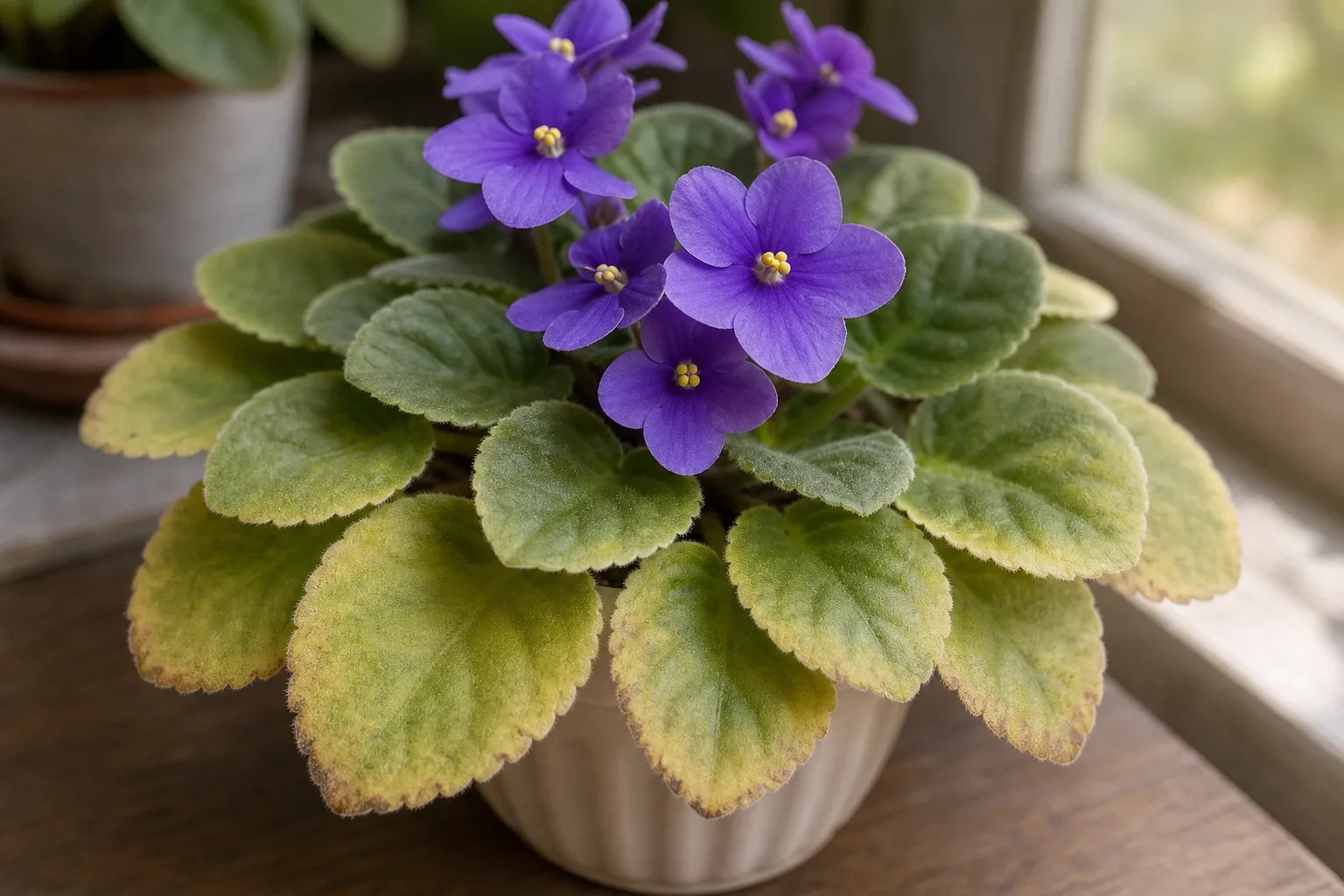
Nitrogen Deficiency on African Violet: Causes, Checks & Fixes
This guide covers nitrogen deficiency on African Violet. See also the general Nitrogen Deficiency guide, watering, and light pages for this plant.
Nitrogen Deficiency on African Violet: Causes, Checks & Fixes
Quick answer
Nitrogen is a mobile nutrient, so deficiency shows first on older leaves, not the crown, a pattern described in Missouri IPM and reflected in African-violet guidance from the African Violet Society of America. For general nitrogen-deficiency mechanics, see our nitrogen deficiency symptom hub. On a violet, that usually means the outer ring fades while the center stays greener.
If the roots are firm, the potting mix is not sour or waterlogged, and you have underfed the plant for a while, nitrogen deficiency is a reasonable working diagnosis. First fix: moisten dry mix with plain room-temperature water, then return to weak routine feeding as described by University of Minnesota Extension. Do not jump to full-strength fertilizer on a stressed plant.
What Nitrogen Deficiency Looks Like on African Violet
The useful clue is leaf age.
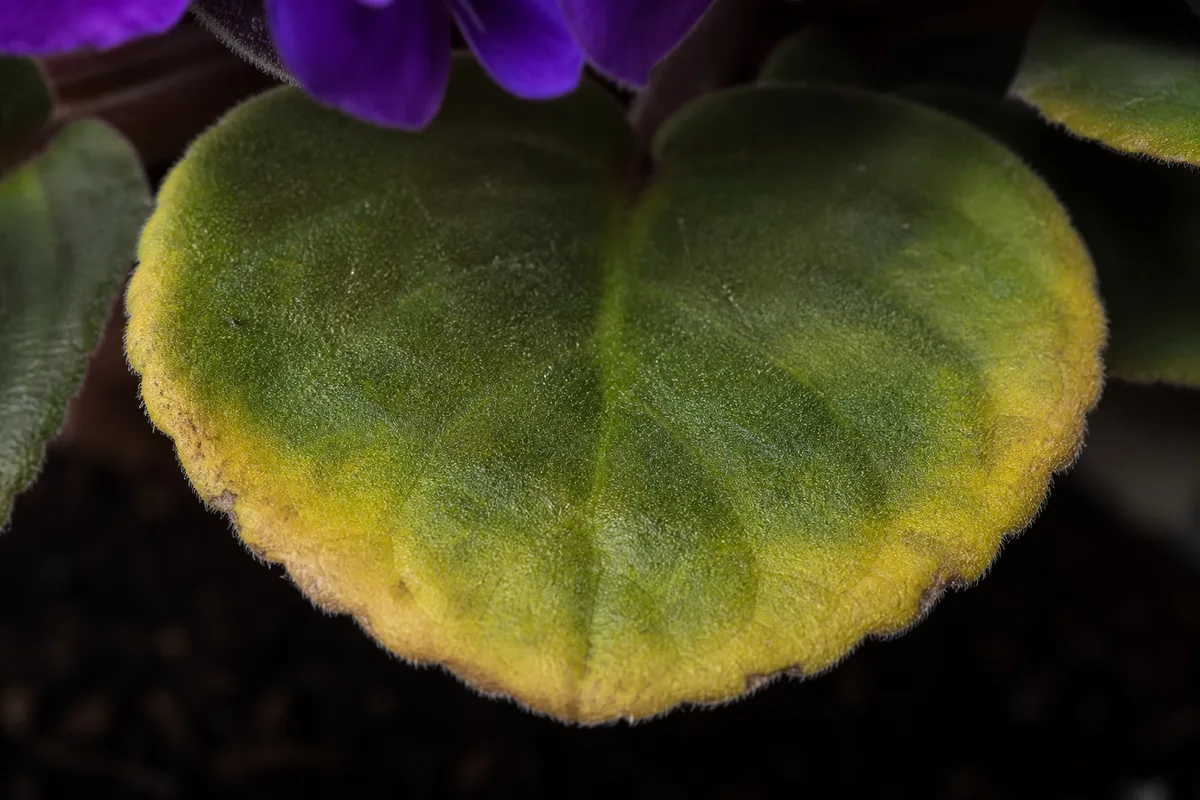
Nitrogen shortage should read as an older-leaf problem first. If the crown is the first place to fail, look elsewhere.
Typical signs include:
- the oldest outer leaves look lighter green or yellow
- fading is more even than the edge-scorch pattern seen with some other nutrient problems
- growth slows and flowering may become less frequent
- the center stays relatively greener unless the problem becomes severe
That differs from iron deficiency on African violet, where the youngest leaves are the first ones to pale, and from root rot, where wet soil and failing roots make the whole plant look unwell.
Why African Violet Runs Short of Nitrogen
In home collections, nitrogen shortage usually comes from one of four patterns:
- long gaps without fertilizer
- repeated plain-water flushing with no return to routine feeding
- old potting mix that no longer buffers nutrients well
- root problems that prevent normal uptake
University of Minnesota Extension recommends weak fertilizer solutions for violets on an ongoing basis, not big occasional doses. UF/IFAS also emphasizes mild feeding and careful salt management in containers. In other words, the plant does best with consistency.
Confirm the Pattern Before You Feed
Check the plant in this order:
- Leaf position: are the oldest leaves worst, while newer center leaves still look better?
- Root condition: are roots firm, not mushy or sour?
- Moisture status: is the pot cycling between moist and dry as it should, or staying wet too long?
- Feeding history: have you skipped fertilizer for weeks or months?
- Mix age: has the violet been in the same mix so long that a repot is overdue?
If outer leaves are fading but the pot is chronically wet, do not treat it as a nutrient page first. Go to overwatering on African violet or damaged roots on African violet.
First Fix: Resume Weak Routine Feeding
If the plant is dry, moisten the mix first with plain water. Then apply a weak balanced fertilizer at the routine low concentration recommended for violets by University of Minnesota Extension. UF/IFAS likewise warns against pushing concentrated fertilizer through stressed container roots.
This is a better first move than:
- doubling the dose to “catch up”
- feeding a bone-dry plant
- stacking fertilizer, repotting, and light changes on the same day
If the mix is very old, crusted, or sour, a repotting guide for African violet may be the higher-value next step after the first careful feed.
When It Is Probably Not Nitrogen Deficiency
| Pattern | More likely issue | Better next page |
|---|---|---|
| Newest leaves yellow first | Iron or other immobile nutrient trouble | Iron deficiency |
| Brown edges and white crust on pot rim | Salt injury or fertilizer burn | Salt build up |
| Wet mix, mushy roots, limp crown | Root failure | Root rot |
| General fading plus weak light | Cultural stress | African violet light guide |
This matters because feeding the wrong problem can make the plant harder to recover.
Recovery Timeline
Nitrogen correction is not measured by perfect old leaves. It is measured by better new growth.
- old outer leaves may stay pale
- new leaves should look healthier if the diagnosis was right
- flowering and overall vigor usually recover more slowly than leaf color
If nothing improves after a reasonable return to routine feeding, revisit the diagnosis. A plant that looks hungry but never responds may need fresh mix, healthier roots, or a broader review through the African Violet problems hub.
What Not to Do
Do not pour full-strength fertilizer into a stressed violet.
Do not assume every yellow outer leaf means hunger; old leaves naturally age, and root trouble is common.
Do not keep flushing forever without returning to any fertilizer at all. Salt management matters, but so does replacing nutrients.
Do not ignore the African violet watering guide while troubleshooting nutrition. Wet roots can mimic underfeeding.
Wick watering and nutrient loss
Violet growers who wick-water or bottom-feed exclusively sometimes flush nutrients from small pots faster than they replace them, especially during active bloom cycles. Periodic top-watering with weak fertilizer after a plain-water flush restores nitrogen without salt crust. If outer leaves fade while the crown stays green and roots are firm, resume routine weak feeding before assuming the mix needs an emergency repot.
Prevention
The prevention plan is routine, not dramatic:
- use weak regular feeding instead of sporadic strong feeding
- flush salts when needed, then resume normal nutrition
- repot often enough that the root zone stays usable
- keep watering and light steady so the plant can use what you feed it
Those same habits also help prevent slow growth on African violet and yellow leaves on African violet.
When to Use This Page vs Other African Violet Guides
- Iron deficiency: use when the center yellows before the outer ring.
- Yellow leaves: use when you are not yet sure this is nutritional.
- Fertilizer burn: use when feeding itself caused new damage.
- Root rot: use when roots are failing and the mix stays wet.
- African Violet problems hub: use when the pattern still feels mixed.