Damaged Roots on African Violet: Causes, Checks & Fixes
Quick answer
Damaged roots on African Violet stop water uptake even when soil feels moist. First, unpot gently and inspect-trim only mushy tissue, repot into fresh airy mix, and use a humidity bag if you removed a large share of the root ball.
Damaged Roots on African Violet: Causes, Checks & Fixes
This guide covers damaged roots on African Violet. See also the general Damaged Roots guide, watering, and light pages for this plant.
Damaged Roots on African Violet: Causes, Checks & Fixes
Quick answer
Damaged roots on African Violet mean the root zone can no longer move water to the rosette, even when the mix feels damp. Fine roots tear during rough African Violet repotting guide, suffocate in compacted mix, or decay after repeated overwatering on African Violet. Above soil you see limp leaves, yellowing on the lowest row, bud drop, and a pot that stays heavy while the plant looks thirsty.
First fix: unpot gently and inspect the root ball before you water again or repot. Once you know whether damage is mechanical, rot, or shock, trim only clearly dead tissue, repot into fresh well-drained African violet mix, and hold fertilizer until new center growth appears.
Why African Violet gets damaged roots
African Violet evolved with shallow, fibrous roots in loose forest debris-not dense, waterlogged potting soil. Those fine roots break easily when you shake off old mix, trim aggressively, or pull the plant out by the crown instead of tipping the pot.
Chronic overwatering is the other major path. Root rot from over watering is one of the most common reasons African violets die When mix stays saturated, roots lose oxygen and the outer root mass dies first. On a rosette plant, that damage often shows on lower leaves while the fuzzy center still looks intact for a week or two.
Other common triggers include old compacted mix that no longer drains, pots without open drainage, repotting into an oversized container, bone-dry potting mix that never absorbed water after repotting, and physical injury from dividing crowns or burying a long neck too deep. Damaged roots plus wet soil can progress to crown rot within one or two watering cycles if you keep adding moisture.
What damaged roots look like on African Violet
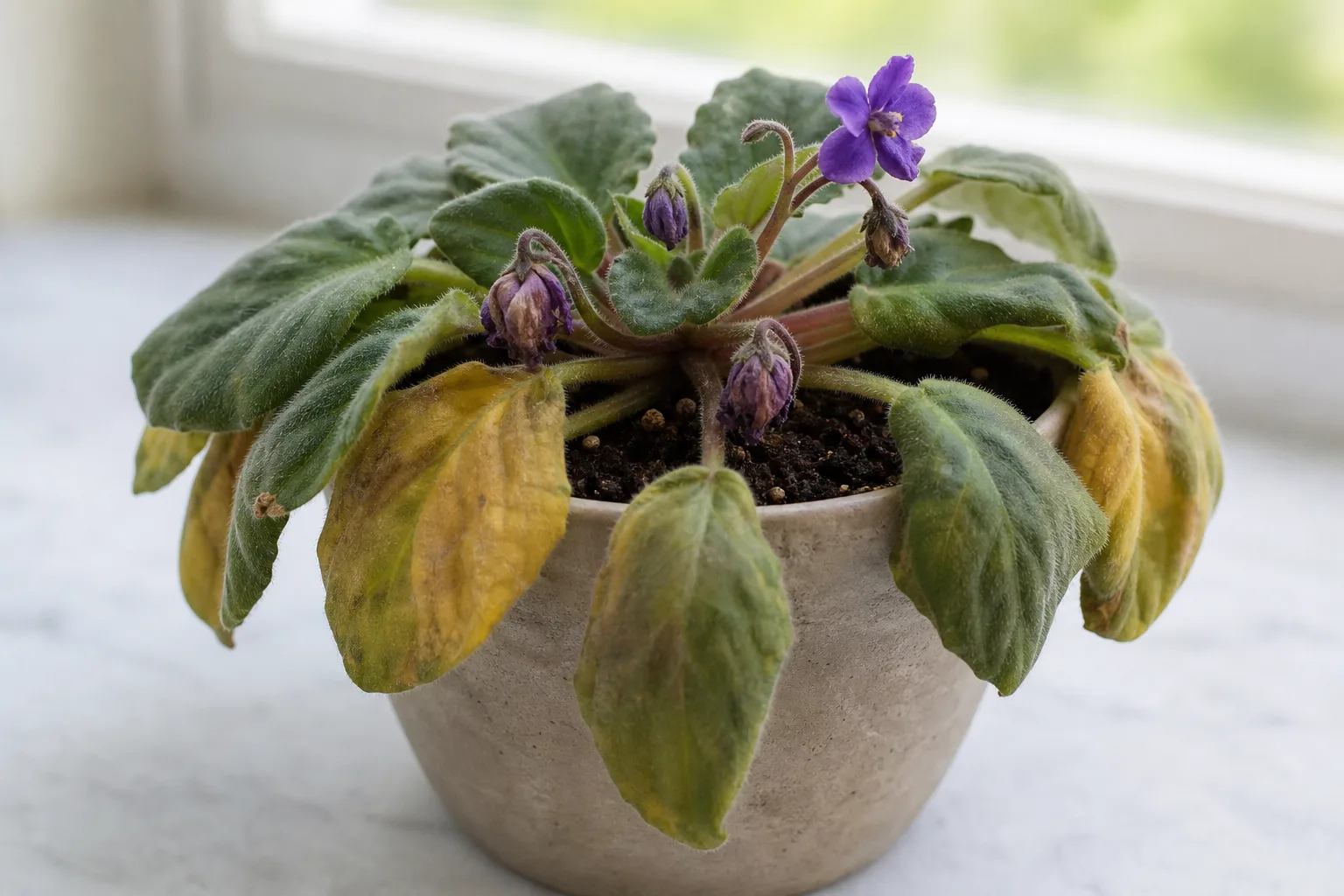
Above soil: leaves wilt and do not perk up after bottom-watering-a pattern extension guides describe as limp and wilted even when soil is moist; yellowing starts on the lowest row and moves inward; buds drop; new center leaves stall or stay small; the plant feels loose in the pot despite moist soil.
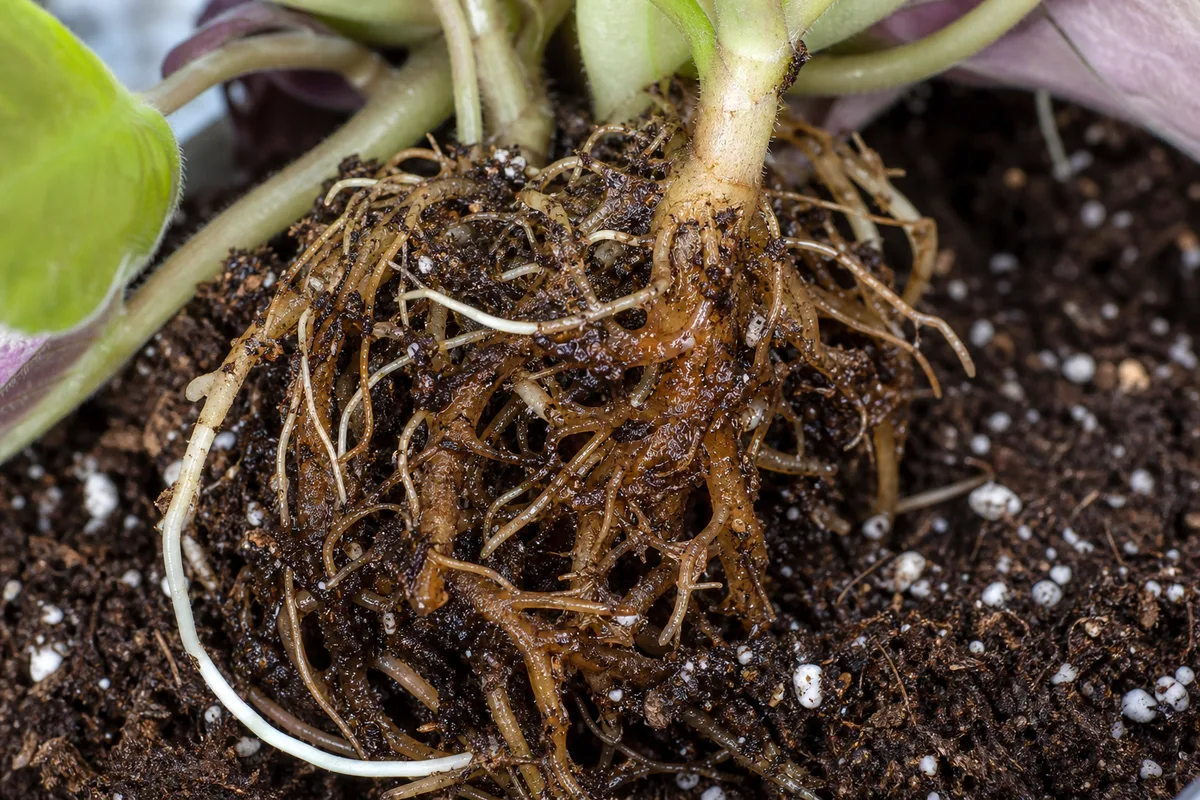
Brown, slimy damaged roots mixed with fewer pale firm roots - the below-soil sign that explains wilt despite moist potting mix.
Below soil: healthy roots are pale, firm, and thread-like. Damaged roots look brown, dark, broken, or slimy. If roots are mushy, brown, and slimy, the plant is not likely to survive without major trimming and care changes A sour or musty smell from the mix confirms decay, not simple transplant stress. A thin outer ring of dead roots differs from total collapse- the first may recover with trimming; the second may need a crown restart.
Compare with underwatering on African Violet: a light pot, dry surface, and firm wilted leaves usually mean drought, not root failure. Compare with cyclamen mites: stunted, brittle center growth with white intact roots points to pests, not rot.
How to confirm the cause
Work through these checks in order:
- Timing - Did wilting follow repotting, division, or a watering change within the last two weeks? Roots shocked when you repot by trimming, tearing, or stripping mix away often wilt even when tissue is not yet rotted.
- Pot weight and smell - Heavy mix plus sour odor means decay. Light mix with wilt suggests drought or repelled dry peat.
- Gentle unpot - Knock the plant from the pot by tipping it; never pull the crown. Note what percentage of roots are firm versus mushy.
- Crown firmness - A soft crown at the soil line means escalate toward crown rot protocols, not simple root trimming.
- Water absorption test - If water runs straight through dry mix without soaking in, roots sit in a dry pocket even though you watered.
If more than half the root mass is mushy and the crown is still firm, treat as severe root loss. If roots are mostly intact but the plant wilted right after repotting, mechanical shock or dry mix is more likely than full rot.
First fix for African Violet
After inspection, make one focused rescue pass:
- Trim only black, brown, or slimy roots with clean scissors. Leave firm pale roots untouched.
- If you removed a large share of the root ball, let the plant rest a few hours so cut surfaces dry slightly.
- Repot into fresh African violet mix with added perlite if your commercial blend feels heavy. Keep the crown at the same depth-leaves and stems above soil, roots buried.
- Use a pot with drainage holes sized to the root mass, not the leaf span.
- Water once lightly from below with room-temperature plain water. Do not fertilize.
- If the plant still wilts heavily after repotting, enclose it in a clear plastic bag to increase humidity for one to four weeks so leaves can hydrate while new roots form. Keep the bag out of direct sun.
Do not bare-root and scrub healthy tissue unless rot is advanced-that breaks the fine roots you are trying to save.
Recovery timeline
Minor mechanical damage may stabilize within one to two weeks once wet cycles stop and the mix holds moisture evenly. Moderate trimming with a humidity tent often needs three to four weeks before you can remove the enclosure. Severe root loss can take six weeks or longer; old yellow leaves will not recover-remove them only after the crown firms up and new growth looks normal.
Signs of improvement: firm new leaves from the center, the plant no longer wilts between bottom-waterings, and roots hold the mix when you gently lift the pot. Signs of decline: crown softening, spreading mushy tissue, or collapse despite a humidity tent-restart the crown above clean green stem or discard the base.
Lookalike symptoms to rule out
- Underwatering - light pot, dry top inch, firm wilted leaves, white brittle roots.
- Transplant shock - wilt within days of repotting with mostly intact pale roots and no sour smell.
- Full root rot - same rescue steps, but survival odds drop when nearly all roots are mushy.
- Exposed neck - bare stem from aging leaves, not broken roots; bury the neck rather than trimming roots.
- Low light - pale leggy growth without sour mix or slimy roots.
What not to do
Do not keep watering because leaves look wilted when soil is already wet-that pushes damaged tissue toward full rot. Do not fertilize stressed roots; moisten dry mix with plain water before fertilizing once recovery starts. Do not repot into dense garden soil, an oversized pot, or a container without drainage. Do not leave the plant sitting in runoff water after bottom-watering.
How to prevent damaged roots next time
Re-pot plants in fresh potting mix once a year without unnecessary root disturbance-slide the root ball out, trim only dead tissue, and return to a properly sized pot. Bottom-water when the top inch of mix is dry, empty saucers after soaking, and use a light well-aerated African violet blend. When repotting, handle the plant by the pot, disturb roots minimally, and use a humidity dome after any hard repot that removes a large share of the root mass or outer leaves. Keep pots no larger than one-third the size of the diameter of the plant so mix does not stay wet longer than the plant can use it.
When to use this page vs other African Violet guides
- African Violet watering guide - Use for routine moisture checks before assuming damaged roots is the main issue.
- African Violet problems hub - Browse all 52 common issues on this species.