Blight on African Violet: Causes, Checks & Fixes
Quick answer
Blight on African Violet is usually Botrytis gray mold-fuzzy growth on flowers, leaves, or the crown. Isolate the plant and cut away every infected leaf and bloom before improving airflow.
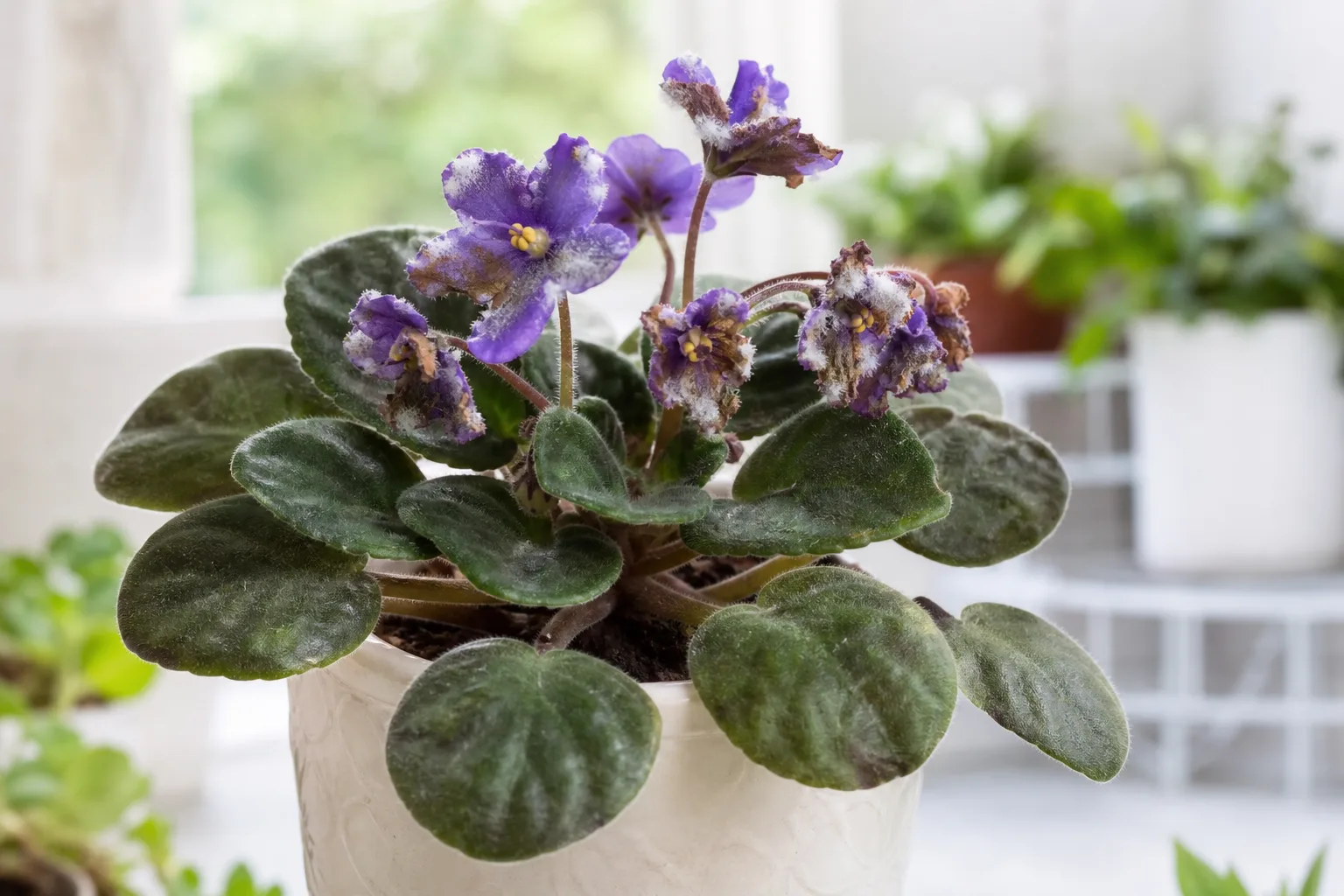
Blight on African Violet: Causes, Checks & Fixes
This guide covers blight on African Violet. See also the general Blight guide, watering, and light pages for this plant.
Blight on African Violet: Causes, Checks & Fixes
Quick answer
Blight on African Violet almost always means Botrytis blight-gray mold caused by the fungus Botrytis cinerea. It attacks spent flowers, bruised petioles, and damp crown tissue, then spreads across the rosette. Your first move is to isolate the plant and remove every leaf, flower, or soft stem showing fuzz or water-soaked decay. Do not wait for a fungicide; cutting out infected tissue and drying the environment stops most home outbreaks.
Why African Violet gets blight
African Violet carries a dense, overlapping rosette of fuzzy leaves that traps humidity between petioles and the pot rim. Botrytis cinerea readily colonizes senescent leaves and flower parts first-fading blooms left in the crown, yellowing lower leaves, or petioles resting on wet soil-then moves into healthy tissue when air is still and humidity stays high.
Crowded grow shelves, bathroom windows above 60% humidity, and pots sitting in standing water create the cool, damp conditions where gray mold thrives. The disease becomes more severe when plants are crowded and growing conditions are humid. African violets are bottom-watered for good reason: wet velvet foliage and cold splashes weaken leaf cells and give the fungus an entry point. Cool drafts below 65°F (18°C) combined with damp leaves accelerate spread, especially in winter when heating dries room air unevenly and plants cluster on humid trays.
What blight looks like on African Violet
Early Botrytis often shows up on flowers before leaves. Infected flowers fade prematurely, develop white or gray spots that cannot be flicked off like dust, or turn brown and mushy within a few days. The center crown may stall while outer leaves still look normal.
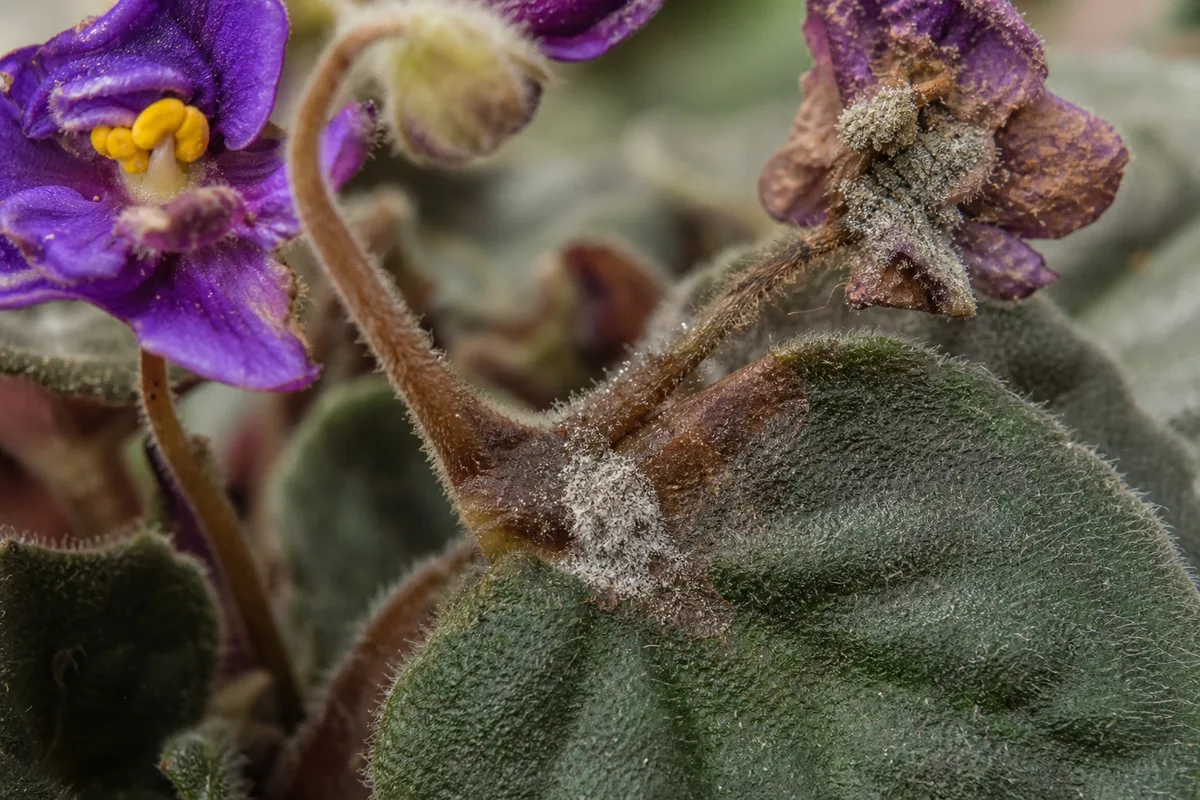
Gray mold (Botrytis cinerea) on fading African violet flowers and water-soaked petiole lesions - clumped irregular fuzzy growth, not a uniform powdery dust.
On foliage, small water-soaked lesions form on damaged petioles and spread to leaf blades. Infected tissue darkens to brown or black and feels soft or jelly-like. Under humid conditions, a grayish fungal growth may cover diseased tissue-clumped and irregular, not a uniform powder. Advanced cases look like the plant is melting from the middle outward: wilting leaves, collapsed flowers, and gray sporulation on stems.
Lookalikes worth ruling out
Powdery mildew leaves a fine white to gray dust that often coats leaf surfaces evenly and can be partially wiped away. Botrytis fuzz is spotty, tied to soft decay, and returns on mushy tissue. Ring spot from irrigation water much colder or warmer than the leaf surface shows pale or bleached rings without mold. Bacterial blight causes dark reddish brown to black rotting on the crown without the characteristic gray fungal growth-though both demand isolation and tissue removal.
How to confirm the cause
Work through these checks before treating:
- Touch the spots. Fuzzy gray-brown growth on soft tissue confirms Botrytis. Dry brown edges with firm leaf tissue suggest mechanical damage or senescence instead.
- Watch the flowers. Spots that grow on petals and cannot be brushed off, plus premature bloom collapse, support gray mold over genetic flower markings.
- Track speed. Water-soaked lesions that enlarge within days fit Botrytis. Static pale rings after a single cold watering point to ring spot.
- Scan the shelf. Similar fuzzy patches on multiple violets in the same humid zone suggest airborne spore spread. A single marked leaf after African Violet repotting guide may be bruising, not blight.
- Smell and feel the crown. Sour mush without surface fuzz may overlap with crown rot from overwatering on African Violet-still isolate, but the priority is drying the rosette, not only trimming flowers.
First fix for African Violet
Isolate the affected plant away from your collection immediately. Using clean, sharp scissors or a blade sterilized with rubbing alcohol, remove every infected leaf, flower, and any soft crown tissue. Cut into firm green stem only; if the center is entirely mushy, discard the plant or salvage outer healthy leaves for propagation rather than risking spores on shared benches.
Bag removed material and throw it in the trash-do not compost indoors. Move the pot to a brighter location with steady 65–75°F (18–24°C) temperatures and lower humidity. Bottom-water from a room-temperature tray and drain fully after 30 minutes so no moisture sits in the saucer or on leaf edges. Space plants and provide ventilation to avoid excessively high humidity between rosettes; a small fan on low helps if your shelf is enclosed.
Hold fertilizer until new center growth looks clean for two weeks. A fungicide labeled for Botrytis on ornamentals can protect remaining healthy tissue on valuable plants, but sanitation and airflow do most of the work in typical home collections.
Recovery timeline
When only a few flowers or one lower leaf show spots, clean new center leaves may appear within two to four weeks after removal and environmental correction. Crown involvement with widespread mush usually means the main plant cannot be saved-propagate from firm outer leaves instead.
Signs you are winning: firm new leaves from the center, no new fuzz on cut surfaces, and stable bloom stalks. Signs the problem is worsening: continued wilting despite dry soil, gray growth reappearing on fresh cuts, or neighboring plants developing matching spots-escalate isolation and consider discarding severely affected specimens to protect the rest of the collection.
What not to do
Do not mist leaves or top-water to “wash off” mold-wet foliage spreads spores across the velvet surface. Do not leave the pot in a water-filled saucer or on a pebble tray that keeps the crown zone humid around the clock. Do not return the plant to a crowded shelf until new growth stays clean for at least two weeks. Do not reuse pruning tools between plants without sterilizing. Do not assume a fungicide alone will save a rosette still full of dead flowers and yellowing leaves-the fungus feeds on that debris.
How to prevent blight next time
Keep humidity in the 40–60% range African violets prefer, with gentle airflow between pots rather than sealed terrarium conditions. Remove fading flowers and yellowing leaves weekly before they rot in the crown. Bottom-water only, using room-temperature water, and let the top inch of mix dry before soaking again.
Space rosettes so outer leaves do not press against wet soil or neighboring pots-infection of petioles may occur where they contact the pot rim. Quarantine new plants for two weeks before mixing them with established violets. In winter, avoid clustering plants on humid capillary mats without ventilation; all diseased tissue should be removed because it serves as a source for new spores.
When to use this page vs other African Violet guides
- African Violet watering guide - Use for routine moisture checks before assuming blight is the main issue.
- African Violet problems hub - Browse all 52 common issues on this species.