Brown Leaves on African Violet: Causes, Checks & Fixes
Quick answer
Switch to bottom-watering with room-temperature water and let the top inch of soil dry before the next soak. If white, yellow, or brown rings appeared on fuzzy leaves within a day of top-watering, that is cold-water or splash injury-not a fungus. On African Violet, wet rosette centers and cold tap water are the most common brown-leaf triggers.
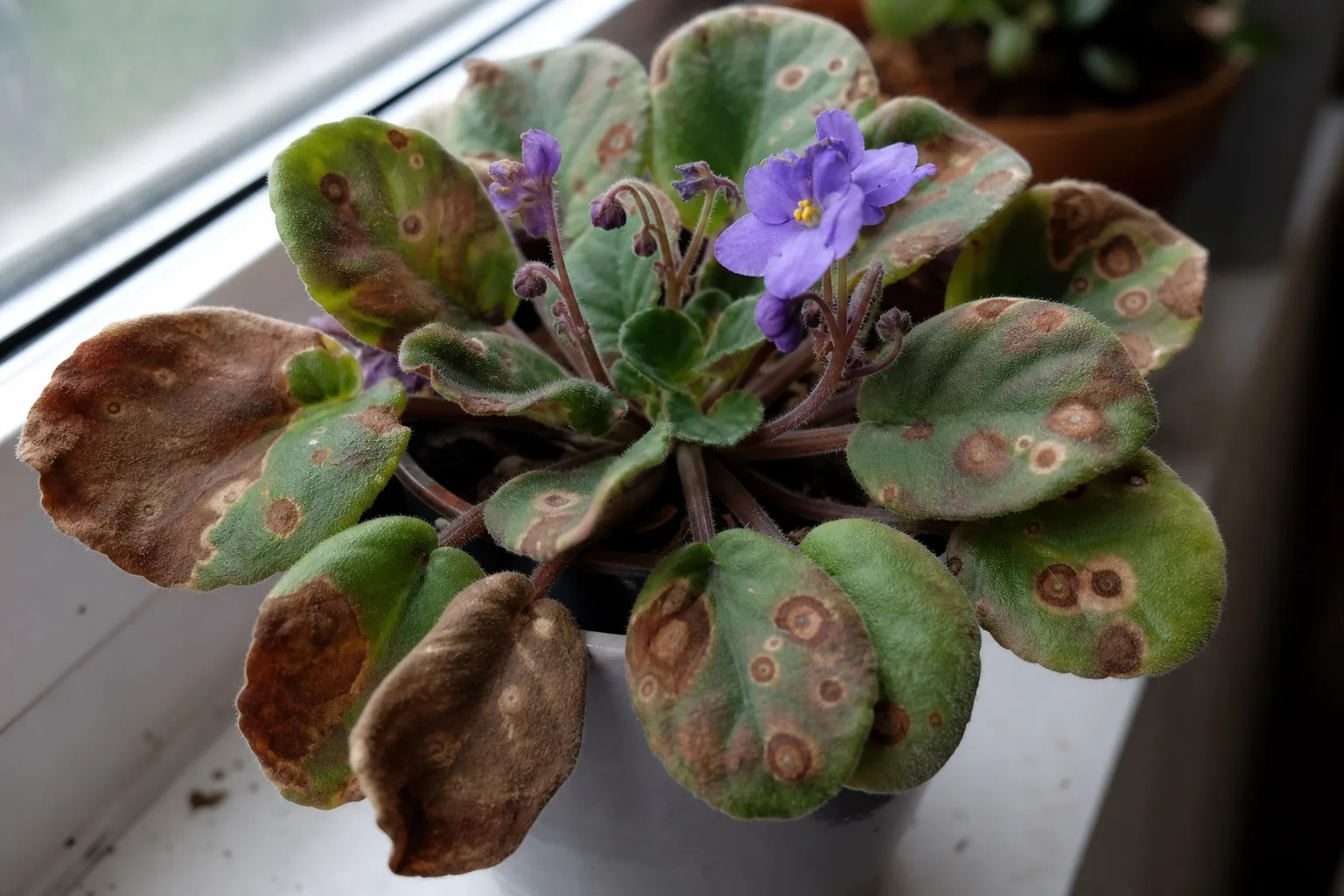
Brown Leaves on African Violet: Causes, Checks & Fixes
This guide covers brown leaves on African Violet. See also the general Brown Leaves guide, watering, and light pages for this plant.
Brown Leaves on African Violet: Causes, Checks & Fixes
Quick answer
Brown leaves on Saintpaulia (African Violet) almost always tie back to moisture on fuzzy foliage, a wet crown, or temperature shock-not random bad luck. Cold water that touches the leaves can cause white blotches and ring patterns within hours. For general brown-leaf mechanics, see our brown leaves symptom hub.
If rings or arcs appeared within a day of top-watering, it is water-contact injury-not disease. That single timing clue saves you from treating a healthy plant with fungicides or repotting on the wrong diagnosis.
Your first move is to stop top-watering and switch to bottom-watering with room-temperature water, letting the top inch of soil dry before soaking again. Before repotting or feeding, check whether the rosette center feels firm or soft. If margins brown after heavy feeding rather than after watering, cross-check brown tips and fertilizer burn before changing your watering rhythm.
Why African Violet gets brown leaves
African Violet leaves are covered in fine hairs that hold water against the surface. Yellow or white ring and line patterns on leaves are caused by contact with cold water-a problem unique to hairy-leaved houseplants that dislike wet crowns. Splashing during top-watering creates the same injury, especially in winter when tap water runs cold from the pipe.
Overwatering keeps the tight rosette center damp. African violets are highly susceptible to crown and root rots when overwatered, and crown rot turns center leaves water-soaked, shriveled, and brown. Root rot starts on lower leaves: they yellow, droop, then turn brown and become mushy as damage moves upward. See overwatering and root rot when soil stays wet and lower leaves fail first.
Temperature swings add a third layer. Temperatures below 50°F darken, wither, and watersoak leaves, while sustained heat above 85°F slows growth and can scorch tissue near windows. Drafty winter windows and HVAC vents that blow cold air overnight are common indoor triggers-see cold damage when browning follows a chill event rather than watering.
Salt and fertilizer buildup from tap water or heavy feeding produces dry brown margins, especially on older leaves whose petioles touch salt-crusted clay pot rims. That margin pattern overlaps with salt build up and brown tips more than with ring-shaped splash marks.
What brown leaves look like on African Violet
Cold-water and splash ring spots
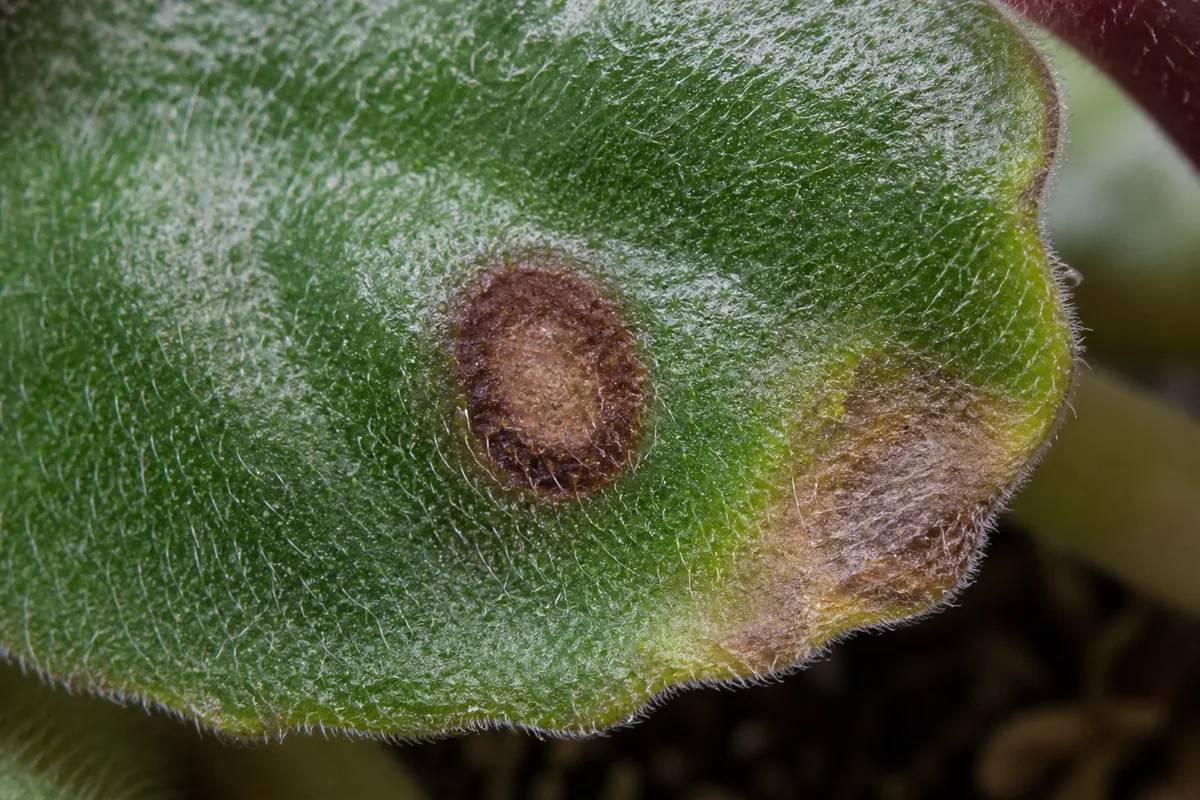
Brown Leaves symptoms on African Violet - compare with healthy tissue on the same plant.
Cold-water and splash injury shows as white, yellow, or brown rings and arcs on upper leaf surfaces-often appearing within a day of watering. Water allowed to sit on leaves causes discolored spots, especially with cold water. On variegated cultivars the rings may look more yellow against pale leaf tissue; on dark-leaf varieties they read as pale halos. The pattern follows where water touched the hairs, not the leaf margin.
Crown rot (center-first)
Crown rot begins at the center: young leaves turn dull brown, feel soft, and may smell sour while outer leaves still look normal. The crown appears mushy, translucent brown, or black when Phytophthora crown rot is active. Crown rot usually leads to plant death if the stem tissue collapses-treat early crown softness as urgent, not cosmetic.
Root rot (lower-leaf progression)
Root rot browning starts on the lowest row, progresses upward, and feels mushy rather than crispy. Soil often smells sour and stays wet between waterings.
Salt burn and crispy edges
Salt burn and underwatering both produce crisp brown edges, but salt damage usually hits older lower leaves first and may come with white crust on the pot rim. Underwatering browning tends to affect leaf tips and edges on multiple rows when the mix has been dry for weeks.
Chill and heat injury
Direct afternoon sun bleaches leaves pale green-yellow before margins brown. Sudden browning after a cold night near a drafty window indicates chill injury-watersoaked darkening rather than ring spots.
How to confirm the cause
Match the browning pattern to recent care before treating.
- Rings after watering - Note whether you top-watered or used cold tap water. Rings that appear within 24 hours of watering confirm water-contact injury, not disease.
- Center-first browning - Gently part the rosette with dry fingers. Soft, translucent tissue at the heart with wet surface soil points to crown rot. Allow the top of the soil to dry completely between watering to prevent crown rot.
- Lower-leaf browning - Yellow lower leaves that turn brown and mushy while soil stays wet suggest root rot. Unpot and inspect root color and firmness.
- Crispy edges only - White crust on the pot rim or heavy recent fertilizing supports salt burn. Flush test: run lukewarm water through the pot until it drains freely.
- Sudden browning after a cold night - Leaves near a drafty window that darken and watersoak overnight indicate chill injury, not rot.
If only one or two bottom leaves brown while new center growth stays firm, you may be seeing normal aging rather than active stress.
First fix for African Violet
Stop top-watering immediately. Water from below by placing the pot in a tray and removing it once the surface is moist, using only room-temperature water. Allow the top inch of the soil to dry before sub-irrigating again-this single rhythm change resolves many brown-leaf cases tied to splash injury or chronic wetness. Full watering technique is in the African violet watering guide.
If the crown feels soft, stop all watering, remove mushy leaves with a sterile blade, and let the root zone dry for several days before resuming lighter bottom-soaks. In advanced crown rot, salvage may require removing dead tissue, repotting in fresh sterilized mix, and bottom-watering only-but when the main stem collapses, leaf propagation from healthy outer leaves is often the practical rescue. Do not propagate from leaves if you suspect cyclamen mites-the tight, brittle center in the lookalike section below can spread mites to new starts.
For salt-burned edges, flush the pot with plain lukewarm water until it runs from drainage holes, then discard runoff. Do not fertilize until browning stops spreading and new growth looks clean.
Wick and capillary mat watering
African violets can also be watered through a wick connecting the soil to a water reservoir, which keeps moisture even without splashing the crown. Wick and mat systems work well for fuzzy-leaved violets because foliage stays dry-but periodic top-leaching with room-temperature water is still recommended to prevent salt accumulation. Do not leave pots submerged in full saucers for long periods; remove excess water once the surface is moist.
Recovery timeline
Cold-water ring spots are permanent on affected leaves but new growth stays clean once watering changes-expect firm center leaves within two to three weeks. Mild crown stress may stabilize after one to two dry cycles if some firm tissue remains. Advanced crown rot often kills the main stem; judge recovery by whether new center leaves firm up within three weeks, or start leaf propagation from healthy outer leaves if the crown collapses.
Root rot recovery takes longer: trimmed plants may need four to six weeks before new leaves emerge without brown margins. Crispy salt-burned edges on old leaves will not re-green, but flushing prevents new damage on fresh growth.
What not to do
Do not splash cold tap water on fuzzy leaves to rinse dust or pests. Use only warm water because cold water causes spots on the leaves. Do not keep watering because leaves look wilted when soil is already wet-that deepens crown and root rot. Do not fertilize stressed plants hoping to push green growth; excess salts worsen edge burn. Do not leave the pot sitting in a full saucer overnight.
Lookalike symptoms
- Botrytis blight - Fuzzy gray mold on flowers or leaf edges; overlaps with wet-crown conditions but shows visible mold, not ring spots.
- Cyclamen mites - Crinkled tight crowns are a possible sign of incurable cyclamen mites on African violets; center looks stunted and brittle with no mushy tissue or sour smell. Do not propagate from affected plants-mites spread easily among violets.
- Normal lower-leaf aging - One or two bottom leaves brown and drop while the crown stays firm and soil dries normally between waterings.
- Light bleaching - Upper leaves turn pale yellow-green before edges brown; fix placement, not watering frequency.
- Underwatering - Dry, lightweight pot with crispy brown tips on multiple rows; rehydrate from below rather than flooding the crown.
How to prevent brown leaves next time
Bottom-water only with room-temperature water. Keep temperatures between 65 and 80°F and humidity at 40–60%. Flush salts every fourth watering by running plain water through the pot. Use a light African violet mix with open drainage, keep plants slightly root-bound in appropriately sized pots, and never let saucers hold standing water for more than an hour after soaking.
If you wick-water, schedule a monthly top-flush per the watering guide so salts do not mimic brown margins on lower leaves.
Related African Violet guides
- Brown tips - margin browning from salt, feed, or dry air overlap
- Overwatering - wet mix and crown safety before rot spreads
- Root rot - lower-leaf mushy progression and root rescue
- Cold damage - chill and draft injury after cold nights
- Salt build up - white crust and edge burn without ring spots
- African violet watering - bottom-water, wick, and flush rhythm
- African violet propagation - leaf starts when the crown cannot recover
Related tool
Use the Plant Problem Diagnosis Tool to narrow causes for brown leaves on this plant before changing multiple variables at once.