Salt Build Up on African Violet: Causes, Checks & Fixes
Quick answer
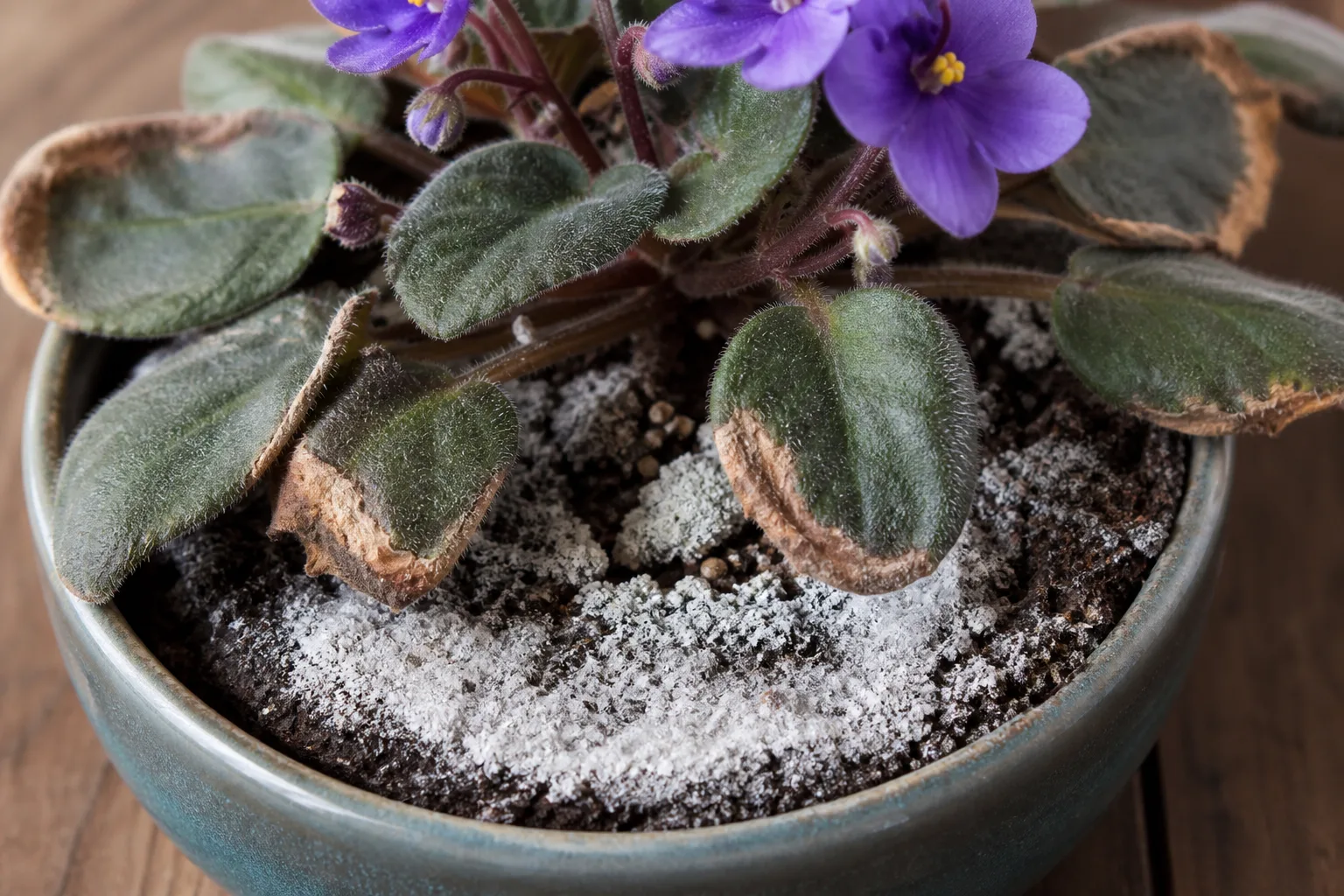
Salt build up on African Violet shows as white crust on the pot rim and soil surface, plus brown crispy margins on leaves resting against the rim. Stop fertilizing, top-leach with room-temperature water until it drains freely, and slip a foil collar on crusted rims so petioles no longer touch salts.
Salt Build Up on African Violet: Causes, Checks & Fixes
This guide covers salt build-up on African Violet. See also the general Salt Build-up guide, watering, and light pages for this plant.
Salt Build Up on African Violet: Causes, Checks & Fixes
Quick answer
White crust on the inner pot rim and brown crispy edges on lower leaves that rest against it usually mean salt build up on your African Violet-not mold and not necessarily a single overfeed event. Saintpaulia has shallow fibrous roots and a tight rosette, so minerals from tap water and fertilizer concentrate exactly where petioles touch the pot edge when you water only from the bottom.
First step: stop all fertilizer and top-leach with plain room-temperature water until it runs freely from drainage holes. Discard runoff. If petioles sit on a crusted rim, add a foil collar before the next watering so leaves no longer contact salts.
What salt build up looks like on African Violet
Salt injury on African Violet overview is visible on the pot and on leaf margins before the whole rosette fails:
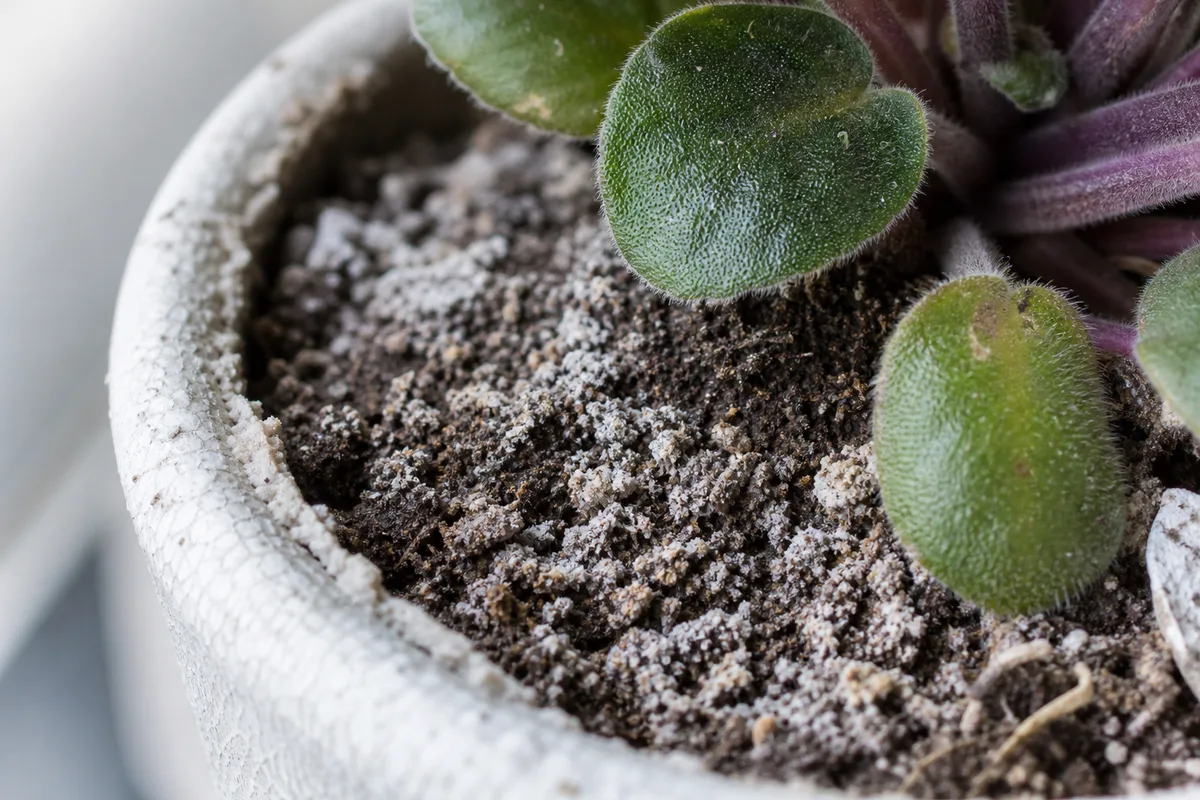
Salt Build-up symptoms on African Violet - compare with healthy tissue on the same plant.
- White or gray crystalline crust on the inner pot rim, soil surface, or wick reservoir-often the first sign growers notice when lifting outer leaves.
- Brown, dry margins on lower leaves that drape over or touch the pot edge; the damage follows contact lines, not random spots across the crown.
- Orange-brown sunken lesions on petioles where stems rest against a salt-lined clay rim-petiole rot aggravated by fertilizer salts on porous pots.
- Stunted or pale new leaves and smaller blooms when salt concentration blocks water uptake at fine roots.
- Wilting with moist soil in advanced cases-roots cannot move water when soluble salts compete in the root zone.
- Orange fertilizer crystals in crown hairs on heavily fed plants-overlap with fertilizer burn when feeding was recent and aggressive.
Burned tissue does not green up again. Judge recovery by new center leaves opening clean and crust staying off the rim after leaching.
Why African Violet gets salt build up
Saintpaulia is fed lightly and often in small pots, yet very sensitive to soluble salt accumulation that damages roots. Salt build up here is usually gradual-months of minerals stacking in a shallow root zone-not one spilled dose.
Bottom-watering and wick systems
Many growers bottom-water to keep fuzzy leaves dry, and wick reservoirs keep mix evenly moist. Both work well for moisture but do not leach salts that accumulate in the soil. Water rises, evaporates at the surface and rim, and leaves minerals behind. On a tight rosette, the lowest leaves rest exactly on that salt ring.
Tap water minerals vs. fertilizer residue
Hard tap water deposits calcium and other dissolved minerals even if you rarely feed. Layering one-third to one-half recommended fertilizer strength on top of mineral-heavy water accelerates crust formation. Fertilizer salts and water minerals look the same as white grit on the rim-you treat both with leaching and reduced feeding, but prevention differs: softer water or periodic top-flush for hard tap; dilution and feed pauses for overfeeding.
Clay vs. plastic pots: Porous clay wicks salts to the rim faster than glazed plastic, which makes foil collars and occasional heavy top watering especially useful on unglazed containers.
How to confirm the cause
Work through these checks before African Violet repotting guide or adding supplements:
- Scrape test - Gently scrape crust from the rim. Hard, gritty crystals that return after the mix dries point to salts; soft fuzzy growth that spreads in damp conditions is mold (see mold on soil).
- Contact pattern - Margin burn on leaves touching the rim fits salt buildup. Uniform crown tightness with rusty inner leaves after a recent heavy feed fits fertilizer burn more than rim crust alone.
- Watering history - Exclusive bottom-watering or wicks without top-flush for months raises salt risk on this species.
- Moisture vs. wilt - Limp leaves with wet mix and visible crust suggest salt-blocked uptake; crisp leaves with a light dry pot suggest underwatering on African Violet.
- Cold-water spots - Ring-like tan marks on wet foliage from cold splashes are separate from gritty rim crust and margin burn tied to the pot edge.
If crust is absent, outer leaves are pale, and you have not fed in months, check light and deficiency before flushing.
Symptom lookalike comparison
| What you see | More likely cause | Quick check |
|---|---|---|
| White crust on rim + margin burn on contact leaves | Salt build up | Gritty crystals scrape off dry; returns if not leached |
| Tight rusty center after recent full-strength feed | Fertilizer burn | Crown injury dominates; see dedicated guide |
| Soft cottony growth on wet soil surface | Mold / saprophytic fungus | Fuzzy, not crystalline; no gritty rim ring |
| Orange-brown sunken petiole at clay rim only | Petiole rot from rim salts | Lesion exactly where stem touches crusted edge |
| Ring-like tan spots on wet leaves | Cold water on foliage | Spots follow splash pattern, not pot contact |
| Mushy crown, sour smell | Crown rot | Center stem soft; not just crusty and dry |
First fix for African Violet
Stop all fertilizer and top-leach the pot with plain room-temperature water.
Pour slowly through the top until water runs freely from drainage holes-roughly one full pot volume, or run a steady stream for about twenty minutes on standard pots when crust is thick. Wait twenty minutes, then repeat once. Discard all runoff; never let the saucer re-wick salty water back into the mix.
While the pot drains:
- Brush loose crust off the soil surface with a soft brush-avoid wetting the crown.
- If petioles rest on a salt-lined rim, slip an aluminum foil collar around the inner pot edge so leaves no longer touch gritty deposits.
Do not repot on day one unless roots are already mushy or two flushes fail to stop decline.
Step-by-step recovery
After the initial leach, follow these steps in order-not all on the same day:
- Move the pot to a sink where water can drain freely; keep room temperature stable.
- Top-leach as above until runoff is clear; empty saucers within thirty minutes.
- Install or refresh the foil collar on any crusted clay or plastic rim before returning the plant to its shelf.
- Wait one to two weeks before feeding-let new center leaves start without added minerals.
- Resume at one-quarter to half label strength with African violet–labeled fertilizer only when the top inch of mix is already moist from plain water.
- Top-flush monthly with plain water even during normal care-especially if you bottom-water or use wicks.
- Remove fully dead leaves only with tweezers; leave partly green tissue to photosynthesize.
- Repot if crust returns within two weeks or wilting persists after two leaches-use fresh sterile mix in a clean pot the same size, without fertilizer for one month.
Recovery timeline
Mild rim crust with firm roots often shows clean new center leaves within two to four weeks after leaching and a feeding pause. Old margin burn on outer leaves remains visible; the rosette looks uneven until new layers cover the damage.
Crust on the pot exterior may persist until you scrub the container or repot-focus on whether new crust stops forming and wilting ends while mix stays appropriately moist.
Flowering may pause during recovery. That is normal; do not increase feed to force blooms.
If wilting continues despite flushing, inspect roots for mushy brown tissue-severe salt damage can overlap with root rot, which needs trimmed roots and fresh mix, not repeated leaching alone.
What not to do
Do not fertilize a wilted plant hoping to “green it up”-extra salts worsen root burn. Do not leave the pot sitting in leach runoff; minerals redeposit when drainage is blocked or saucers stay full. Do not mist the crown to wash off crust; wet tissue invites rot on this plant. Do not bottom-water exclusively without occasional top leaching to force salts out. Do not repot and fertilize the same week.
How to prevent salt build up next time
Water occasionally from the top with warm water to wash out salts even if you usually bottom-water-Illinois Extension recommends a good top watering every few months to leach soluble salts. Many growers use one-third to one-half the recommended fertilizer amount and flush monthly with plain water when feeding with each watering.
Keep foil collars on clay pots prone to rim crust. Empty saucers promptly. Refresh mix on your annual repot schedule to reset mineral levels before buildup becomes chronic.
When to worry
Escalate if:
- Wilting persists after two thorough top-leaches and a two-week feed pause-inspect roots and consider repotting into fresh mix.
- Petiole lesions spread up stems despite a foil collar-crust may be deep in the root ball, not just on the rim.
- Center leaves collapse or turn jelly-soft-may be crown rot overlapping salt stress; do not keep leaching a rotting crown.
- Crust returns within days after flushing-soil may be saturated with salts; repot rather than repeat light leaches.
For chronic salt injury after repotting, contact your local extension office or an African Violet Society of America chapter grower for cultivar-specific advice.
Scope note: salt build up vs. fertilizer burn
This page covers gradual mineral crust from bottom-watering, tap water, and routine feeding without leaching-especially white rim deposits and margin burn on contact leaves. If your main problem is a tight rusty center after a heavy feed, orange crystals in crown hairs, or aggressive recent fertilizing, start with the fertilizer burn guide for crown-focused recovery. Both pages share the same first fix-stop feeding and top-flush-but prevention and symptom patterns differ.
When to use this page vs other African Violet guides
- African Violet watering guide - Use for routine moisture checks before assuming salt build-up is the main issue.
- African Violet problems hub - Browse all 52 common issues on this species.
- Overfertilization on African Violet - Different entry point when symptoms overlap with salt build-up.
- Fertilizer Burn on African Violet - Different entry point when symptoms overlap with salt build-up.
- Brown Tips on African Violet - Different entry point when symptoms overlap with salt build-up.