Brown Tips on African Violet: Causes, Checks & Fixes
Quick answer
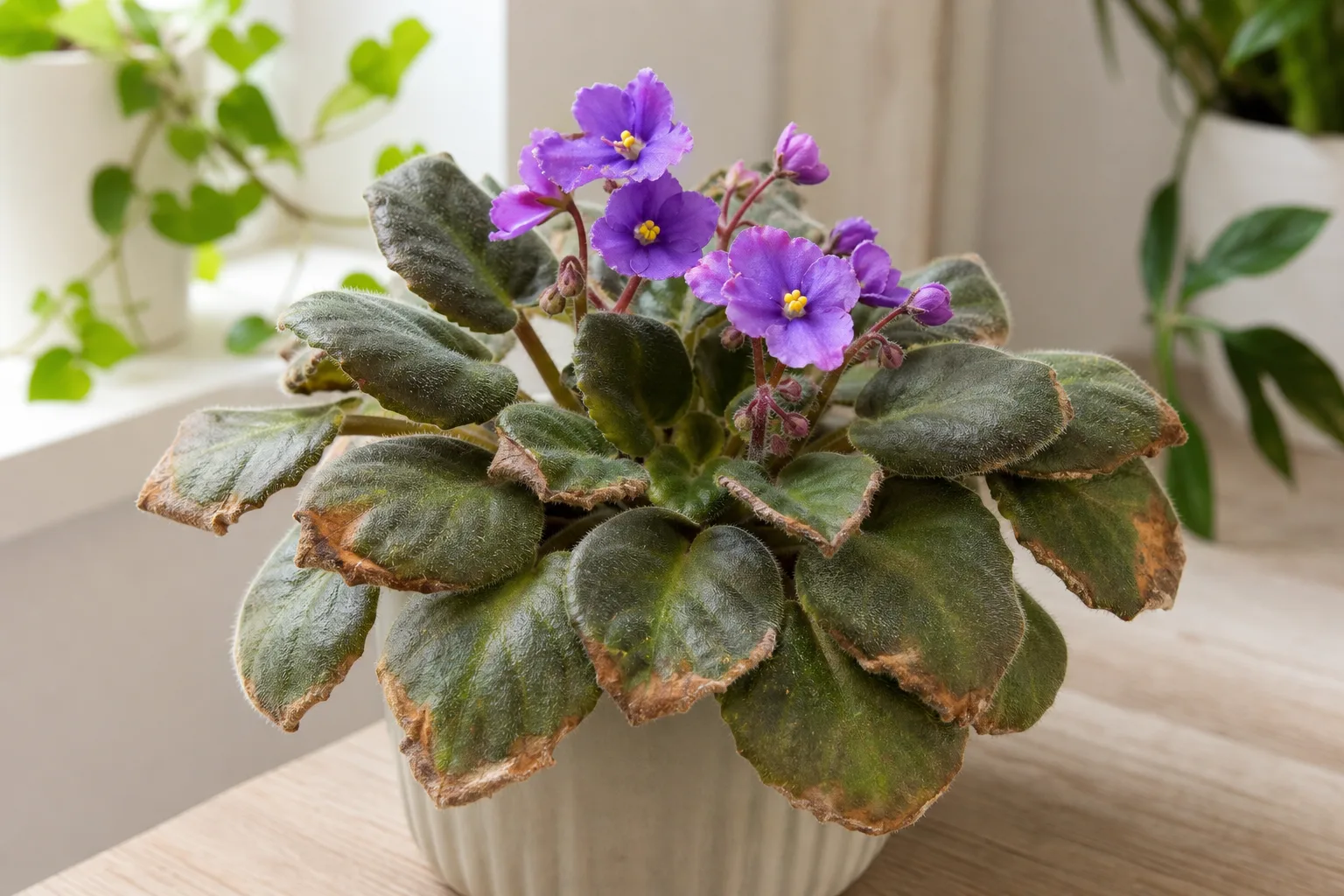
Brown tips on African Violet usually mean salt buildup at the leaf margins, dry air below 40% humidity, or uneven watering-not disease. First step: flush the soil with plain room-temperature water until it drains freely, then check humidity and watering rhythm.
Brown Tips on African Violet: Causes, Checks & Fixes
This guide covers brown tips on African Violet. See also the general Brown Tips guide, watering, and light pages for this plant.
Brown Tips on African Violet: Causes, Checks & Fixes
Quick answer
Brown tips on African Violet are almost always a care-environment problem, not a fungal disease. The fuzzy leaf margins dry out first when salts concentrate in a small pot, winter air drops below comfortable humidity, or the mix swings between bone-dry and saturated. First step: flush the soil with plain room-temperature water from the top until it runs freely from the drainage hole, discard all runoff, and pause fertilizer for four to six weeks. After that, correct humidity and watering before trimming old damage.
What brown tips look like on African Violet
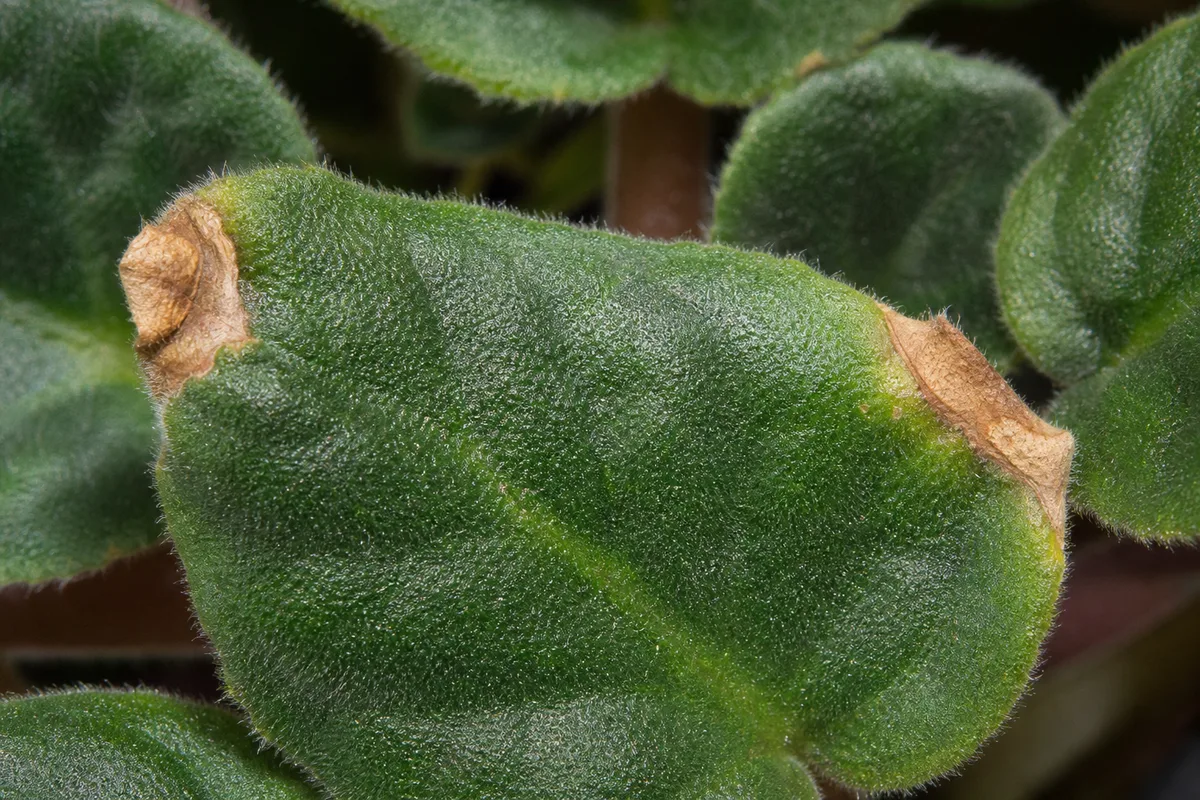
Dry, crispy tan-to-brown tips on velvety African violet leaves - sharp-edged margin burn with green centers intact, typical of salt buildup, low humidity, or underwatering stress.
On African Violet, tip burn shows as dry, crispy tan-to-brown tissue at the leaf apex or along the outer margin. The damage is usually sharp-edged and papery-not soft, wet, or spreading like crown rot. Patterns help separate causes:
- Salt or fertilizer injury - Brown tips on older lower leaves, often paired with white or gray crust on the soil surface or inner pot rim. Leaves that drape over a clay pot edge may brown only where they touch the rim.
- Low humidity on African Violet - Even brown margins across several leaves, worse on the side facing a heating vent or dry winter window. The leaf center stays green while only the far edges desiccate.
- underwatering on African Violet - Tips curl slightly downward; the pot feels very light and the top inch of mix is dusty-dry. Outer leaves brown first while the tight center still looks firm.
- Not brown tips - Pale ring-shaped spots from cold water on fuzzy leaves are ring spot injury, not tip necrosis. Orange-brown sunken patches where a petiole touches the pot rim are petiole rot from salt accumulation on the rim-a related but distinct margin problem.
New center leaves with clean edges while only old outer tips are brown usually mean the issue is aging plus mild stress, not an active crisis.
Why African Violet gets brown tips
African Violets grow in small pots with fine, shallow roots and velvety leaves that lose moisture quickly at the margins. That combination makes tip tissue the first place stress appears.
Salt accumulation is the most common indoor cause. Bottom-watering and wick systems keep the rosette dry-which is correct-but periodic leaching from the top is necessary to prevent salt accumulation. Tap water and diluted fertilizer leave salts behind as water evaporates. Over time, salts concentrate at the soil surface and pot rim where lower leaves rest. Root injury from excess soluble salts reduces water delivery to the farthest leaf tissue: the tips.
Low humidity compounds the problem. African Violets prefer humidity at 40 to 60 percent. Heated winter rooms often run near 30–35%, which increases transpiration through fuzzy foliage faster than roots can replace moisture at the leaf edges.
Underwatering produces a similar crispy margin when the top inch of mix stays dry too long between drinks. Small violet pots dry quickly; a missed watering cycle desiccates outer leaf edges while the crown still feels firm.
Over-fertilizing concentrates salts faster and can show first on young inner leaves as tight, rusty-colored centers-not only tips. Heavy feeding into dry mix is especially risky because fine violet roots burn easily.
Physical contact matters too: petioles resting on a salt-crusted clay rim develop brown, sunken contact spots that can look like spreading tip burn from one side of the plant.
How to confirm the cause
Work through these checks in order before changing multiple variables at once:
- Pot rim and soil surface - White or gray crystalline crust confirms salt buildup. Wipe the rim with a damp cloth; if grit returns within a week, minerals are still concentrating.
- Humidity - A simple gauge near the plant reading below 40% supports dry-air tip burn, especially in winter.
- Pot weight and soil moisture - A very light pot with dusty-dry top inch and crispy tips suggests underwatering. A heavy, wet pot with brown tips on new growth points to salt or fertilizer injury.
- Leaf position - One-sided browning where leaves touch the pot rim or hot window glass is contact or environmental, not random disease.
- Recent feeding - Tips that appeared within days of a heavy fertilizer dose or first use of full-strength feed strongly implicate salts.
- Watering method - Exclusive bottom-watering without occasional top flushing raises salt risk on African Violet.
Confirmed salt diagnosis - Visible crust plus margin burn on lower or rim-contact leaves. Suspected dry air - Even margins, low humidity, stable watering, no crust. Suspected underwatering - Light pot, dry surface, no crust, tips on oldest leaves only.
First fix for African Violet
Flush the soil with plain room-temperature water from the top until water runs freely from the drainage hole-about one to two pot volumes. Let it drain completely and discard saucer runoff so salts are not reabsorbed. Repeat once after twenty minutes if crust was heavy.
This single step addresses the most common cause-soluble salt buildup-without stacking African Violet repotting guide, pruning, and feeding changes on the same day. Do not fertilize during the flush or for four to six weeks afterward.
After flushing:
- Resume bottom-watering only when the top inch of mix feels dry.
- Raise humidity toward 40–60% with a pebble tray or by grouping plants-never mist fuzzy leaves.
- Move leaves off salty pot rims; cover the rim with foil or switch to plastic if petioles keep touching crust.
If there is no crust and the pot is very light, skip the second flush and give one thorough bottom-water instead-underwatering, not salts, is the active problem.
Recovery timeline
Salt-flushed plants typically produce clean new leaves within two to four weeks. Existing brown tips will not green up; trim only the most damaged outer leaves if they spoil the rosette shape, cutting just into the brown tissue and leaving a thin brown margin to avoid wounding healthy green cells.
Humidity corrections show on the next flush of growth within one to two weeks. Underwatering recovery is faster-often within days of a proper soak-if roots are still white and firm.
Improvement signs - New center leaves open without tip burn, crust stops reforming on the rim, and outer damage does not spread inward. Worsening signs - Brown tips on brand-new inner leaves, tight rusty crown, wilting on wet mix, or crust returning within days after flushing.
Lookalike symptoms to rule out
- Ring spot - Pale tan rings or spots from cold water on leaves, not isolated tip necrosis. Fix watering temperature and keep foliage dry.
- Petiole rot - Orange-brown sunken patches where a petiole touches a salty pot edge; leaf may collapse at that point.
- Crown rot - Soft, water-soaked center tissue on wet soil; different from dry crispy tips.
- Spider mites - Fine stippling and webbing on leaf undersides; tips alone are rarely the only sign.
- Sunburn - Bleached or yellow stiff leaves from too much direct light, often whole-leaf not just margins.
What not to do
Do not apply more fertilizer to “fix” brown tips-that worsens salt burn. Do not mist leaves; wet fuzzy foliage invites fungal spotting. Do not let the pot reabsorb salty drainage from the saucer after flushing. Do not repot into a much larger container on day one; African Violets bloom best slightly root-bound in a light mix. Do not trim deep into healthy green tissue trying to remove old tips.
How to prevent brown tips next time
Bottom-water with room-temperature water when the top inch of soil is dry, but top-flush every fourth watering to leach minerals through the drainage hole. Fertilize lightly at one-quarter of the recommended amount only during active growth, using an African violet formula. Keep humidity at 40–60% and away from heating vents. Wipe salt crust from pot rims promptly or use plastic pots so leaves do not rest on mineral deposits. Moisten dry mix with plain water before any fertilizer application.
When to use this page vs other African Violet guides
- African Violet watering guide - Use for routine moisture checks before assuming brown tips is the main issue.
- African Violet problems hub - Browse all 52 common issues on this species.
- Low Humidity on African Violet - Different entry point when symptoms overlap with brown tips.
- Underwatering on African Violet - Different entry point when symptoms overlap with brown tips.
- Overwatering on African Violet - Different entry point when symptoms overlap with brown tips.