Yellow Leaves on African Violet: Causes, Checks & Fixes
Quick answer
Yellow leaves on African Violet usually start on the lowest row from normal aging, overwatering, or light stress. First step: feel the soil surface-if it stays wet, stop watering until the top inch dries while you check whether yellowing is spreading upward.
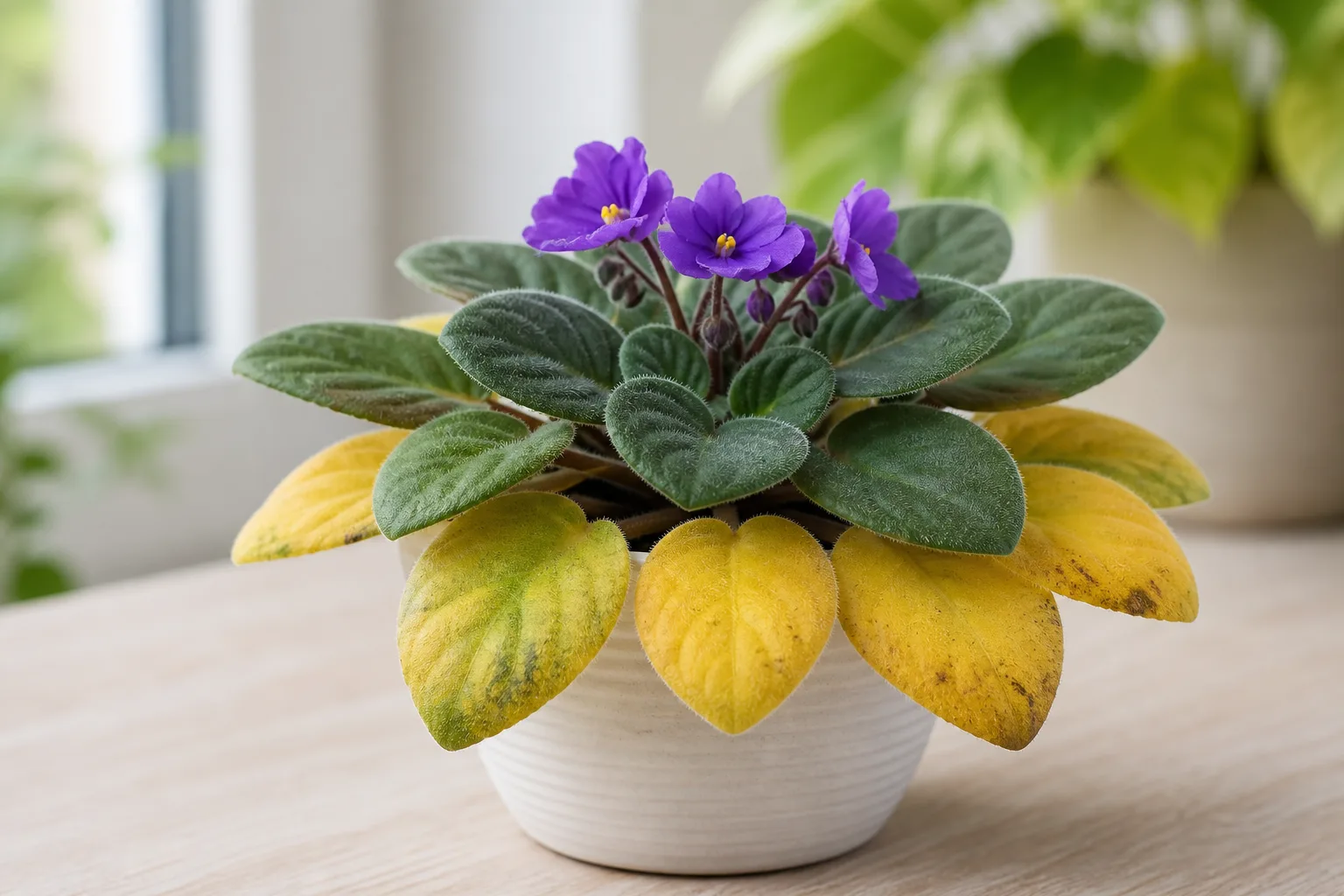
Yellow Leaves on African Violet: Causes, Checks & Fixes
This guide covers yellow leaves on African Violet. See also the general Yellow Leaves guide, watering, and light pages for this plant.
Yellow Leaves on African Violet: Causes, Checks & Fixes
Quick answer
Yellow leaves on African Violet are rarely one disease-they are a pattern you read from the rosette. A single bottom leaf fading over weeks is often normal turnover as the plant grows outward. Yellow, droopy lower leaves on soil that stays wet point to root rot on African Violet from overwatering on African Violet. Pale yellow-green upper leaves usually mean too much light; dark thin leaves that later yellow suggest too little light.
First step: touch the soil surface. If it feels wet or cool and has stayed that way since the last watering, stop watering until the top inch dries. That pause alone prevents many cases from advancing while you confirm whether the problem is moisture, light, or aging.
What yellow leaves look like on African Violet
African violets grow as a flat rosette of fuzzy leaves. Where yellowing appears-and what the leaf feels like-matters more than the color alone.
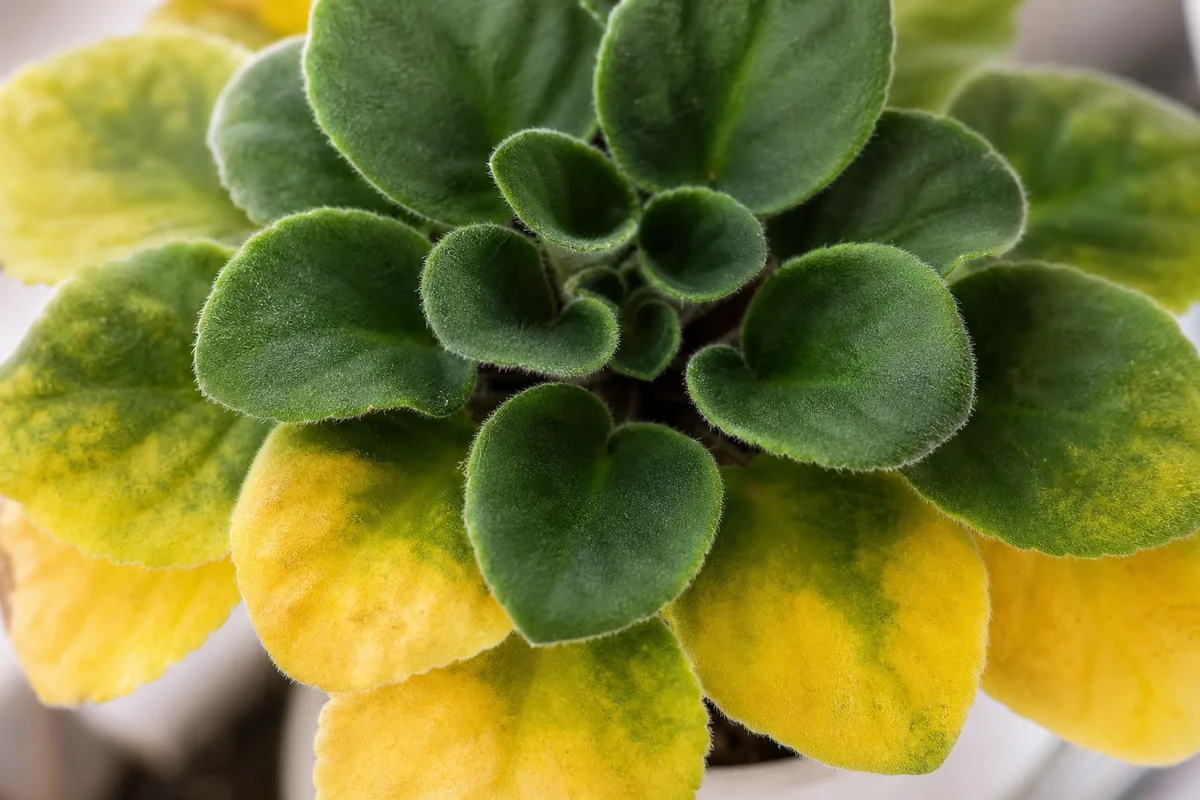
Yellow lower leaves on an African violet rosette while center growth stays firm and green - read whether yellowing is limited to the bottom row or climbing upward.
Normal aging - The oldest, outermost row turns yellow from the tip or edges inward, then dries and drops while new center leaves stay firm, dark green, and actively growing. You may see one leaf at a time over several weeks.
Overwatering and root rot - Symptoms start on lower leaves: yellow, limp, then brown and mushy as damage moves up the rosette. Soil stays damp for many days. The pot feels heavy. A sour smell from the drain hole or soft tissue at the leaf base suggests roots are failing.
Too much light - Upper and middle leaves turn pale, bleached, or greenish-yellow. Growth may look compact and stunted. Leaves that were shaded by upper foliage sometimes keep darker green patches where they were protected.
Too little light - Leaves become thin, dark blue-green, and stretched on long petioles before older ones yellow and drop. Flowering slows. This pattern is easy to miss because the plant still looks “green” until lower leaves age out.
Nutrient fade - A gradual loss of leaf color on older leaves with reduced growth and fewer blooms often means the mix is depleted. Center growth may still look acceptable because African violets prioritize the crown when nutrients run short.
Cold-water spotting - Circular yellow or light green spots on the upper leaf surface, not uniform yellowing, appear when cold water touches warm leaves. This is distinct from root rot or aging.
Salt and pot-rim injury - Lower petioles touching a fertilizer-salt crust on a clay pot rim can develop brown sunken patches; affected leaves may yellow and fail before the rest of the plant.
Why African Violet gets yellow leaves
African violets evolved in cloud-forest conditions: bright but filtered light, airy organic soil, and steady moisture without waterlogging. Indoors, yellow leaves usually mean one of those tolerances is off.
Overwatering is the most dangerous cause. Fine, shallow roots need oxygen in the mix. Constantly wet soil lets root-rot fungi destroy roots, so lower leaves cannot get water even though the pot is saturated-classic yellow, droopy lower foliage on wet mix.
Natural rosette growth sheds lower leaves as the crown produces new ones. As African violets grow, lower leaves die and fall off. African violets that are slightly root-bound and blooming well still lose bottom leaves; that is not a crisis if the crown is healthy.
Light mismatch shows up quickly on velvety leaves. Direct sun bleaches and yellows tissue-too much light produces stunted plants with yellow leaves; dim rooms slow photosynthesis and water use, which keeps soil wet longer and compounds root stress.
Nutrient depletion in old, exhausted mix shows on older leaves first because the plant moves nitrogen and other elements toward new growth at the crown.
Temperature swings below about 50°F or above roughly 85°F slow growth and can darken, wilt, or yellow leaves. Drafty windows and heat registers matter on small pots.
Recent African Violet repotting guide or crown wetness can trigger crown rot-water-soaked lower leaves and a collapsing center-when water sits in the tight rosette or the neck was buried too deep.
How to confirm the cause
Work through these checks in order. You are separating aging, water stress, light stress, and nutrient fade before changing multiple variables at once.
- Which leaves? Bottom row only, slowly → likely aging or mild nutrient fade. Climbing upward on multiple leaves → suspect rot or severe water/light stress.
- Soil moisture - Dry top inch with yellow, crispy lower edges → underwatering on African Violet may be involved. Wet surface for 3+ days → overwatering or poor drainage is confirmed enough to act on.
- Pot weight and drainage - Lift the pot. Heavy, cool, wet mix plus yellow lower leaves strongly supports root rot. Water sitting in the saucer confirms the problem.
- Crown firmness - Press the center gently. Firm crown with one yellow bottom leaf → aging. Soft, water-soaked crown → stop watering and inspect immediately.
- African Violet light guide - South or west window with midday sun hitting leaves → light bleaching. Dark interior with stretched petioles → insufficient light.
- Spot pattern - Ring or patch spots on upper leaf faces after top watering with cold tap water → cold-water injury, not root disease.
- New growth - Firm, properly colored center leaves mean the plant is still functioning; focus on the specific stressor. Stunted, rusty, or tightly packed new leaves may indicate over-fertilization instead of deficiency.
Confirmed overwatering/root rot: wet mix, yellow droopy lower leaves, optional sour smell, mushy roots if you slip the plant from the pot.
Confirmed aging: one or two lowest leaves yellowing over weeks, dry-to-slightly-moist appropriate mix, healthy center.
Suspected light issue: bleached upper leaves with good watering habits, or stretched dark leaves in a dim spot.
First fix for African Violet
If the soil surface is wet or the pot has sat in runoff, stop watering. Allow the soil surface to dry to the touch before the next drink. Do not fertilize, repot, or remove half the rosette on day one-that stacks stress onto roots that may already be drowning.
After the surface dries:
- Bottom-water from a shallow tray with room-temperature water for 20–30 minutes, then drain completely.
- If lower leaves are mushy or the mix smells sour, gently unpot and inspect roots. Trim brown, slimy tissue with clean scissors, repot into fresh, light African violet mix, and wait a week before resuming light feeding.
- If upper leaves are bleached, move the plant to bright indirect light-north or east window, or farther from a hot south glass-without exposing it to direct sun.
- If only one or two bottom leaves are yellow on an otherwise healthy plant, snip them off when fully spent and keep your normal African Violet watering guide.
One correction at a time. Fix water before light, and fix light before fertilizer.
Recovery timeline
Aging leaves will not re-green. They drop and are replaced from the center over several weeks-no further action needed if the pattern stays limited to the bottom row.
Mild overwatering often stabilizes within one to two weeks after the wet cycle stops and the mix breathes again, provided the crown stayed firm and living roots remain.
Light correction needs two to four weeks for new leaves to show normal color; bleached old tissue does not recover.
Nutrient-related fade may take ten days to three weeks after a proper African violet fertilizer at reduced strength-only after watering and light are already correct.
Judge success by new center growth, not by old yellow leaves turning green.
Lookalike symptoms
| What you see | Often confused with | How to tell them apart |
|---|---|---|
| Yellow ring spots on upper leaf faces | Fungal leaf spot | Spots follow cold water splash; no wet-soil smell; crown firm |
| Pale upper leaves | Nitrogen deficiency | Bleaching on sun-exposed leaves; deficiency fades older leaves evenly on lower rows |
| One yellow bottom leaf | Root rot | Single leaf, dry-appropriate mix, firm roots when checked |
| Limp plant, wet soil | Underwatering | Underwatered pots are light and dry; leaves are wilted but not mushy |
| Tight rusty center leaves | Normal new growth | Over-fertilization packs the crown; back off feed rather than adding more |
What not to do
Do not keep watering because lower leaves look sad when soil is already wet-wilted leaves on saturated mix often mean roots cannot absorb water, not that the plant is thirsty.
Do not fertilize yellow leaves before fixing water and light. Over-fertilized African violets develop tight centers and rusty new leaves, which looks like a new problem on top of the old one.
Do not pull yellow leaves that still attach firmly; wait until they are fully spent, then snip with clean scissors.
Do not move the plant repeatedly between dim corners and sunny windows while diagnosing-pick a stable bright indirect spot and observe for two weeks.
Do not repot on schedule alone. Repot when mix is exhausted, roots are rotted, or the neck needs resetting-not as a reflex response to one yellow leaf.
How to prevent yellow leaves next time
Match watering to how fast your pot dries, not a calendar. Water when the top inch of mix is dry, use a light well-drained African violet mix, and empty saucers after every bottom-watering session so the plant never sits in standing water.
Place plants in bright indirect light-north or east windows, or supplemental LED 4–8 inches above the leaves for 12–16 hours if natural light is weak. Avoid direct midday sun on velvety leaves.
Bottom-water with room-temperature water to keep foliage dry and prevent cold-water ring spots.
Remove spent lower leaves before they lie against wet soil and trap moisture at the crown.
Repot every one to two years into fresh mix, keep pots appropriately small (African violets bloom well slightly root-bound), and leach salts every few months if you use tap water and fertilizer regularly.
When in doubt, read the lowest row of leaves and the soil surface together-that pairing tells you more about African violet health than any single yellow leaf.
When to use this page vs other African Violet guides
- African Violet watering guide - Use for routine moisture checks before assuming yellow leaves is the main issue.
- African Violet problems hub - Browse all 52 common issues on this species.
- Overwatering on African Violet - Different entry point when symptoms overlap with yellow leaves.
- Underwatering on African Violet - Different entry point when symptoms overlap with yellow leaves.
- Root Rot on African Violet - Different entry point when symptoms overlap with yellow leaves.