Fertilizer Burn on African Violet: Causes, Checks & Fixes
Quick answer
Fertilizer burn on African Violet usually means salt buildup-not a single hot splash. Stop feeding, flush the mix with plain room-temperature water until it runs clear, and resume at one-quarter label strength only after new center leaves open clean.
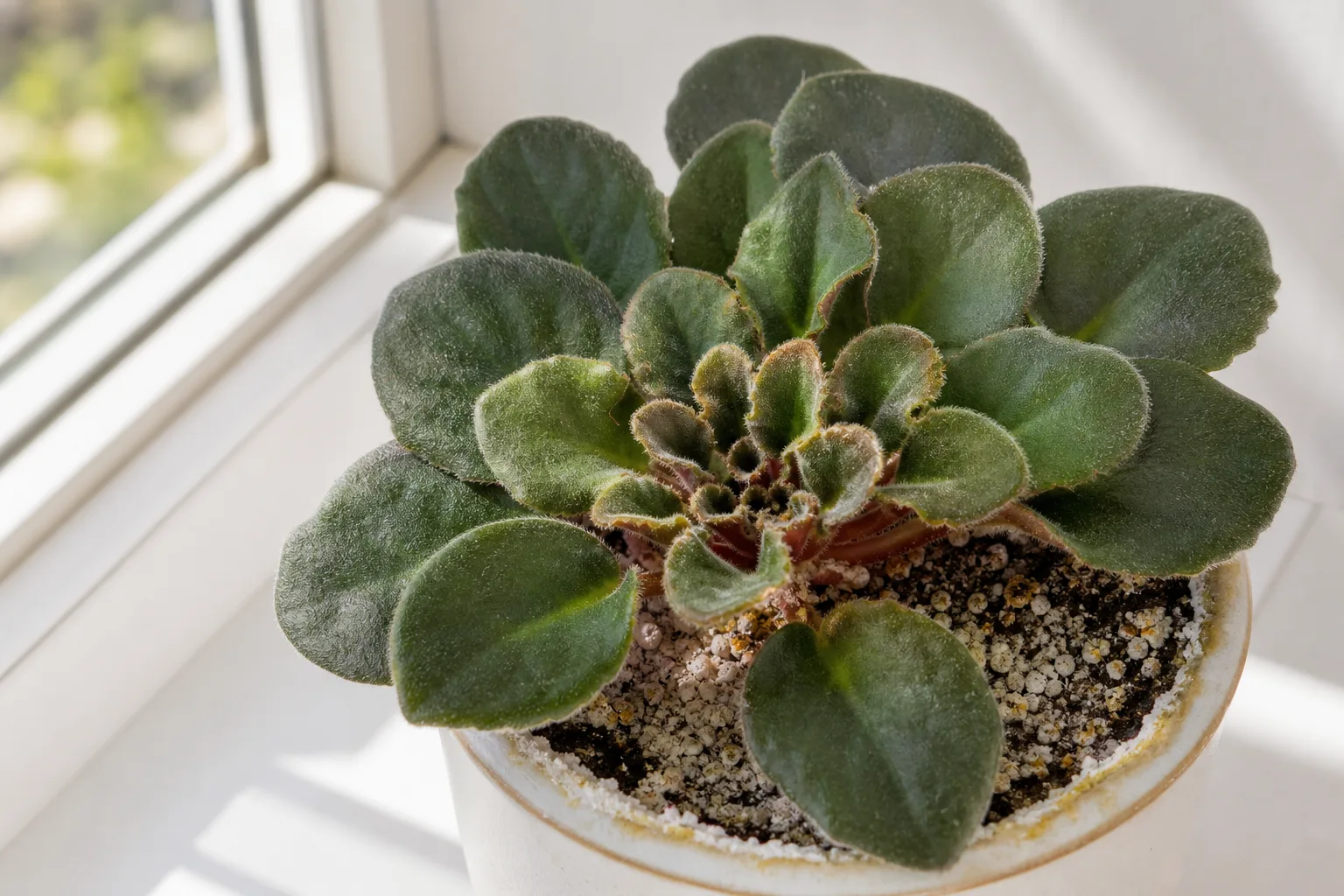
Fertilizer Burn on African Violet: Causes, Checks & Fixes
This guide covers fertilizer burn on African Violet. See also the general Fertilizer Burn guide, watering, and light pages for this plant.
Fertilizer Burn on African Violet: Causes, Checks & Fixes
Quick answer
African Violets want mild, steady feeding-but their shallow fibrous roots and tight rosette crown cannot handle concentrated salts. Fertilizer burn here is almost always salt accumulation in the mix, on the pot rim, or at the leaf bases where young fuzzy leaves emerge. First step: stop all fertilizer and flush with plain room-temperature water poured through the top until it runs freely from drainage holes. Discard the runoff; do not let the saucer re-wick salty water back in.
What fertilizer burn looks like on African Violet
Burn on African Violet overview rarely shows as one scorched leaf from a spill. The pattern is gradual and centered on where salts collect:
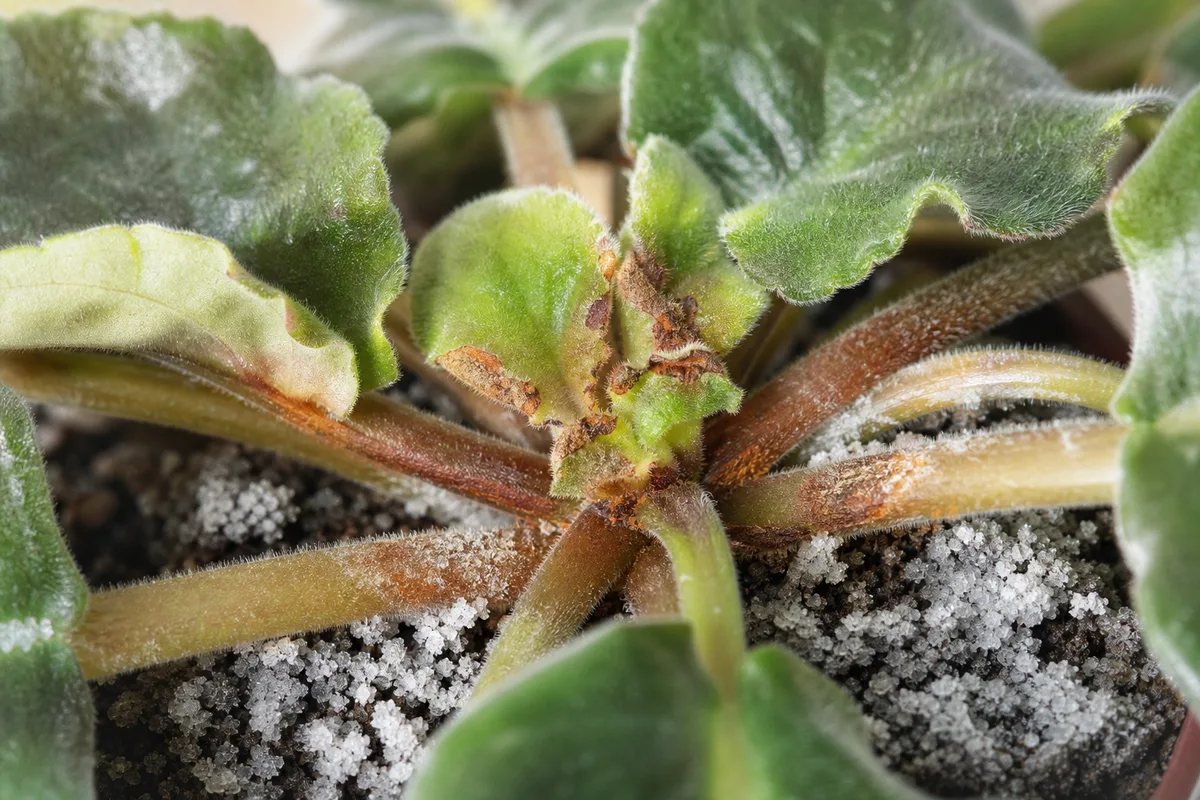
White crystalline salt crust on the soil rim and rusty-orange petiole bases on emerging center leaves - salt buildup attacks new growth first.
- White or yellow crust on the soil surface, inner pot rim, or wick reservoir-often visible before leaf damage spreads. Crystalline deposits on the pot rim or mix surface are a classic salt signal.
- Tight, crowded center with smaller new leaves that look rusty-orange or dark at the petiole base where they touch salty soil or pot edges.
- Brown or necrotic tips on the youngest inner leaves, not uniform yellowing on older outer leaves.
- Lesions on petioles where stems rest against a salt-lined clay or plastic rim-the fuzzy leaf base dies back while outer foliage still looks fine.
- Stunted blooms or no flowers despite good light, because excess feed pushes leaf growth over flowering.
- Wilting with moist soil in advanced cases, when salts pull moisture away from fine roots.
Compare with nitrogen deficiency: on African Violet, deficiency typically pales older outer leaves while the crown stays relatively green. Fertilizer burn attacks the newest growth first and usually pairs with visible crust-not evenly light-green foliage from low light alone.
Cold-water leaf spots leave ring-like tan marks on wet foliage; salt burn stays tied to the crown, soil line, and pot rim.
Why African Violet gets fertilizer burn
This species is fed lightly and often-yet full-strength doses, dry fertilizing, or months without leaching push minerals to damaging levels.
Small pots and frequent feeding. African Violets bloom best slightly root-bound in small containers. Each watering adds a little fertilizer; without periodic flushing, salts concentrate in a shallow root zone.
Bottom-wicking and reservoirs. Wick systems and saucer watering keep mix moist but draw dissolved minerals upward. Salts end up at the soil surface and crown-the exact spot new leaves unfold. Periodic leaching from the top is recommended to prevent salt accumulation with sub-irrigation.
Dry fertilizing. Moisten the potting mix with plain water before fertilizing if the plant is dry-otherwise fertilizer on dry mix creates a hot pulse at the roots. African Violet roots are fine and close to the surface; they cannot buffer a concentrated dose the way a large outdoor shrub might.
Clay pot rims. Porous pots wick salts to the edge where petioles rest. Leaves touching a crusted rim get direct contact burns separate from soil-level buildup.
Tap water plus fertilizer. Hard water already carries minerals. Layering full-label fertilizer on top accelerates crust formation, especially if you never top-water to leach.
How to confirm the cause
Work through these checks before African Violet repotting guide or adding supplements:
- Scrape the soil surface gently. White crystalline crust that returns within a week after watering confirms salt accumulation-not mold (which is usually fuzzy and green-gray).
- Inspect the pot rim. Run a finger along the inner edge where petioles sit. Gritty white or yellow residue that burns to taste (don’t ingest-just note texture) points to fertilizer salts, not dust.
- Review your dilution. Full label strength, granules on dry soil, or doubling feed after a bloomless month are common triggers.
- Check watering method. Pure bottom-watering without occasional top leaching lets salts rise. Self-watering pots need periodic flushing from above.
- Timeline. Symptoms that worsened over several weeks of regular feeding fit burn. Sudden collapse after one repot may be crown rot instead-check whether the center stem is soft and brown, not just crusty.
If crust is absent, outer leaves are pale, and you have not fed in months, consider deficiency or insufficient light before treating for burn.
The first fix to try
Stop all fertilizer immediately and flush the pot with plain room-temperature water.
Pour water slowly through the top until it runs freely from drainage holes-roughly equal to the pot volume. Run a stream of water through the pot for approximately 20 minutes to leach excess salts; wait twenty minutes, then repeat once. Discard all runoff; never let the plant sit in that drainage. This single leaching step is the safest first response for African Violet-no repot, no pruning marathon, no “boost” feed.
While the mix drains, brush loose crust off the soil surface with a soft brush. If petioles rest on a salt-lined rim, slip a foil collar around the inner edge so leaves no longer touch the crust. Resume any bottom-watering only after the flush, and empty saucers within thirty minutes.
Step-by-step recovery
After the initial flush, add these steps in order-not all on the same day:
- Wait two weeks before feeding. Let new center leaves start without added minerals.
- Resume at one-quarter label strength mixed into room-temperature water, only when the top inch of mix is already moist from plain water.
- Flush monthly with plain top water even during normal care-especially if you bottom-water or use wicks.
- Remove dead tissue only. Tweeze fully brown center leaves; leave anything still partly green to photosynthesize.
- Repot only if flushing twice fails or crust is deep in the root ball. Use fresh African violet mix in a clean pot the same size or one size up-not a large jump with immediate fertilizer.
Judge progress by new leaves, not old damage. The rosette may look uneven for weeks while outer leaves stay scarred.
Recovery timeline
You should see clean new center leaves within one to two weeks after flushing if salts were moderate. Tight, rusty inner leaves will not reopen-expect two to three months before the crown looks full again as new layers cover the damage.
Flowering may pause during recovery. That is normal; do not increase fertilizer to force blooms. Blooms return once new growth stays green for several weeks at the reduced feed rate.
If wilting continues despite flushing and a feeding pause, inspect roots for mushy brown tissue-severe salt damage can overlap with root rot on African Violet, which needs repotting and trimmed roots, not more leaching alone.
Lookalike symptoms
| What you see | More likely cause | Quick check |
|---|---|---|
| Ring-like tan spots on wet leaves | Cold water on foliage | Spots follow a splash pattern, not the crown |
| Pale outer leaves, green center | Nitrogen deficiency or low light | No soil crust; long petioles suggest light stress |
| Soft, water-soaked crown | Crown rot from overwatering on African Violet | Center stem mushy; often follows heavy watering |
| White powder on leaf tops | Powdery mildew | Wipes off; not gritty on soil |
| Orange crystals in crown hairs | Advanced over-fertilization | Confirms salt excess-flush urgently |
Mistakes to avoid
Do not apply more fertilizer to “green up” a burned plant-that adds salts to an already stressed root zone. Do not use cold or hot water for flushing; room temperature protects fuzzy foliage from separate spot injury. Do not bottom-water exclusively without occasional top leaching to force out excess salts. Do not repot and fertilize the same week. Do not mist leaves to “wash off” crust; wet crown tissue invites rot on this plant.
How to prevent fertilizer burn next time
Feed at one-quarter recommended strength with each watering during active growth, moisten dry mix with plain water before feeding, and flush monthly from the top. If you use wicks or self-watering pots, cut concentration further and leach every three to four weeks.
Keep the crown dry, empty saucers promptly, and use African violet–labeled fertilizer rather than full-strength general houseplant feed. When in doubt, under-feed slightly-a complete fertilizer at a low rate suits this species better than salt shock from excess feed.
When to use this page vs other African Violet guides
- African Violet watering guide - Use for routine moisture checks before assuming fertilizer burn is the main issue.
- African Violet problems hub - Browse all 52 common issues on this species.
- Overfertilization on African Violet - Different entry point when symptoms overlap with fertilizer burn.
- Salt Build-up on African Violet - Different entry point when symptoms overlap with fertilizer burn.
- Brown Tips on African Violet - Different entry point when symptoms overlap with fertilizer burn.