Crown Rot on African Violet: Causes, Checks & Fixes
Quick answer
Crown rot on African Violet starts when the rosette center stays wet. Stop all watering, check whether the crown is mushy, and remove decayed tissue before repotting into fresh mix.
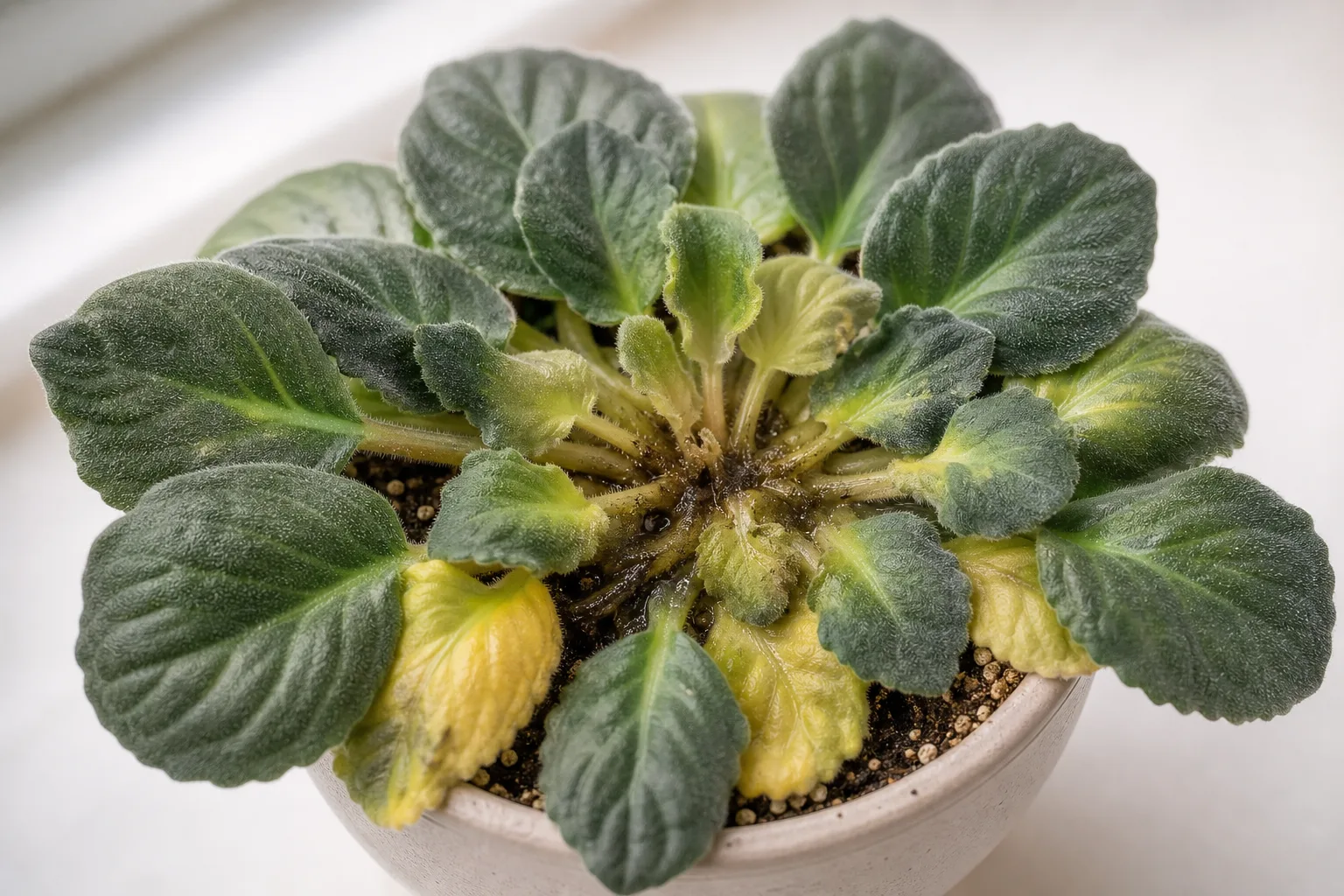
Crown Rot on African Violet: Causes, Checks & Fixes
This guide covers crown rot on African Violet. See also the general Crown Rot guide, watering, and light pages for this plant.
Crown Rot on African Violet: Causes, Checks & Fixes
Quick answer
Crown rot on African Violet is decay at the heart of the rosette-the point where new leaves emerge. It usually follows overwatering on African Violet, water trapped in the leaf cup, or African Violet repotting guide that buried wet leaves against the stem. Crown rot causes the main stem and lower leaves to appear water-soaked, shrivel, and die, and it often kills the plant. Your first move is to stop watering and inspect the crown with dry hands-not to pour more water because the leaves look wilted.
What crown rot looks like on African Violet
On a healthy African Violet, the youngest leaves sit tight and firm at the center. Crown rot reverses that pattern: the innermost leaves turn dull, limp, or yellow first while lower, older leaves may yellow and drop in clusters. Advanced decay shows water-soaked, mushy tissue where new growth should appear. The plant may wilt even though the soil feels wet, because damaged crown tissue cannot move water normally.
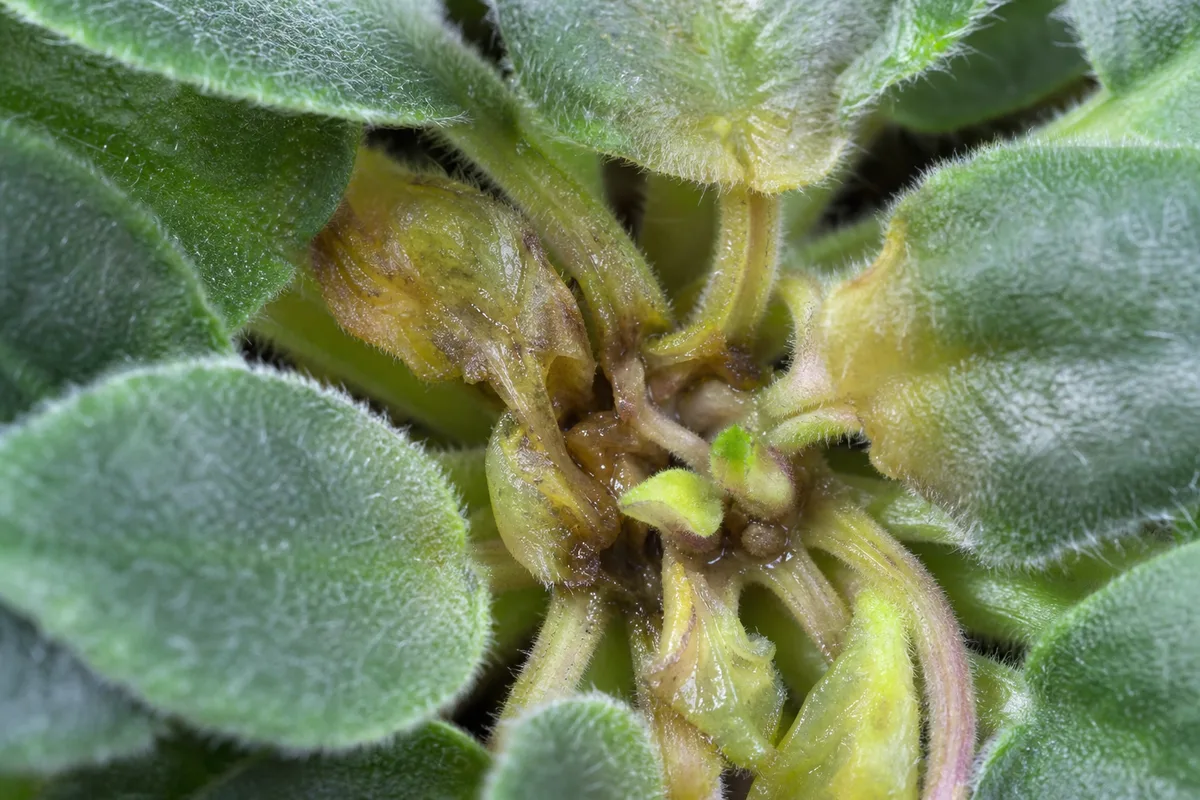
Limp, water-soaked young leaves at the crown center - compare with firm green outer leaves still attached on the same plant.
A sour or musty smell when you gently part the center leaves is a strong rot signal. Unlike normal lower-leaf aging-which removes one or two old leaves at a time-crown rot attacks the youngest tissue and spreads inward. In severe cases the plant lifts out of the pot easily because the crown has softened and roots below may also be brown and mushy.
Why African Violet gets crown rot
African Violet grows as a compact rosette with overlapping fuzzy leaves. That shape traps any water poured onto the crown or splashed from the top. Cold water on leaves causes white blotches, and moisture sitting in the cup overnight creates the stagnant, wet conditions crown pathogens favor.
The most common trigger is cultural, not mysterious: African violets are highly subject to root and crown rot if overwatered. Root and crown rot can occur when roots stay too wet-even when no specific disease organism is present. Saturated mix in a cool room, blocked drainage holes, or leaving the pot submerged in a saucer too long keeps the crown zone wet for days.
Fungal organisms such as Pythium, Phytophthora, Fusarium, and Rhizoctonia listed on African violet disease references can accelerate collapse once soil stays soggy. Recent repotting with buried lower leaves, misting fuzzy foliage, or watering on a calendar instead of soil dryness all raise risk on this shallow-rooted houseplant.
How to confirm the cause
Work through these checks before cutting tissue or repotting:
- Feel the crown. Gently separate the center leaves with dry fingers. Soft, brown, or translucent tissue at the heart confirms crown involvement.
- Smell the center. A sour odor means active decay; mechanical bruising rarely smells rotten.
- Review watering. Recent top-watering, misting, saucer standing water, or repotting that buried leaves supports crown rot over simple underwatering on African Violet.
- Lift the plant. Slide it from the pot. If the crown is firm but roots are mushy, you may have root rot on African Violet that has not yet destroyed the crown-still treat as a wet-soil emergency.
- Compare leaf age. One yellow outer leaf with a firm center may be normal senescence; multiple young center leaves failing together points to rot.
If only outer leaves are yellow and the crown is firm and green, rule out natural aging before removing tissue.
First fix for African Violet
Stop watering immediately. Allow the top of the soil to dry completely between waterings to prevent crown rot. Do not add water because wilted leaves make the plant look thirsty while soil is already saturated-that mistake deepens rot.
Once watering stops, inspect the crown in daylight. If some firm green stem remains, cut away every mushy leaf and stem segment with a sterile blade until you reach solid tissue. Let cuts air-dry briefly, then repot into fresh, light African violet mix in a clean pot with open drainage. Water from below by placing the container in a tray and removing it once the surface is moist, and discard excess water from the saucer.
If the entire crown is mushy with no firm center, salvage healthy outer leaves for propagation rather than trying to save the main stem. Prevention is the most successful approach-there is no dependable rescue once decay spreads through the crown.
Step-by-step recovery
When partial crown tissue survives:
- Isolate the plant away from other violets until active spread stops.
- Trim all soft leaves and stem sections; disinfect scissors between cuts.
- Shake off old wet mix and rinse only if roots look firm; trim brown, slimy roots.
- Repot shallowly in fresh mix-do not bury the crown deeper than before.
- Bottom-water lightly only after the top inch of new mix feels dry.
- Hold fertilizer until new center leaves look firm and normal-sized.
For crown loss, remove several healthy middle-row leaves with petioles and root them in moist mix or water. Tiny plantlets typically emerge at the petiole base in six to ten weeks under African Violet light guide.
Recovery timeline
Partial crown surgery may stabilize a plant within one to two weeks if firm tissue remains and watering stays conservative. Full crown loss means restarting from leaf cuttings-expect six to ten weeks before small plantlets are ready to pot. Judge success by new firm center growth or healthy plantlets, not by whether old outer leaves stay pretty.
Lookalike symptoms
- Root rot without crown damage - Crown firm but lower leaves yellow; fix drainage and trim rotted roots before the center fails.
- Botrytis gray mold - Fuzzy gray growth on flowers or leaf edges; may overlap with wet crown conditions but shows visible mold, not just mush.
- Cold damage - Watersoaked patches after chill exposure without sour smell or progressive center collapse.
- Cyclamen mites - Crinkled, stunted center growth with tight crowns and no mushy tissue or rotten odor.
- Normal lower-leaf drop - One or two old bottom leaves yellow and detach while the center stays firm.
Mistakes to avoid
Do not top-water or mist while the crown is vulnerable. Do not keep watering because leaves look wilted when soil is already wet. Do not repot deeper to hide a bare neck if the crown is still soft-bury only firm, healthy stem. Do not return the plant to a self-watering reservoir or wick system until new roots and crown tissue are clearly stable. Do not fertilize a rotting plant; salts in wet mix add stress.
How to prevent crown rot next time
Water from below by placing the container in a tray containing about 1 inch of water. Remove the pot when the soil surface becomes moist and discard excess water from the saucer. Let the top inch of soil dry before sub-irrigating again. Use a light, well-drained African violet mix with perlite, keep drainage holes open, and place the plant in bright indirect light so the small pot dries predictably between drinks.
Never pour water directly into the leaf cup. After repotting, keep lower leaves above the soil line. Quarantine new violets before mixing collections, since pests and diseases spread easily among plants on the same shelf.
When to give up and start over
Dispose of the plant when the crown is fully mushy, center leaves detach with a tug, and no firm green stem remains after trimming. Crown rot usually leads to plant death, and holding on in wet soil rarely reverses advanced decay. Before discarding, take two or three healthy outer leaves for cuttings so you keep the variety without risking nearby plants.
When to use this page vs other African Violet guides
- African Violet watering guide - Use for routine moisture checks before assuming crown rot is the main issue.
- African Violet problems hub - Browse all 52 common issues on this species.