Cold Damage on African Violet: Causes, Checks & Fixes
Quick answer
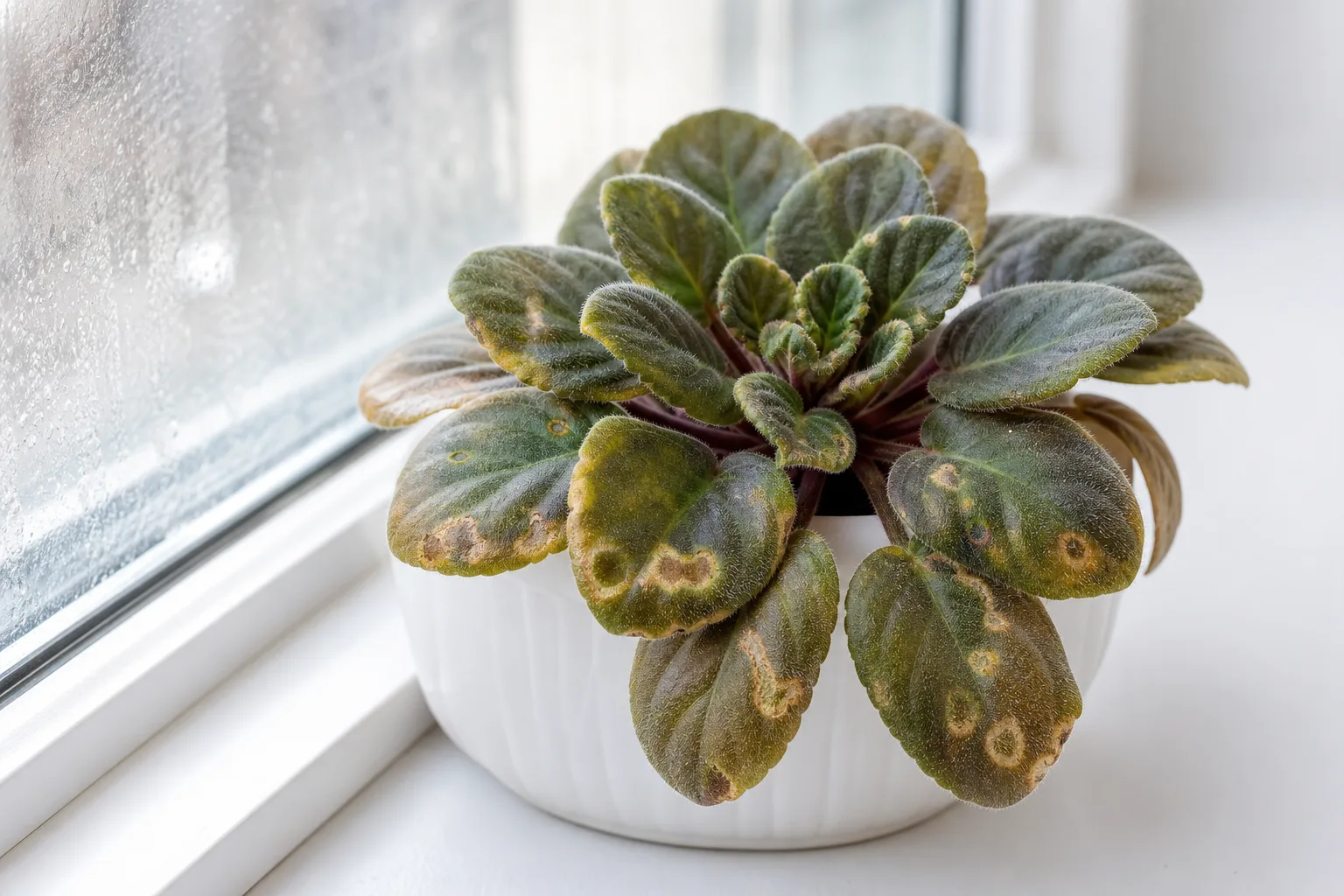
Cold damage on African Violet shows as ring spots, curled leaves, or dark watersoaked tissue after a chill or cold-water splash. Move the plant to stable warmth and stop cold top-watering immediately.
Cold Damage on African Violet: Causes, Checks & Fixes
This guide covers cold damage on African Violet. See also the general Cold Damage guide, watering, and light pages for this plant.
Cold Damage on African Violet: Causes, Checks & Fixes
Quick answer
Cold damage on African Violet happens when this tropical rosette meets temperatures or water it cannot handle. The first fix is warmth and stability-move the plant away from cold glass, drafts, and HVAC blasts, then bottom-water only with room-temperature water. Do not top-water with cold tap water; cold water directly on the leaves will damage them quickly.
What cold damage looks like on African Violet
Symptoms depend on how the plant got cold. The most common indoor sign is ring spot: pale green, tan, or yellow rings, arcs, or lines on leaves after cold water splashes the foliage. These marks never fade because a rapid drop in leaf temperature irreversibly destroys palisade cells.
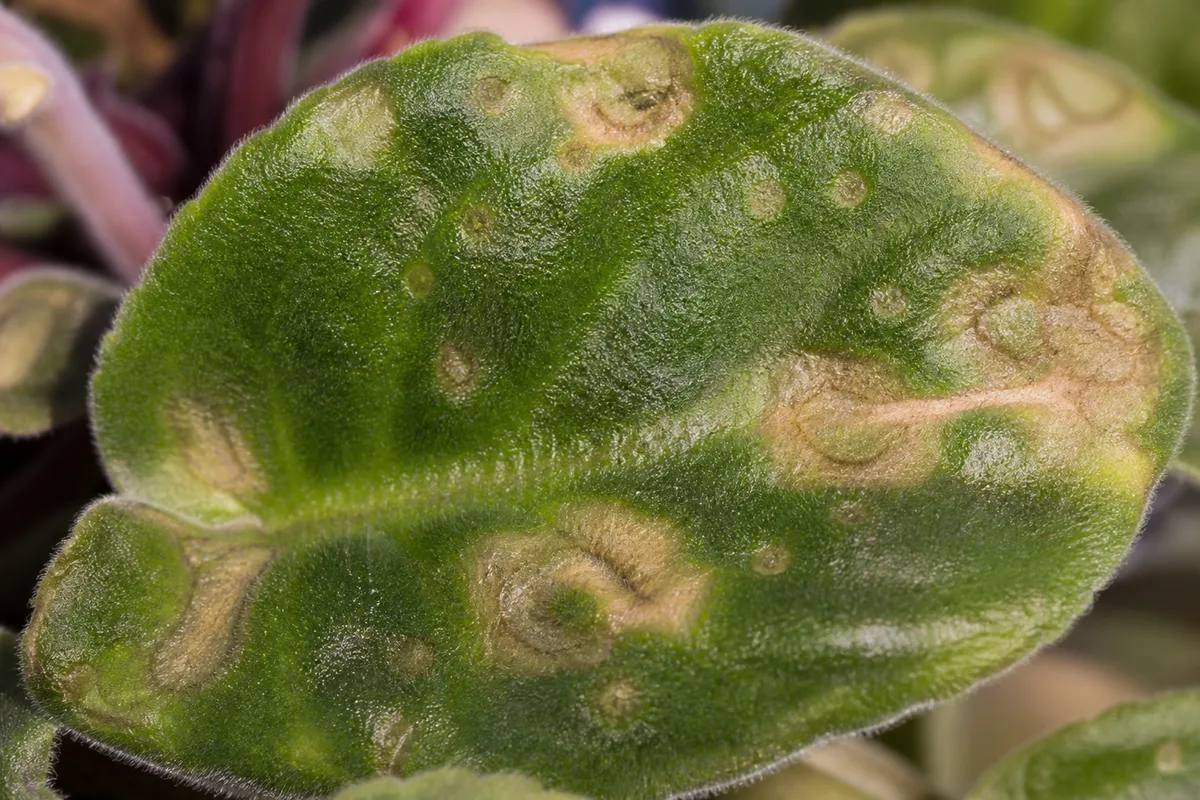
Pale ring spots and arcs on African Violet leaves after cold water contact - permanent marks that do not fade as the leaf ages.
Ambient chill shows differently. Plants growing against glass window panes may have injured foliage on outer leaves first while the center crown still looks intact. Below 60°F, leaves may curl down, cup, and become brittle. Buds abort without opening. After deeper exposure, temperatures below 50°F cause leaves to darken, wither, and become watersoaked-distinct from the slow yellowing of overwatering on African Violet.
Cold-water injury on roots can curl leaf edges downward as chilled water moves up through the plant, sometimes with dry brown or yellow patches only where water contacted leaves. Symptoms may not appear until several hours after exposure, so the trigger is easy to miss if you are not tracing recent care.
Why African Violet gets cold damage
African Violet evolved in East African cloud forests where temperatures stay mild and stable. Its shallow fibrous roots and water-filled leaf cells have no tolerance for sudden cold.
Three indoor triggers cause most damage:
Cold air. Drafts from windows, doors, or air conditioners, plus leaves resting on cold glass in winter, expose the rosette to temperatures African Violets cannot sustain. Growth slows, flowering stops, and severe chill can push the plant into shock.
Cold water on leaves. Top-watering with cold tap water is the classic ring-spot trigger. The injury comes from a rapid temperature drop at the leaf surface-damage can occur when the temperature difference between leaves and water is as little as 10°F.
Cold water at the roots. Bottom-watering with water much colder than room air chills shallow roots quickly. Curled, deformed leaves follow as the plant absorbs the cold moisture.
African Violets in small plastic pots on winter window sills are especially vulnerable because the pot itself transfers chill to roots overnight.
How to confirm the cause
Work backward from the last 48 hours:
- Was the plant on a window sill, near an open door, or carried in from a cold car?
- Did top-watering or misting use cold tap water directly on leaves?
- Do ring patterns appear only on splashed leaves while untouched foliage looks normal?
- Does damage match outer leaves touching glass, with the crown still firm?
- Is soil moisture normal and roots firm when you gently tip the plant out-no sour smell?
Cold-damaged tissue feels limp or watersoaked but not slimy. Crown rot smells sour and starts at a wet center. If soil is soggy and roots are mushy after a cold, wet window spell, treat rot separately-cold stress and crown rot can overlap when a chilled plant sits in wet mix.
First fix for African Violet
Move the plant to a stable spot away from glass edges and draft paths. Hold day and night temperatures as steady as possible in the 65–80°F comfort range African Violets prefer. Stop top-watering entirely until new center growth looks healthy; bottom-water with room-temperature water when the top inch of soil dries, then drain the saucer.
Remove only leaves that are fully mushy or collapsed. Keep firm but spotted leaves in place-they still photosynthesize while the plant replaces them from the center. Do not fertilize, repot, or rotate the pot until fresh inner leaves emerge flat and normally colored.
If the plant sat on a cold sill, set the pot on a cork mat or small trivet to reduce chill transfer through the container bottom.
Recovery timeline
Ring-spotted and curled leaves will not heal cosmetically. Judge recovery by new growth, not old damage. Expect firm center leaves within two to four weeks if warmth stays consistent. Bud formation may lag a full bloom cycle after severe chill below 50°F even when the plant survives.
Signs the plant is improving: new leaves open flat without cupping, the crown feels firm, and bud stalks hold without aborting. Signs it is worsening: center leaves wilt or darken, the crown softens, or outer damage spreads inward despite stable warmth-those point to crown rot or continued cold exposure, not simple leaf injury.
What not to do
Do not top-water with cold tap water in winter, even briefly to rinse dust. Do not place the plant on a heating mat without monitoring soil temperature-warm roots help, but leaf cells begin to break down above 80°F. Do not repot immediately unless mix is clearly failing or roots are rotting. Do not prune every damaged leaf at once; the plant needs foliage to rebuild.
Causes to rule out
- Overwatering - yellow lower leaves with chronically wet mix but no recent cold event or ring patterns.
- Crown rot - mushy center with sour smell, not tied to a temperature drop.
- Cyclamen mites - tight, stunted crown without watersoaked patches or a clear chill trigger.
- Fungal leaf spot - spreading brown lesions with yellow halos over days, not hours after a single cold event.
- Normal senescence - one or two old lower leaves yellowing slowly at the base without ring marks or curl.
How to prevent cold damage next time
Keep African Violet between 65 and 80°F year-round. In winter, pull plants back from window glass at night or insulate the sill side with a mat. Let tap water sit until it matches room temperature before bottom-watering. Avoid shipping or moving plants in cold cars without wrapping the pot.
Group plants for slight humidity buffering, but stable room heat matters more than clustering. If you must top-water occasionally to flush salts, use room-temperature water and keep it off the leaves entirely.
When to use this page vs other African Violet guides
- African Violet watering guide - Use for routine moisture checks before assuming cold damage is the main issue.
- African Violet problems hub - Browse all 52 common issues on this species.
- Brown Leaves on African Violet - Different entry point when symptoms overlap with cold damage.
- Leaf Drop on African Violet - Different entry point when symptoms overlap with cold damage.
- Drooping Leaves on African Violet - Different entry point when symptoms overlap with cold damage.