Leaf Drop on African Violet: Causes, Checks & Fixes
Quick answer
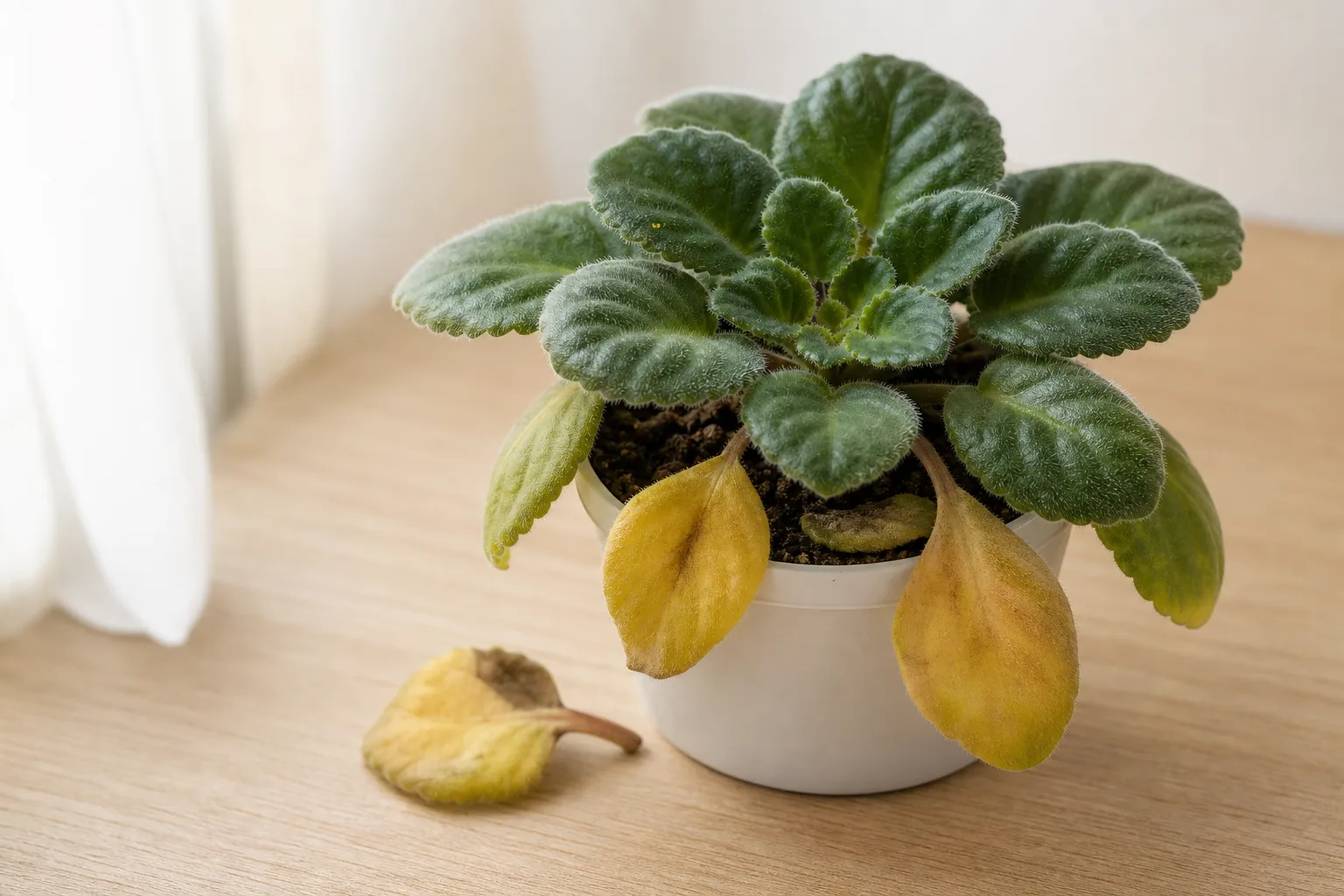
Leaf drop on African Violet usually means the root zone is stressed-most often from soil that stays wet too long. First step: stop watering, feel whether the pot is heavy or light, and check whether lower leaves are yellowing and soft before you water again.
Leaf Drop on African Violet: Causes, Checks & Fixes
This guide covers leaf drop on African Violet. See also the general Leaf Drop guide, watering, and light pages for this plant.
Leaf Drop on African Violet: Causes, Checks & Fixes
Quick answer
When African Violet leaves start falling faster than the plant replaces them, the root zone is usually the story-not the individual leaf. Overwatered mix is the most common trigger: lower leaves turn yellow and droop, hang limply, then brown and detach while the pot still feels heavy. Cold water splashed on velvety foliage, salt crust on the pot rim, drafty windows, and recent African Violet repotting guide can also shed leaves without rot. First fix: stop watering, lift the pot to judge weight, and press the top inch of soil. If it is wet and the lower leaves are soft, let the surface dry completely before the next bottom-water-do not add more water because the plant looks wilted.
What leaf drop looks like on African Violet
Healthy African violets slowly lose lower leaves that die and fall off from the bottom of the rosette as new center growth continues. Problematic drop looks different:
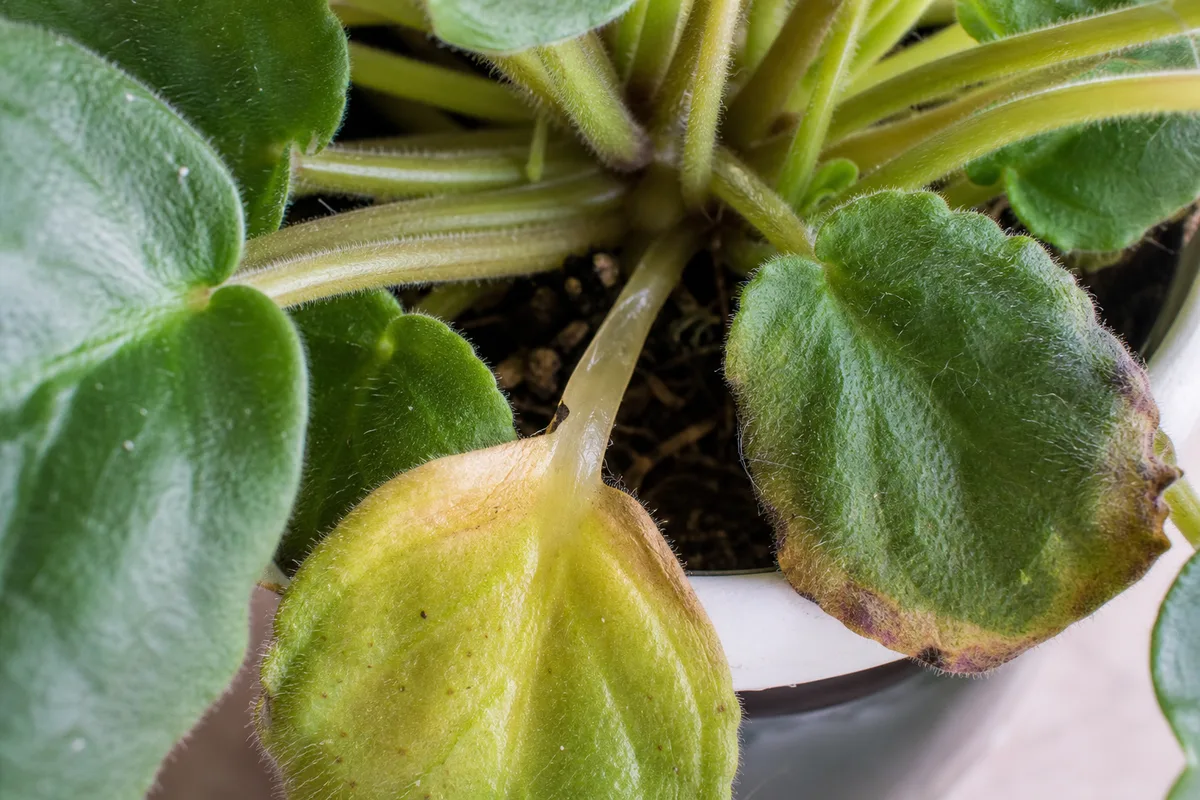
Yellowing limp lower leaves with translucent petiole bases - problematic drop hits the bottom row first while the center may still grow.
- Lower leaves first - yellowing, limp, then brown; often several at once rather than one spent leaf every few weeks
- Soft or mushy texture - rot-affected leaves feel waterlogged, not crisp like drought stress
- Translucent petioles - leaf stems turn almost clear before the blade falls, especially with cold-water or salt damage at the pot rim
- Whole-rosette collapse - advanced crown rot makes even upper leaves wilt despite moist soil
- Sudden shed after a change - many leaves drop within days of repotting, a window move, or a cold draft
underwatering on African Violet also drops leaves, but the mix is dry throughout, the pot feels light, and remaining leaves are firm but curled-not mushy on wet soil.
Why African Violet gets leaf drop
African violets evolved in cloud-forest debris: shallow, airy roots that want even moisture, not saturation. Their velvety leaves trap water and mark easily, so cultural mistakes show up as leaf loss before you see obvious pest damage.
overwatering on African Violet and root rot on African Violet - The classic chain. Wet mix suffocates fine roots; fungi finish the job. Lower leaves yellow and droop first because the damaged root system cannot supply the lowest, oldest foliage. Many growers see wilted leaves and water again, which accelerates loss.
Sitting in drainage water - Bottom-watering works well for African violets, but plants should not remain submerged in saucers of water for long periods as they may rot-the same outcome as watering too often from the top.
Cold water on leaves - Winter top-watering with cold tap water causes pale rings and spots on fuzzy leaves. Damaged tissue yellows and drops. Temperatures below 50°F can darken and watersoak leaves as well.
Salt buildup at the pot rim - Minerals from tap water and fertilizer collect as a white crust on ceramic or clay pots. Leaf stems in contact with clay pots may be killed by accumulated salts; petioles resting on that rim develop brown, sunken contact spots and leaves fall even when watering seems correct.
Environmental shock - Repotting, a new window, or moving the plant while buds are forming can trigger temporary shedding. African violets dislike sharp temperature swings and prefer air temperatures between 65 and 80°F.
Underwatering - Less common than rot indoors, but extended drought makes lower leaves crisp and drop while growth stalls and flowering stops.
Pests - Cyclamen mites, mealybugs in the crown, and severe thrips can distort and weaken leaves until they detach. Sticky residue, tight new growth, or silver scarring on blooms points here rather than watering alone.
How to confirm the cause
Work through these checks in order before repotting or fertilizing:
- Pot weight and surface moisture - Heavy pot, damp top inch, limp lower leaves = likely overwatering or poor drainage. Light pot, dry mix, firm wilted leaves = drought.
- Leaf pattern - Yellow mushy lower leaves spreading upward on wet soil matches root rot. One or two firm brown bottom leaves on an otherwise vigorous plant may be normal aging.
- Recent events - Repot, window change, or cold splash in the last week? Shock may be the main driver if roots are still pale and firm.
- Pot rim and petioles - White crust with brown sunken spots where stems touch the edge suggests salt injury, not rot.
- Crown feel - Soft, water-soaked center tissue means crown rot; isolate from other gesneriads and act fast.
- Root inspection - If multiple leaves are falling weekly, gently knock the plant out. Firm pale roots support recovery; brown, slimy roots confirm rot.
First fix for African Violet
If soil is wet or the pot is heavy: stop all watering. Move the plant to African Violet light guide with airflow, and wait until the top inch of the soil to dry before sub-irrigating again. Do not fertilize, repot, or pull green leaves during this pause.
If soil is bone-dry and the pot is light: bottom-water once. Set the pot in a tray of room-temperature water for about 30 minutes, let excess drain, and remove any standing water from the saucer.
If roots are mushy when you inspect: trim rotted tissue with a clean blade, let cuts air-dry briefly, and repot into fresh light African violet mix in a clean pot with drainage-only after you have removed the saturated old mix. Water lightly once to settle soil, then return to the dry-surface rule.
One correction first. Stacking repot, fertilizer, and aggressive pruning on the same day usually sheds more leaves.
Step-by-step recovery
Once watering matches actual soil moisture:
- Remove only spent tissue - Pinch off yellow, mushy, or fully detached leaves at the base. Keep any green leaf that still feels firm; it is photosynthesizing.
- Stabilize placement - Bright indirect light (north or east window is ideal), no cold drafts from AC or winter glass, temperatures held steady.
- Bottom-water on a schedule - When the surface dries, water from below with room-temperature water; drain the saucer within one to two hours.
- Leach salts if needed - If you see rim crust, scrape it off and run room-temperature water through the mix from the top once, letting it drain fully. Repeat after 20 minutes if buildup was heavy.
- Watch the center - New firm leaves emerging from the crown mean roots are recovering. A bare neck after heavy drop can be buried at the next repot-set the stem low in the pot up to the lowest healthy leaves-but only when growth is stable, not during active rot.
- Treat pests separately - If mites or mealybugs are confirmed, isolate and treat per label directions; avoid wetting leaves with sprays unless the product allows it.
Recovery timeline
| Stage | What to expect |
|---|---|
| Days 1–3 | Leaf drop should slow once wet soil begins drying; do not water during this window if the pot was heavy |
| Weeks 1–2 | Fewer new yellow leaves; center leaves stay firm on corrected watering |
| Weeks 3–6 | New center growth visible if roots survived; flowering may pause while the plant rebuilds |
| Months 2–3 | Rosette fills back in; old bare neck may need repotting deeper if drop was severe |
Dropped leaves do not reattach. Judge success by stopped shedding plus new center leaves-not by reviving fallen blades.
Lookalike symptoms
Normal aging - One or two lower leaves turn brown and detach every few weeks on an otherwise blooming plant with firm roots. No action beyond gentle grooming.
Yellow leaves without drop - Nutrient need, low light, or mild overwatering can yellow leaves before they fall. Low light also stretches petioles and reduces bloom; leaves may stay attached but pale.
Bud drop only - Flowers aborting while leaves stay firm often traces to dry air, moving the plant during bud set, or temperature swings-not the same as foliage shedding.
Crown rot vs root rot - Both drop leaves, but crown rot softens the central growing point while upper leaves may still look green briefly. Root rot starts lower and moves up as roots fail.
Drooping without detaching - Limp leaves that stay attached can mean recent underwatering or shock. Detaching leaves on wet soil more strongly implicates roots.
Causes to rule out
Before assuming your plant is dying:
- A single old bottom leaf on a blooming violet in a appropriately sized pot is often routine.
- Post-repot shed for under three weeks on firm roots and correct moisture can be acclimation-hold steady instead of changing again.
- Winter slow growth with one leaf loss per month in good light may be seasonal, not rot.
- Fertilizer deficiency rarely causes rapid mass drop; it yellows older leaves slowly while the center still grows-confirm watering and roots first.
Mistakes to avoid
Do not keep watering because leaves look wilted when soil is already moist-the first symptom of root and crown rot is droopy leaves, and watering more feeds rot. Do not top-water with cold tap water onto leaves in winter. Do not leave the pot sitting in a full saucer after bottom-watering. Do not fertilize a stressed plant to “push” new growth. Do not repot on day one unless roots are clearly rotting-unnecessary disturbance drops more leaves. Do not yank partially green leaves to tidy the rosette; each firm leaf supports recovery.
When to worry
Escalate when the crown feels soft, leaf loss includes many firm green blades within a week, sour smell comes from the mix, or roots are mostly brown and slimy. Crown rot that waterlogs the center often kills the plant if watering continues. If only a few roots are damaged but the crown is firm, recovery is realistic with drier culture and trimmed roots.
How to prevent leaf drop next time
Allow the soil surface to dry to the touch before watering, not on a calendar. Bottom-water with room-temperature water, drain saucers promptly, and use a light well-drained African violet mix in a pot sized to the root ball-not an oversized container that stays wet for days. Keep bright indirect light and stable room temperatures. Occasionally top-water gently to flush salts while keeping foliage dry. Handle the plant gently during heavy bloom, and wax or cover porous pot rims if salt crust is a recurring issue. A slightly root-bound violet in a small pot often blooms better than one drowning in excess soil.
When to use this page vs other African Violet guides
- African Violet watering guide - Use for routine moisture checks before assuming leaf drop is the main issue.
- African Violet problems hub - Browse all 52 common issues on this species.
- Yellow Leaves on African Violet - Different entry point when symptoms overlap with leaf drop.
- Drooping Leaves on African Violet - Different entry point when symptoms overlap with leaf drop.
- Root Rot on African Violet - Different entry point when symptoms overlap with leaf drop.