Transplant Shock on African Violet: Causes, Checks & Fixes
Quick answer
Transplant shock on African Violet follows root disturbance at repotting. Enclose the plant in a clear humidity bag or dome, keep the mix barely moist, and wait for new center growth before fertilizing.
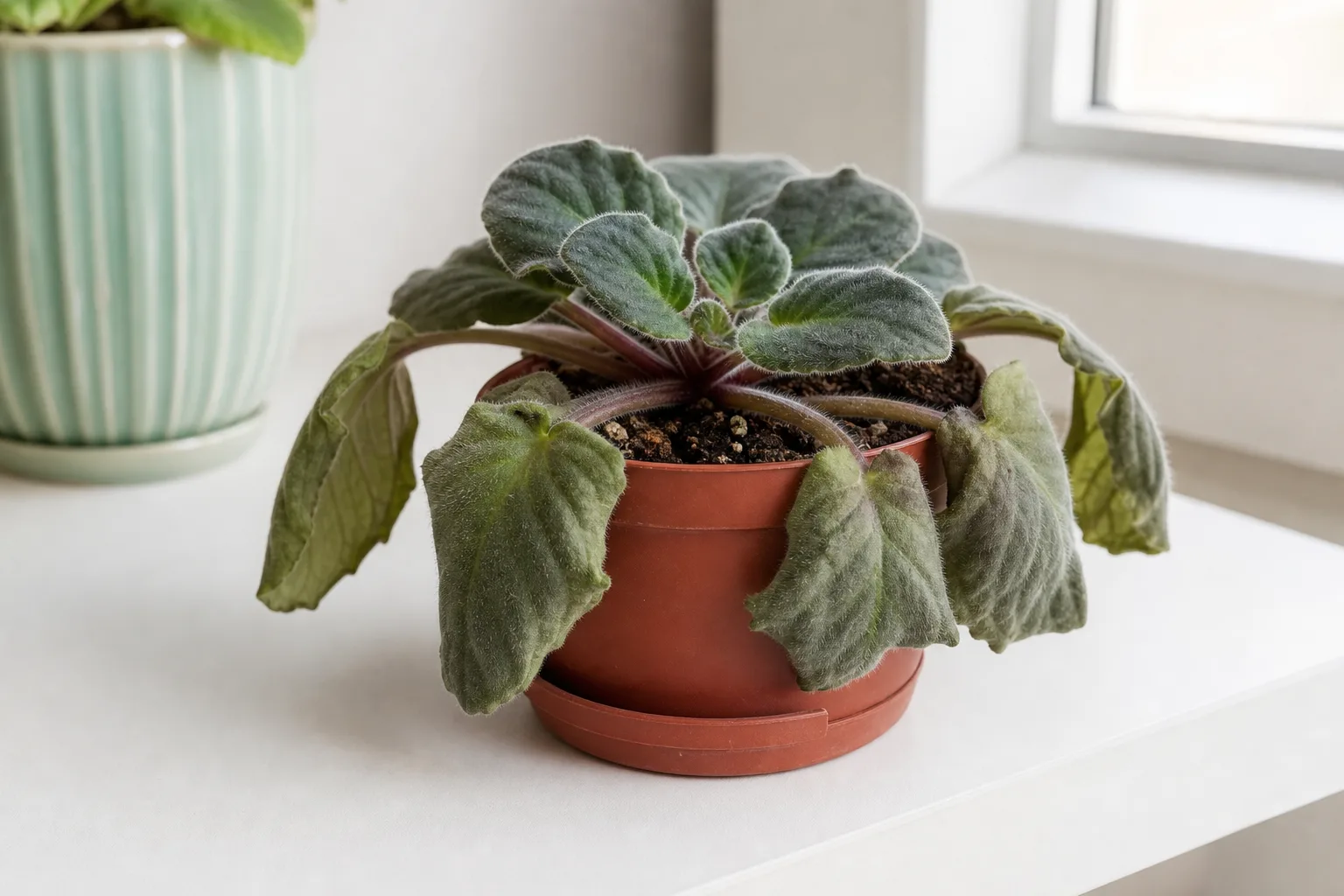
Transplant Shock on African Violet: Causes, Checks & Fixes
This guide covers transplant shock on African Violet. See also the general Transplant Shock guide, watering, and light pages for this plant.
Transplant Shock on African Violet: Causes, Checks & Fixes
Quick answer
If you repotted yesterday and your African Violet (Saintpaulia spp.) is suddenly wilted, transplant shock is the most likely explanation when the crown still feels firm and roots look pale-not mushy-when you unpot. Shock happens because fine fibrous roots stop moving water until new ones form after disturbance.
First step: enclose the repotted plant in a clear plastic bag or humidity dome, place it in bright indirect light out of direct sun, and keep the mix barely moist. Do not fertilize until new center growth looks firm. For the full repotting procedure-including neck burial and pot sizing-see the African violet repotting guide.
What transplant shock looks like on African Violet
The classic pattern is sudden wilting within a few days of repotting. Leaves feel soft and limp, but the rosette center often stays firm longer than the outer row. Open flowers may collapse even when the plant will survive-blooms are the first tissue to fail when roots cannot keep up with transpiration.
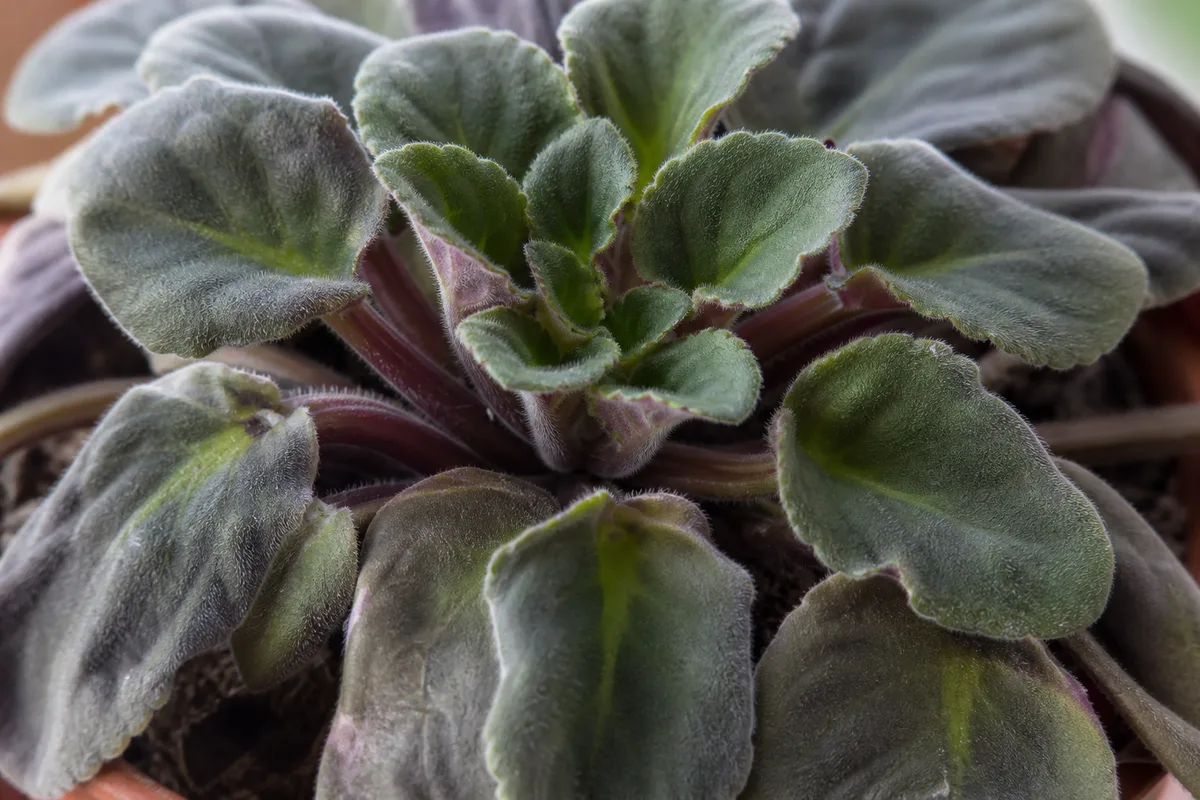
Soft limp outer leaves drooping from a recently repotted African violet while the tighter center rosette stays relatively firm - typical post-repot wilt before new roots form.
Other signs that fit shock rather than disease:
- Dropped buds or smaller new blooms after even a gentle pot upgrade
- Outer leaves yellowing or browning after a hard repot where you removed old foliage on purpose
- Dry-looking wilt when bone-dry peat in the new pot never absorbed water and water ran straight through
- Normal condensation inside a humidity bag without sour smell from the mix
Shock can look like drooping leaves from underwatering or overwatering, but the timing ties it to a recent repot. If you have not repotted in months, read those guides before assuming shock.
Why African Violet gets transplant shock
African violets carry a shallow, fine fibrous root system evolved for mossy limestone crevices-not deep garden soil. When those roots are torn, trimmed, or stripped of old mix, they temporarily stop functioning. Leaves keep losing water through transpiration, but damaged roots cannot replace it until new root tips form.
Soft refresh vs. hard repot
Not every repot stresses the plant equally. The distinction matters for how long recovery takes and whether you need a dome from day one.
| Repot type | What you did | Typical leaf/bloom loss | Dome needed? |
|---|---|---|---|
| Soft refresh | Lifted intact root ball into same or slightly larger pot; fresh mix around edges only | Open blooms may collapse; buds may open small | Only if leaves wilt |
| Mix refresh | Removed all old soil but kept root mass mostly intact | Some outer leaf loss possible | Often yes, 1–2 weeks |
| Hard repot | Potted down, stripped roots, or neck burial with outer leaves removed | Expect outer leaf and bud removal by design | Yes, 3–4+ weeks |
Whenever fibrous roots are disturbed, they tend to stop functioning until new roots generate. A soft transplant preserves flowers when possible; a hard transplant removes buds, flowers, and older outside leaves because those tissues will die from lack of water anyway.
Neck burial-burying an elongated stem to reset planting depth-is intentionally a hard repot. You remove lower leaves, bury the neck, and should plan on dome recovery from the start. Step-by-step neck burial lives in the repotting guide.
Peat-based African violet mix can also trigger a wilt mimic: very dry fresh mix repels water, so roots sit in a dry pocket while the surface looks wet. That is a hydration failure, not missing roots-but the dome protocol still helps while you fix moisture.
How to confirm the cause
Work through these checks before adding fertilizer or repotting again:
- Timeline - Did wilt appear within three to seven days of repotting? Shock is time-linked; chronic drooping without a recent repot points elsewhere.
- Crown firmness - Press the center gently. Firm tissue supports shock; soft, sunken crown tissue suggests crown rot.
- Root inspection - Knock the plant from the pot. Pale, intact fibrous roots with no sour smell fit shock. Brown, mushy, hollow roots mean root rot-treat that page instead.
- Water absorption - Did water soak in or run through dry peat? Lift the pot weight after watering. A light pot with wilted leaves after top-watering may need pre-moistened mix.
- Pot size - A pot much larger than the root mass holds wet mix too long and can cause rot that mimics post-repot wilt.
- Smell - Sour or swampy odor from drainage holes rules out simple shock.
Symptom lookalike comparison
| Pattern | Timing | Crown | Roots on unpotting | Likely cause |
|---|---|---|---|---|
| Wilt after repot, firm center | Days after repot | Firm | Pale, intact | Transplant shock |
| Wilt with wet heavy pot | Anytime | Firm early | Brown, mushy, sour smell | Root rot |
| Center collapse first | Anytime | Soft | May look okay early | Crown rot |
| Crispy wilt, light pot | No recent repot | Firm | Dry, firm | Underwatering |
| Limp lower leaves, wet mix | After heavy watering | Firm | Firm but saturated | Overwatering |
| Watersoaked patches | After cold window or chilled water | Firm | Firm | Cold damage |
First fix for African Violet
Enclose the repotted plant in a clear humidity bag or dome after the mix is correctly moistened-not soggy. This is the single most effective shock intervention for African violets because it slows transpiration while roots regenerate.
Humidity dome setup and timeline
- Pre-moisten mix if you used dry peat. Stir warm water into mix until crumbly-damp before repotting, or bottom-water until the root zone is evenly moist.
- Choose an enclosure - Clear produce bags, cake domes, or inverted clear containers work. The plant should not touch the plastic with wet leaves pressed against it.
- Place in bright indirect light - An east or shaded west window is ideal. Never put a sealed bag in direct sun; heat builds fast and cooks the rosette.
- Vent if needed - Condensation on the bag walls is normal. If water pools on leaves or mold appears on soil, open the bag slightly for a few hours, then reseal.
- Water lightly - Only when the surface feels dry to the touch. Bottom-water from a shallow tray and discard excess so the crown stays dry.
- Hold fertilizer until new center leaves look firm and normal-sized.
Dome duration by repot severity:
- Soft refresh with mild wilt - One to two weeks, then crack the bag open for a few days before removing.
- Full mix refresh or moderate root disturbance - Two to three weeks.
- Hard repot or neck burial - Three to four weeks, sometimes longer; keep the dome until center growth is clearly firm.
During enclosure, outer wilted leaves may not re-green. Judge success by new center leaves and firm roots when you peek-not by saving every old leaf.
Recovery timeline
Mild shock after a soft refresh may resolve within one to two weeks under a dome. Hard transplants-neck burial, potting down, or full root stripping-often need three to four weeks inside enclosure before the plant tolerates normal room humidity.
Signs recovery is working:
- New center leaves emerge firm and full-sized
- Roots look white or tan at the tips when you gently check the drainage hole
- Wilt stops spreading to additional leaves
- Condensation stays steady inside the bag without sour smell
Signs recovery is failing-see When to worry below.
What not to do
Do not flood a wilted plant immediately after repotting; saturated mix in a plastic pot is a common rot trigger. Do not repot again “to fix” shock unless the mix is hydrophobic and dry-give the dome time first. Do not place a bagged plant in direct sun. Do not fertilize stressed roots; salts in wet mix add injury. Do not remove the dome too early because outer leaves look bad-those leaves rarely recover anyway.
Do not bury the crown deeper during a panic repot. African violet stems rot easily when buried too high. Follow the repotting guide if planting depth was wrong the first time.
When to worry
Escalate beyond dome care when:
- The crown softens or youngest center leaves collapse while mix is moist
- Roots turn brown and mushy with a sour smell-switch to the root rot protocol
- Wilt climbs upward for more than a week inside a dome with correct moisture
- The plant sits in wet mix and keeps collapsing despite enclosure-likely rot from overwatering after repot, not shock
- No new center growth after four weeks in a dome with proper light and moisture
If shock recovery stalls but roots and crown are still firm, one gentle repot into pre-moistened mix in a correctly sized pot may help-but only after the first dome cycle fails. Chronic failure after two corrected attempts is a signal to take healthy leaves for propagation per the overview guide.
How to prevent transplant shock next time
Repot on a schedule that refreshes stale mix before roots struggle in exhausted chemistry-often annually for violets in 4-inch pots. Use a pot about one-third the diameter of the leaf span, pre-moisten mix, and pile it loosely without packing.
For routine refreshes, favor soft transplants when you want to keep blooms: lift the root ball intact and add fresh mix around the edges. Reserve hard repots-neck burial, potting down, full soil strip-for when the plant needs structural correction, and plan on dome recovery from day one.
Water with the bottom-watering method after repotting so the crown stays dry. Match light to the light guide so the small root zone dries predictably between drinks.
Related problems on the same shelf after a rough repot: root rot from oversized pots or soggy mix, and crown rot from buried stems or splash on the heart. This page covers post-repot diagnosis and dome recovery; the repotting guide covers procedure.
When to use this page vs other African Violet guides
- African Violet watering guide - Use for routine moisture checks before assuming transplant shock is the main issue.
- African Violet problems hub - Browse all 52 common issues on this species.
- Wilting on African Violet - Different entry point when symptoms overlap with transplant shock.
- Leaf Drop on African Violet - Different entry point when symptoms overlap with transplant shock.