Heat Stress on African Violet: Causes, Checks & Fixes
Quick answer
Heat stress on African Violet shows up when temperatures stay above 80°F for long stretches-buds drop, leaves cup downward, and the rosette stops blooming. First move the pot to the coolest bright spot you have and keep soil evenly moist with bottom-watering only.
Heat Stress on African Violet: Causes, Checks & Fixes
This guide covers heat stress on African Violet. See also the general Heat Stress guide, watering, and light pages for this plant.
Heat Stress on African Violet: Causes, Checks & Fixes
Quick answer
Heat stress on African Violet appears when prolonged temperatures climb above the plant’s comfort zone. African violets evolved in cool cloud-forest conditions and perform best around 65–80°F. Move the pot immediately to the coolest bright indirect location and maintain even moisture through bottom-watering-never splash water on velvety leaves to try to cool them.
What heat stress looks like on African Violet
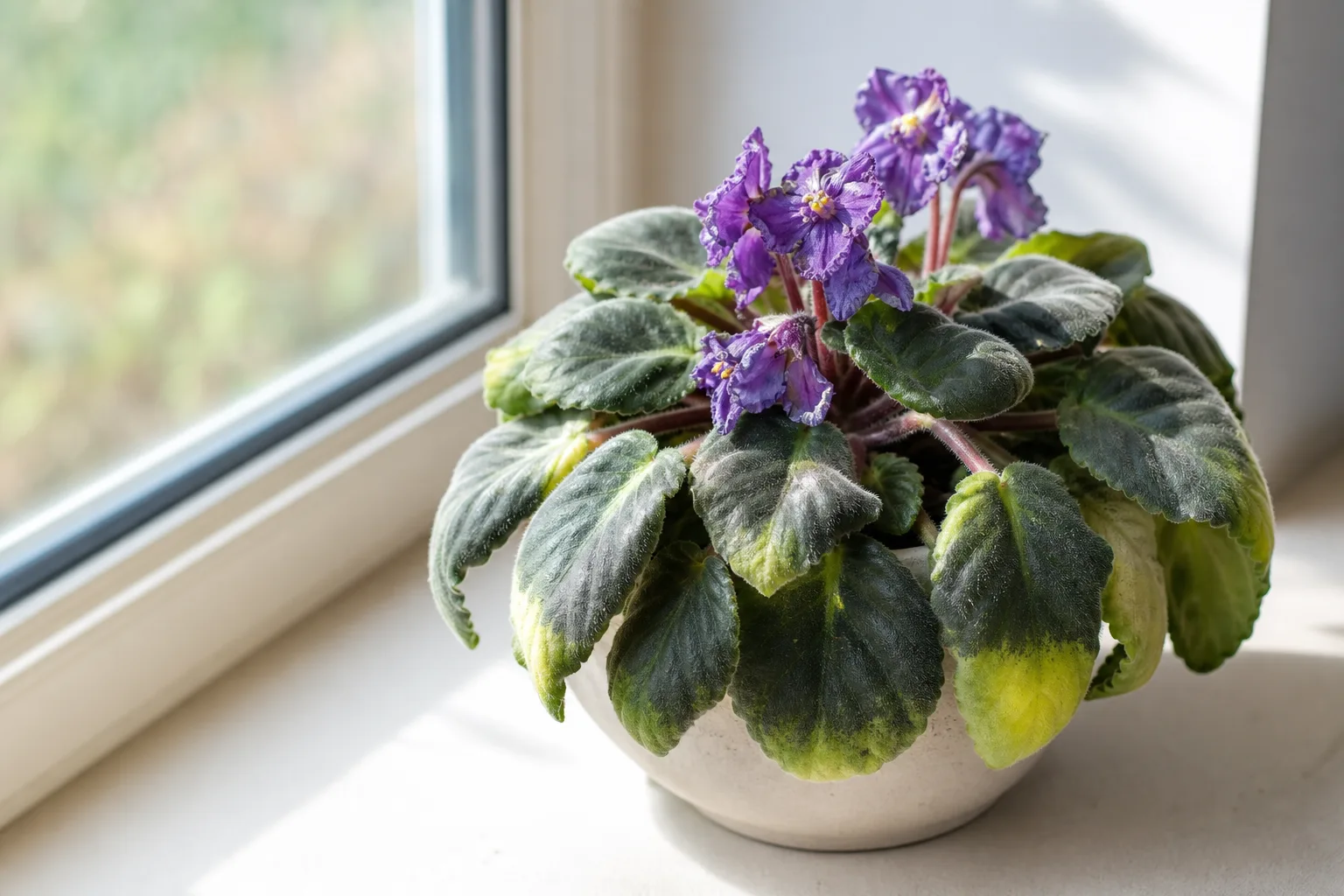
Early heat stress often shows limp, downward-cupped leaves and sudden bud drop even when the mix feels adequately moist. Open flowers may collapse on the same day a heat spike hits. Leaves facing a hot window can bleach to pale green or yellow-green-a pattern that looks like too much light but tracks a recent temperature jump rather than a gradual light change.
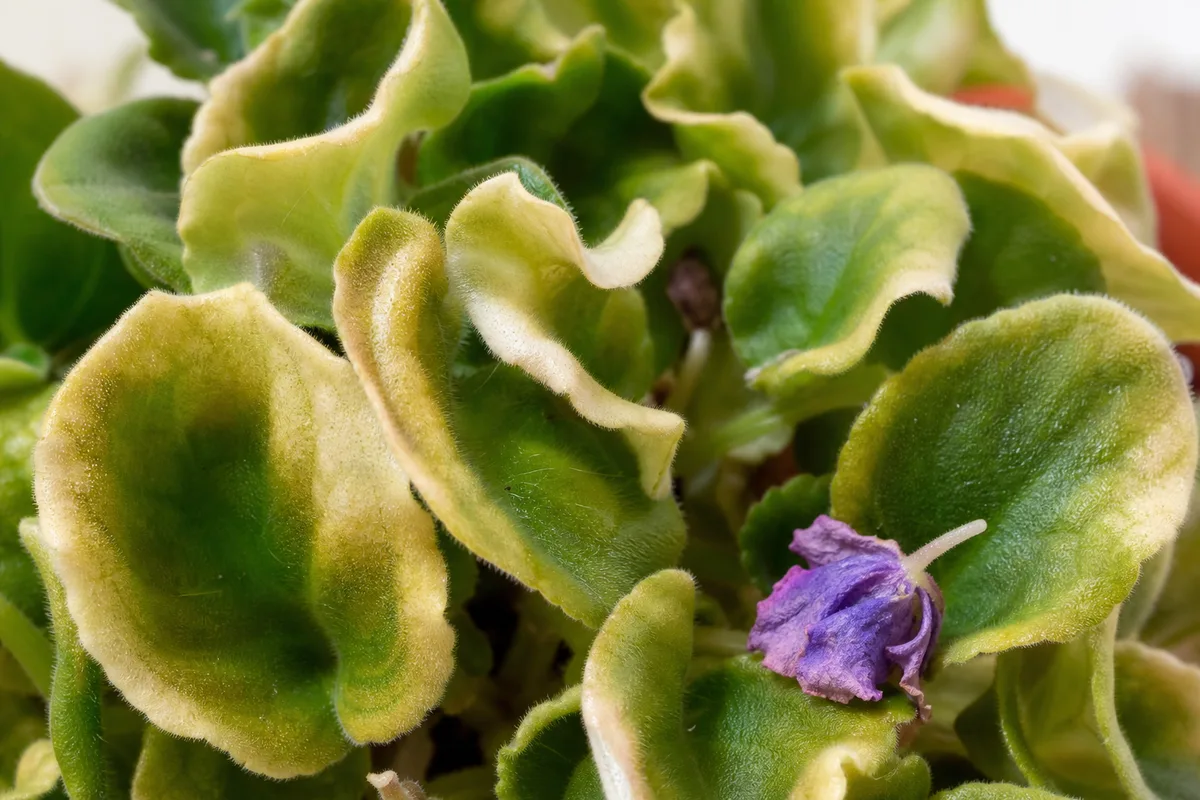
Downward-cupped limp leaves with pale bleached tips and wilted open blooms - heat stress often hits during afternoon temperature spikes.
Prolonged exposure slows new center growth and stops blooming entirely. At very high temperatures, stems and leaves may look elongated and dry as the plant shifts energy away from flowers. Compare with cold damage: exposure below about 50°F causes dark water-soaked patches, while heat stress more often pairs with dry leaf edges, collapsed blooms, and a warm room on a sunny afternoon. Under prolonged high temperatures, growth and flowering is reduced.
Why African Violet suffers in heat
African Violet is native to high-altitude tropical cloud forests in Tanzania and Kenya, where air stays cool and humid-not to hot windowsills or stuffy shelves. The compact rosette with shallow fibrous roots and water-sensitive fuzzy leaves loses water fast when air is hot and dry, while warm saturated mix slows root function at the same time.
Common heat traps in homes include:
- West- or south-facing windows where afternoon sun heats the pot and glass
- Heat vents or radiators blowing warm dry air across the rosette
- Enclosed terrariums or domes that trap heat on sunny days
- Grow lights mounted too close, especially older incandescent bulbs that add radiant heat
- Leaves touching sun-heated window glass, which can injure tissue even when room air feels moderate
High heat also compounds other stressors. Dry air from air conditioning or summer heating drops humidity below what the rosette prefers, accelerating transpiration from fuzzy leaves. If you respond to wilting by watering more while the mix is already warm and wet, you invite crown rot-a separate emergency that heat makes more likely.
How to confirm the cause
Work through checks in order so you separate heat from watering mistakes, pests, and light burn:
- Temperature at the pot - Hold a thermometer at the rim during the hottest part of the day. Sustained readings above 80°F while the plant wilts or drops buds strongly supports heat stress.
- Placement audit - Note whether afternoon sun hits the pot directly, whether a vent blows on the plant, or whether grow lights run within a few inches of leaves.
- Soil moisture - Press the top inch. Dry mix with limp leaves suggests heat plus underwatering on African Violet. Wet, heavy mix with limp leaves suggests heat stacked on overwatering on African Violet-cool and dry slightly rather than adding more water.
- Recent changes - Heat stress often follows a heat wave, a move to a brighter window for winter, or closing a terrarium lid on a sunny day.
- Pattern on the plant - Bleaching or cupping on the side facing the window points to localized heat and light; uniform wilting across the rosette may mean room-wide high temperature.
Confirmed diagnosis: High pot-level temperature plus bud drop, cupped leaves, or stalled blooms without pest signs or soggy rot smell. Suspected: Brief afternoon warmth with no symptoms-watch before changing care.
First fix for African Violet
Relocate the pot to the coolest bright indirect spot available-often an east window, an interior shelf away from afternoon sun, or an air-conditioned room. During hot weather, place plants in the coolest place in the home. This single move removes the primary stressor before you adjust anything else.
After moving:
- Bottom-water with room-temperature water if the top inch of mix is dry; skip watering if the pot still feels heavy from recent drinks.
- Raise grow lights or reduce hours during heat waves so foliage is not heated from above.
- Pull the pot back from hot glass so leaves and the container are not touching sun-heated panes.
- Remove spent flowers and fully bleached leaves so the rosette directs energy to new growth rather than dying tissue.
Do not mist leaves to cool them-water on velvety foliage causes permanent spotting and does not fix root-zone heat.
Recovery timeline
Once temperatures stabilize below 80°F, limp leaves often re-firm within a few days if roots stayed healthy. New buds may take three to six weeks to return after a serious bloom loss. Severely bleached or cupped tissue does not re-green or flatten; wait for fresh center leaves to replace damaged ones.
Signs the plant is improving: firm leaf texture, new growth from the crown, and buds that hold instead of dropping. Signs the problem is worsening: soft crown tissue, sour smell from the soil, or spreading yellowing on wet mix-shift to crown-rot protocol and reduce watering.
Lookalike symptoms
Underwatering - Pot feels light, top inch is bone dry, and wilting improves within hours of bottom-watering. No recent heat spike required.
Overwatering and crown rot - Limp leaves on consistently wet mix, soft crown, or sour soil smell. Heat may have triggered the overwater response but the fix is cooler conditions and a drier root zone, not more water.
Too much light alone - Bleached tight center leaves in a bright south window without extreme heat. Moving to indirect light fixes new growth; heat stress usually adds wilting and bud drop on warm days.
Cold damage - Dark water-soaked patches after exposure near a cold window or below about 50°F. Treatment is warmth, not cooling.
Mistakes to avoid
Do not move a heat-stressed plant into direct sun to “recover”-light intensity compounds the problem. Do not overwater because leaves look limp; warm wet mix invites crown rot. Do not fertilize until the plant resumes active center growth in stable temperatures. Do not repot during a heat spell unless the mix has failed or roots are rotting-African Violet repotting guide adds transplant stress when the plant needs stability most.
How to prevent heat stress next time
Keep day temperatures in the 65–80°F range when possible. In summer, pull pots back from hot glass, run a fan for gentle airflow between grouped plants, and use pebble trays for humidity without letting pots sit in standing water. Bottom-water on your normal schedule so roots neither dry out nor stay saturated during warm spells.
If you grow under artificial light, favor cooler LED fixtures over incandescent bulbs and maintain at least 12–15 inches between tubes and foliage. During forecast heat waves, move collections to the coolest room preemptively rather than waiting for bud drop.
When to use this page vs other African Violet guides
- African Violet watering guide - Use for routine moisture checks before assuming heat stress is the main issue.
- African Violet problems hub - Browse all 52 common issues on this species.
- Wilting on African Violet - Different entry point when symptoms overlap with heat stress.
- Drooping Leaves on African Violet - Different entry point when symptoms overlap with heat stress.
- Brown Leaves on African Violet - Different entry point when symptoms overlap with heat stress.