Plant Edema: Symptoms, Causes, and Treatment
'Edema is one of the most common houseplant issues because indoor watering is easy to get wrong. Pots, soil mix, season, and light all change how fast soil dries. When you see Blister-like bumps or corky spots caused by excess water uptake, the goal is to confirm whether the plant is getting too much water, too little, or uneven moisture before making big changes. Track weekly progress after you change care, and note watering, light, and repotting dates so you can tell whether the symptom is improving or returning.'. Compare upper versus lower leaves, new versus old growth, and soil moisture at root depth before you treat, because the same visible symptom can come from watering, light, pests, or normal aging on different plants.
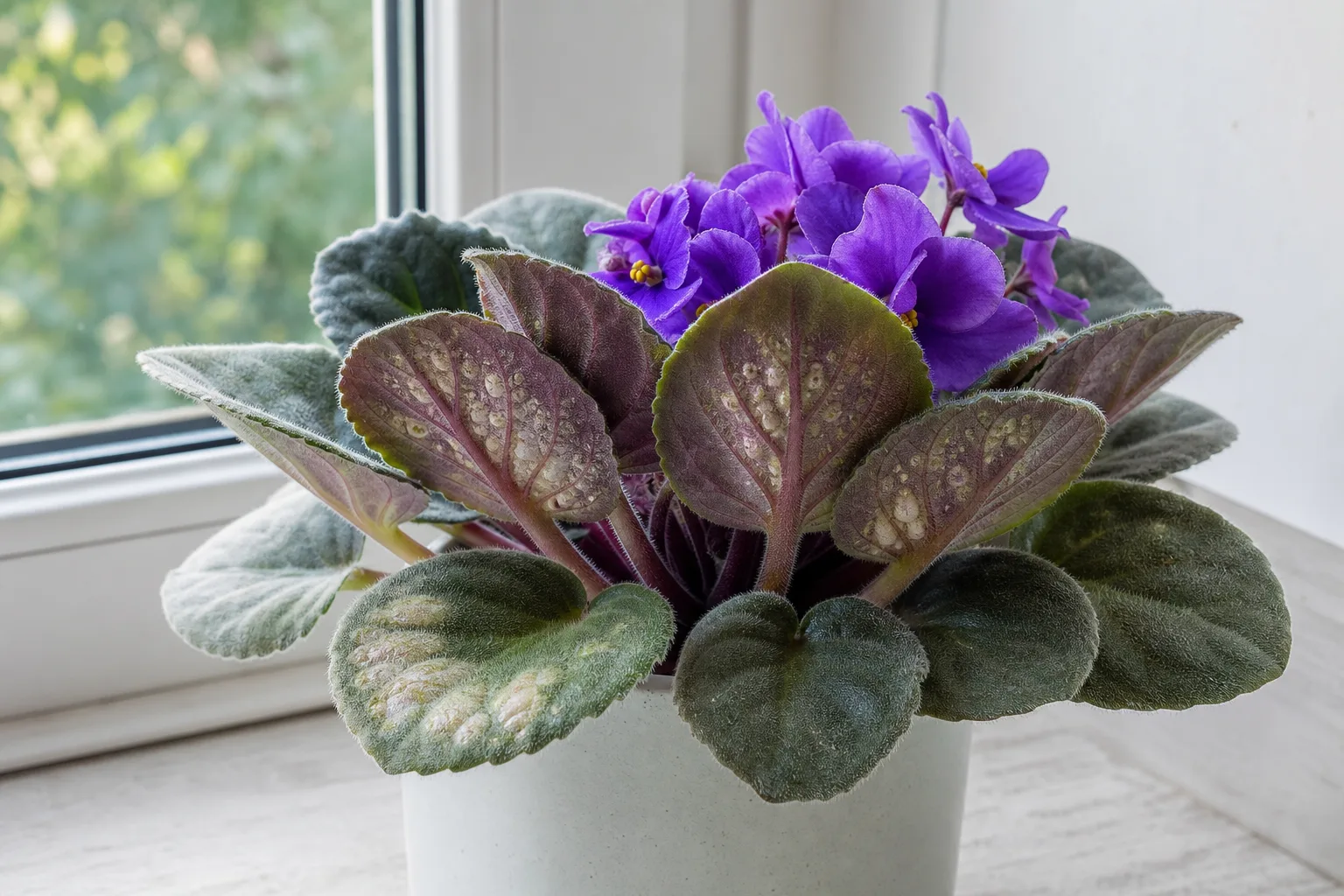
Edema on Houseplants
Still unsure?Match your symptoms to the most likely problems in under a minute.Run diagnosis →Understand and fix edema
'Edema is one of the most common houseplant issues because indoor watering is easy to get wrong. Pots, soil mix, season, and light all change how fast soil dries. When you see Blister-like bumps or corky spots caused by excess water uptake, the goal is to confirm whether the plant is getting too much water, too little, or uneven moisture before making big changes. Track weekly progress after you change care, and note watering, light, and repotting dates so you can tell whether the symptom is improving or returning.'. Compare upper versus lower leaves, new versus old growth, and soil moisture at root depth before you treat, because the same visible symptom can come from watering, light, pests, or normal aging on different plants.
Overview
'Edema is one of the most common houseplant issues because indoor watering is easy to get wrong. Pots, soil mix, season, and light all change how fast soil dries. When you see Blister-like bumps or corky spots caused by excess water uptake, the goal is to confirm whether the plant is getting too much water, too little, or uneven moisture before making big changes. Track weekly progress after you change care, and note watering, light, and repotting dates so you can tell whether the symptom is improving or returning.'. Compare upper versus lower leaves, new versus old growth, and soil moisture at root depth before you treat, because the same visible symptom can come from watering, light, pests, or normal aging on different plants.
How to identify it
- Soil feels soggy or waterlogged several days after watering
- Top inch stays wet while lower roots may be dry (or the reverse)
- Leaves yellow, wilt, or crisp despite your usual routine
- White mold, fungus gnats, or sour smell from the pot
- Symptoms worsen after repotting or a weather change
When to worry
Mushy stems, foul-smelling soil, or widespread yellowing within days means act immediately-root damage may already be underway.
Common causes
Watering on a calendar instead of soil moisture
Many houseplants are watered weekly regardless of need. Cool rooms, short winter days, and dense soil keep pots wet longer and trigger Edema.
Poor drainage or no drainage holes
Water that sits in the bottom of a pot suffocates roots. Decorative cache pots without drainage are a frequent cause of Blister-like bumps or corky spots caused by excess water uptake.
Heavy or compacted potting mix
Old soil that has broken down holds water like a sponge. Roots get less oxygen even when you think you are watering lightly.
Seasonal light and growth changes
Plants use less water in low-light winter months. Continuing summer watering into winter often leads to Watering stress.
Step-by-step fix
Check soil moisture at root level
Stick your finger 2 inches into the soil or use a moisture meter. Note whether the root zone is wet, evenly moist, or bone dry before watering again.
Adjust watering to the plant's actual need
Water thoroughly only when the top 1–2 inches are dry for most tropical houseplants. Pour out excess from saucers within 30 minutes.
Improve drainage if soil stays wet
Repot into a mix with perlite or bark if needed. Confirm the pot has drainage holes and is not sealed inside a decorative outer pot.
Inspect roots if symptoms persist
Slide the plant out of the pot. Trim mushy brown roots, repot in fresh mix, and hold fertilizer until new growth appears.
Monitor for 10–14 days
Track soil dryness and leaf response. One adjustment at a time makes it easier to see what helped.
Prevention tips
- Water when soil is dry at the top, not on a fixed schedule
- Use pots with drainage holes and empty saucers after watering
- Reduce watering frequency in winter or dim rooms
- Choose a well-draining mix suited to your plant type
Common mistakes
- Watering because leaves look sad without checking soil first
- Repotting into a much larger pot 'to fix' watering issues
- Misting leaves instead of fixing soil moisture
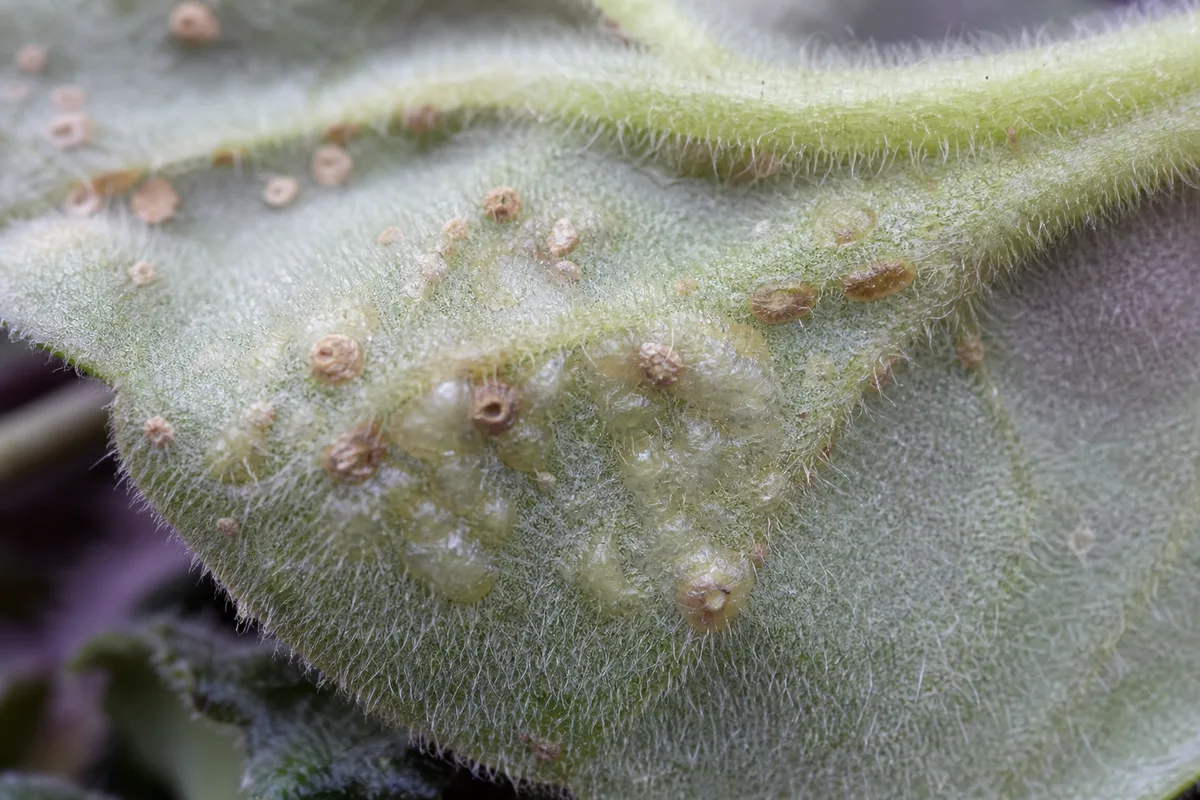
Small translucent bumps on the underside of a leaf can look like insects, eggs, or an infection. When those bumps become tan, brown, and corky without any organism attached, plant edema is a strong possibility. Edema—also spelled oedema—is a physiological water-balance disorder, not a contagious disease.
The practical goal is to stop new damage, not to erase old scars. Diagnose the pattern carefully, rule out pests and infectious spots, then adjust the conditions that allowed water uptake to exceed water loss. Avoid reaching for a pesticide unless you actually find a pest or pathogen.
This guide synthesizes extension and university plant-clinic guidance for a conservative visual triage. Photographs cannot confirm every lesion: atypical, rapidly expanding, oozing, or collapsing tissue should be assessed by a local extension plant clinic, especially when a valuable plant continues to decline after environmental corrections.
What plant edema is
Plant edema develops when roots take up water faster than leaves and other tissues can release it. Cells swell, and affected tissue forms water-soaked blisters that may rupture and become corky. The UC Statewide IPM Program defines edema as a noninfectious, abiotic disorder characterized by raised, scabby areas, especially beneath leaves.
That mechanism is more precise than saying the plant was simply “overwatered.” Frequent irrigation and persistently wet media are important contributors, but edema depends on the relationship between uptake and transpiration. A moist, warm root zone combined with cool, humid, dim, still air can produce the imbalance even when the same watering practice caused no visible problem under brighter, drier conditions.
Edema is usually cosmetic in houseplants, though severe or repeated injury can cause yellowing, distortion, leaf drop, and lost photosynthetic area. UC IPM describes typical landscape damage as aesthetic, while greenhouse sources note that susceptible crops can suffer economically significant injury. Host, severity, and duration therefore matter.
Recognize edema from early blister to corky scar
Fresh lesions often begin as tiny translucent or water-soaked bumps. They may be easiest to see by holding the leaf against light and viewing the underside. As cells rupture and the plant walls off injury, lesions become tan or brown, raised or scabby, and cork-like.
The University of Wisconsin Plant Disease Diagnostics Clinic describes fluid-filled blisters that enlarge, merge, burst, and scar. Older marks will not necessarily resemble the early stage, so a single plant may show clear bumps on new damage and hardened patches on older leaves.
Do not diagnose edema from brown texture alone. Examine whether the mark is part of the leaf, whether it scrapes off, whether insects or webbing are present, and whether similar lesions are appearing in a consistent surface pattern.
Where symptoms appear
The lower leaf surface is the classic location, often near margins and initially on older leaves, but host responses vary. Bumps can occur on upper surfaces, petioles, stems, and occasionally flowers. On some succulents, edema may appear as flat pitted or corky scarring rather than obvious raised blisters.
Maryland Extension describes houseplant edema as wart-like or crusty raised bumps that may brown and be confused with disease or insect feeding. Inspect both leaf surfaces, using a hand lens if necessary, because scale insects and mite or thrips injury require different management.
Distribution offers clues. Edema often affects many lesions within the tissue of susceptible leaves, while scale consists of discrete insects attached to the surface. Infectious leaf spots may expand with halos, concentric zones, ooze, or fruiting structures, although appearance alone cannot always distinguish them.
Hosts and seasonal patterns
Edema can affect many plants, but extension references repeatedly identify ivy geranium, begonia, jade, African violet, Schefflera, snake plant, ivy, and other fleshy-leaved or greenhouse-grown plants as susceptible. Susceptibility also varies among cultivars, so two plants sharing a shelf may respond differently.
Late winter, cloudy stretches, and greenhouse or indoor conditions are common contexts. Light is lower, air may be cool or humid, and ventilation is often limited while roots remain in moist media. Iowa State Extension reports that edema is especially common when soil is warm and moist while air is cool and humid.
Seasonal association is evidence, not proof. Summer edema can occur in air-conditioned rooms, under dense plant canopies, after an irrigation change, or during prolonged humid weather. Diagnose the actual microclimate around the plant rather than the calendar.
Why edema develops
Water moves through a plant as roots absorb it and leaves lose it through transpiration. When uptake and loss become badly mismatched, pressure can damage susceptible cells. The visible blister is tissue injury resulting from that imbalance.
This explains why an isolated watering event does not predict every case. Root-zone warmth, moisture supply, plant genetics, light, leaf temperature, humidity, and air movement all affect the rates involved. Management works best when it corrects the imbalance gently rather than driving the plant from saturation into drought.
Water uptake exceeds water loss
Penn State Extension describes edema as an imbalance of water uptake and loss, with warm moist root conditions favoring absorption and cool air, high humidity, low light, and poor ventilation reducing transpiration. The model fits the familiar pattern of damage after a cloudy, humid period.
Plant cells do not “sweat out” liquid in the human sense. Transpiration is water vapor loss, mainly through stomata, driven by plant and environmental conditions. Avoid advice that tries to force rapid drying with harsh heat, intense sun, or a cold draft; sudden extremes can create new injury.
Because the disorder is physiological, it does not multiply or spread from plant to plant like a fungus. Several plants may develop it simultaneously when they share the same environment, which can resemble contagion but instead reflects common exposure and susceptibility.
Moisture, light, temperature, humidity, and airflow
Persistently wet media maintain water availability to roots. Low light reduces photosynthetic activity and commonly coincides with reduced transpiration. High relative humidity narrows the vapor gradient between the leaf and air, while still air lets a humid boundary layer remain around foliage.
Temperature relationships are nuanced. Warm media can maintain root uptake while cooler air reduces water loss; rapidly cooling evening air can also raise relative humidity. The useful response is not to chase an exact temperature but to avoid the combination of wet roots, cool or dim periods, high humidity, and stagnant air.
Oil sprays are a relevant edge case. Wisconsin Extension notes that edema has been associated with oil sprays that interfere with normal leaf water loss. This does not make horticultural oil universally unsafe, but it supports following labels, testing sensitive plants, and avoiding unnecessary applications when no pest is present.
Rule out look-alike problems
Before changing care, examine lesions with bright light and magnification. Ask whether the bump is living tissue, an attached organism, residue, or a lesion caused by infection or feeding. Photograph both sides of the same leaf and compare new and old marks.
If bumps scrape or lift away and reveal an insect beneath, consider scale. Fine webbing, mobile mites, stippling, or cast skins point toward arthropods. Sticky honeydew and sooty growth also support sap-feeding insects rather than pure edema.
Edema versus scale, mites, galls, and leaf spots
| Feature | Edema | A look-alike clue |
|---|---|---|
| Attachment | Part of leaf tissue | Scale sits on the surface and may lift |
| Early appearance | Translucent or water-soaked blister | Mite injury often begins as stippling |
| Older appearance | Tan or brown corky scar | Leaf spots may expand, halo, or ooze |
| Movement | None | Mites or thrips may move under magnification |
| Spread pattern | Shared environment, not contagion | Infectious disease may move through tissue or plants |
| Treatment response | Cleaner new growth after environmental correction | Pest damage continues while insects remain |
Use the comparison to decide what not to do as well as what to do. Embedded, stable corking with no insects supports monitoring and environmental correction. Removable bodies, honeydew, webbing, or moving organisms justify pest identification before treatment. Expanding wet lesions, halos, ooze, or stem collapse justify isolation and diagnostic help rather than an automatic edema label.
UConn Extension warns that edema and related intumescences can be confused with infectious disease or insect galls. When the pattern is atypical, worsening rapidly, or valuable enough to justify testing, send clear photographs or a sample to a local extension plant clinic.
Do not use a scratch test aggressively on delicate leaves. One carefully examined lesion is enough. Repeated scraping creates wounds that obscure the original evidence.
Three realistic patterns show how the evidence works. A jade plant that develops embedded brown pitting after several dark weeks, while its mix remains moist and no insects are visible, fits edema well. A ficus with removable brown shields, sticky residue, and ants fits scale better. A geranium with expanding water-soaked spots, yellow halos, and decline that continues after the environment improves needs disease assessment rather than an automatic edema label.
The age of lesions matters. If only old leaves carry hard corky marks and every leaf produced since conditions improved is clean, the disorder may already be inactive. Fresh translucent bumps on successive leaves show that the imbalance continues. Marking the newest lesion with a photograph is safer than writing directly on delicate tissue.
Intumescence is sometimes used loosely as a synonym, but plant-science sources distinguish some intumescences from classic oedema based on host and mechanism. Gardeners do not need to settle that taxonomy to make a safe first response. They do need to avoid claiming an insect or pathogen without evidence and to correct clearly unfavorable water, light, and airflow conditions.
Diagnose the growing conditions
Reconstruct the seven to ten days before lesions appeared. Note watering, cloudy weather, use of a humidifier, a closed window, changed heating, plant crowding, relocation, a new cachepot, or an oil spray. Edema may become visible after the causal conditions have already shifted.
Inspect the root zone at multiple depths. Surface dryness can coexist with saturated lower media, especially in large or poorly drained containers. Lift the pot, check drainage openings, and remove standing water from the outer container or saucer.
Inspect the plant, root zone, and recent care
Use this sequence:
- Confirm that bumps are within tissue and look at both leaf surfaces.
- Search with a hand lens for scale, mites, thrips, webbing, frass, and cast skins.
- Check moisture below the top layer and compare pot weight.
- Verify that drainage openings are unobstructed and no water is trapped outside the pot.
- Review light, humidity, airflow, temperature, irrigation, and spray changes.
- Mark affected leaves and watch whether new lesions continue.
The sequence reduces unnecessary disturbance. Root inspection is appropriate when the mix is persistently wet, smells sour, or the whole plant is declining, but edema alone does not prove root rot and does not automatically require repotting.
Measure relatively, not obsessively. A basic humidity meter and light reading can reveal a large change, but leaf response remains the decisive evidence because susceptible species and cultivars differ.
Check whether the plant shares a microclimate with unaffected neighbors. A specimen tucked behind others may receive less light and airflow even when all pots are watered together. A plant on a cold sill may have cooler foliage than one only a short distance away, while its root zone remains warmed by a radiator or heat mat. These small spatial differences can explain why one plant shows edema first.
Also examine the container system. A nursery pot may drain correctly at the sink but then sit in runoff inside a sealed ceramic cover. A self-watering reservoir may remain full during a low-demand period. Dense decorative topdressings can slow evaporation and hide persistent moisture. Record these details before changing the pot because they may reveal a simpler correction.
Manage edema without overcorrecting
Your objective is a better balance: adequate root moisture without prolonged saturation, plus enough appropriate light and air movement for normal water loss. Make measured changes, because forcing a succulent or African violet from wet conditions into harsh sun can add scorch or drought stress.
Remove standing water immediately and pause irrigation until the root zone reaches an appropriate moisture state for the species. Do not let a moisture-loving plant become bone dry solely because it has edema.
Adjust watering and drainage
Water based on the plant and root zone rather than a recurring calendar date. During dim or cool periods, the interval usually lengthens because the plant and media lose water more slowly. UC IPM recommends avoiding overly frequent irrigation and improving drainage where warranted.
When watering is needed, wet the root ball evenly and allow excess to leave through drainage holes. Empty saucers and cachepots. Repeated small surface pours may create uneven zones; a thoroughly watered but well-aerated mix is different from media that remains saturated.
Repot only when evidence points to a structural drainage problem: blocked holes, severely compacted mix, an oversized container, or unhealthy roots. Select a container close to the root mass and a medium appropriate for the species. Unnecessary repotting can injure roots and make water use even less predictable.
Improve light and air movement safely
Increase light gradually within the species’ tolerance. Better light can support normal plant activity, but direct sun may scorch leaves acclimated to shade. A grow light on a timer can provide consistency during dark seasons without a sudden solar shock.
Improve spacing so leaves are not pressed together and air can move around them. A gentle fan may help in a crowded growing area, but avoid a strong stream that chills or desiccates foliage. The aim is mild circulation, not wind stress.
Review humidifier placement. Humidity can benefit some tropical plants, yet very high local humidity combined with wet mix, low light, and poor airflow can favor edema. Adjust the whole environment instead of assuming maximum humidity is always better.
Decide whether to remove affected leaves
Old edema scars do not heal. Clemson Extension states that symptomatic leaves will not recover, although improving light and watering can halt continued decline. Removal is therefore an appearance and plant-balance decision, not a way to eliminate contagion.
Keep mildly affected green leaves if they are still contributing substantial healthy area. Remove leaves that are mostly damaged, yellowing, dropping, or obstructing airflow, using clean tools. Avoid stripping many leaves from a small or stressed plant at once.
If you are not fully confident in the diagnosis, preserve one representative leaf for inspection or photographs before disposal. Bag tissue when pests or infection remain plausible.
Recovery expectations
Judge recovery by the absence of new blisters and by healthy new leaves. Existing corky marks will remain, and a plant may shed severely affected foliage. Improvement can therefore be real even while old damage is still visible.
The timetable depends on species and growth rate. A fast-growing geranium may provide evidence within a new flush, while a slow succulent may take much longer. Keep a dated photo and mark the latest affected leaf so progression is easier to assess.
If new lesions continue after moisture, light, and airflow are corrected, revisit the diagnosis. Confirm actual root-zone conditions, check for a hidden pest, review recent sprays, and seek plant-clinic help if the pattern does not fit.
Set recovery checkpoints rather than repeatedly altering care. At the first checkpoint, confirm that the root zone now dries in a predictable way and that no water remains trapped after irrigation. At the next new leaf, inspect the underside for translucent bumps before they age. After two clean leaves on an actively growing plant, maintain the successful conditions instead of tightening them further.
Dormant or slow plants require patience. When no new leaf is expected, track whether existing lesions are stable and whether the plant retains color and firmness. A lack of fresh damage is useful evidence even before new foliage appears.
Common mistakes
Avoid spraying fungicide or insecticide merely because lesions look alarming. Edema is noninfectious, and an unnecessary spray may damage sensitive foliage or complicate identification. Treat only an identified pest or disease and follow the product label.
Do not remove every marked leaf, expose the plant abruptly to intense sun, aim a heater or strong fan at it, or let it remain severely dry. Those responses replace one imbalance with another.
Another mistake is assuming a drainage hole guarantees good drainage. Compacted mix, a blocked opening, roots sealing the base, or water trapped in a cachepot can still keep the lower root zone saturated.
Avoid trying to lower humidity drastically for an entire tropical collection because one susceptible cultivar has edema. Improve spacing, local airflow, and irrigation timing around the affected plant first. The lowest-risk solution is the smallest environmental correction that stops new injury while still respecting the species’ normal needs.
Prevent edema from returning
Match watering to current light, temperature, growth, pot size, and species rather than the day of the week. Learn the pot’s weight at different moisture levels and check below the surface before irrigating.
Provide adequate spacing and gentle circulation, especially during cool cloudy periods. Reduce irrigation frequency as drying slows, empty collected water, and keep media aerated. Apply oils only when justified and according to label instructions.
Inspect susceptible plants weekly in winter, focusing on lower leaf surfaces. Catching translucent blisters early lets you correct the environment before a large amount of tissue becomes corky.
Conclusion
Plant edema is a noninfectious water-balance disorder that begins as translucent or water-soaked blisters and often ends as tan or brown corky scars. Confirm that the bumps are part of the tissue, rule out pests and infectious spots, and review the combination of root-zone moisture, light, temperature, humidity, and airflow.
Old scars will not disappear, so success means clean new growth and no continuing lesions. Adjust watering and drainage without forcing drought, improve light and circulation gradually, and reserve pesticides for verified organisms. That measured approach addresses the mechanism while protecting an already stressed plant.
Plants commonly affected
These houseplants often struggle with edema. Open a care guide or plant-specific troubleshooting page for tailored fixes.
 Medium
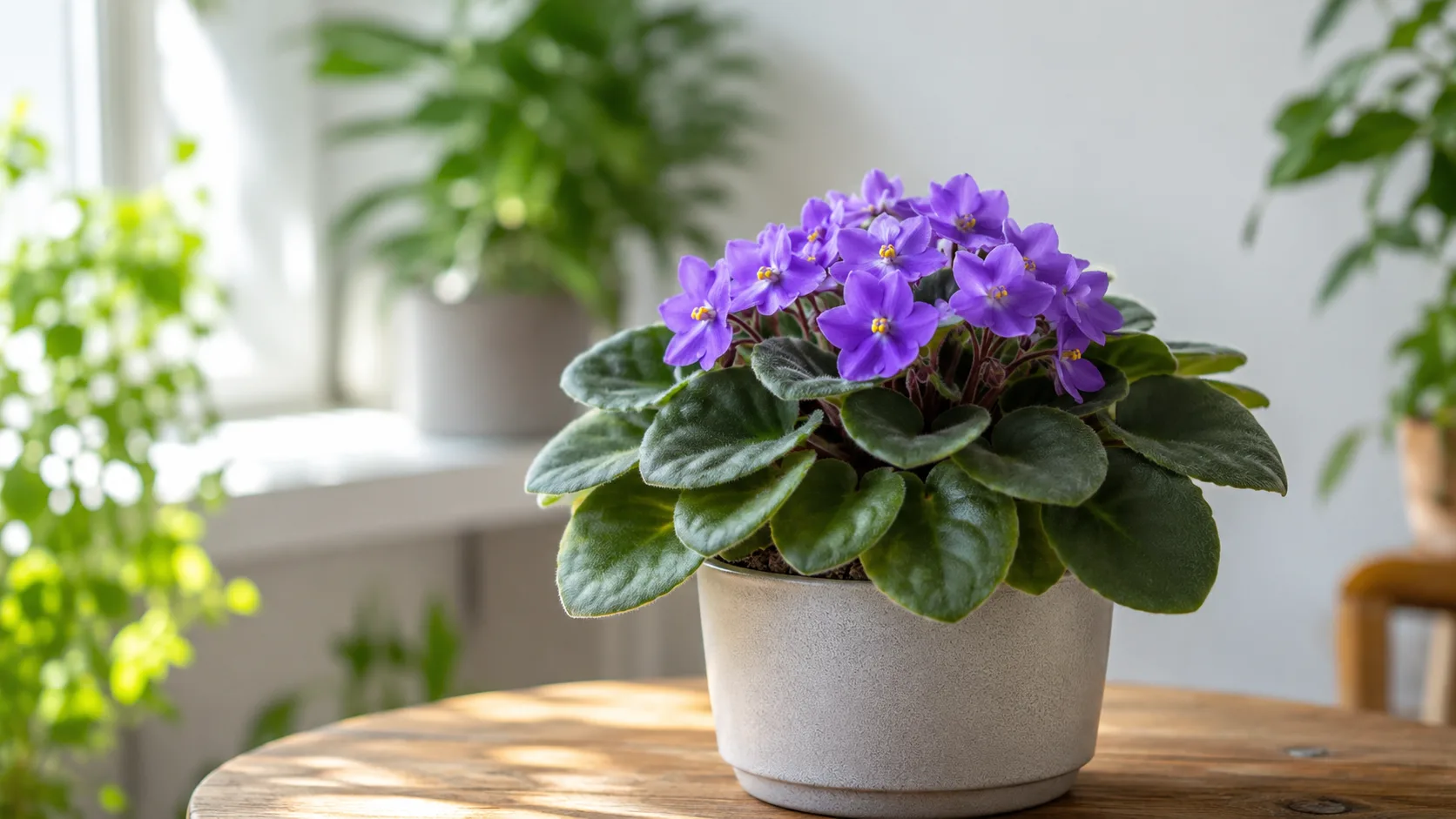
African Violet
Likely causeEdema on African Violet: Your African violet leaves will develop yellow and brown spots if you do not provide magnesium or nitrogen. Overwatering can sometimes cause edema, caused by the plant consuming too much water.
Quick fixInspect African Violet, confirm edema matches your symptoms, then adjust care or treat per authoritative guides.
 Medium
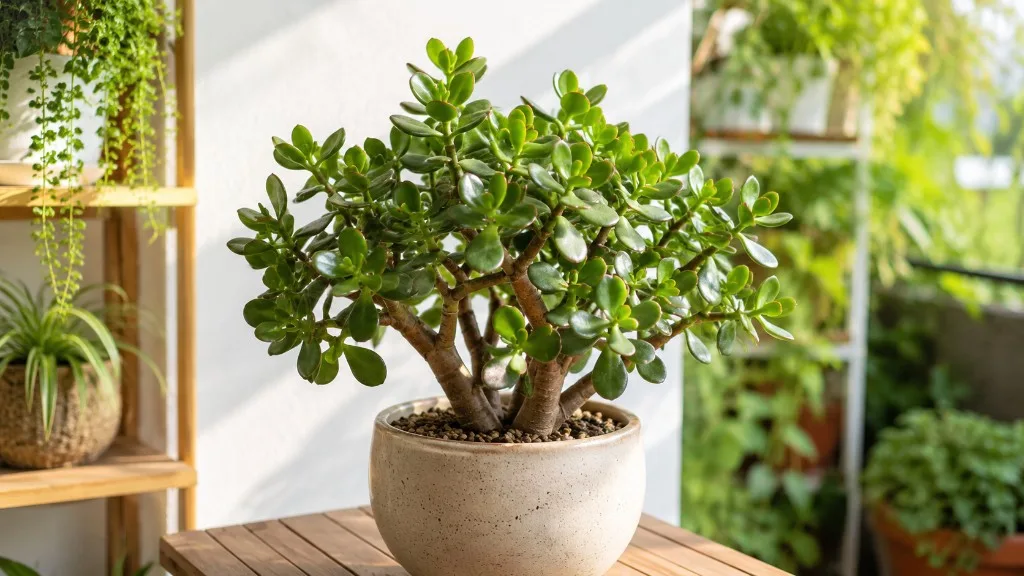
Jade Plant
Likely causeYour jade plant has edema ? Don't panic — Edema appears as small corky bumps or blisters on jade leaves from irregular…. Here's exactly how to fix it.
Quick fixConfirm diagnosis on your Jade Plant, then address the most likely care or pest factor described in current extension guidance.
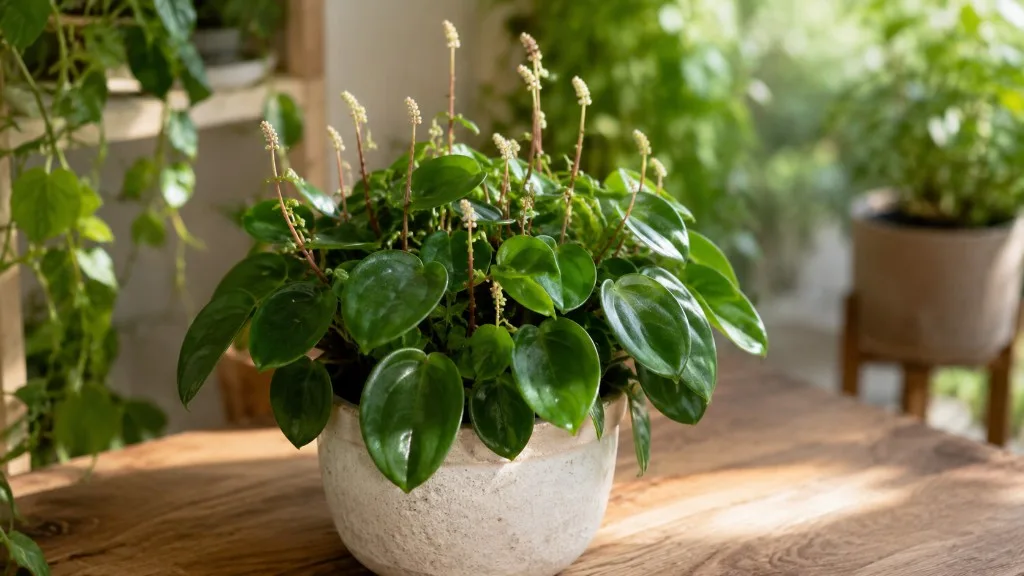 Medium
Raindrop Peperomia
Likely causeMay 8, 2026 · Mushy stems and leaf drop on peperomia? We'll show you why it happens—overwatering, poor drainage, and edema —plus exact fixes to save your plant.
Quick fixConfirm diagnosis on your Raindrop Peperomia, then address the most likely care or pest factor described in current extension guidance.
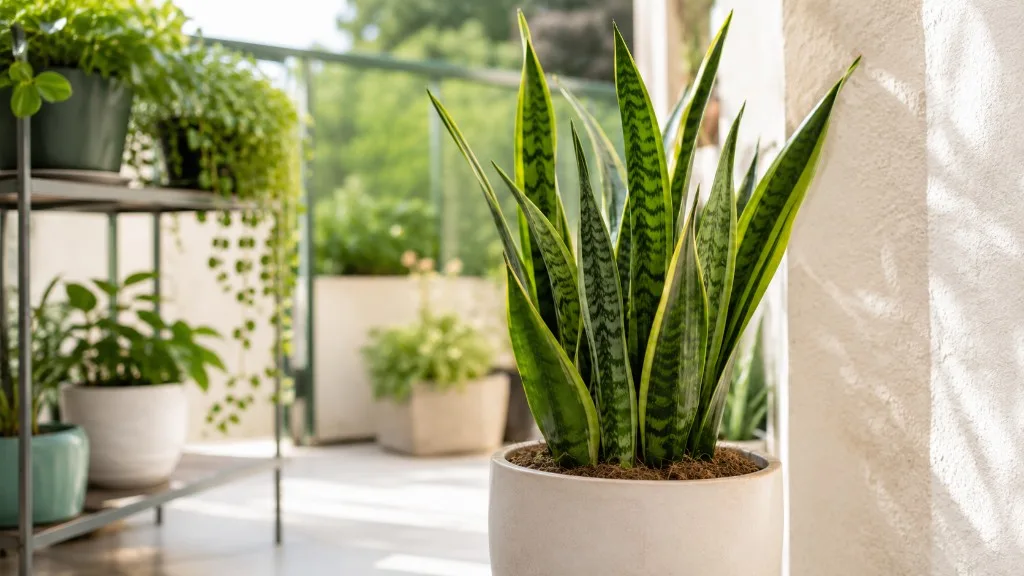 Medium
Snake Plant
Likely causeOverwatering in low light makes Sansevieria roots take up water faster than leaves release it, bursting cells into corky bumps.
Quick fixReduce watering frequency and move to brighter indirect light; existing bumps won't heal but new growth stays clear.
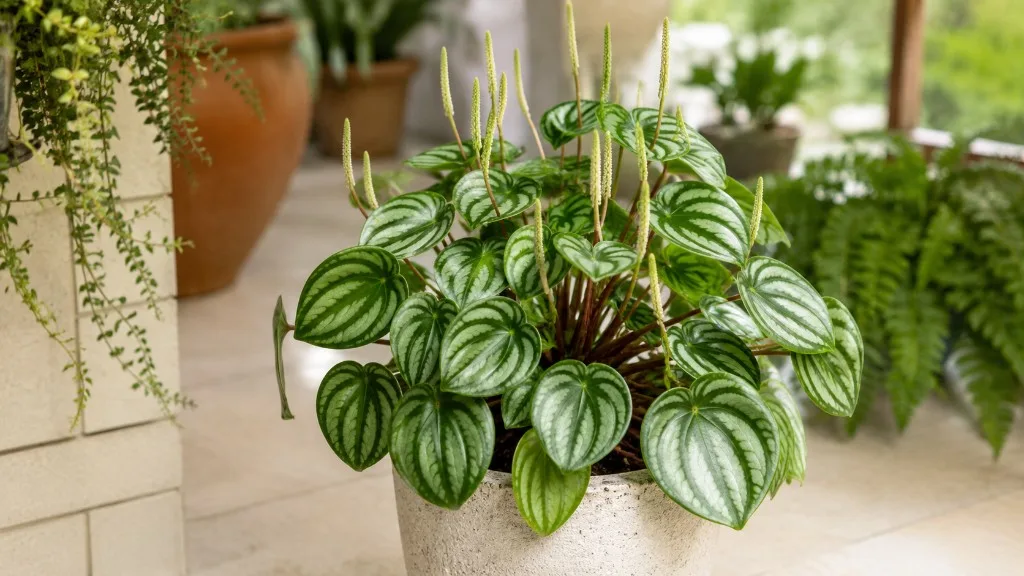 Medium
Watermelon Peperomia
Likely causeInconsistent watering with high humidity causes water blisters that burst into brown corky spots on peperomia leaves.
Quick fixWater only when the top inch dries; reduce misting and improve airflow around the rosette.