Edema on Jade Plant: Causes, Checks & Fixes
Quick answer
Edema on jade plant is a physiological water-imbalance disorder: roots absorb more water than thick leaves can release, cells rupture, and the plant heals with permanent corky brown bumps-often on leaf undersides or margins after wet soil in cool, low-light winter rooms. First fix: let the mix dry fully and improve light before repotting or spraying.
Edema on Jade Plant: Causes, Checks & Fixes
This guide covers edema on Jade Plant. See also the general Edema guide, watering, and light pages for this plant.
Edema on Jade Plant: Causes, Checks & Fixes
Quick answer
Edema (also spelled oedema) on jade plant is a physiological disorder, not a disease or pest. On Crassula ovata, roots absorb water faster than thick succulent leaves can release it through transpiration. Pressure builds inside leaf cells, some cells rupture, and the plant seals the damage with permanent corky brown or rust-colored bumps-often on leaf undersides, margins, or outer edges.
The classic indoor trigger is winter overwatering in a cool, dim room: growth slows, transpiration drops, but watering continues on a summer schedule. Stems usually stay firm and woody; soil may feel heavy. That pattern is cosmetic and fixable with environmental changes-not the same urgency as root rot.
First fix: stop watering until the mix dries deep in the pot, then move the plant to brighter light (four or more hours of direct sun once acclimated) so it uses water efficiently. Do not repot, prune heavily, or spray pesticide on the first day.
What edema looks like on Jade Plant
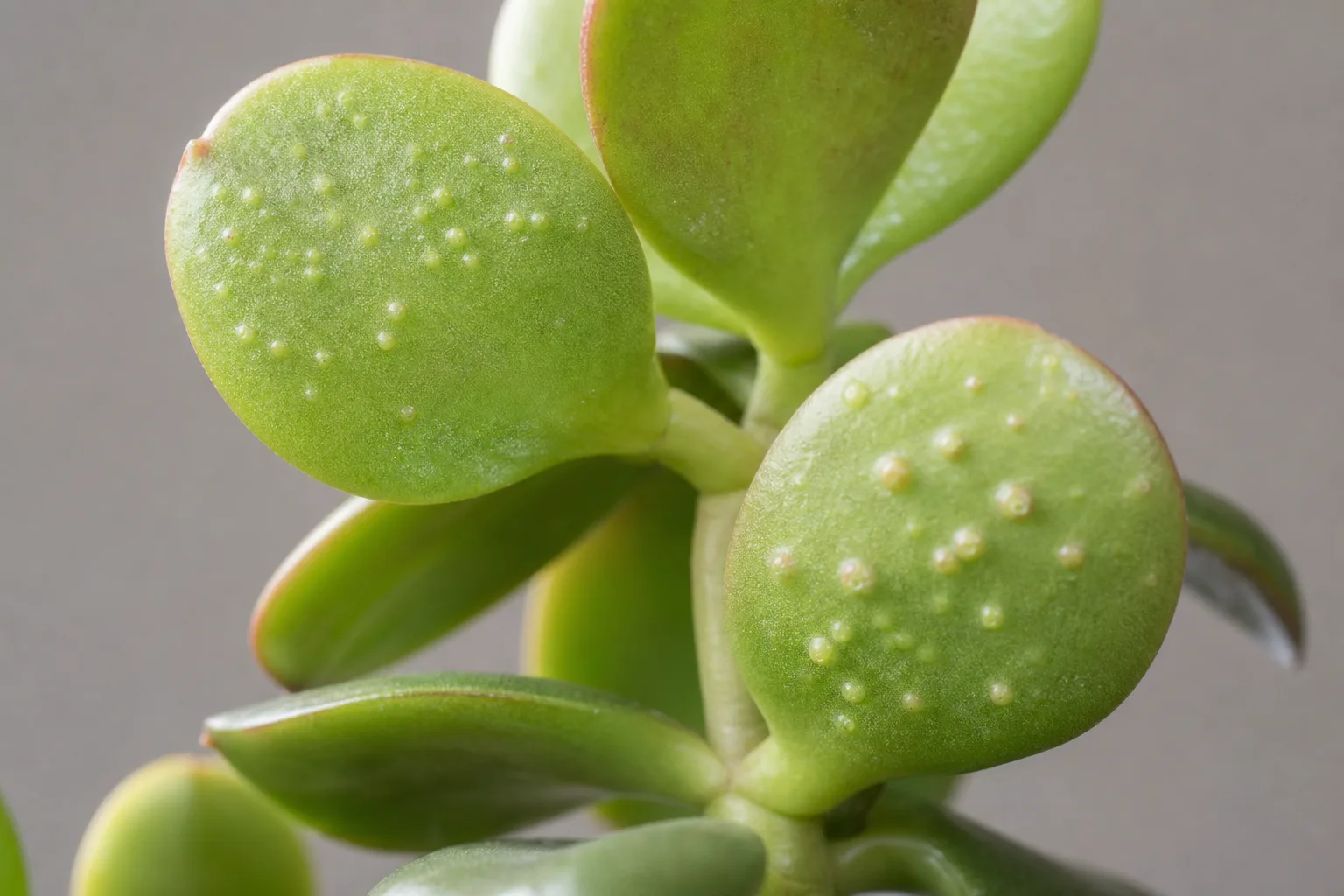
Edema on jade progresses in stages. Early signs are small water-soaked blisters on the leaf surface-often easiest to see on the underside where cells swell first. Those blisters rise into papule-like bumps lighter or darker than the surrounding green tissue. As they age, bumps rupture and callous over, turning rust-brown or tan with a rough, sandpaper-like texture.
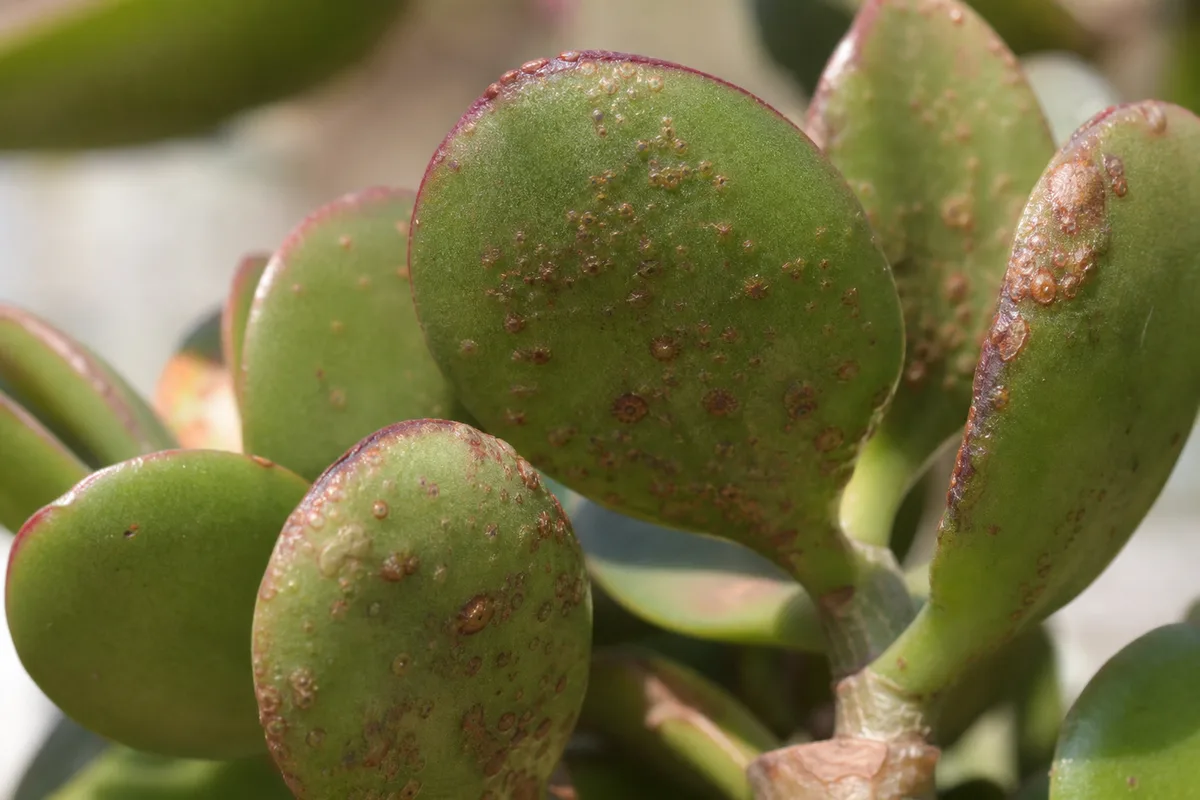
Edema symptoms on Jade Plant - compare with healthy tissue on the same plant.
On mature jade, you may also see uneven corky ridges along stems or slight swelling where leaf meets stem-still firm, not mushy. Multiple leaves can show bumps at once while the rest of the plant looks otherwise healthy. Unlike yellow leaves from overwatering, edema often appears before widespread yellowing or stem softening.
Where bumps appear: outer margins, leaf undersides, and sun-facing edges are most common. Lower leaves on woody branches are frequent targets because they transpire less than active tip growth. Bumps do not spread like infection-they stop forming once uptake and transpiration balance again.
Corky bumps vs. other brown marks
| Pattern | Texture | Stem base | Pot weight | Likely cause |
|---|---|---|---|---|
| Rough corky bumps on multiple leaves | Raised, integrated into leaf | Firm | Often heavy; wet history | Edema |
| Brown bumps that scrape off | Removable; insects underneath | Firm | Variable | Scale |
| One lower leaf browning at a time | Dry, papery | Firm woody | Light to moderate | Normal aging |
| Yellow mushy leaves, sour soil | Soft tissue | Softening | Very heavy, wet now | Overwatering / rot |
| Bleached tan patches after window move | Flat scorch | Firm | Dry | Sunburn - see brown leaves |
Why Jade Plant gets edema
Water uptake vs. transpiration on thick leaves
Jade evolved on dry rocky slopes in South Africa, storing water in thick fleshy leaves and stems. Indoors, the plant still takes up water through roots whenever soil is moist-but leaf water loss depends on light intensity, temperature, and airflow. When roots deliver more water than leaves can transpire, hydraulic pressure builds inside leaf tissue. Cells exceed their capacity, burst, and heal as corky scar tissue.
University of Maryland Extension lists jade among houseplants prone to edema and notes the disorder occurs when water absorbed by roots exceeds water lost through leaves. Missouri Botanical Garden links overwatering to water-soaked spots and blisters (oedema) on stems and leaves-distinct from rot, but often sharing the same watering mistake.
Winter overwatering, cool rooms, and low light
The highest-risk season for indoor jade edema is late fall through early spring. Short days slow growth into semi-dormancy; cool window ledges drop leaf temperature; transpiration falls sharply. Many growers keep watering on a summer rhythm while the plant sits in a dim north-facing window with a heavy wet pot-exactly the imbalance that produces bumps.
Contributing factors include:
- Moist soil + cool media + reduced light - roots stay active enough to absorb; leaves cannot release fast enough
- Misting or pebble trays - unnecessary on jade and adds surface moisture without fixing uptake imbalance
- Plastic pots and peat-heavy mix - stay damp for weeks; terracotta and gritty succulent mix dry faster
- Salt buildup from hard water or winter fertilizer - can stress tissue and accompany corky spotting on leaf surfaces
Wisconsin Horticulture Extension recommends restricted watering in winter when jade is semi-dormant, with soil remaining on the dry side-a sharp contrast to summer that catches schedule-driven growers off guard. Pair that guidance with four or more hours of direct sun so the plant processes water efficiently.
How to confirm the cause
Work through these checks in order before changing multiple variables:
- Season and recent watering - Did bumps appear or spread during October–March while you watered weekly? Edema fits; urgent rot is less likely if stems are hard.
- Pot weight and soil moisture - Lift the pot. Heavy mix that stays damp for days supports edema or advancing overwatering. Push a skewer to the bottom; if wet while bumps are corky and stems firm, edema is probable.
- Stem and leaf firmness - Pinch the stem base and a bumped leaf. Firm plump tissue with rough bumps = edema. Soft mushy stem with sour smell = inspect for root rot.
- Bump location and texture - Integrated corky patches on undersides or margins = edema. Removable brown disks = scale-do not treat with edema fixes alone.
- Light level - Leggy pale stems or deep green drooping growth in a dim corner mean low light is slowing transpiration; see jade plant light for placement targets.
- Pest scan - Magnify leaf undersides and axils. White cottony clusters mean mealybugs; sticky residue with movable bumps means scale-not edema.
Confirmation rule: edema is likely when firm woody stems, corky integrated bumps, and wet-soil history in cool dim conditions align. Escalate to rot protocols only if stems soften or soil smells sour.
First fix for Jade Plant edema
Let the mix dry completely before the next drink. Check dryness two inches into the mix and by pot weight-not surface color alone. This single step stops new water from entering a system that already cannot transpire fast enough.
After one full dry-down cycle:
- Move to brighter light - East or south window with gradual acclimation, or supplement with a grow light per the light guide. Adequate light helps jade use water efficiently and reduces repeat edema.
- Improve airflow - Space plants so leaves are not crowded against a cold window pane.
- Hold fertilizer until active spring growth resumes.
Do not scrape corky bumps off leaves-that leaves indented scars, as extension experts note when distinguishing edema from pests. Do not repot on day one when roots are intact and stems are firm; repotting stresses a plant that needs drier soil and better light, not root disturbance. Do not apply pesticide without confirming insects.
Make one environmental correction at a time over two weeks so you can read the plant’s response. Full watering rhythm details live on the dedicated guide.
Recovery timeline
New bumps should stop forming within one to two dry-down cycles (often two to four weeks in winter) after watering reduction and brighter placement. Existing corky scars are permanent-they will not smooth out or re-green. Success means clean new leaf pairs at branch tips and stable firm stems, not perfect older foliage.
Mild cosmetic edema on an otherwise vigorous jade needs no pruning. Remove only leaves that are fully dead and brittle. If bumps appeared alongside brown tips from salt burn, flush the pot once in spring with plain water and resume light feeding only after growth restarts.
Worsening signs - soft stem bases, spreading yellow mushy leaves, sour soil - mean progress past edema toward root damage. Switch to the overwatering and root-rot paths immediately.
What not to do
- Do not mist to fix bumps; jade tolerates low to average humidity and misting does not balance root uptake.
- Do not fertilize a stressed plant with corky leaves; salts can worsen tissue damage.
- Do not scrape or pick edema cork-it is healed scar tissue, not a scab to remove.
- Do not stack repotting, heavy pruning, and pesticide on the same day when stems are firm and only bumps are present.
- Do not assume every bump is scale and reach for horticultural oil without inspection-wrong treatment adds stress without benefit.
- Wear gloves when handling cut tissue; jade plant is toxic to cats and dogs. Keep plants out of pet reach.
How to prevent edema next time
Match watering to season and light, not a calendar. In winter, stretch intervals to every four to eight weeks or longer until mix is dry deep in the pot-see jade plant watering for dry-down technique. In summer active growth, water when the top two inches are dry and the pot feels light.
Use unglazed terracotta and fast-draining gritty mix sized to the root ball-not an oversized wet reservoir. Give four or more hours of direct sun when possible so transpiration keeps pace with uptake. Skip misting and humidity trays.
During routine care, lift the pot weekly in fall and winter. If weight stays high for ten days, skip the next scheduled drink even if leaves look slightly soft-firm stems with cosmetic bumps are less dangerous than wet soil through a cool night.
Inspect new growth at branch tips. Clean firm pairs mean your rhythm works. Fresh bumps on newest leaves mean soil is still too wet or light is still too low.
Practical checks
Urgency check (when bumps mean rot, not edema)
Edema alone is rarely urgent. Treat as cosmetic when stems are firm, soil is drying on schedule after correction, and bumps are not increasing on new leaves.
Escalate immediately when:
- Stem bases soften or blacken
- Soil smells sour or rotten
- Leaves turn yellow and mushy across multiple branches
- White mealybug colonies or scale cover stems-pest issue, not edema
Those patterns belong on root rot, overwatering, or pest guides-not edema-first fixes.
Best inspection order
Newest growth → bump texture (integrated vs. removable) → stem base firmness → pot weight → soil moisture at depth → leaf undersides for pests → window light level.
Jade care cross-check
Also sold as money tree or lucky plant, jade is often confused with Pachira aquatica, which has different water needs. If your plant has thick oval succulent leaves on woody stems, Crassula ovata rules apply. When the pot stays wet for weeks in a dim room, edema margins often follow-same trigger described on the brown leaves guide. For overlapping tip burn and edema from heavy feeding, see brown tips.
Related Jade Plant guides
- Jade plant care overview - stress troubleshooting and seasonal rhythm
- Watering jade plant - dry-down technique and winter reduction
- Jade plant light - sun targets and acclimation
- Brown leaves on jade - edema corking vs. scorch, aging, and rot
- Brown tips on jade - salt burn and overwatering edema link
- Yellow leaves on jade - when yellowing means rot, not bumps
- Overwatering on jade - soft leaves and wet soil
- Root rot on jade - when firm stems are no longer the case