Best Soil for Jade Plant: Gritty Succulent Mix Guide
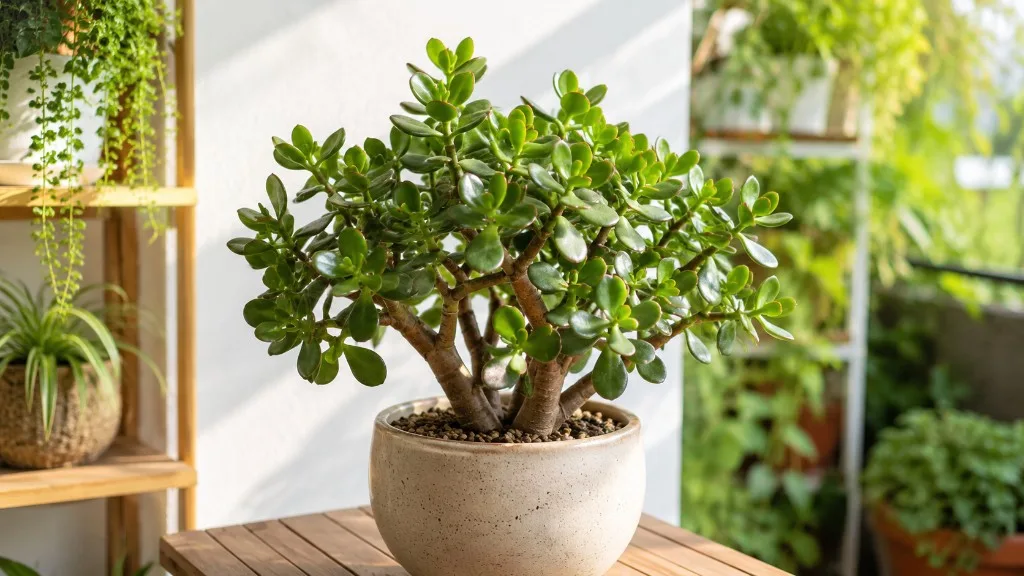
Best Soil for Jade Plant: Gritty Succulent Mix Guide
Best Soil for Jade Plant: Gritty Succulent Mix Guide
A jade plant with the wrong soil can look fine for months and then fail in a week. The leaves stay plump because Crassula ovata stores water in its stems and foliage, which masks root trouble until the damage is severe. The mix in the pot is not a minor detail. It controls how fast water leaves the root zone, how much oxygen reaches the roots after every watering, and how long the substrate stays structurally open before it compacts. Get the soil right and jade care becomes predictable. Get it wrong and even careful watering cannot prevent rot.
The best soil for jade plant is a gritty succulent mix: fast-draining, mineral-heavy, and low in water-retentive organic matter, with a pH near 6.0 to 7.0. This guide explains what that means in practice, why standard potting soil fails, which components to use, how to build reliable DIY recipes, which pre-made bags are worth buying, and how to pair the mix with the right pot so the whole system works together.
What jade plants actually need from their soil
Jade plants need three things from their root zone, in this order: fast drainage, steady aeration, and a slightly acidic to neutral pH. Missouri Botanical Garden describes jade as intolerant of moist, poorly-drained soils and recommends a well-drained loamy potting mixture indoors. Steady aeration means the mix stays loose and open so roots can breathe between waterings. The pH range keeps nutrients chemically available without pushing the mix toward the peat-heavy acidity that many tropical blends drift into over time.
A useful home benchmark: after you water until runoff appears at the drainage hole, the top inch of mix should feel dry within 3 to 7 days in a typical indoor room. If the surface stays damp for two weeks, the mix is too organic, too fine, or the pot is too large for the root ball. Jade plants are forgiving of occasional dry spells because of their internal water storage, but they are not forgiving of a root zone that stays wet.
The mix should also match how jade grows. Unlike thin-leaved succulents that dry out almost instantly in pure grit, jade develops woody stems and a substantial root system over years. It can handle slightly more organic matter than a desert cactus, but only slightly. Think of jade soil as 70 to 80 percent mineral by volume, not the 50-50 peat blends sold for general houseplants.
The rocky South African context behind the mix
Crassula ovata is native to South Africa, where it grows on rocky, arid hillsides in shallow soil pockets. Rainfall is infrequent and drains away quickly through coarse mineral substrate. The plant evolved thick, glossy leaves and a woody trunk precisely because water is unreliable above ground but dangerous below it. Roots that sit in saturated soil lose oxygen, weaken, and invite rot pathogens long before the leaves show obvious distress.
This native context is why “succulent soil” alone is sometimes not enough for indoor jade. Many bagged cactus mixes are formulated for a broad range of succulents and retain more moisture than a rocky hillside would. Jade tolerates a touch more organic matter than echeveria or lithops, but it still lives in mineral-dominated soil in the wild. Your indoor mix should echo that balance: gritty, open, and quick to dry rather than fluffy, spongy, and slow.
The pH range Crassula ovata prefers
Most credible sources place jade plant soil pH between 6.0 and 7.0, with many growers and extension guides targeting around 6.5. Clemson HGIC recommends a cactus mix with added organic matter, or a blend of one part sterilized organic soil, one part sphagnum peat moss, and three parts coarse sand by volume for fast drainage.
pH matters because it controls nutrient availability. In overly alkaline soil, iron and manganese uptake can suffer. In overly acidic, peat-heavy mixes, calcium and phosphorus availability drops and the substrate tends to hold even more moisture as the peat breaks down. Most quality cactus and succulent mixes already land near 6.0 to 7.0 because of their limestone or dolomite content. If you build a DIY mix from plain compost and perlite with no pH buffer, a small limestone addition is worth considering, especially if you use acidic pine bark or peat as part of the organic fraction.
Why regular potting soil fails jade plants
Standard indoor potting soil is the most common reason jade plants die indoors, and the failure pattern is remarkably consistent. All-purpose mix is engineered for tropical foliage plants that want steady moisture: peat moss, compost, and fine forest products act like sponges and stay damp for days. Jade roots evolved for the opposite environment. When you plant jade in moisture-retentive soil, you force the root system to operate in conditions it cannot survive long term.
The problem gets worse with “moisture control” or “water retaining” blends. These products hold water deliberately, which is appropriate for ferns and calatheas and catastrophic for Crassula ovata. Anything labeled for tropicals, African violets, or general houseplants should stay out of a jade pot unless you amend it so heavily with perlite, pumice, or coarse grit that the original blend becomes a minor ingredient.
Even “succulent soil” from a big-box store can fail if you use it straight from the bag without checking texture. Open the bag and look at the particles. If the mix looks like dark, fine peat with a few white perlite specks, it will likely stay wet too long for a jade in a dim room or a humid climate. The fix is not a different watering calendar alone. It is a grittier mix.
What happens when jade roots sit in wet mix
When jade roots sit in saturated soil, water fills the air spaces between particles and oxygen cannot reach root cells efficiently. Roots begin to suffocate and lose structural integrity. Weakened tissue becomes an entry point for Pythium, Phytophthora, and other soil-borne organisms that multiply in wet conditions. Because jade stores water in its leaves and stems, the plant can look healthy above the soil line while the root system is already compromised.
The visible symptoms often arrive late. Lower leaves may feel soft or drop with slight pressure. The base of the trunk can feel slightly mushy at the soil line. New growth slows or stops even in bright light. In advanced cases, bacterial soft rot can cause stems and branches to collapse, and infected tissue cannot be reversed. Clemson HGIC notes that root rot results from soil that does not drain quickly or from overly frequent watering.
Prevention is almost entirely about substrate and pot drainage, not rescue after the fact. A gritty succulent mix that dries predictably keeps pathogen populations in check and gives roots the oxygen they need to stay firm and white.
What gritty succulent mix means for jade
When growers say gritty succulent mix, they mean a substrate dominated by coarse mineral particles with enough organic matter to anchor roots and supply slow nutrients, but not enough to hold moisture for days. For jade, gritty does not mean pure sand and it does not mean a dust-fine cactus blend from a shelf. It means visible particles, permanent air gaps, and a dry-down rate measured in days, not weeks.
A proper gritty mix has three measurable properties. Drainage rate: water poured onto the surface flows through and out the bottom in seconds rather than sitting on top or running down the inside wall of the pot. Dry-down speed: the mix feels dry to the touch within a few days after a full watering under normal indoor conditions. Structural stability: mineral components like pumice, perlite, crushed granite, and coarse grit hold their shape for years instead of collapsing into mud.
Jade sits between extremes on the succulent spectrum. Pure 1:1:1 mineral mixes (equal parts pumice, lava rock, and decomposed granite) drain almost instantly and work well for growers in humid homes who tend to overwater, but they require more frequent watering attention. Peat-heavy cactus mix holds moisture too long for the same grower. The practical target for most indoor jade plants is a balanced gritty succulent mix with roughly 40 percent organic base, 30 percent perlite or pumice, and 30 percent coarse grit or sand by volume, adjusted up or down based on your climate and light.
Particle size and the squeeze test
The most important variable in any jade soil mix is particle size, not the brand on the bag. Particles around one-quarter inch (6 mm) leave enough air space for drainage while still making good contact with roots. Fine sand, dust-grade perlite, and sifted peat compact under watering pressure and eliminate the air pockets jade depends on.
The squeeze test catches bad mixes in seconds. Moisten a handful of your finished blend and squeeze it firmly. When you open your hand, the mix should crumble apart immediately. If it forms a tight ball that holds together, it is too fine, too peat-heavy, or both. Add more perlite, pumice, or coarse grit until it fails the ball test. This single check prevents more jade losses than any Jade Plant watering guide printed on a tag.
Core components of a jade plant soil mix
Every reliable jade mix combines mineral drainage material, a modest organic base, and sometimes a pH buffer. None of the components is magic on its own. The ratio is what makes the system work.
Perlite, pumice, and coarse grit
Perlite is lightweight expanded volcanic glass. It creates air channels, drains freely, and is cheap and widely available. The trade-offs: it floats toward the surface when you water aggressively, and it slowly crushes into powder over a few years. For most beginners, those are acceptable compromises. Use perlite at 30 to 50 percent of a DIY mix when amending heavy soil.
Pumice is heavier, more porous, and more durable. It holds a little moisture inside its pores without feeling wet on the surface, stays in place when watered, and lasts longer in the pot. It costs more and is harder to find in small garden centers, but it is the upgrade many experienced succulent growers prefer for long-lived jade plants.
Coarse grit, crushed granite, and horticultural sand add weight and mimic the rocky native habitat. They improve drainage and help anchor top-heavy jade plants in the pot. Use coarse builder’s sand or horticultural sand with visible grain size. Never use fine play sand or beach sand; fine sand fills gaps between larger particles and makes drainage worse, and beach sand can carry salt that damages roots.
Cactus and succulent mix as a base
A pre-made cactus and succulent potting mix is the most practical starting point for most growers. Brands like Miracle-Gro Cactus, Palm and Citrus, Espoma Organic Cactus Mix, Hoffman Organic Cactus and Succulent Soil, and Black Gold Cactus Mix are widely available and already contain a blend of organic matter, sand, and perlite. They save time and provide a reasonable pH baseline.
The catch: most bagged mixes are still not gritty enough straight from the bag for indoor jade in average humidity. They are formulated for a wide range of succulents, including some that want slightly more moisture retention. The standard fix is to amend one part bagged cactus mix with one part perlite or pumice by volume, or to use the 40-30-30 recipe below where the cactus mix supplies the organic fraction. Always read the label: skip products marketed as moisture-retentive.
Organic matter jade can tolerate
Jade can handle more organic matter than desert cacti, but the keyword is more, not a lot. A workable range is 20 to 40 percent organic material by volume, supplied through composted bark, coco coir, quality cactus mix, or a small amount of compost. Pine bark fines add structure and break down slowly compared to peat. Coco coir holds moisture evenly without the extreme water retention of sphagnum peat, though it still needs to be balanced with plenty of mineral material.
Pure compost alone is a poor choice for jade. It holds water, compacts quickly, and pushes soft, leggy growth. If compost is part of your mix, keep it below 20 percent of total volume and pair it with aggressive mineral amendment. Some growers use 70 percent gritty mineral mix plus 30 percent pine bark or coco coir specifically for jade, reflecting its slightly higher moisture tolerance compared to echeveria. That ratio works well in dry indoor air; in humid climates, shift back toward 80 percent mineral.
Perlite vs pumice for jade plants
Both perlite and pumice work in jade soil. The choice depends on budget, availability, and how long you want the mix to last before refreshing.
| Property | Perlite | Pumice |
|---|---|---|
| Weight | Very light; may float when watered | Heavier; stays distributed in the pot |
| Porosity | Moderate air channels | High internal pores; holds slight moisture |
| Cost | Inexpensive; stocked everywhere | More expensive; specialty or online |
| Durability | Breaks down over 2–4 years | Stable for many years |
| Best for | Beginners, budget mixes, short-term repots | Long-lived jade, humid homes, heavy plants |
If you water from the top and perlite keeps surfacing, switch partially or fully to pumice. If you repot every two to three years anyway, perlite is perfectly adequate. Many growers use whichever coarse amendment their local shop stocks and adjust the ratio until the squeeze test passes.
DIY jade plant soil recipes that work
You do not need exotic ingredients to build excellent jade soil. You need correct proportions, coarse particle size, and a pot that matches the mix.
The balanced 40-30-30 gritty mix
The most reliable all-purpose recipe for indoor jade is:
- 40 percent quality cactus and succulent mix or composted bark-based succulent base
- 30 percent perlite or pumice
- 30 percent coarse grit, crushed granite, or coarse horticultural sand
Mix thoroughly in a bucket until the color and texture look uniform. The finished blend should feel gritty, crumble easily, and drain within seconds when you pour water through a sample in a pot. This ratio hits the sweet spot jade prefers: enough organic matter to support a woody, long-lived plant, enough mineral material to prevent chronic wet feet.
For a single 6-inch terra cotta pot (roughly 1.5 quarts of mix), measure approximately:
- 1.5 cups cactus and succulent mix
- 1.5 cups perlite or pumice
- 1.5 cups coarse grit or coarse sand
Scale proportionally for larger batches. Store extra dry mix in a sealed bucket until the next repot.
Half-and-half shortcut: If you are in a hurry, blend 50 percent bagged cactus mix with 50 percent perlite or pumice. It is slightly less gritty than 40-30-30 but still dramatically better than unamended potting soil and works well for jade in bright light with careful watering.
Ultra-gritty option: Equal parts pumice, lava rock, and decomposed granite (the classic 1:1:1 mineral mix) drains in seconds and almost eliminates overwatering on Jade Plant risk. It suits humid climates and heavy-handed waterers but requires more frequent watering checks because the mix dries fast.
Adjusting the recipe for your home conditions
The 40-30-30 mix is a default, not a law. Tune it to your room.
Humid climate or low airflow: Push mineral content higher. Try 30 percent organic base, 35 percent perlite or pumice, 35 percent coarse grit. Faster dry-down compensates for slow evaporation.
Dry climate or hot south window: Keep 40-30-30 or try 70 percent gritty mineral mix with 30 percent coco coir or pine bark fines so the plant does not desiccate between waterings.
Low light indoors: Increase perlite or pumice to 40 to 50 percent of total volume. Lower light means slower water use; a grittier mix prevents stagnant moisture.
Large mature jade or bonsai-in-training: Stay gritty but ensure the organic fraction includes stable bark fines rather than peat alone. Woody jade in small bonsai pots dries quickly; avoid oversized containers that hold wet mix around sparse roots.
Pre-made mixes worth buying for jade
Pre-made soil saves time. Pick a bag with visible mineral particles, then amend if needed.
| Pre-made mix | Key traits | Drainage rating | Best for | Watch-outs |
|---|---|---|---|---|
| Bonsai Jack Succulent and Cactus Soil | Screened gritty mix; low organic matter; pH ~5.5 | Superior | Humid homes, overwaterers, long-lived specimens | Expensive; dries fast; may need slightly more organic fraction for jade in dry air |
| Hoffman Organic Cactus and Succulent | Peat, sand, perlite, limestone | Very good | Beginners, indoor jade, wide availability | Amend with extra perlite in humid climates |
| Espoma Organic Cactus Mix | Peat, perlite, limestone, Myco-tone | Good to very good | Organic-focused growers | Slightly moisture-retentive; add 30% perlite |
| Miracle-Gro Cactus, Palm and Citrus | Forest products, peat, sand, perlite, fertilizer | Good | Budget option, easy to find | Add 30–50% perlite or pumice for indoor jade |
| Black Gold Cactus Mix | Peat, pumice, sand, forest humus | Very good | Growers who want pumice in the bag | Still amend in low-light or humid setups |
No bagged product replaces your judgment. Open it, run the squeeze test, and add coarse amendment until the texture is right. Premium gritty mixes like Bonsai Jack often work with little or no amendment in humid conditions but may need a small organic addition if your jade dries out faster than you can water in arid winter air.
Pot choice, drainage, and when to refresh the mix
Soil and pot function as one system. The best gritty succulent mix still fails in a pot with no drainage hole, an oversized plastic container, or a decorative cachepot that traps runoff.
Drainage holes are non-negotiable for long-term indoor jade. Water must exit freely after each thorough watering. Empty the saucer after 15 minutes so the pot is not sitting in a reservoir. Terra cotta and unglazed ceramic are ideal for jade because they breathe and dry evenly; Missouri Botanical Garden notes that jade is intolerant of moist, poorly-drained soils and needs a well-drained potting mixture. Plastic works if you adjust watering downward and use an aggressively gritty mix.
Pot size should match the root ball, not the leaf canopy. Jade is top-heavy but its roots do not need a huge volume of wet mix. Choose a pot only 1 to 2 inches wider than the root mass. Oversized pots hold excess moist soil around unused space and extend dry-down time past what the roots can tolerate.
Do not add a layer of gravel or rocks at the bottom of the pot for drainage. The practice creates a perched water table where the fine soil above the gravel stays saturated longer, not shorter. Use one homogeneous gritty mix from top to bottom instead.
Repot or refresh the mix every 2 to 3 years, or sooner if you notice compaction, sour smell, white crust from fertilizer salts, or water running straight down the sides without soaking in. Organic components break down over time and lose the air pockets jade needs. Repot in spring when the plant is entering active growth, not when it is stressed from recent overwatering unless the wet soil itself is the emergency.
Common jade plant soil mistakes
Using straight all-purpose potting soil is the top error. It stays wet, compacts, and leads to root rot even when you water “correctly.”
Adding only a handful of perlite to heavy soil does not fix drainage. You need 30 to 50 percent amendment by volume, not a decorative sprinkle.
Choosing fine sand or play sand makes compaction worse. Always use coarse horticultural or builder’s sand with visible grains.
Relying on bottom gravel instead of fixing the mix. The gravel layer does not improve drainage and can shorten the effective root zone.
Using a pot far too large for the root ball. Extra soil volume means extra wet time.
Ignoring texture because the bag says “cactus.” Labels vary. Trust the squeeze test and your dry-down observations more than marketing copy.
Jade Plant repotting guide into fresh mix without checking roots after a decline. If rot is present, trim damaged roots, let cuts callus, and use dry gritty mix. Fresh soil alone does not reverse advanced rot.
Signs the soil system is failing: water sits on the surface; mix stays dark and cool for weeks; musty or sour smell from the pot; leaves drop easily despite plump appearance; new growth stalls; trunk softens at the base. When several signs appear together, inspect roots and rebuild the mix rather than adjusting fertilizer or light first.
Conclusion
The best soil for jade plant is a gritty succulent mix that drains in seconds, dries within days, and stays open enough for roots to breathe between waterings. Build it with roughly 40 percent cactus base, 30 percent perlite or pumice, and 30 percent coarse grit, or buy a quality cactus mix and amend it until it passes the squeeze test. Target pH 6.0 to 7.0, pair the mix with a terra cotta or ceramic pot that has a drainage hole, and refresh the substrate every 2 to 3 years before organic components collapse.
Jade is not fussy about brand names. It is fussy about wet feet. Once the root zone matches the rocky, fast-draining conditions Crassula ovata evolved in, watering becomes simpler, growth steadier, and the plant far more likely to become the decades-old specimen growers keep for years.
When to use this page vs other Jade Plant guides
- Jade Plant overview - Start here for whole-plant context before deep-diving this topic.
- Jade Plant problems hub - Jump to symptom-specific fix guides when this care topic does not resolve the issue.
- Poor Drainage on Jade Plant - Escalate here when soil adjustments are not enough.
- Compacted Soil on Jade Plant - Escalate here when soil adjustments are not enough.
- Mold on Soil on Jade Plant - Escalate here when soil adjustments are not enough.
Related Jade Plant guides
- Jade Plant overview
- Jade Plant watering
- Jade Plant light
- Jade Plant propagation
- Jade Plant fertilizer
- Jade Plant repotting
- Poor Drainage on Jade Plant
- Compacted Soil on Jade Plant
- Mold on Soil on Jade Plant
- Jade Plant problems
Related tool
Try the Soil Mix Calculator with jade-plant pre-selected to estimate needs for your setup.