Jade Plant Watering: Soak and Dry, Winter Guide
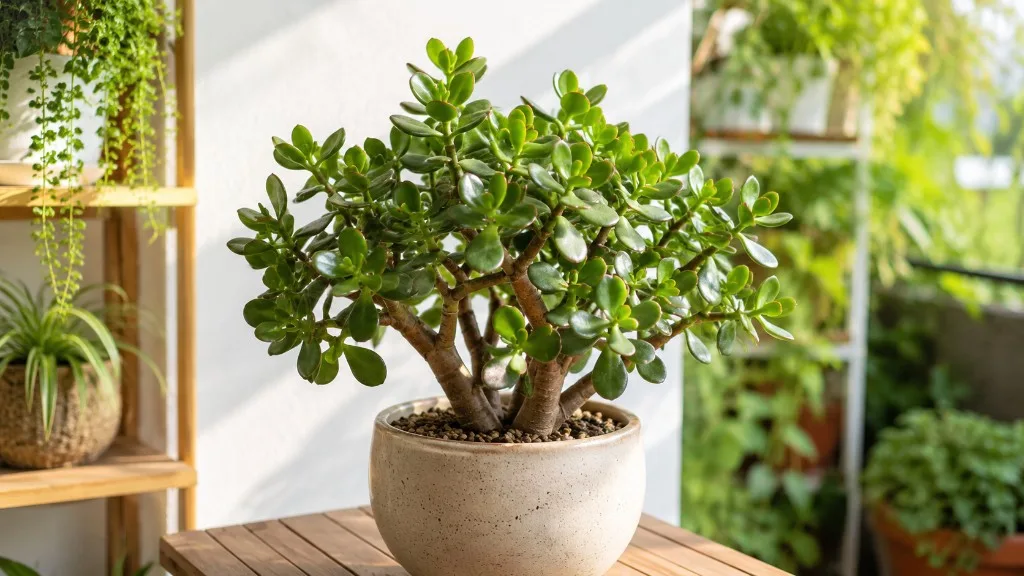
Jade Plant Watering: Soak and Dry, Winter Guide
Jade Plant Watering: Soak and Dry, Winter Guide
Jade plant watering is less about memorizing a calendar and more about matching water to the plant’s stored reserves, your pot, and the season. Crassula ovata - the thick-stemmed succulent most people call jade plant or money plant - evolved on dry, rocky hillsides in South Africa, where rain arrives in bursts and the soil drains fast. Indoors, that biology translates into one reliable rule: soak the root zone thoroughly, then let the mix dry out completely before you water again. In winter, when the plant enters semi-dormancy and growth slows, you cut back sharply. Same method, much longer dry-down.
The practical rhythm most homes can follow looks like this: check moisture at root depth, not just the surface; water deeply until excess runs from drainage holes; empty the saucer; then wait. During active growth in spring and summer, many jades need a full drink every two to four weeks, though bright light and small pots can shorten that interval. In fall and winter, stretch to four to eight weeks - sometimes longer in a cool room - because cold, dim conditions slow water uptake and rot risk rises when wet soil sits around sluggish roots.
This guide walks through the soak-and-dry method, how to check dryness accurately, winter reduction, and the leaf and stem signals that tell you which direction you have drifted.
Why Jade Plants Need a Soak-and-Dry Rhythm
Jade plants are stem-and-leaf succulents. They store water in fleshy leaves, woody stems, and roots, which is why a healthy plant feels firm and heavy for its size. That storage is an adaptation to irregular rainfall - not a license to ignore water forever, but a buffer that lets the plant survive dry spells between deep soakings.
University of Wisconsin Division of Extension notes that jade plants, like most succulents, do best when soil is allowed to dry between deep waterings, with liberal water during active spring and summer growth and restricted watering in winter when semi-dormant (Wisconsin Horticulture - Jade Plant). Clemson Cooperative Extension similarly advises keeping soil moist but not wet during active growth and letting it dry between waterings in winter, because jade is highly susceptible to rot when overwatered (Clemson HGIC - Jade Plant).
The soak-and-dry rhythm respects that biology. Shallow, frequent sips keep the upper mix damp while the lower root zone never fully breathes - a pattern that encourages fungal issues and weak surface roots. One thorough soak followed by a full dry-down mimics natural rain: roots absorb what they need, then the mix aerates. The leaves plump up after watering and gradually use stored water as the pot dries. When you see slight softness or subtle wrinkling on lower leaves, the plant is telling you the tank is getting low - not that disaster has arrived, but that a check is due.
Temperature and light modulate the rhythm. A jade at 65–75°F (18–24°C) in a bright window metabolizes faster than one in a cool back room at 55°F (13°C). Cooler nights in winter slow transpiration further. That is why a watering interval that worked in July can rot roots in January if you do not adjust.
How Often to Water Jade Plant (Indoors)
If you want a single honest answer: water when the root-zone mix is fully dry, at whatever frequency that happens in your home. For most indoor jades, that lands near every two to four weeks in warm, bright months and every four to eight weeks - or longer - in winter. Those ranges are starting points, not commandments. A 4-inch terracotta pot in a south window may need water in ten days; a 10-inch plastic pot in a north-facing office may go six weeks in December.
The mistake is treating “every two weeks” as a schedule instead of a reminder to check. Set a phone alert if it helps, but let soil moisture - confirmed by finger, skewer, or pot weight - make the final call. Wisconsin Extension and multiple horticultural sources agree that frequency depends entirely on how fast your specific container dries, which varies with pot size, soil texture, light, humidity, and season.
Active Growth: Spring and Summer
From mid-spring through summer, jade plants typically push new leaves, extend branches, and use water at their fastest indoor rate. This is the window for regular soak-and-dry cycles. Water deeply when the mix is dry throughout the pot, then wait until it dries again before the next session.
In practice, active-growth watering often means:
- Bright light, warm room, small pot: every 7–14 days is common, but only if checks confirm dryness.
- Moderate light, average room, medium pot: every 14–21 days is typical.
- Dimmer corner, larger pot, heavy mix: every 21–28 days or longer.
Growth speed is your feedback loop. Firm new leaves at stem tips mean conditions - including water - are roughly right. If new growth is absent for months while soil stays wet, you are overwatering on Jade Plant for the light level. If leaves shrivel repeatedly between waterings, the interval is too long or the soak is too shallow.
During active growth, pair watering with good drainage: a gritty succulent mix (roughly 40% compost or potting base, 30% perlite, 30% coarse grit or pumice works well) and a pot with drainage holes. Terracotta accelerates dry-down, which suits jade plants in humid homes or low-light spots where plastic pots would stay wet too long.
Winter Reduction When Growth Slows
Winter is where jade plant watering diverges most from generic houseplant advice. As days shorten and temperatures drop - especially if the plant sits in a cooler room - Crassula ovata enters semi-dormancy. Growth slows or pauses. Water demand drops sharply. The same volume that refreshed the plant in June can linger for weeks in January and invite root rot.
Wisconsin Horticulture Extension advises watering less often in fall and winter, allowing soil to dry out fully between waterings, and keeping the mix on the dry side when jade is semi-dormant. Clemson HGIC similarly recommends letting soil dry between waterings in winter (Clemson HGIC - Jade Plant).
A practical winter-reduction protocol:
- Stretch checks to every two weeks instead of weekly - you are monitoring, not watering on autopilot.
- Require full dryness through the pot before any winter drink; partial dryness at the surface is not enough.
- Reduce volume slightly if you are unsure; a thorough soak is still fine when truly dry, but skip “just in case” top-ups.
- Keep the plant above ~55°F (13°C) when possible; cold plus wet soil is the highest-risk combination.
- Pause fertilizer entirely until spring growth returns - feeding a plant that is not using water actively compounds salt stress.
If your jade sits in a heated room under grow lights and keeps producing new leaves all winter, it may need intermediate watering - closer to a three-week interval - but still far less than summer. Even then, err on the dry side. A slightly thirsty jade recovers in one good soak; a rotting jade may not recover at all.
The Soak-and-Dry Method Step by Step
Soak-and-dry means one complete wetting of the entire root ball, followed by an idle period until the mix is dry again. It is the standard succulent protocol for good reason: jade roots need oxygen between drinks, and partial moisture keeps pathogens happy.
Here is the routine:
- Check dryness at root depth (see the moisture section below). If the mix is still damp, stop - do not water.
- Water slowly and evenly across the soil surface until water runs freely from drainage holes. That confirms the center of the root ball received moisture, not just the edges.
- Let the pot drain for 15–30 minutes. Tilt it to shed trapped water if needed.
- Empty the saucer or cachepot completely. Never leave the pot standing in runoff.
- Wait until the mix is fully dry throughout before repeating.
Avoid alternating between tiny splashes and occasional floods. Consistency in method matters more than consistency in calendar dates.
How Deep to Water
“Deep watering” means wetting the whole root zone, not merely darkening the top inch. For a typical indoor jade in a 6-inch pot, that often translates to roughly 200–350 ml (about ¾ to 1¼ cups) of water applied slowly - enough that excess drains out the bottom. Smaller 4-inch pots need less; larger specimens in 10-inch containers need more, always judged by drainage, not a fixed milliliter count.
Pour until you see steady drainage, then stop. If water runs through instantly along the pot walls while the center stays dry - common in an overly peat-heavy mix that has pulled away from the sides - rehydrate in passes: water lightly, wait ten minutes for the mix to swell, then water again until even drainage occurs. Chronic channeling means the soil structure needs attention, not that you should water more often.
Bottom-watering - setting the pot in a tray of water and letting the mix wick upward - works for jades and can reduce crown splash, but still requires full drainage afterward and the same dry-down wait. Top-watering remains fine when done thoroughly and cleanly.
When the Soil Counts as “Dry”
For jade plants, dry means dry through the pot, not merely a pale, dusty surface. The top layer can look arid while the lower mix still holds moisture - the classic path to accidental overwatering.
Use these criteria before you soak:
- A finger or bamboo skewer pushed to the bottom drainage area comes out clean and dry, not cool or stained with soil crumbs.
- The pot feels noticeably lighter than it did right after the last watering.
- A moisture meter, if you use one, reads dry at depth (roughly 1–2 on a 10-scale), not just at the surface probe depth.
- Leaves are firm with no widespread wrinkling; slight softness on older lower leaves can be normal late in the cycle.
If any deep check suggests moisture, wait three to seven days and test again. Jade plants tolerate dry better than wet. Wisconsin Extension notes that although succulents store water, drought can still cause dwarfing, leaf spotting, drop, and death - so the goal is full dry-down, not indefinite desert (Wisconsin Horticulture - Jade Plant). The sweet spot is complete dryness, then a full soak - not months of neglect.
Best Ways to Check Soil Moisture Before Watering
Calendar reminders are useful; moisture checks are decisive. Pick one primary method and use it consistently so you learn how your specific pot behaves through the seasons.
The finger or skewer test remains the most reliable low-tech option. Insert your index finger or a dry wooden chopstick through the drainage hole upward, or down from the top near the pot wall, reaching two-thirds to the full depth of the container. Pull it out and feel for coolness or visible damp particles. Any hint of moisture means wait.
Pot weight is underrated once you train your hand. Lift the pot right after a thorough watering - that is your “heavy” baseline. Lift it every few days. When it feels light for its size and moves easily, dryness is likely. Weight plus a skewer confirmation catches edge cases where a very airy mix feels light while still holding some moisture at the core.
Moisture meters help beginners but can lie in chunky grit-heavy mixes if the probe misses water films on perlite or misses dry pockets entirely. Treat meters as one data point, not gospel. If the meter says dry but the skewer shows damp, trust the skewer.
Leaf feel is a secondary signal. Plump, firm leaves indicate adequate storage. Widespread wrinkling or a soft, deflated texture on multiple leaves suggests the dry-down has gone far enough that a soak is due - provided soil checks agree. Do not water based on one slightly soft leaf alone; older leaves naturally senesce.
Whichever method you choose, check at the same time of day when possible. Pots feel marginally lighter in warm afternoon air than in a cool morning, and consistency reduces guesswork.
Signs Your Jade Plant Is Overwatered
Overwatering is the number one killer of jade plants indoors. The symptoms often appear in leaves and stems before you see roots, but by then damage may already be underway.
Watch for these overwatering signs:
- Soft, mushy, translucent leaves that feel waterlogged rather than firm
- Yellowing leaves that drop with little provocation, sometimes in clusters
- Black or brown, mushy stem bases - a serious rot indicator at the crown
- Persistent damp soil smell or white fuzzy mold on the surface
- Edema - small brown or corky spots on leaves from cells bursting under excess water
- No new growth for months while soil stays wet and the pot feels heavy
Overwatering is especially common when a fast-draining succulent mix is paired with low light, no drainage holes, or a decorative outer pot holding runoff. A jade pushed into a dim corner still receives water on a summer schedule is a textbook rot setup. Cool winter rooms amplify the risk because evaporation slows.
If several signs appear together, pause all watering, move the plant to brighter light if it was dim (gradually, over a week), and inspect the root zone. Gently unpot if you suspect rot: healthy jade roots are white to tan and firm; rotting roots are brown, black, slimy, or hollow. Trim affected tissue with a sterile blade, let cuts callus, and repot into fresh gritty mix only after the root ball has had time to dry - recovery is covered later in this guide.
Signs Your Jade Plant Is Underwatered
Underwatering jade plants is less common and more reversible than overwatering, but chronic drought still damages fine roots and can cause leaf loss.
Typical underwatering signals:
- Wrinkled, shriveled, or thin leaves that feel less plump than usual
- Leaves that feel papery and may curl slightly inward
- Slow leaf drop of older foliage after prolonged dryness
- Stunted new growth even in bright, warm conditions
- Soil pulling away from pot walls, sometimes with white mineral crust
A single dry episode after travel usually resolves with one thorough soak and proper drainage. Repeated cycles of bone-dry soil followed by panic flooding stress roots, though jades tolerate this pattern better than constant wetness.
If leaves are wrinkled but soil checks show the mix is still damp at depth, you may have root loss from past overwatering rather than simple thirst - fewer roots cannot uptake water even when present. In that case, inspect roots before assuming more water is the fix.
How Pot Size, Soil, and Light Change Watering
Three environmental variables override any generic schedule: how much soil holds water (pot size and mix), how fast the plant uses it (light), and how fast the container loses it (material and airflow).
Pot size: Small pots dry quickly; large pots hold moisture longer, especially right after Jade Plant repotting guide when roots have not yet filled the volume. A jade freshly moved from a 4-inch to an 8-inch pot may need half the watering frequency for several months even in summer.
Soil mix: Jade plants need very fast drainage. Heavy peat-based indoor mixes retain water for days - too long for Crassula ovata. A gritty succulent blend with perlite and coarse sand or grit dries on a timeline compatible with soak-and-dry. If your mix stays wet more than five to seven days after a soak in a warm room, amend or repot rather than watering less volume on the same schedule.
Light: A jade receiving Jade Plant light guide to several hours of direct sun transpires faster and may legitimately need water twice as often as the same plant in moderate shade. Grow lights at 12–14 hours per day behave like bright sun for dry-down purposes. Low light slows water use but also weakens the plant’s ability to recover from rot - a dangerous combination if watering stays aggressive.
Terracotta vs Plastic Pots
Terracotta breathes through porous walls, pulling moisture from the mix and accelerating dry-down. It is an excellent choice for jade plants, especially in humid homes or for growers who tend toward heavy-handed watering. The trade-off: small terracotta pots in hot windows may need more frequent checks in summer.
Plastic and glazed ceramic retain moisture longer - helpful in very dry, air-conditioned rooms or for growers who travel, but risky if paired with dense soil or low light. If you use plastic, compensate with grittier mix and stricter dryness confirmation before soaking.
No drainage holes is never acceptable for jade long term. If a decorative cover pot is required, grow in a plain inner pot with holes and lift it out to water and drain fully.
Water Quality, Temperature, and Drainage Rules
Tap water is fine for most jade plants. If your municipal supply is heavily chlorinated and you are sensitive to leaf tip issues on other plants, letting water sit 24 hours before use can allow chlorine to dissipate - evidence for dramatic benefit is mixed, but the habit costs little. Room-temperature water (~65–75°F) avoids shocking roots with cold pours in winter.
Never let a jade sit in standing water. Saucers, cachepots, and plant saucers under oversized trays are where healthy roots turn rotten. Drain, then empty. If excess water keeps pooling, your mix may be too compact or drainage holes may be blocked.
Do not mist jade leaves as a substitute for proper watering. Misting raises humidity briefly but does not hydrate roots, and wet foliage in stagnant air can encourage fungal spotting. Jade plants tolerate typical indoor humidity (30–50%) without misting.
Pet note: The ASPCA lists jade plant (Crassula species) as toxic to cats and dogs, causing vomiting, depression, and incoordination if ingested (ASPCA - Jade Plant). Keep plants and drainage trays away from pets that chew foliage or drink saucer water.
Watering After Repotting, Propagation, and Stress
Freshly repotted jades need a short adjustment period. Wisconsin Horticulture Extension recommends watering sparingly until established in a new container, and Clemson HGIC advises allowing soil to become dry after repotting and waiting four months before feeding repotted plants. After roots settle, resume soak-and-dry - but expect slower dry-down until roots explore the new mix.
Leaf or stem cuttings rooting in dry-to-barely-moist propagation mix need a different rhythm: keep the propagation medium slightly moist until roots form, then transition rooted cuttings toward full soak-and-dry as they establish. Mature watering rules applied to unrooted cuttings cause rot; spritzing leaves while ignoring root moisture causes shrivel.
After pest treatment, sunburn, or mechanical damage, hold off on extra water beyond normal checks. Stress diverts energy; wet soil during recovery adds insult. Resume the standard rhythm once new growth appears.
Recently moved plants - new window, new home - should go two weeks of observation before you trust old intervals. Light and airflow changes rewrite dry-down speed overnight.
Seasonal Watering Calendar
Use this table as a framework, then adjust with moisture checks and leaf feedback.
| Season | Growth phase | Watering approach | Typical indoor interval* |
|---|---|---|---|
| March–April | Waking up | Resume regular soak-and-dry when new growth visible | 14–21 days |
| May–August | Active growth | Full soak when fully dry; monitor bright windows weekly | 7–21 days |
| September–October | Slowing | Begin stretching interval; require deeper dryness | 21–28 days |
| November–February | Semi-dormant | Winter reduction; minimal water, cool room = less | 28–56+ days |
*Intervals assume drainage holes, gritty mix, and average indoor temperatures. Bright sun, heat, small pots, and terracotta shorten intervals; cool dim rooms and large plastic pots lengthen them.
The calendar is not a substitute for checks. A heat wave in October can dry a pot in a week; an unseasonably warm January with grow lights may require an intermediate drink while a cold drafty sill may need none for two months.
Common Jade Plant Watering Mistakes
Even experienced growers slip on predictable errors:
Watering on a fixed weekly schedule without checking soil moisture is the most common mistake. Your jade does not know it is Tuesday.
Trusting the surface only leads to chronic overwatering. The top dries first; roots may still sit in damp mix.
Using dense potting soil labeled “indoor” or “moisture control” suffocates succulent roots. Repot into grittier mix instead of watering less and less in the same soil.
Leaving runoff in saucers or cachepots creates a water table at the bottom of the root ball - exactly where rot starts.
Winter watering at summer frequency when the plant is semi-dormant in a cool room is a fast path to stem rot.
Misting instead of soaking leaves the root zone dry while giving a false sense of care.
Watering immediately after repotting on the same day disturbs wounded roots and can trigger decay in wet fresh mix.
Panic-flooding a wrinkled plant without checking whether soil is already wet - wrinkling plus wet soil means root damage, not thirst.
Each mistake is fixable by returning to soak-and-dry basics: confirm full dryness, soak thoroughly, drain completely, wait.
Recovering a Jade Plant from Watering Problems
Recovery depends on how far rot has progressed and how quickly you change conditions.
For early overwatering - soft leaves but firm stem, soil still damp, no black crown:
- Stop watering and move to brighter light gradually.
- Let the mix dry completely - this may take one to two weeks.
- Remove any mushy leaves by hand.
- Resume soak-and-dry only when soil is fully dry and the stem feels solid.
For advanced rot - black mushy stem base, foul smell, collapsing plant:
- Unpot and wash roots gently.
- Cut away all brown, black, or slimy tissue with a sterile knife until only firm white or tan tissue remains.
- Let the plant and any cut surfaces callus in dry air for several days to a week.
- Repot into fresh, gritty mix in a smaller pot proportional to remaining roots.
- Wait one week, then give a moderate soak and return to strict soak-and-dry.
- Avoid fertilizer until new growth is obvious - usually spring.
For underwatered plants - widespread wrinkling, dry mix throughout:
- Soak thoroughly once.
- Drain fully.
- Wait for normal dry-down; do not water again until checks confirm dryness.
- Avoid daily tiny sips - they fail to rehydrate the root ball and keep upper soil damp.
Some leaf loss during recovery is normal. New firm leaves at tips are the sign your rhythm is working.
How Watering Connects to Fertilizer and Bloom
Water and nutrients move together. Fertilize only during active growth when you are already watering on a regular soak-and-dry cycle - typically spring through early fall. Wisconsin Extension suggests fertilizing every two months during active growth or using dilute feed more frequently (Wisconsin Horticulture - Jade Plant). Do not fertilize in winter when watering is reduced; unused salts accumulate and burn roots.
Flowering in mature jades is a separate rhythm tied to cool nights (~55°F), short days, and withheld water in fall followed by resumed watering (Wisconsin Horticulture - Jade Plant). Most indoor growers prioritize healthy foliage over forcing bloom. If you experiment, treat drought-withholding as a seasonal strategy for established plants only - not as everyday care for a young pot struggling with basic watering.
Conclusion
Jade plant watering succeeds when you treat Crassula ovata like the succulent it is: soak the root zone until water drains freely, empty the saucer, and wait until the mix is fully dry before watering again. In spring and summer, that often means a full drink every two to four weeks in typical indoor conditions, checked - not assumed. In fall and winter, reduce sharply as semi-dormancy slows water use; many jades need only a handful of drinks across the whole season, especially in cool rooms.
Replace calendar habits with root-depth moisture checks, pot weight, and leaf firmness. Watch for mushy stems and spontaneous leaf drop as overwatering warnings, and wrinkled plump-loss as underwatering cues. Match pot material, soil grit, and light to your rhythm: terracotta and bright windows dry faster; dense mix and dim corners demand patience.
Get soak-and-dry and winter reduction right, and jade plants reward you with decades of firm, glossy leaves on woody stems - the kind of slow, forgiving companion that tolerates a missed check better than a generous pour at the wrong time.
When to use this page vs other Jade Plant guides
- Jade Plant overview - Start here for whole-plant context before deep-diving this topic.
- Jade Plant problems hub - Jump to symptom-specific fix guides when this care topic does not resolve the issue.
- Overwatering on Jade Plant - Escalate here when watering adjustments are not enough.
- Wilting on Jade Plant - Escalate here when watering adjustments are not enough.
- Mold on Soil on Jade Plant - Escalate here when watering adjustments are not enough.
Related Jade Plant guides
- Jade Plant overview
- Jade Plant light
- Jade Plant soil
- Jade Plant propagation
- Jade Plant fertilizer
- Jade Plant repotting
- Overwatering on Jade Plant
- Wilting on Jade Plant
- Mold on Soil on Jade Plant
- Jade Plant problems
Related tool
Try the Plant Watering Calculator with jade-plant pre-selected to estimate needs for your setup.